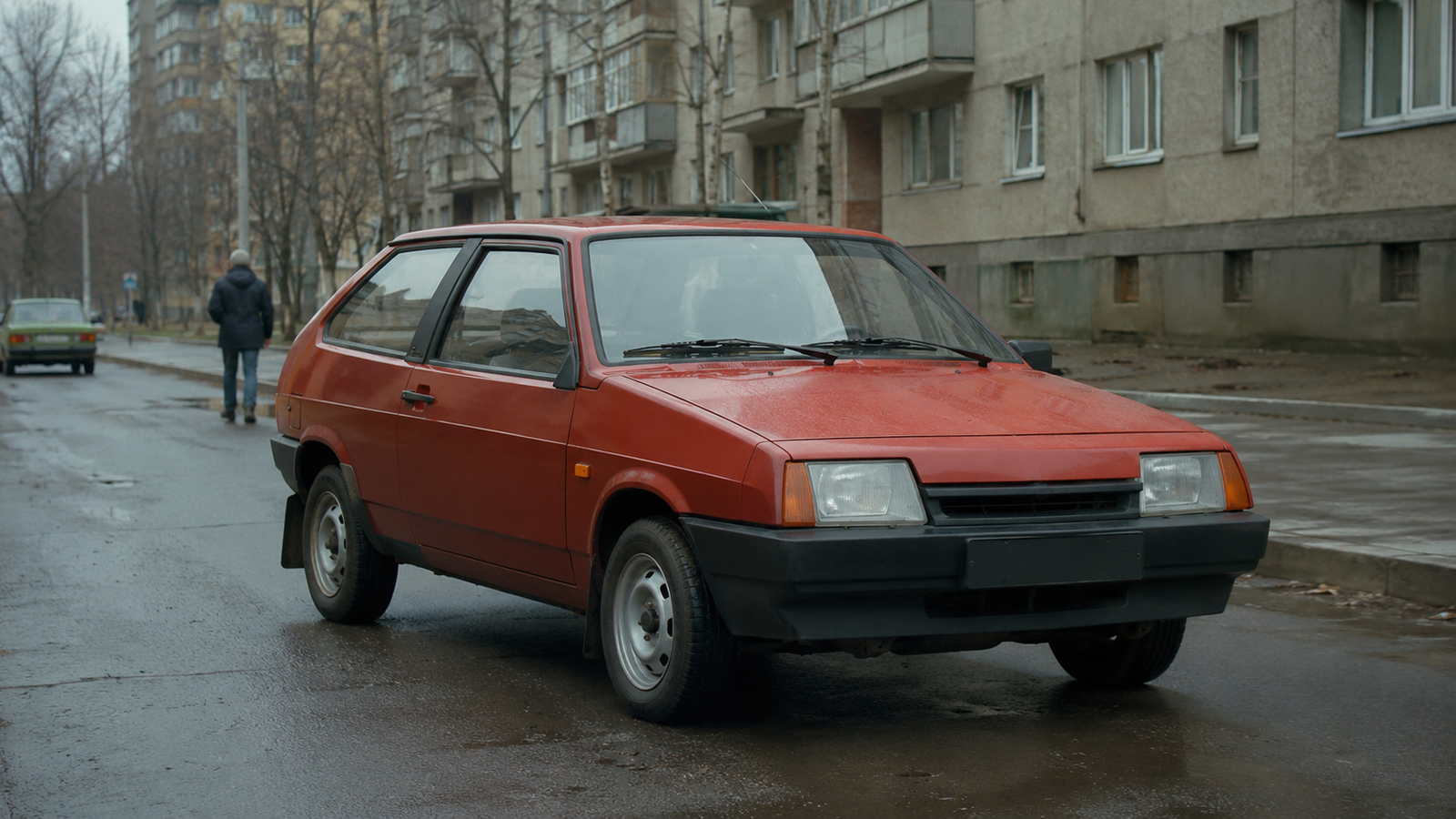
The first VAZ-2108 family cars had one detail that instantly made them recognizable. The front part looked as if it had been made separately and then attached to an already finished body. It was this protruding element that gave rise to the nicknames "beak", "parrot nose" and even became one of the reasons for the appearance of the famous name "chisel". However, six years later, the unusual front end disappeared from the conveyor belt.
In the factory documentation, this part was called the radiator frame trim and was listed under catalog number 21080-8401014. In spare parts catalogs, it was placed next to the hood and fenders, and within the enterprise, a shorter designation was used - the front mask.
It was the protruding radiator grille that made the design so unusual. Because of its shape, drivers quickly came up with several unofficial names. The protrusion itself was called the "beak", and the entire plastic overlay was nicknamed the "ski". Together with the wedge-shaped silhouette of the body, this feature finally cemented another popular name for the car - the "chisel".
At the same time, the author of such an unusual design remained unknown. There is still no consensus on who exactly formed the final appearance of AvtoVAZ's first front-wheel drive model.
How the unusual front part was arranged
The front of the car had a very non-standard design. The metal body elements ended before the headlights. Both the hood and the front fenders did not reach the optics, and the entire space around the headlights and grille was covered by a single plastic panel, the upper part of which partially extended onto the hood.
At the same time, the fenders themselves remained traditional - steel and stamped. Only the front mask was made of plastic, which was the main difference in the design.
First prototypes
On experimental cars, this part was not stamped, but made by hand from fiberglass. Such panels were not painted, so some prototypes received a characteristic unpainted front end.
Some test vehicles even moved without the standard nose design. Instead, a camouflage overlay was used. According to the recollections of the test participants, the unusual appearance so surprised oncoming drivers that they sometimes got distracted and even drove off the road.
One such prototype with an unpainted fiberglass mask has survived to this day and is in the Porsche collection.
What the production mask was made of
Production cars used a plastic part, painted in body color. After installation, it was practically indistinguishable from metal elements, so many owners were convinced for years that they had an ordinary steel panel in front of them.
For its time, the solution looked very bold. Despite the fact that plastic remained a scarce material, the design itself turned out to be quite successful. The main damage usually fell on the radiator grille, while there were practically no serious complaints about the strength of the mask itself.
Where did this design come from?
The idea of using a large plastic panel was not entirely original. Similar solutions had already been used by foreign manufacturers, and AvtoVAZ decided to take advantage of this experience.
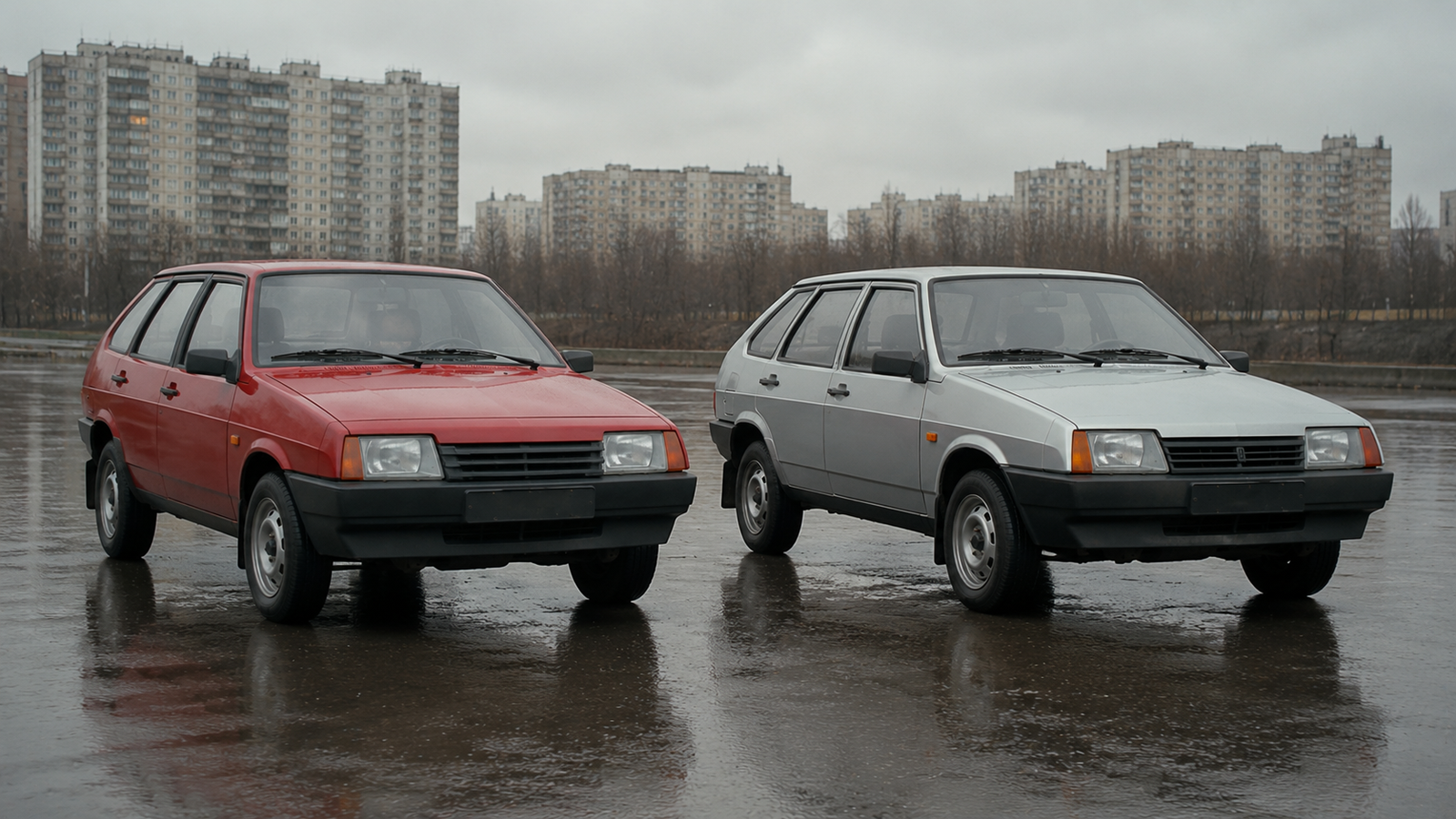
A similar design could be seen, for example, on the DeLorean DMC-12. On this car, the hood and fenders also did not reach the headlights, and the space around the lighting was covered by a separate decorative overlay.
Work with plastic body elements at AvtoVAZ began even before the launch of the "eight" into production. One of the prototypes, assembled at the end of 1978, already received integrated bumpers, and the production bumpers of the VAZ-2108 were also not made of metal.
Practical benefits of the plastic mask
The unusual design had several advantages. When small stones hit, the plastic did not rust, so the damage was limited to small chips.
During light collisions, the plastic panel took part of the load, allowing the metal fenders and hood to remain intact.
Even after more serious damage, repairs were often significantly cheaper. In many cases, it was enough to replace the mask along with the headlight, without resorting to welding and body painting.
Why the long fender did not appear immediately
Interestingly, the long fender option was developed by 1985. This was the design supported by the enterprise's designers.
However, the project could not be implemented immediately. The reason was technological limitations. The manufacture of longer hoods and fenders required deep metal drawing, which the existing press equipment could not handle.
Re-equipping production would mean a long shutdown of the conveyor, while the launch of a new model could no longer be postponed. Therefore, the project was temporarily shelved.
What problems were identified in operation
Bodyworkers warned even before the start of mass production that the new design would be difficult to assemble. The mask partially overlapped the hood, so it required very precise gap adjustment.
Over time, it turned out that the fears were not unfounded. The plastic part did not always retain its original shape, which caused the gaps between the hood, fenders, and mask to vary significantly from car to car. Adjusting the elements on the conveyor took additional time, and the short hood turned out to be insufficiently rigid.
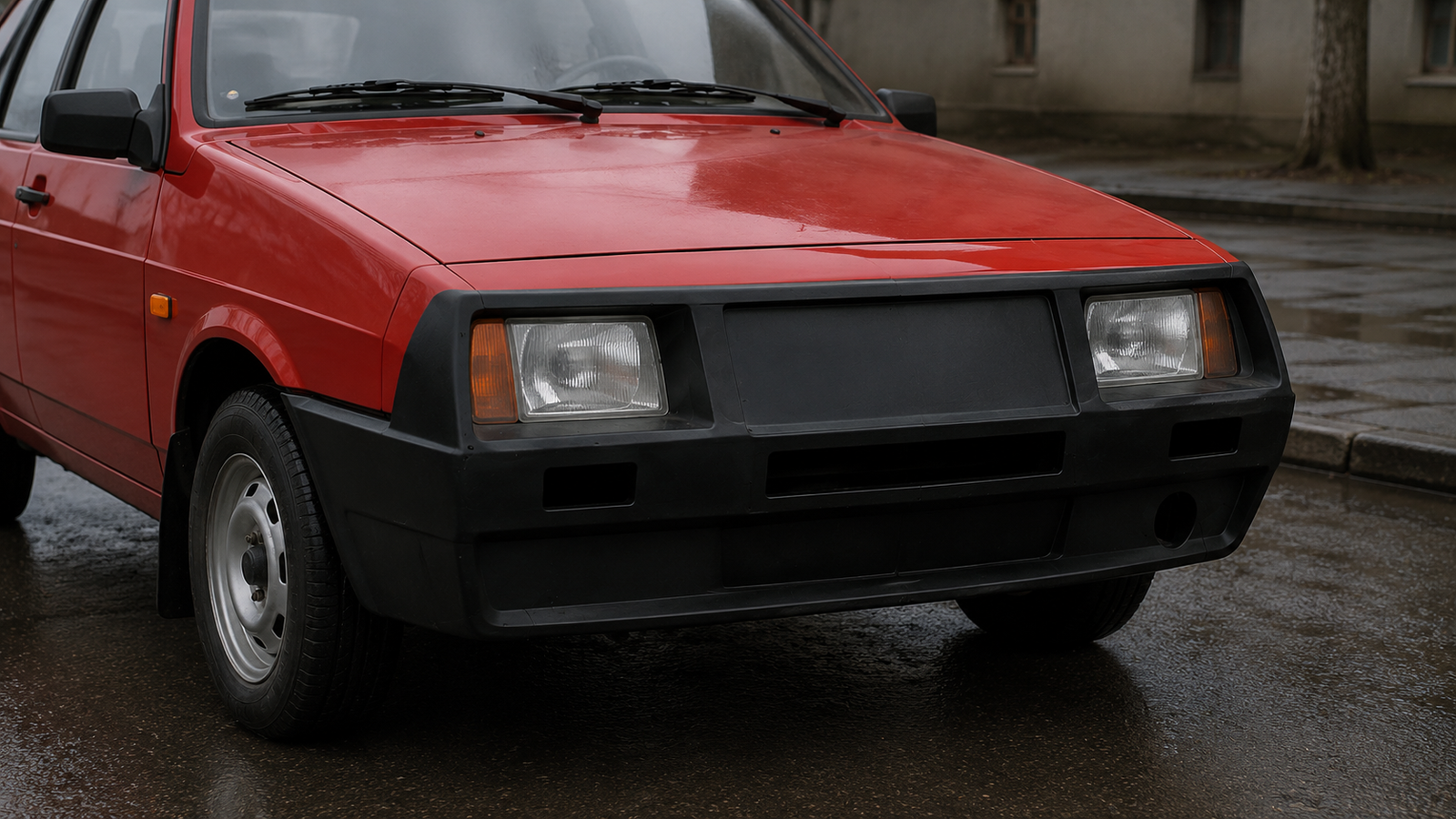
Not all owners were satisfied with the appearance of the car either. Many almost immediately replaced the factory radiator grille with cooperative products, homemade options, or modified parts from the VAZ-2107.
Abroad, such modifications were even performed by dealers. As a result, Samara family cars were often displayed in car dealerships with several options for alternative grilles, many of which were painted in body color.
Which model was the first to receive the new front end
In the spring of 1989, AvtoVAZ began to gradually abandon the plastic mask. The five-door VAZ-21093 with a 1.5-liter engine was the first to receive the updated design.
The modernization coincided with the mastering of mass production of a new 1.5-liter engine. At the enterprise, this version was considered the most prestigious, so it was the first to get the new front end.
Even before the car went on sale, it was shown to readers of "Za Rulem" magazine. The cover of the April issue featured a silver "nine" with a new design: elongated fenders reached the headlights, the hood received a characteristic curve between them, and a small radiator grille took the place of the former plastic mask.
When the long fender became widespread
By the end of 1990, the first VAZ-21099s with a new front end design rolled off the assembly line. It was then that the expression "long fender" finally became established among motorists.
A year later, such a design began to be installed on hatchbacks as well. At the same time, both versions were produced simultaneously for some time. The new front end could be found on cars with a 1.3-liter engine, as well as on modifications with a 1.5-liter engine.
The factory completely abandoned the short fender only in 1994.
What changed along with the front end
The update affected not only the appearance of the car.
Other changes also occurred simultaneously:
- instead of a beige interior, gray and gray-black trim options appeared
- the shape of the radiator grille changed
- later, the complex shaped grille was replaced by a simpler design with three horizontal slats
Motorists quickly nicknamed the new grille "Adidas". Initially, it was painted in body color, but by the end of the 1990s, this practice was abandoned, leaving the part black.
What was lost along with the plastic mask
Despite numerous criticisms, the old design had an important advantage. After switching to a long fender, even a minor collision in a parking lot most often damaged the metal body parts. This meant a full body repair with subsequent painting.
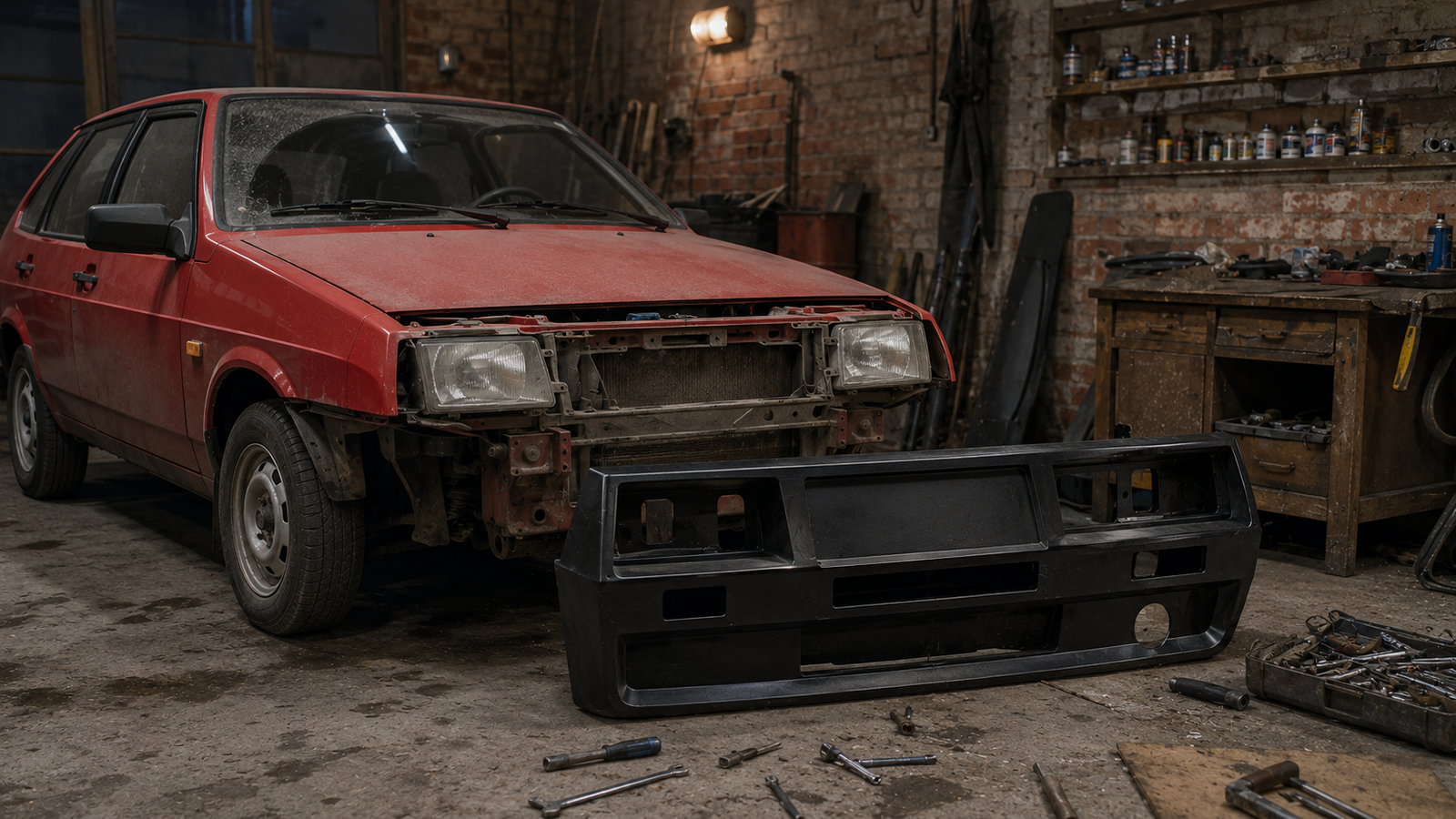
In addition, the open front edge of the hood began to quickly become covered with chips, and then with traces of corrosion.
Over time, owners of cars with short fenders often independently modified their cars. The mask gradually deformed, the edges diverged from the fenders, so many bought long fenders and a hood, modernizing the car in garage conditions.
Why the attitude changed
After the appearance of the new design, the short front end quickly began to be perceived as a sign of an outdated model, although cars with such a design continued to roll off the assembly line for several more years.
At the same time, the older design did not mean a lower cost. For example, the VAZ-21093-01 with a short fender cost 9,200 rubles, while the VAZ-2109 with a 1.3-liter engine was estimated at 8,900 rubles.
Today the situation has changed. It was the first "Samaras" with the branded plastic mask that became the most recognizable representatives of the family and are considered an important part of the history of domestic automotive industry.
Read more materials:
- How much Lada cars cost in different countries
- Is it true that sun blinds save a car from the heat
- How the American Dodge Tradesman ended up in service with the authorities in the USSR
Комментарии