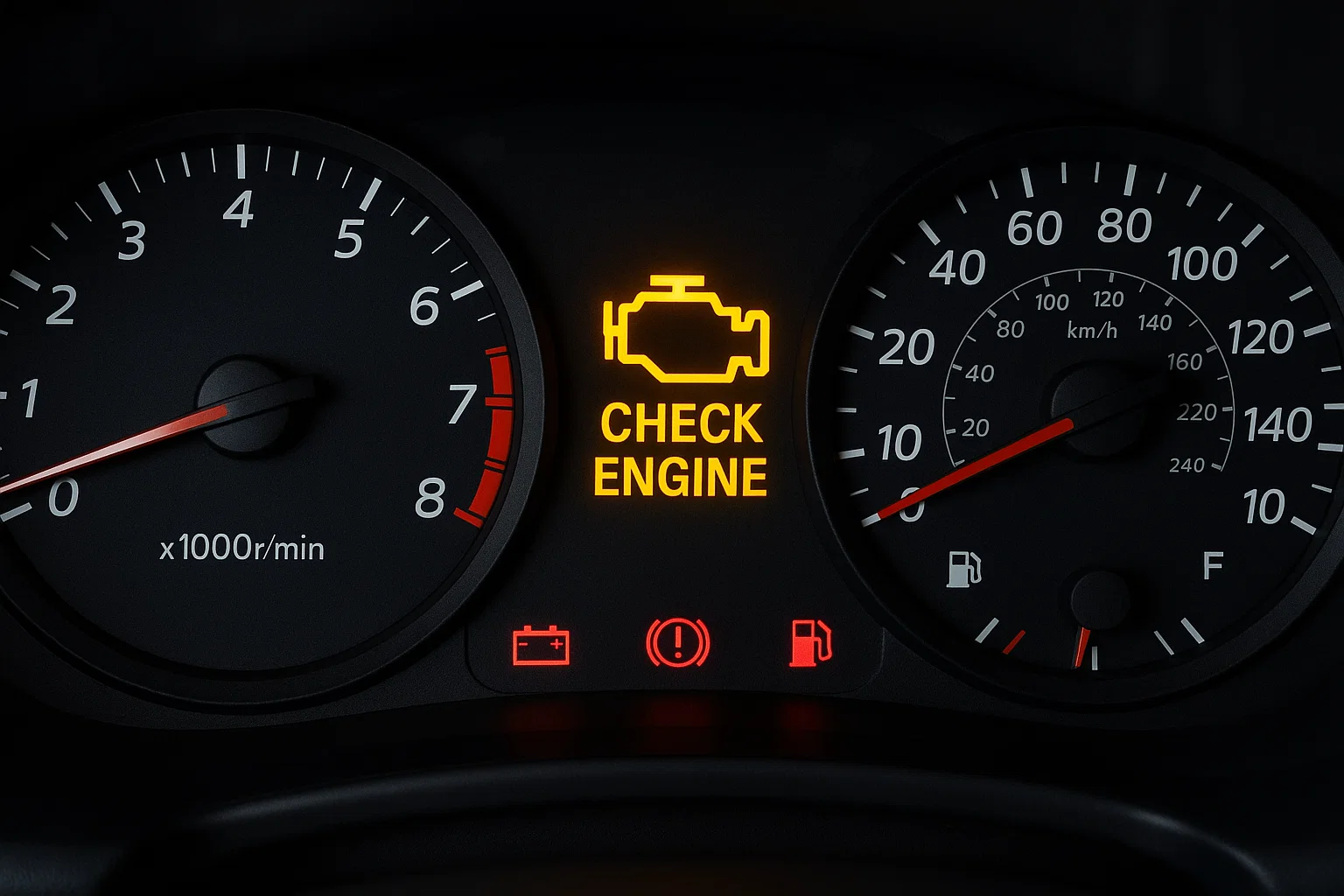
When the Check Engine light suddenly illuminates on the dashboard, even a calm driver starts to get nervous. This light literally says: "Check the engine," but it's not immediately clear what to check. Sometimes the cause is trivial, sometimes it's extremely serious. Let's figure out what this signal means, when you can continue driving, and when it's better to call a tow truck immediately.
What Does Check Engine Really Mean?
The indicator lights up when the electronic control unit detects an error in the engine or systems directly related to it. It's important to understand: one light—dozens of possible causes. Even expensive cars with advanced electronics like BMW, Audi, or Porsche don't "explain" the problem to the driver without diagnostics.
The error can be:
- temporary;
- periodic;
- constant;
- critical.
The light may be on steadily, flashing, or appearing only occasionally. You can't ignore it, but you shouldn't panic either: in most cases, the car remains operational.
Is it Possible to Continue Driving?
If the Check Engine light comes on while driving or doesn't go out after starting, you can drive, but under certain conditions. It is strictly forbidden to continue driving if:
- the car has suddenly lost power;
- the engine has entered emergency mode;
- the light is flashing constantly;
- the engine is running with interruptions, vibrations are felt;
- the oil, overheating, or catalyst indicators light up simultaneously.
In such cases, it is better to stop immediately, turn off the engine, and call a tow truck. If the car is behaving stably, it is permissible to carefully drive to the service, without postponing the diagnostics.
The Most Common Causes of Check Engine Light
1. Fuel Problems
The most common and at the same time the most harmless option. Poor-quality gasoline or diesel causes detonation, uneven engine operation, and loss of traction.
What can be done:
- refuel with high-quality fuel to "dilute" the bad fuel;
- observe—sometimes the error disappears on its own.
A separate nuance is the gas tank cap. A loosely tightened or cracked cap causes depressurization of the system, and the electronics immediately signal an error. Check it first.
2. Low Oil Level
If the Check Engine light comes on together with the oil pressure indicator, you cannot drive. You need to stop immediately and check the level.
If there is not enough oil:
- add strictly the same oil that was used before;
- after that, be sure to go to the service—a leak or increased consumption is possible.
3. Fuel Pump
A faulty pump makes itself known immediately: the car loses traction, behaves unstably, and may stall. If it fails completely, the car will simply stop. There are no options here—only service, sometimes with a tow truck.
4. Fuel Injectors
Problems with injectors manifest themselves in a complex way:
- fuel consumption is increasing;
- power is falling;
- the revs are floating;
- jerks appear during acceleration.
If the Check Engine light comes on at the same time, the malfunction has already started.
5. Spark Plugs
Misfires, jerks when starting and accelerating are a classic symptom of tired spark plugs. In this case, the lamp literally says: "Change consumables".
Critical Malfunctions: Lambda Probe and Catalyst
Some of the most unpleasant causes are malfunctions in the oxygen sensor or catalytic converter. The lambda probe monitors the exhaust composition and transmits data to the ECU.
In case of its malfunction:
- fuel consumption increases;
- power drops;
- emission of harmful substances increases.
Worst of all, a faulty sensor gradually kills the catalytic converter, and replacing it is a completely different story. This error can only be determined by computer diagnostics.
Other possible causes
In practice, there are many more reasons for the Check Engine light to appear. Among them:
- failure of various engine sensors;
- wiring damage;
- ignition system failures;
- problems with air supply.
It's useless to guess here without diagnostics.
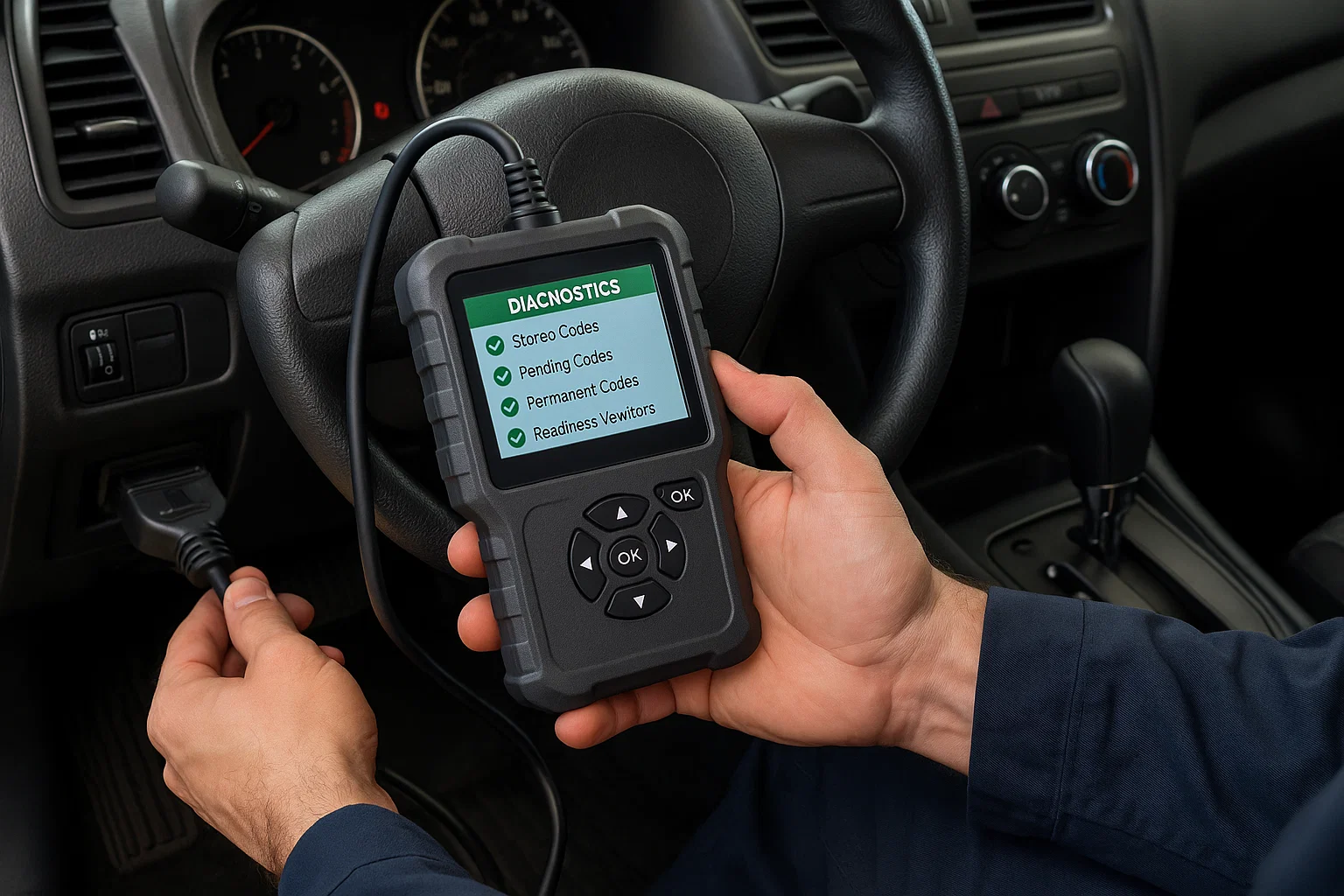
Is it possible to reset Check Engine yourself
Yes, there are several ways to temporarily remove the error without a scanner.
Method 1:
- Remove the negative terminal from the battery
- Wait 30 seconds
- Reinstall the terminal
Method 2 (if it didn't help):
- Remove the negative and positive terminals
- Turn on the headlights
- Connect the terminals to each other for 15 seconds
- Reconnect (positive first, then negative)
If the all-wheel drive error remains after this, turn the steering wheel all the way to the left and right - the system is often reset.
Important: resetting the error does not fix the problem. This is only a temporary measure to get to the service. If the problem is serious, the Check Engine light will come on again.
Read more materials on the topic:
- How to overcome "city" fuel consumption: 7 simple tricks that work
- Why the injector replaced the carburetor forever
- Endoscope is not a magic wand: five mistakes that ruin any engine check
Комментарии