The Chinese publication Autohome conducted winter tests of electric vehicles to determine which models show the greatest range in cold conditions. A total of 31 cars from different segments participated in the tests, including city hatchbacks, sedans, and large crossovers. The tests took place in the city of Yakeshi in Inner Mongolia at air temperatures ranging from -10 to -25 degrees Celsius. The cars moved along the track at a speed of 70 km/h until a complete stop, recording the actual range and energy consumption.
In the hatchback category, the leader was the new generation MG 4 from SAIC. Equipped with a 53.9 kWh battery, it traveled 225.8 km with a declared 530 km. Energy consumption amounted to 25.5 kWh per 100 km, which confirmed the specifics of hatchbacks — an orientation towards short city trips. Among the available sedans, the best result was shown by the Nissan N7, a joint development of the Japanese manufacturer and Dongfeng. Its 73 kWh battery allowed it to cover 296.3 km in winter conditions, consuming 26.4 kWh per 100 km, although the declared range is 625 km.
In the premium sedan segment, the YangWang U7 from BYD took the lead. A powerful 135.5 kWh battery provided an actual range of 372.9 km with a consumption of 40.2 kWh per 100 km, which is less than half of the declared 720 km. This model became the most energy-intensive car in the test, confirming that premium batteries allow achieving significant real ranges even in severe frost.
Among mass-market crossovers, the most long-range was the Geely EX5 EV, which is not yet available on the Russian market. Its 68.4 kWh battery allowed it to travel 260.9 km, consuming 28.6 kWh per 100 km, which is noticeably lower than the declared 605 km. In the segment of 5-seater premium crossovers, the best result was shown by the Xiaomi YU7 Max with a 101.7 kWh battery. It traveled 319 km with a consumption of 33.7 kWh per 100 km, although the declared range is 760 km.
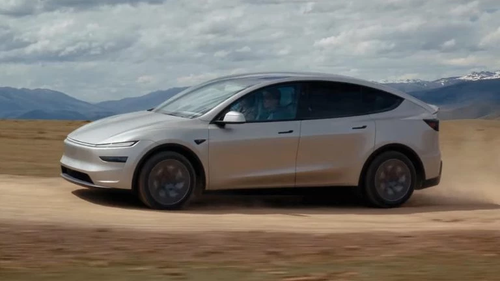
In the category of 6-seater electric vehicles, the Tesla Model Y L, specially designed for China and assembled at a local factory, retained its leadership. An 82 kWh battery provided a range of 270.9 km, with a declared 751 km. Energy consumption amounted to 36.1 kWh per 100 km. Experts separately highlighted the «angular crossovers», whose aerodynamics significantly reduce the driving range. The leader in this segment was the BYD Fang Cheng Bao Ti 3 with a 73 kWh battery, which covered 224.7 km with a declared 501 km and a consumption of 33.7 kWh per 100 km.
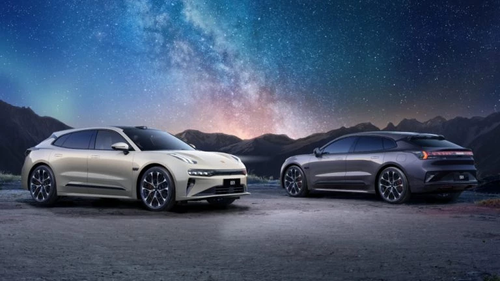
Combining the results across all categories, analysts identified the absolute leaders. The most long-range was the YangWang U7 EV, followed by the second-generation Xpeng P7, which traveled 366.7 km thanks to a 92.2 kWh battery with a consumption of 26.6 kWh per 100 km. In third place was the restyled Zeekr 001 liftback with a 103 kWh battery, which traveled 362.1 km and consumed 28.1 kWh per 100 km.
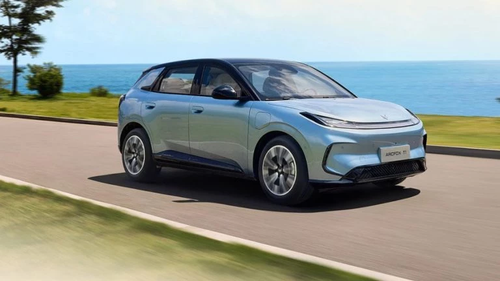
In the list of test participants, the ArcFox T1 hatchback was in last place. Despite its relatively light weight and front-wheel drive, its 42.3 kWh battery allowed it to travel only 160.8 km with a declared figure of 425 km, consuming 31 kWh per 100 km. This difference highlights the importance of both battery capacity and vehicle design for real-world range in frost.
Thus, winter tests have shown that even for electric vehicles with high declared ranges, real-world figures may be only half of those declared, and leadership is retained by models with capacious batteries and thoughtful design. The rating clearly demonstrates which Chinese electric vehicles are best suited for cold operating conditions, and also highlights the segments where range is most critical.
| Place | Model | Range (km) | Energy Consumption (kWh/100km) | Traction Battery Capacity (kWh) |
|---|---|---|---|---|
| 1 | YangWang U7 EV | 372,9 | 40,2 | 135,5 |
| 2 | Xpeng P7 | 366,7 | 26,6 | 92,2 |
| 3 | Zeekr 001 | 362,1 | 28,1 | 103 |
| 4 | Tesla Model 3 | 361,8 | 24,9 | 78,4 |
| 5 | Xiaomi YU7 | 319 | 33,7 | 101,7 |
| 6 | Nissan N7 | 296,3 | 26,4 | 73 |
| 7 | Aito M7 EV | 282 | 35,7 | 100 |
| 8 | Tesla Model Y L | 270,9 | 36,1 | 82 |
| 9 | Xpeng Mona M03 | 270 | 25,4 | 62,2 |
| 10 | BYD Han L | 263,9 | 32,2 | 83,2 |
| 11 | Geely EX5 EV | 260,9 | 28,6 | 68,4 |
| 12 | Leapmotor B01 | 260,2 | 26,9 | 67,1 |
| 13 | Nio ES8 | 257,9 | 39,2 | 102 |
| 14 | Aito M8 EV | 254,1 | 38,9 | 100 |
| 15 | BYD Sealion 06 EV | 253,1 | 35,6 | 78,7 |
| 16 | Li Auto i8 | 250,3 | 39,2 | 97,8 |
| 17 | BYD Seal 06 EV | 248,7 | 24,6 | 56,6 |
| 18 | Toyota bZ3X | 243,8 | 30,4 | 67,9 |
| 19 | Tesla Model Y | 242,8 | 34,9 | 78,4 |
| 20 | Deepal S05 | 242,5 | 30,4 | 68,8 |
| 21 | Li Auto i6 | 238 | 40,5 | 87,3 |
| 22 | MG 4 | 225,8 | 25,5 | 53,9 |
| 23 | Fang Cheng Bao Ti3 | 224,7 | 33,7 | 73 |
| 24 | Changan Nevo A06 | 223,3 | 27,9 | 63,2 |
| 25 | Onvo L90 | 221 | 37 | 85 |
| 26 | Mercedes-Benz G580 EQ Technology | 216 | 51,9 | 122 |
| 27 | Chery iCaur V23 | 201,9 | 41,4 | 80,2 |
| 28 | BYD Seagull | 177,2 | 23,5 | 38,9 |
| 29 | Geely EX2 | 168,2 | 23,5 | 40,2 |
| 30 | Wuling Bingo S | 166,4 | 24,9 | 41,9 |
| 31 | ArcFox T1 | 160,8 | 31 | 42,3 |
Read more materials:
- AvtoVAZ Officially Explains Which Gasoline to Use in Lada
- Moskvich Announces Prices for the Moskvich 6 Sedan of the 2026 Model Year
- Tank Raises Prices for the Entire Model Range in Russia: Tank 500, 700, and 400 Become More Expensive