Every autumn, automotive communities — from forums to garage gatherings — inevitably return to the same debate. On one side are supporters of studded tires, convinced that only metal in the tread can save you on a winter road. On the other are adherents of silence and smoothness, choosing friction tires, which are commonly called "Velcro".
There's no point in talking about comparative tests by specialized publications — they are updated every year. What is much more important is what is rarely mentioned in advertising materials and by tire sellers. We are talking about situations in which even expensive brand-name friction tires can play a cruel trick. In certain conditions, they can be more treacherous than is commonly believed and create a dangerous feeling of complete protection.
It is worth immediately defining the boundary: using summer tires in winter is both a risk and a direct violation of the law. However, the illusion of safety that "Velcro" provides deserves a separate and sober conversation.
Near-Zero Risk Zone
Supporters of friction tires often argue that studs are unnecessary in the city: the asphalt is clean, and metal supposedly only worsens grip. This is partly true. On dry, frozen asphalt or in severe frost below –25 °C, soft "Scandinavian" Velcro really works effectively — the rubber compound remains elastic and provides confident contact with the surface.
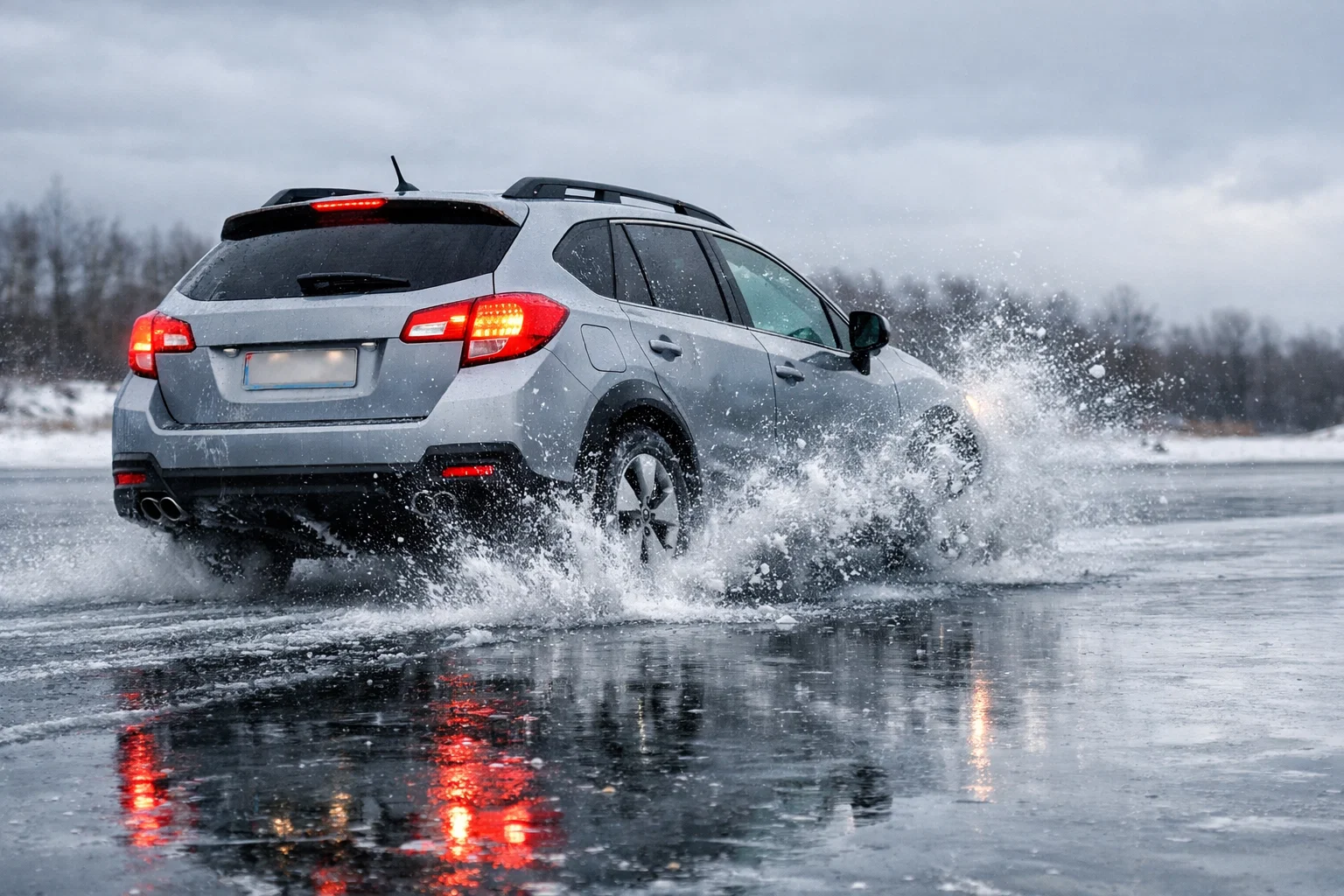
The problem starts where the climate is far from ideal. A typical winter is constant changes: today –20, tomorrow a thaw and around zero. It is in this temperature zone that the so-called "soap effect" manifests itself.
At a temperature of around –1 °C, light snow, melting under the wheels, forms a thin film of water on top of the ice. Even on new friction tires at low speed, the car may almost stop slowing down when braking. The anti-lock braking system is actively working, but there is no actual grip on the road.
The reason lies in the principle of operation of a friction tire. It holds due to the friction of the sipes — many small cuts that cling to the micro-roughness of the surface. But at a temperature of 0 to –5 °C, under the pressure of the wheel, the ice is covered with a micro-film of water. The sipes become clogged with a watery slurry, the coefficient of friction drops sharply, and the wheel begins to slide as if on glass.
In such a situation, the difference in behavior between high-quality "Velcro" and summer tires becomes minimal: both turn out to be practically helpless on wet ice.
Psychological Trap
The most dangerous factor in this scenario is not so much physics as the psychology of the driver.
When using summer tires in winter, a person, as a rule, drives extremely carefully: minimum speed, increased distance, full concentration. Fear forces you to compensate for the lack of grip with a careful driving style.
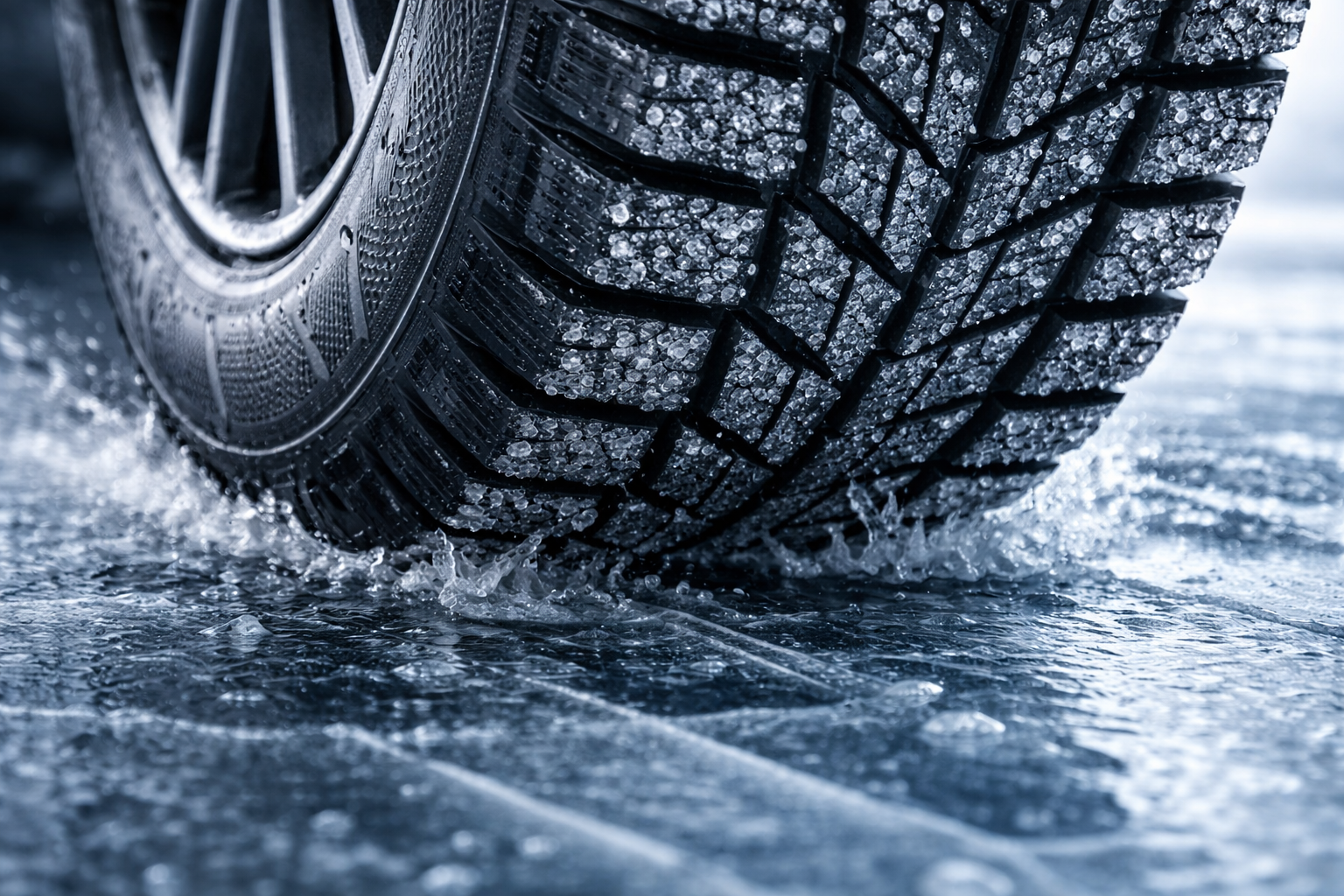
Friction tires create the opposite effect. The awareness that the car is "shod" in winter tires, especially expensive and brand-name ones, creates a false sense of permissiveness. The speed increases to the usual 60–80 km/h, maneuvers are performed more confidently, and the distance is reduced. And when you get on rolled wet ice in front of an intersection, physics unequivocally punishes you for self-confidence.
In such a situation, studded tires have a fundamental advantage: the metal stud mechanically bites into the ice, breaking through the water film. The friction tire is deprived of this possibility and completely depends on friction, which simply does not exist at the moment.
Selection Error: "European" Winter in a Harsh Climate
The confusion in the types of friction tires deserves special attention. Many drivers still do not realize that "Velcro" can be fundamentally different.
Scandinavian (Nordic) version — the softest possible, with sharp tread edges, designed for ice and stable frosts. European — more rigid, focused on wet asphalt, slush and mild winters without prolonged sub-zero temperatures.
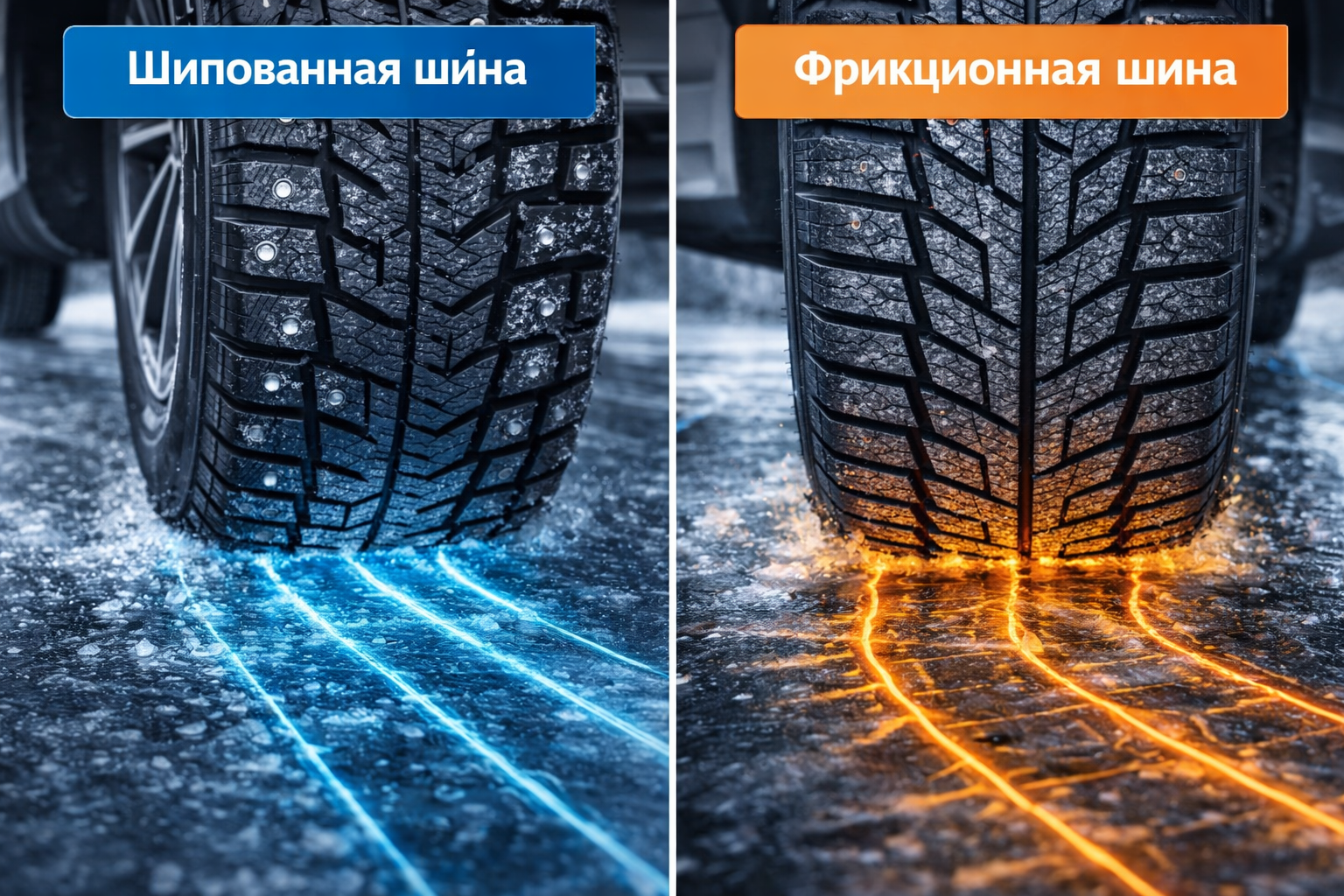
The external differences are minimal, and without experience they are easy to confuse. As a result, "European" friction tires end up on cars in regions with harsh climates. At a temperature of –15 °C, such a tire hardens and begins to resemble plastic in hardness. In this state, it can be even more dangerous than summer tires: summer tires retain grooves for water drainage, and frozen "European" tires have neither elasticity nor working edges.
The Opposite Extreme: When "Velcro" Floats
There is also the opposite scenario — the use of winter friction tires at stable positive temperatures.
The soft compound of Scandinavian "Velcro" begins to deform at +10 °C. Steering responses become delayed, the car loses trajectory clarity, and the braking distance on dry asphalt increases by two to three car lengths compared to summer tires. In a sharp maneuver, the car begins to "shift" on the sidewalls, reducing handling.
In such conditions, even the simplest summer tire provides better control than an expensive winter friction tire.
In a metropolis, where roads are heavily treated with reagents and remain black for most of the winter, friction tires can indeed be a reasonable and comfortable choice.
But with regular trips on highways, into courtyards, to country plots and in unstable weather conditions, the absence of studs becomes a conscious compromise with safety.
Friction tires do not forgive mistakes. It requires the driver to constantly analyze the road surface and maintain high discipline. A slight carelessness is permissible on studs. On "Velcro" in icy conditions, the driver actually acts like a sapper — with no right to make a mistake.
The main danger of "Velcro" is the belief in its versatility. In winter, it is not the tire brand or the tread pattern that keeps the car on the road, but an adequate speed, distance and the ability to read the road. Everything else is just tools that only work when used correctly.
Read more materials on the topic:
- What is the main danger of xenon headlights on the road
- Why did they drive without winter tires in the USSR in winter
- Music while driving: helper or hidden threat
Комментарии