It is increasingly claimed online that modern engines have essentially become disposable. They say that once the unit has covered 200–250 thousand kilometers, its life cycle is complete: all that remains is to throw it away and buy a new one. Repair is supposedly impossible. However, the real picture is different.
It is pointless to deny the reduction in lifespan compared to previous decades. If we look at the engines of the 1980s, 1990s, and early 2000s, many of them covered 500,000 kilometers or even a million without serious intervention. This is how the "million-mile engines" appeared. Today, such examples are rare. And if they do come across, they are usually developments from the 1990s to the early 2000s, created before the active intervention of marketing and the tightening of environmental standards.
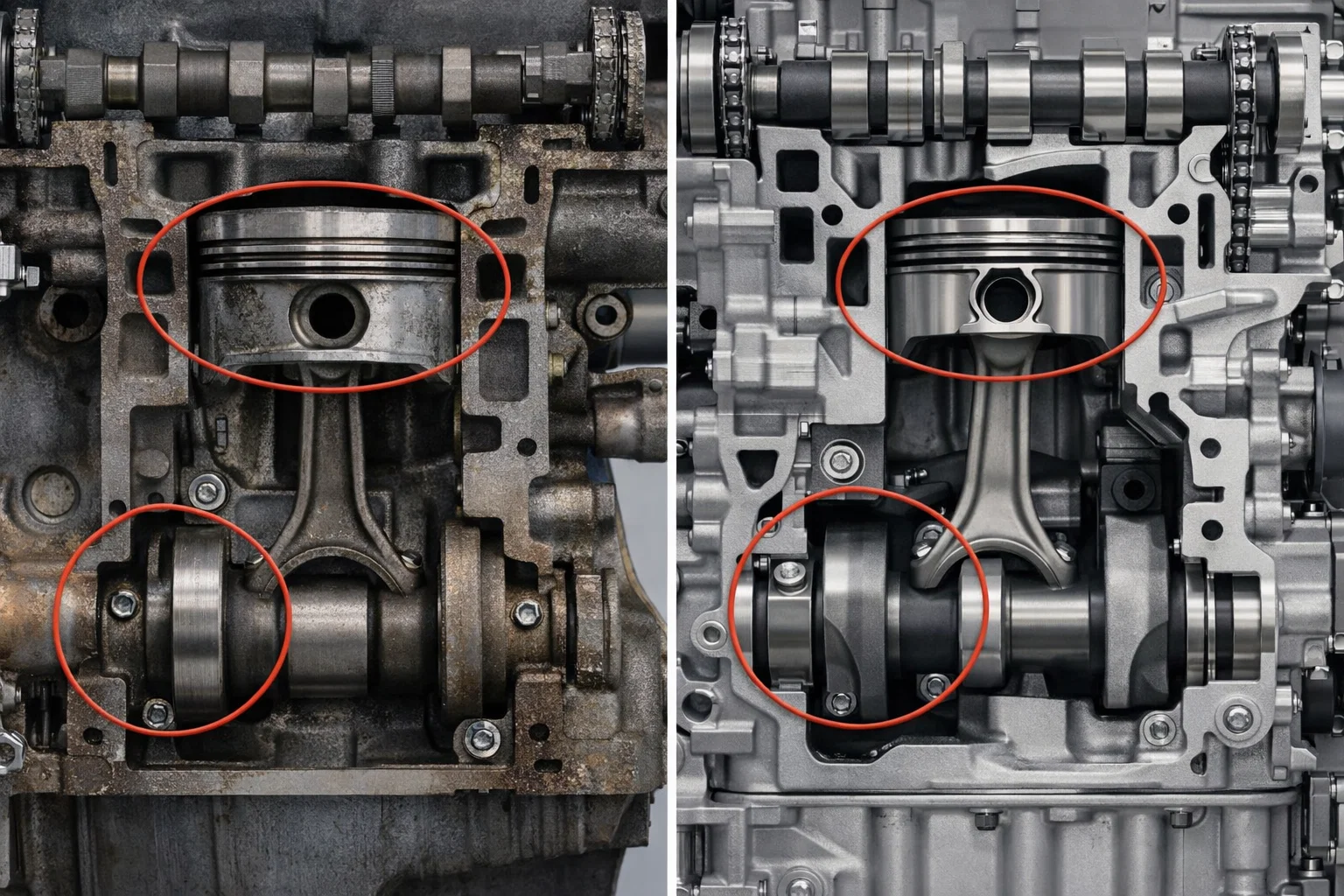
The reasons for the reduction in lifespan are multifaceted, but in a simplified form, environmental requirements played a key role. Their goals are formally noble: to reduce emissions into the atmosphere, reduce fuel consumption, and simultaneously increase power output. This is achieved primarily by lightening the design.
Previously, massive pistons, wide compression and oil scraper rings, large necks of crankshafts and camshafts, and wide liners were used. The wear of such units, even when using medium-quality oil, remained minimal. With good maintenance, the engine easily turned into a "million-mile engine." But the price for reliability was significant: fuel consumption was 12–15 liters per 100 km, the level of emissions was high, and the liter power was modest. Three-liter naturally aspirated engines often did not develop even 200 hp, whereas today such output is obtained from a 1.5-liter turbocharged "four".
Modern designs have become more compact and lighter: the size of the necks of the shafts has decreased, the pistons have become significantly smaller, and the rings are thinner. At the same time, the power density has increased. Logically, the lifespan has decreased under such loads.
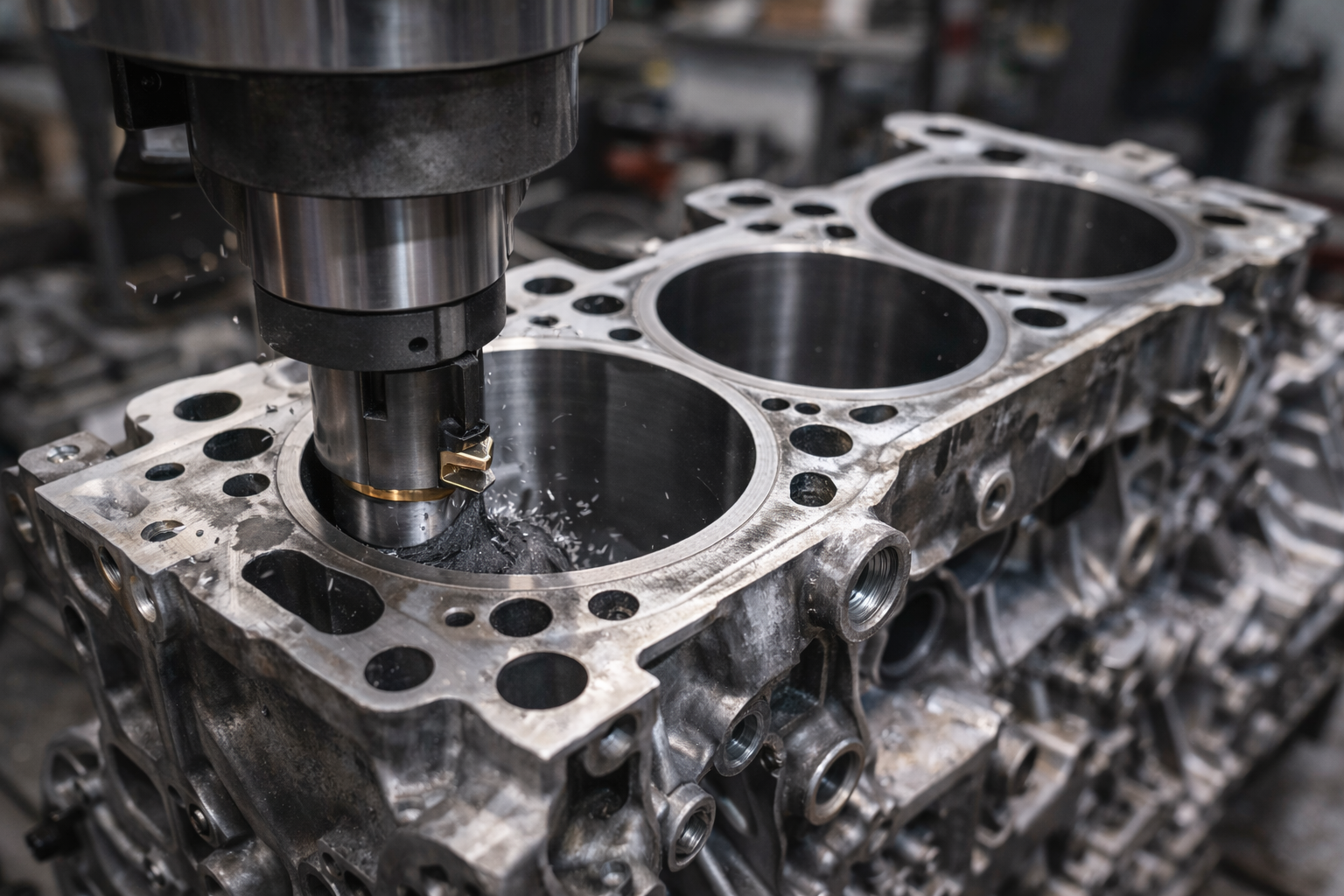
An additional risk factor is the catalytic converter. When it is destroyed, its ceramic crumb can get into the cylinders, and then the engine can fail in a matter of days.
Supporters of modern standards object: even with a reduced lifespan, the unit is capable of covering 200–250 thousand kilometers, consuming about 8 liters of fuel in the city and about 6 liters on the highway. Old engines consumed about 14 liters in the city and 12 on the highway. The savings reach 6 liters per 100 km. Over 200,000 kilometers, you can theoretically buy a new engine on the difference in fuel — maybe even more than one. Plus — reducing the burden on the environment. There is indeed a certain logic in this.
However, does this mean that modern engines have become disposable? The answer cannot be universal: there are many designs, and each should be considered separately.
If we start with AVTOVAZ, most of its engines are made on a cast-iron block — regardless of whether the engine has 8 or 16 valves. The cylinder head is aluminum. Attachments — starter, generator, injectors, throttle — are changed without difficulty.
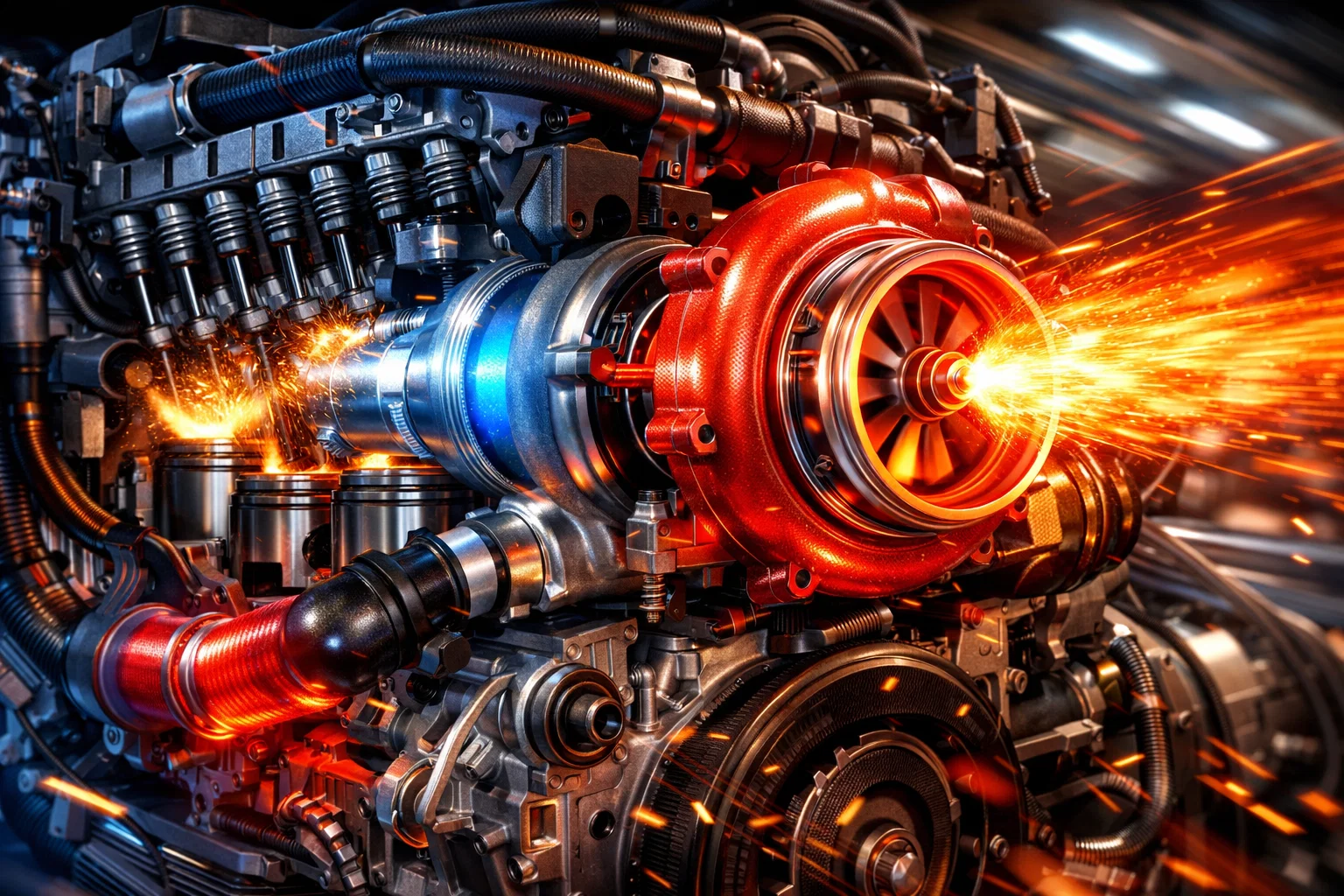
The cast-iron block allows repeated boring, and repair pistons are available in various sizes. The cylinder head lasts a long time, and if necessary, its replacement is relatively affordable: for the VAZ-11182 engine, a new head assembly (with shafts and valves) costs about 30–35 thousand rubles. With minimal maintenance, such engines cover 300–350 thousand kilometers, and in taxis, runs of 400–500 thousand are not uncommon. After a major overhaul, the lifespan can be renewed.
The situation is more diverse with foreign cars. There are models with cast-iron blocks and a good margin of safety — for example, the Renault Logan, where the maintainability is comparable to that of VAZ. But more and more engines are being produced with aluminum blocks, around which many rumors about their "disposability" have arisen.
The main arguments of skeptics come down to two theses: there are no repair parts, and the aluminum block is supposedly impossible to bore — it will collapse. However, in most cases, the aluminum block is equipped with cast-iron cylinder liners, since the aluminum itself would not withstand operating temperatures. It is the liners that are processed. As a rule, boring is possible at least once. Even if the original manufacturers (whether Nissan, Toyota, or Kia) do not offer repair pistons, they are produced by third-party companies.
If the liner has already exhausted its resource for processing, it is replaced: the old one is removed, the new one is pressed in to the size of the original parts. This is a common practice. In parallel, a revision of the crankshaft, liners, connecting rods and, if necessary, their replacement is carried out. The cylinder head can also be restored: if the camshaft beds are worn, they can be repaired, which avoids buying a new one, and for foreign cars this is an expensive element.
A telling example is the Hyundai and Kia engines of the G4FG and G4FC series with a volume of 1.6 liters, which were installed on the Hyundai Solaris and Kia Rio. These cars were massively used in taxis. Runs of 400–500 thousand kilometers are not uncommon for such engines. After that, a major overhaul costing 120–140 thousand rubles allows you to operate the car for another comparable period. The key point is to resolve the issue with the catalytic converter in a timely manner by about 100,000 km.
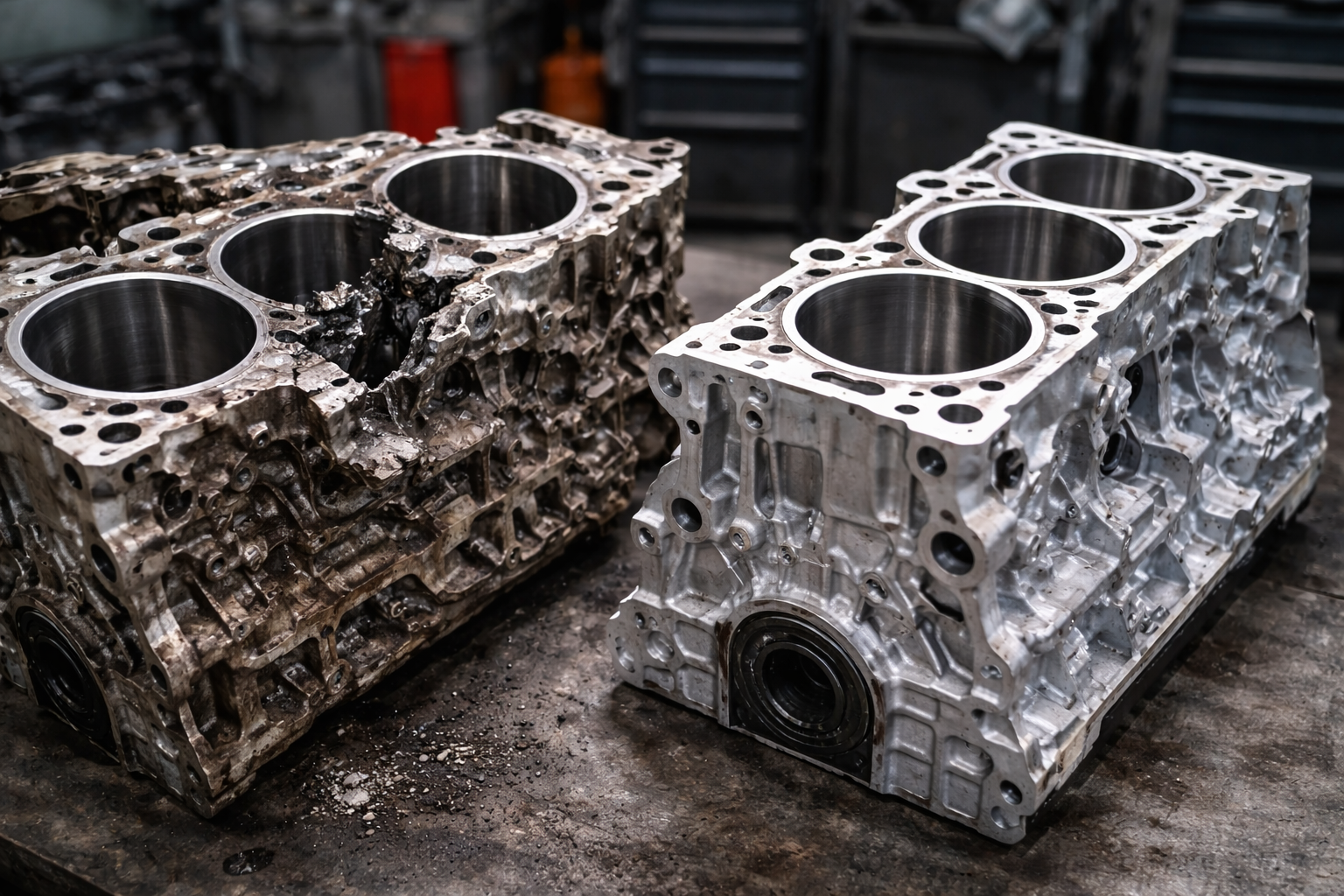
A separate category is turbocharged units. Many of them, including a number of Volkswagen engines (although aluminum versions have appeared in recent years), are made on cast-iron blocks. In the standard configuration, such engines are capable of covering 200–250 thousand kilometers or more with correct operation. Problems often arise due to chip tuning: increasing the power ("stage") additionally loads the units. As a result, the unit can receive serious damage. Cases are known with three-cylinder Geely engines, where the block was torn. In such situations, the block needs to be replaced, and sometimes the cylinder head, damaged as a result of destruction.
In general, it can be argued that about 95% of modern engines are repairable. The remaining 5% are either rare designs or cases of severe mechanical damage. The key condition is qualified service and an experienced mechanic, of which there are really few and who need to be sought.
If the block is not cracked and the head is not torn, if the engine has not been subjected to extreme tuning with physical destruction or melting of elements, restoration is usually possible and economically justified. Moreover, a competent specialist is able to eliminate factory defects: correctly set thermal clearances or install oil nozzles for cooling pistons. After such refinement, the engine can last longer than a new factory one in the standard version.
Read more materials:
- Five reasons in favor of rear-wheel drive
- Why sports cars "shoot" when the gas is released
- 40 years of "Moskvich-2141": hope and disappointment