Many drivers do not pay attention to small bulges on tires. However, it is such defects that often cause serious problems on the road. Even a small hernia can lead to a tire rupture at speed.
Therefore, it is important to understand how this defect occurs, how dangerous it is, and what actions need to be taken immediately after its detection.
What is a Tire Hernia
A tire hernia is a bulge on the surface of the tire that occurs due to damage to its internal carcass. The basis of any car tire is the cord - a strong layer of textile or metal threads that provides the shape and strength of the wheel.
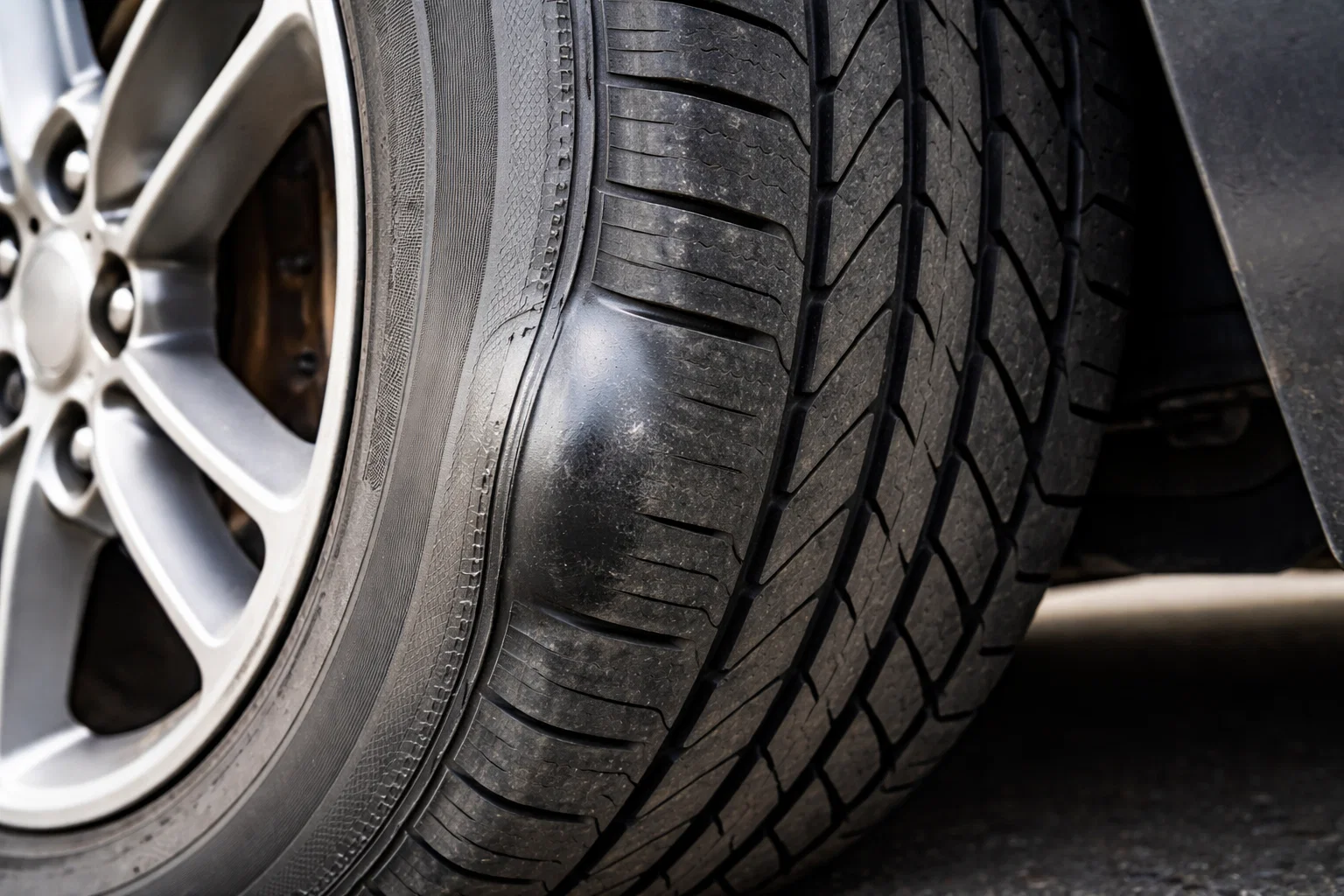
When the cord is damaged, the internal structure of the tire weakens. Under air pressure, the rubber begins to bulge outward, forming a characteristic "bump."
Most often, a hernia appears on the side of the wheel. However, sometimes it can form on the tread or in the transition zone between the tread and the sidewall.
How to Recognize the Problem
In most cases, a hernia can be noticed visually. A bulge appears on the surface of the tire, which differs from the rest of the wheel surface.
If the damage is minor, the signs may be less obvious. Sometimes the car starts to behave strangely:
- vibrations appear while driving
- smoothness of ride deteriorates
- beating is felt on the steering wheel
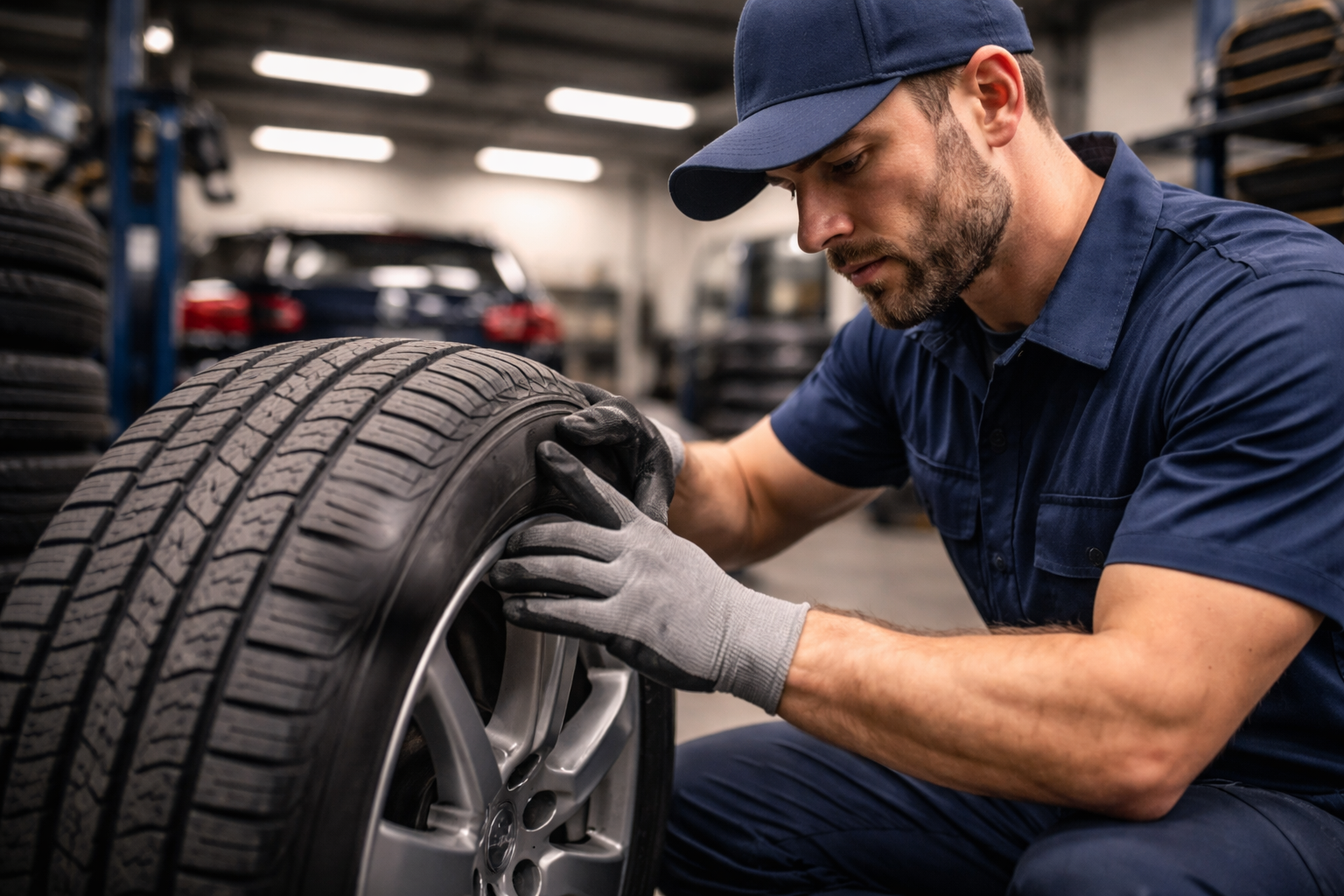
It is especially important to inspect tires after strong impacts - for example, after hitting a deep pothole or running over a curb. It is worth checking not only the outer, but also the inner side of the wheel.
Main Causes of Hernia
The most common cause is strong mechanical impact. Cord damage can occur in different situations:
- hitting a deep pothole at high speed
- impact against a curb
- sharp run over a "speed bump"
- prolonged driving on a flat tire
Also, the risk increases with incorrect tire pressure. Both too low and too high pressure increases the load on the tire carcass.
Sometimes a hernia appears due to a manufacturing defect or due to aging of the rubber. Over time, the material loses elasticity, and microcracks can form in the structure.
An additional risk factor is constant overloading of the car.
Can You Drive With a Hernia
Many drivers hope that a small hernia does not pose a serious threat. However, experts warn: it is dangerous to continue operating such a tire.
The damaged area becomes a weak point in the structure. When driving at speed, the pressure and temperature inside the wheel increase, and the tire may burst.

Side hernias are especially dangerous. In this part of the tire, the rubber is the thinnest, so the defect can quickly increase.
If a hernia has formed on the tread, it can cause vibrations. This additionally loads the suspension and steering elements, accelerating their wear.
Can Such a Tire Be Repaired
It is impossible to completely eliminate a hernia at home. Repair requires special equipment and the experience of specialists.
Tire shops sometimes use the hot vulcanization method. The procedure includes several stages:
- dismantling and inspection of the tire
- removal of damaged cord threads
- surface preparation
- installation of a reinforcing patch on the inside
- filling the damaged area with a rubber compound
- processing under pressure at high temperature
After cooling, the tire is ground and balanced.
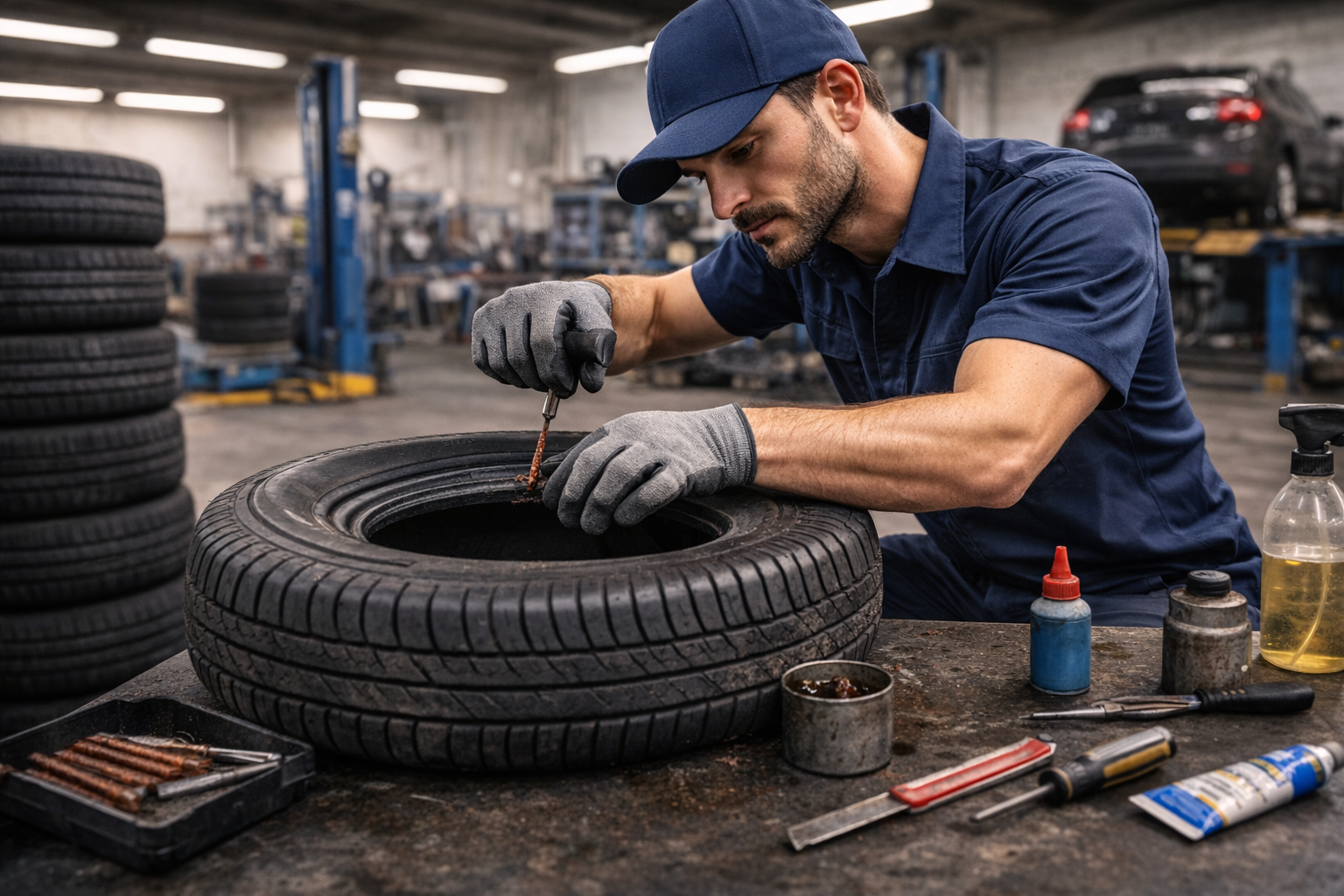
However, even after a high-quality repair, the tire will no longer have its original strength. Therefore, masters usually recommend using a restored tire only with speed and load restrictions.
What to do if a hernia has already appeared
If you find a bulge on the tire, it is best not to delay solving the problem. The best option is to contact a tire shop as soon as possible for diagnostics.
Sometimes drivers try to temporarily install a tube in a tubeless tire. This method is permissible only as a temporary measure to carefully get to the service. It is not suitable for permanent operation.
Attempts to glue the hernia from the outside with sealants or glue also do not solve the problem - the damage to the frame remains.
The main safety rule
A hernia on a tire is not just a cosmetic defect. This is a sign of serious damage to the internal structure of the wheel.
Therefore, at the first signs of a problem, it is better not to risk it. Timely diagnostics and replacement of a damaged tire will help to avoid more serious consequences and maintain safety on the road.
Read more materials:
- 5 places in the car that need to be lubricated regularly
- Drain or vacuum: which oil change method is better for the engine
- Why automakers choose a timing belt or chain
Комментарии