The OAF 745 truck is a vehicle so rare that in archival photos from the 1950s, these road trains are often mistaken for Lend-Lease or trophy machines. However, such assumptions are not true. By that time, the Lend-Lease program had already been fully completed, and the equipment had been returned to the United States.
At the same time, trophy specimens did indeed exist: individual OAF trucks brought from Austria were used in the USSR in the 1950s and 1960s. But the deliveries of the OAF 745 model were of a different nature — they were carried out officially and on a contractual basis.
How Austrian Trucks Ended Up in the USSR
The Österreichische Automobilfabrik (OAF) plant, known in the post-war years, was for some time under the control of the Allies — the United States and Great Britain. In 1955, the company was transferred to the Austrian government with the obligation to make a large delivery of OAF 745 trucks to the Soviet Union. These deliveries continued until 1969, when the plant became part of the MAN concern.
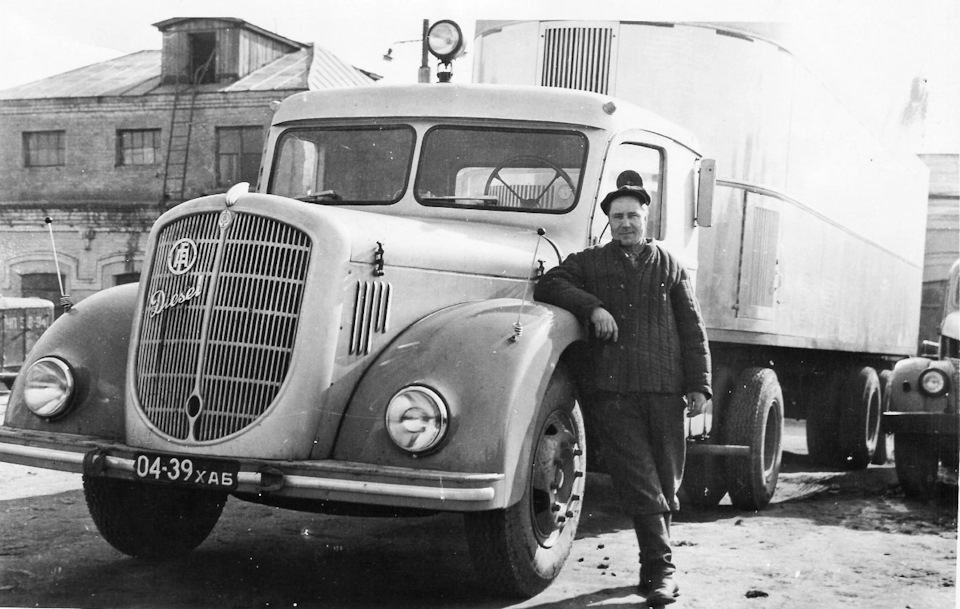
In total, about 1200 vehicles were delivered to the USSR in 14 years. The volume was relatively small, but almost the entire fleet was operated for a long time — until the mid-1970s. The main area of application was urban infrastructure: the vehicles were used primarily for servicing large settlements. The most common version was the OAF 745G semi-trailer truck with a refrigerated semi-trailer.
Design and Features of the OAF 745G
These trucks were among the heaviest in their class. Their development was carried out in the 1940s, which was reflected in both the appearance and a number of technical solutions. Visually, the car stood out with its massive hood, wide fenders, and significant track.
An interesting detail was the absence of the usual turn signals. Instead of lights, folding mechanical flags with reflective fabric were used. This solution was dictated by the requirements of camouflage in the dark. However, Soviet mechanics quickly adapted the design, replacing the flags with standard light indicators.
In fact, the plant mainly produced one basic version of the truck, with only some of the vehicles being shortened and converted into semi-trailer trucks.
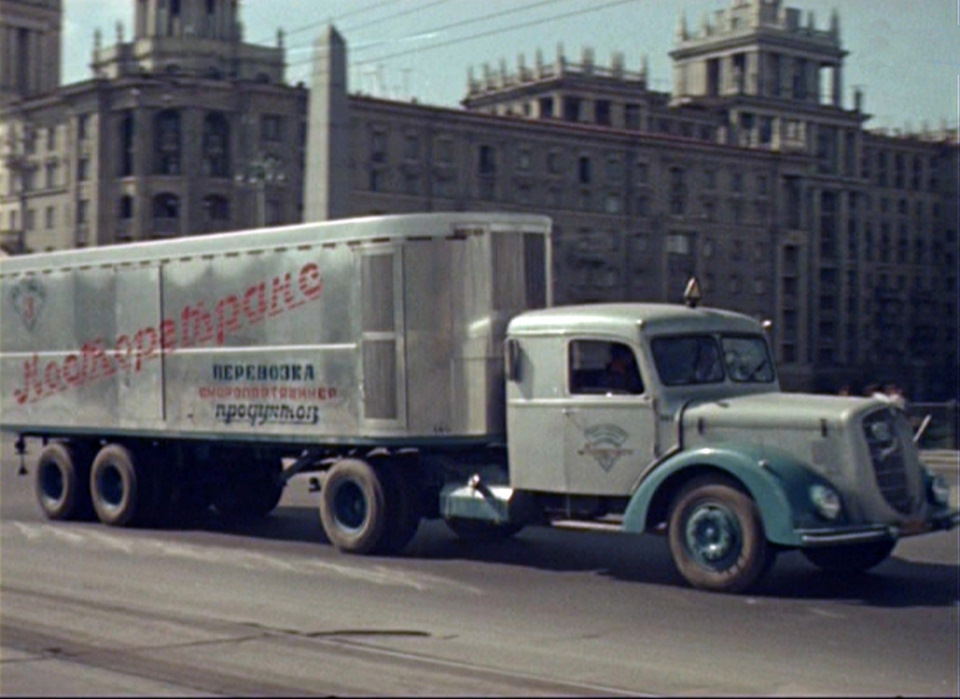
Key features of the OAF 745G include:
- reliable suspension capable of withstanding hundreds of thousands of kilometers of mileage on asphalt without major repairs
- durable construction designed for intensive use
- relatively high level of comfort for its time
At the same time, there were certain difficulties — for example, problems with the supply of tires, which often had to be purchased in Poland.
Operation and Working Conditions
One of the notable differences between the Austrian truck and Soviet counterparts was the cab. It provided more comfortable conditions: effective heating, a relatively soft sofa seat, and a sleeping place for the second driver. This was especially important since the vehicles often operated almost non-stop.
Drivers often spent a significant amount of time in the cab: resting between trips or waiting for loading and unloading on site. Despite this, the conditions cannot be called completely comfortable. The absence of power steering and a stiff suspension made them sweat.
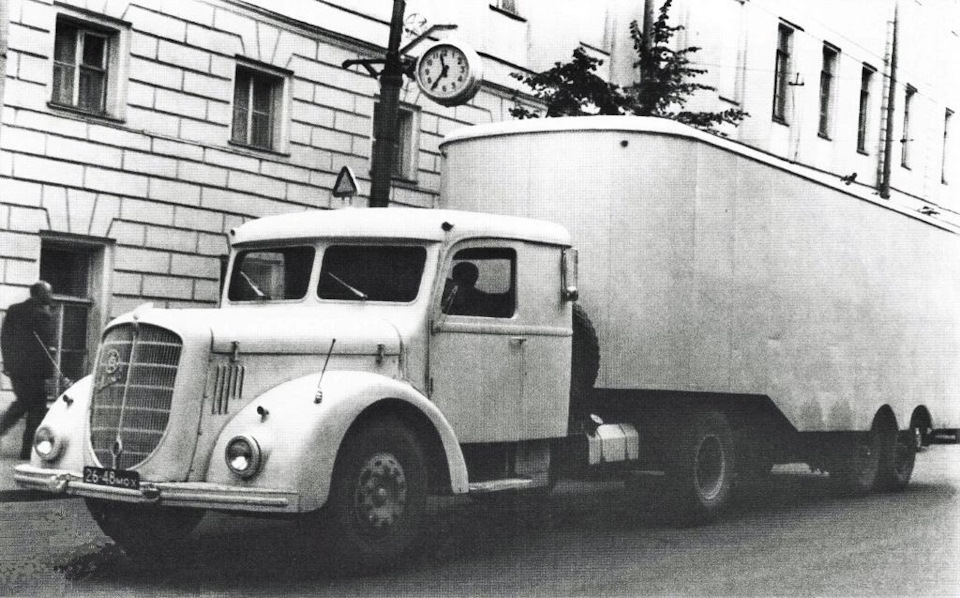
Nevertheless, compared to Soviet trucks such as the ZIS-150, the OAF 745G was perceived as more convenient and modern. Although it had a drawback — the massive hood noticeably limited visibility in front of the car.
Engine and Maintainability
The Austrian engine earned a good reputation for its reliability and unpretentiousness. However, its maintenance required a careful approach and certain qualifications. That is why experienced drivers most often worked behind the wheel of such machines.
The situation with repairs was more complicated. It was possible to restore the engine qualitatively mainly in factory conditions. Even with spare parts available, after a major overhaul, the unit's resource often turned out to be significantly lower than expected.
Why the Vehicles Disappeared
Despite the high resource and operational qualities, the OAF 745G was gradually decommissioned. The main reason was the dependence on imported components: spare parts had to be purchased for currency, which complicated the maintenance of the fleet.
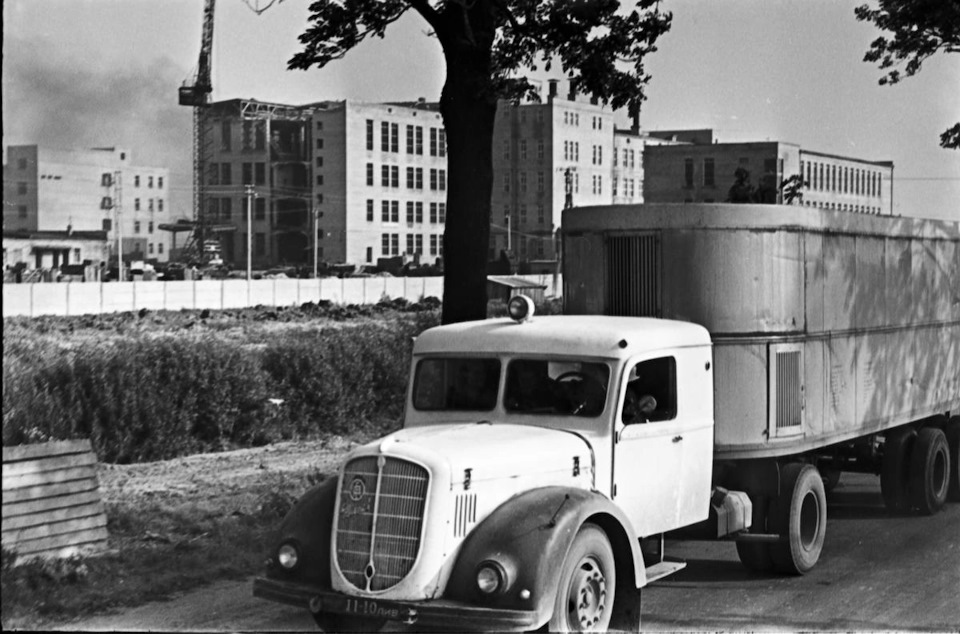
As a result, the trucks were replaced with more affordable and unified solutions — first with Czechoslovak Tatra, and then with domestic KamAZ trucks.
The story of the OAF 745 is an example of how foreign technology organically fit into the Soviet system, despite limited supplies. These machines were distinguished by reliability, thoughtful design, and a higher level of comfort compared to domestic counterparts.
At the same time, their fate was largely determined not only by technical characteristics but also by economic factors. Dependence on imported spare parts and the complexity of maintenance ultimately led to the fact that even successful and hardy trucks gave way to more affordable alternatives.
Read more materials:
- Scooter for every day: how not to make a mistake
- Car from Belarus: is it possible to drive in the Russian Federation
- Forgotten models of extinct car brands