After undergoing scheduled maintenance, a car usually returns to its owner fully ready for operation. The bill for the work has been paid, everything looks normal on the outside, and the driver heads home. However, if you open the hood or carefully inspect some of the car's components, you might notice an interesting detail.
A characteristic blue grease is often visible on the battery terminals, and a white compound on the door hinges or limiters. Owners are rarely told about such procedures separately. Meanwhile, this is an important part of car maintenance: lubrication protects mechanisms from premature wear and helps extend their service life.
Before moving on to specific examples, it's worth remembering one important rule. There is no universal lubricant that would be suitable for all car parts. Each component operates in its own conditions — with different temperatures, loads, and materials. Therefore, a specific type of lubricant is used for each part. An incorrectly chosen lubricant can not only be useless but also accelerate the wear of components.
1. Door Hinges, Locks, and Limiters
The door limiter is a mechanism that fixes the door in the open position. It is activated every time the driver or passengers open the car door.
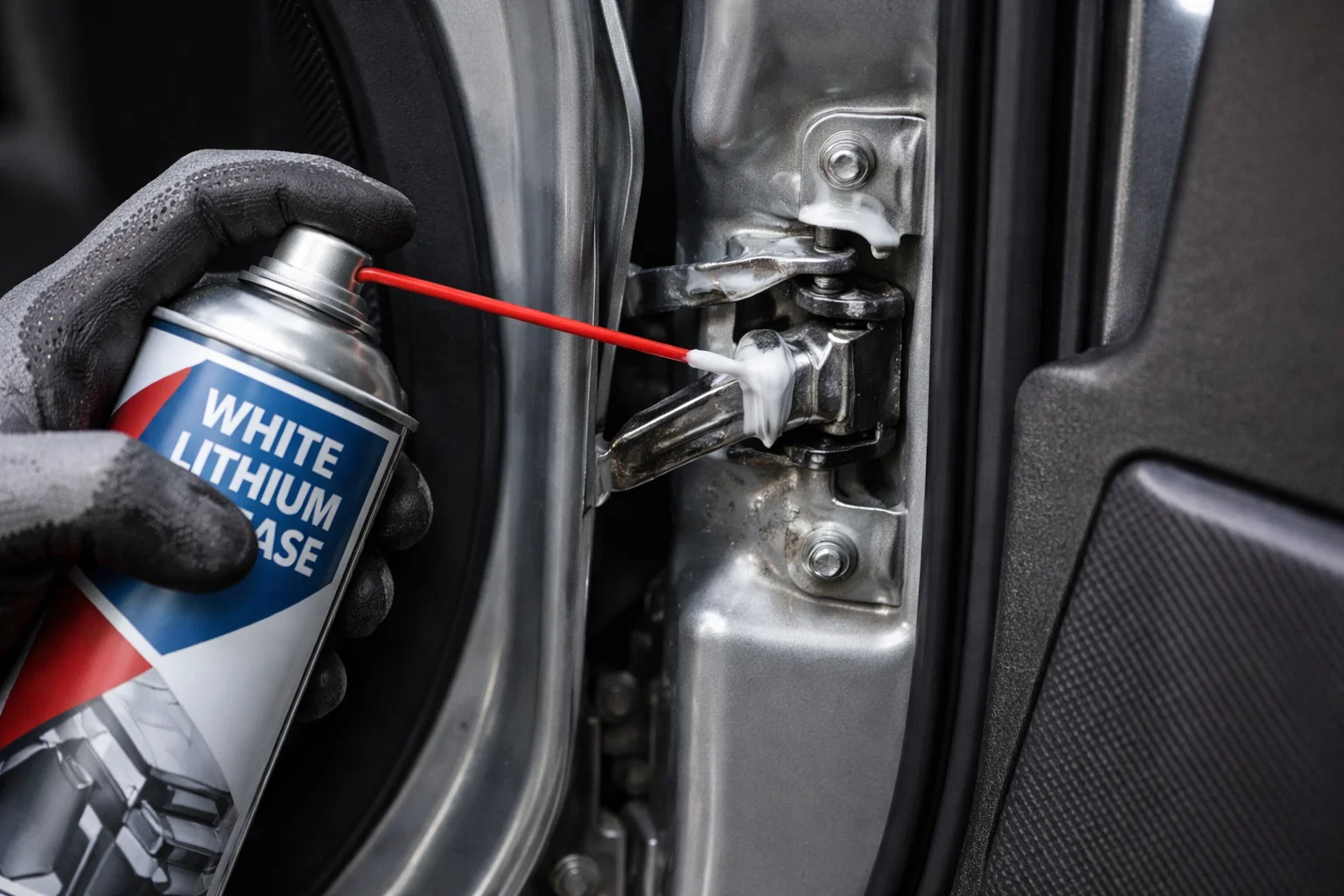
Over time, in the absence of lubrication, the sound of the mechanism changes first: squeaks or characteristic clicks appear. Then the door begins to open with effort, and later the limiter may stop holding it in the desired position. This means that the parts have begun to wear actively.
Hinges also need regular lubrication. If this is not done, play appears in the mechanism. Gradually, this leads to sagging of the door, after which it may be necessary to adjust it or even replace the hinges.
A special lubricant for locks and hinges or lithium grease is usually used to treat these elements — exactly the white compound that is often used during dealer maintenance.
2. Rubber Seals
Seals are located around the perimeter of doors, hood, trunk, and fuel tank hatch. In summer, the rubber remains soft and elastic, but in winter, without additional treatment, it can lose its properties.
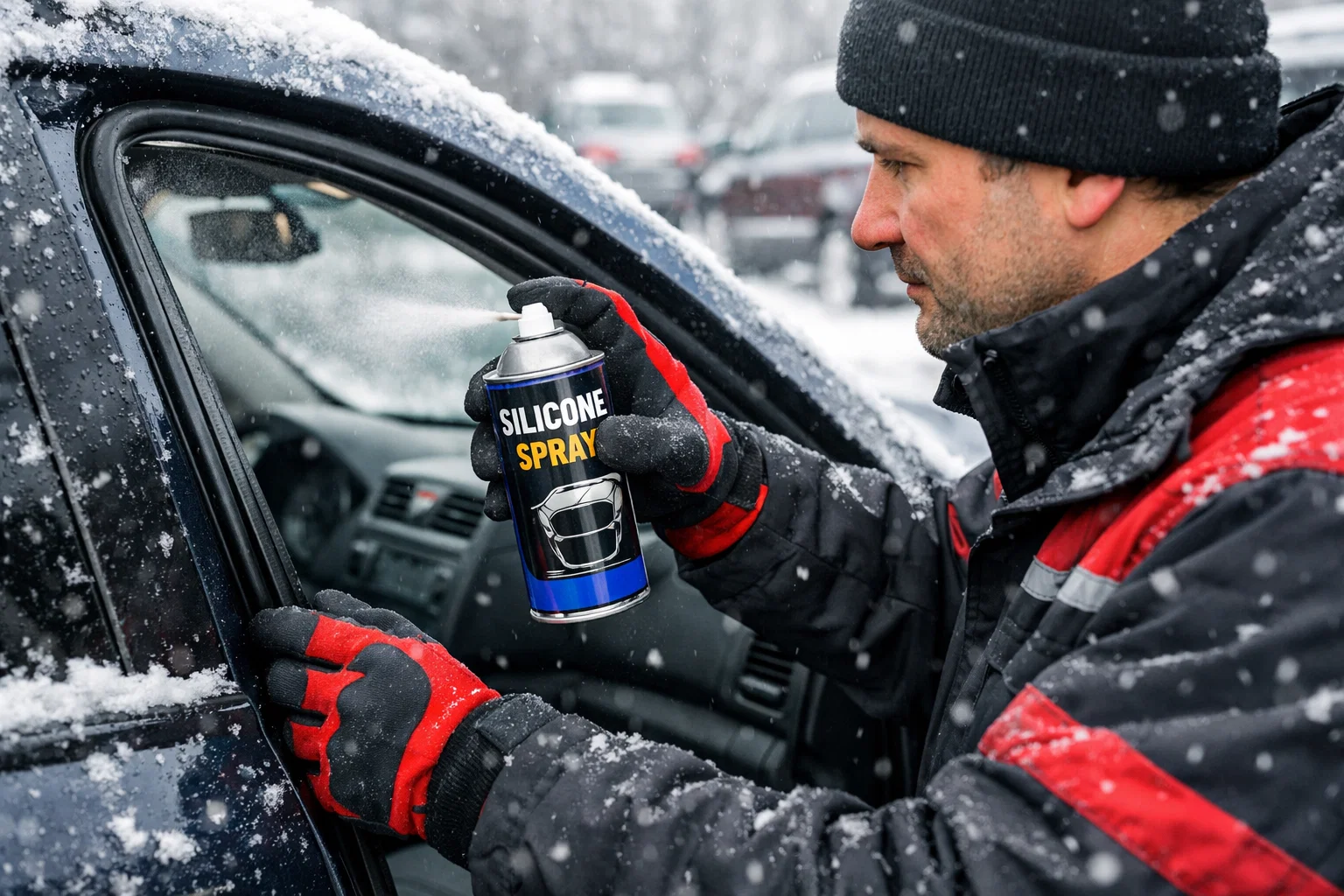
Under the influence of cold, the material gradually hardens, and cracks appear in places of constant bending. A damaged seal leads to drafts in the cabin, increased noise levels while driving, and moisture entering the car during washing or rain.
Silicone grease is used to treat such parts. It is available as an aerosol or an applicator with a sponge. The second option is more convenient because it allows you to apply the product directly to the rubber surface.
It is recommended to treat the seals twice a year — before the start of the winter season and after its end.
3. Battery Terminals
Blue grease on the battery terminals is a common sight in service centers. It performs an important protective function.
Over time, the battery contacts oxidize. This process is especially active in winter, when moisture and road chemicals get under the hood. Oxidation impairs electrical contact. As a result, there may be problems starting the engine, voltage drops in the system, and even failure to start the car in the cold.
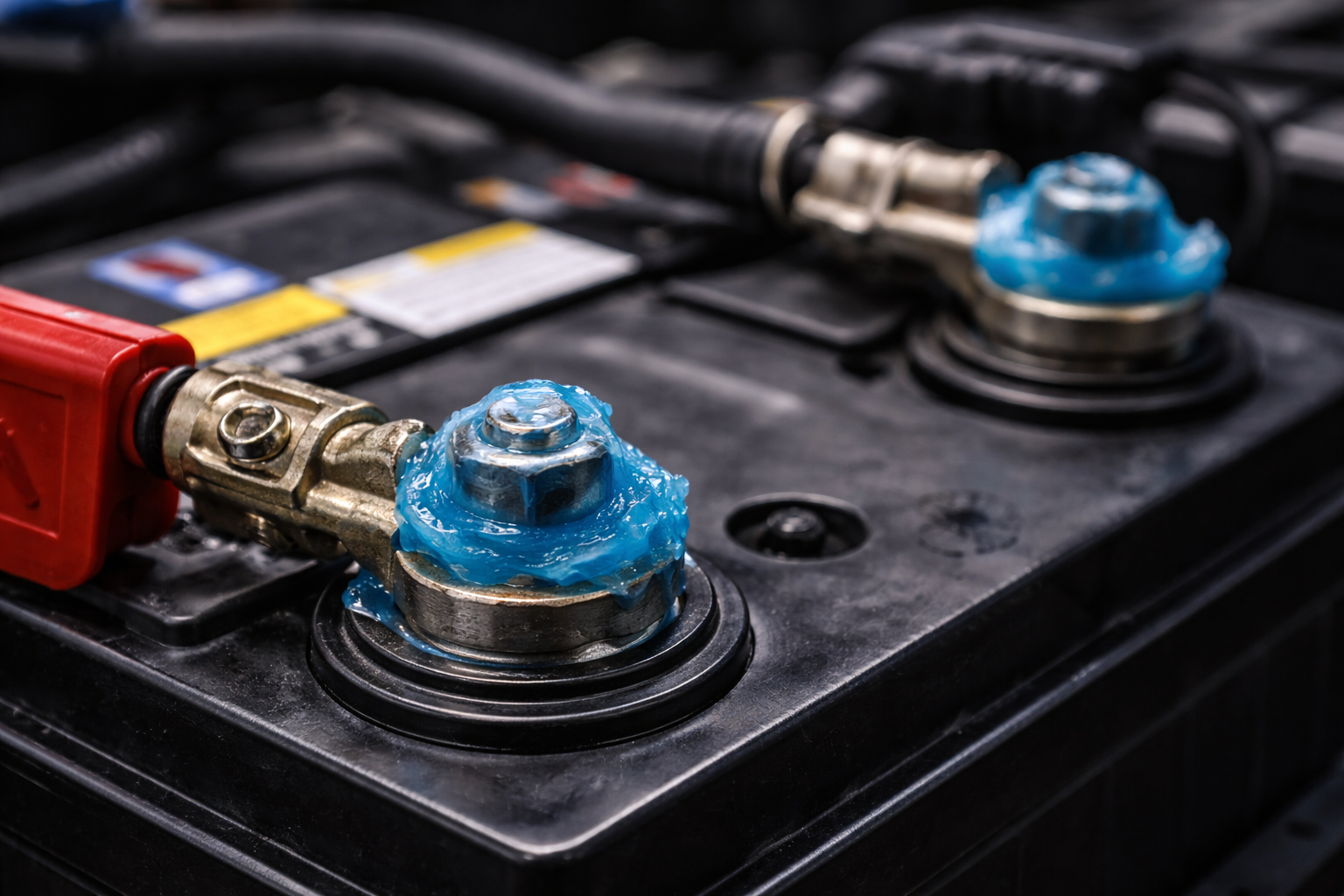
Terminal grease prevents corrosion, oxidation, and sulfation of contacts. Compositions from different manufacturers usually have similar properties, so the deciding factor is the regularity of treatment.
4. Hub Surface Under the Brake Disc
When replacing brake discs on cars with high mileage, a problem often arises: the disc literally "sticks" to the hub. Removing it without additional tools can be extremely difficult.
This problem can be avoided if you apply copper grease to the hub surface before installation. It prevents metal from sticking and greatly facilitates disassembly during the next brake system service.
Copper grease is used because it withstands a wide temperature range — approximately from −40 to +1100 °C. Brake discs get very hot during operation, so ordinary lubricants quickly break down under these conditions.
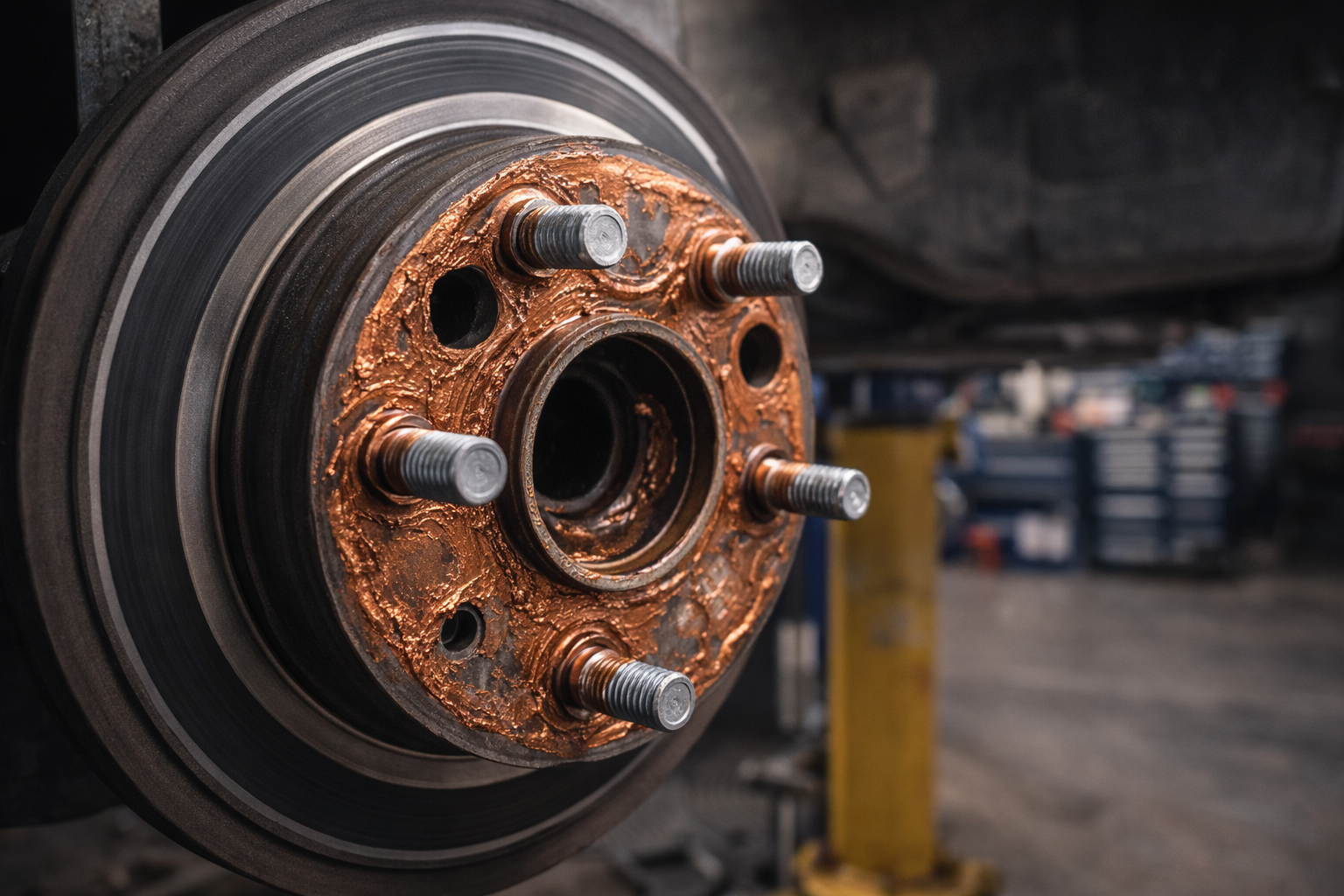
The composition should be applied only to the outer surface of the hub and to the non-working part of the brake disc that is in contact with the wheel disc. The grease should not get on the working surface of the brakes.
5. Caliper Guides and Brake Cylinders
The caliper guide pins ensure the movement of the brake caliper when the brake pedal is pressed. If these elements seize, the caliper stops moving freely.
As a result, one pad begins to constantly press against the disc, and the second works insufficiently effectively. This leads to uneven pad wear and overheating of the brake disc.
A similar problem can occur with the pistons of the brake cylinders. Without lubrication, they can coke up and not return to their original position after braking. The driver may notice that the car begins to brake slightly on its own or pull to the side.
These elements are serviced with every brake pad replacement. A special lubricant for brake mechanisms is used — usually white, blue, or transparent, depending on the manufacturer. It is applied to the guide pins, pistons, and the back of the pads where they contact the caliper.
All these operations can be performed independently, and the cost of the necessary materials is usually low. At the same time, regular lubrication helps to avoid wear of parts and costly repairs in the future.
Read more materials:
- The secret of "millionaires": why truck engines live longer
- Why automakers choose a timing belt or chain
- Start-stop: harm or benefit to the engine
Комментарии