The Korean company Hyundai is most often perceived as a manufacturer of reliable, but rather ordinary cars. However, behind this image lies almost half a century of bold concepts, many of which turned out to be much more interesting than production models. Let's take a look at the most notable ones.
Hyundai Pony Coupe
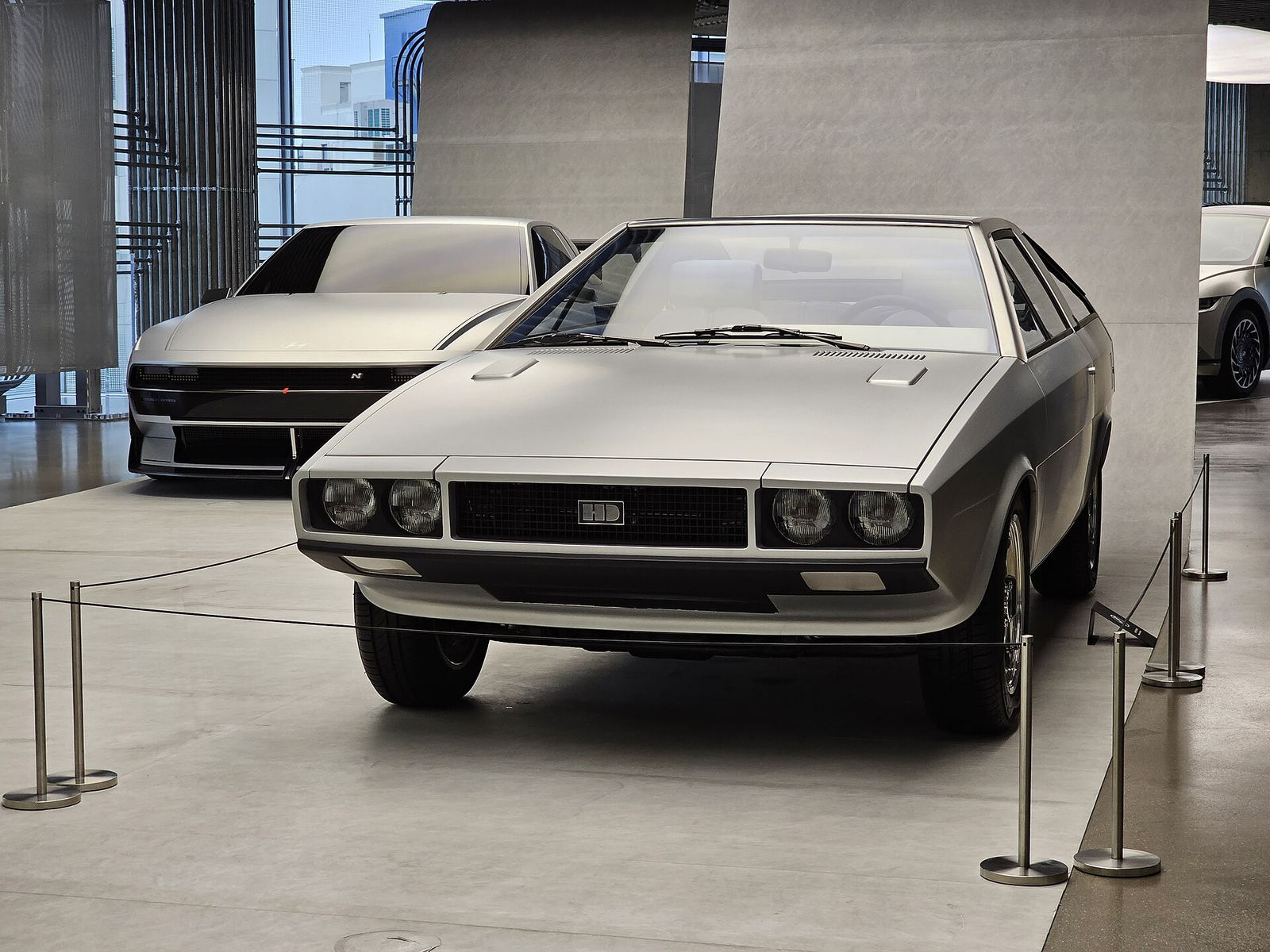
The story began with the simple Pony model — the brand's first production car with rear-wheel drive. But even before its release, an important event occurred: in 1974, the Pony Coupe concept, created with the participation of Giorgetto Giugiaro, was presented at the Turin Motor Show.
By that time, the designer already had a serious reputation. Since 1969, he had been working in his own studio, ItalDesign, and collaborating with brands such as Alfa Romeo, Maserati, and Volkswagen. He was behind the look of the Passat B1 (1973), the first Golf (1974), and the Scirocco (1974).
When Hyundai Motor approached the Italian maestro, the task was broader than just developing the appearance of the basic Pony model. The terms of reference included several body types at once: sedan, hatchback, and two-door coupe.
This approach proved to be forward-thinking, as "Asian design" was viewed with caution in the West in those years.
The production Pony with a two-volume fastback body went into production in 1975. But the coupe remained a concept, despite its expressive appearance. Giugiaro retained the characteristic features of his style:
- wedge-shaped silhouette
- massive central pillar
- pointed front end with recessed headlights
As a result, the car resembled smaller Maserati or Lamborghini models. The image turned out to be bright and distinctive, but probably too bold for the then-Korean manufacturer — the Pony Coupe never went into production.
Hyundai HCD: First Steps Towards Sports Models
For a long time, Hyundai focused on mass-market cars, but in the early 1990s, the Hyundai/Kia design center in California decided to create its own sports concept. This is how the HCD-I appeared, which debuted in 1992 at the Detroit Auto Show.
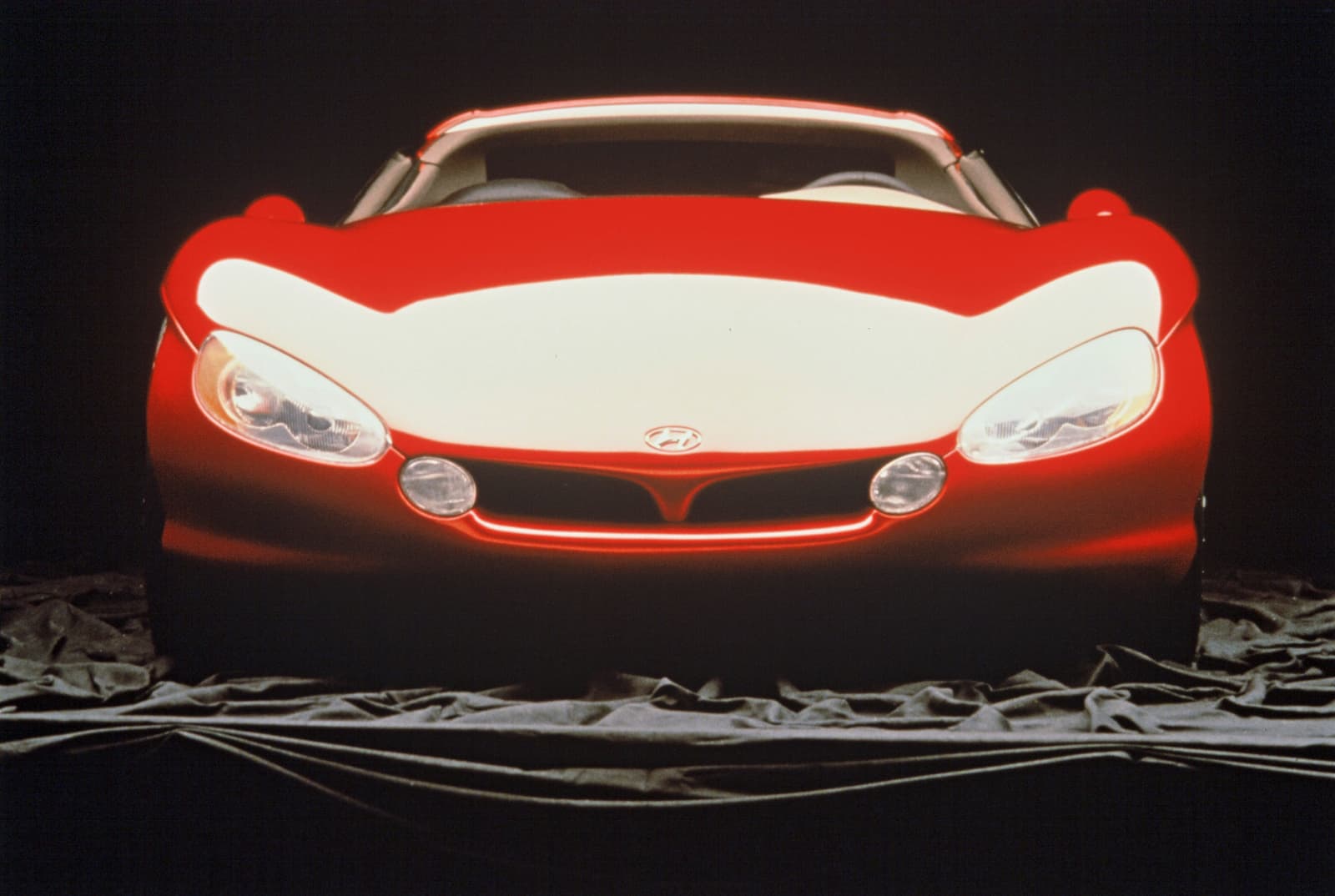
The model received an open low targa-type body and was made in the bio-design style popular at that time. Technically, the car included:
- all-wheel drive
- independent suspension
- 2-liter 16-valve engine with 150 hp
In essence, it was an experiment to create an affordable sports car based on production components. It became the basis for future Tiburon and Coupe models.
The development of the concept continued:
- in 1993, the HCD-II Epoch appeared — a closed coupe with a 2+1 layout, equipped with ABS, traction control, disc brakes, and a built-in telephone
- in 1995, the HCD-III was presented with a 2+2 seating arrangement, adjustable suspension, and an engine boosted to 240 hp
Hyundai NEOS
In 2000, at the Paris Motor Show, Hyundai showed the NEOS concept, developed by the company's Japanese studio. The car featured a radical and aggressive design.
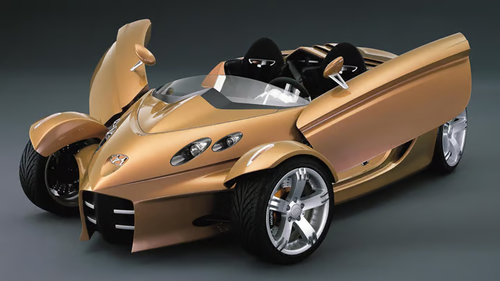
Among the key features:
- open front wheels
- "butterfly wing" type doors
- extremely low body height — only 1026 mm
Under the hood was a 2-liter engine with 250 hp, working in tandem with a 6-speed sequential gearbox. Thanks to this, the light roadster weighing 950 kg accelerated to 100 km/h in 5.1 seconds.
Hyundai Portico
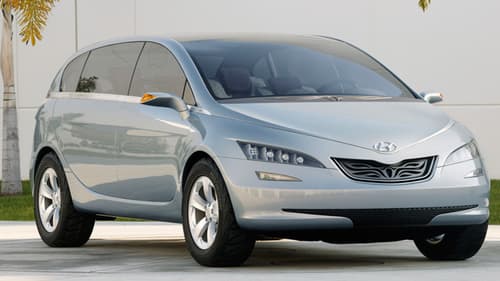
In 2005, at the Chicago Auto Show, the Portico concept was presented, focused on family use. It combined the features of a minivan and a crossover and was designed for six passengers.
The main design feature was the doors:
- no central pillar
- the doors open towards each other
The power plant included a hybrid system:
- V6 Lambda series
- Shiftronic automatic transmission
- Two electric motors
- Total power — 220 hp
The project looked promising, and there were plans for its serial implementation, but it never made it to production.
Hyundai Qamaq
In 2007, Hyundai, together with GE Plastics, presented the Qamaq concept, focusing on new materials. The main feature was the widespread use of composites.
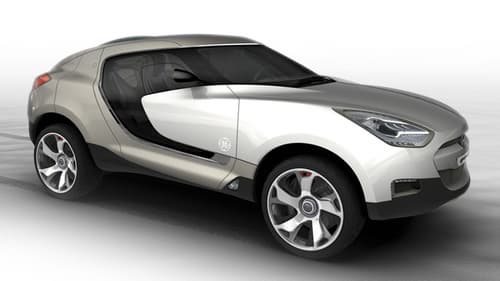
Key solutions:
- the front of the body is made of energy-absorbing plastics
- part of the glazing is made of Lexan polycarbonate
At the same time, the technical base remained quite traditional — the car was built on the Hyundai Tucson platform.
None of these concepts received a serial continuation. Nevertheless, their significance is difficult to overestimate. They played an important role in transforming the perception of the brand and demonstrated that Hyundai is capable not only of producing mass-produced cars, but also of creating modern, technological and bold projects.
Read more materials:
- Unexpected brands: cars from Africa
- Soviet tractor with a difficult character: KAZ "Colchis"
- VC-Turbo: victory over ICE limitations