Automakers have started using humanoid robots for operations currently performed by humans. BMW is testing Figure robots at its South Carolina plant: they transfer parts from containers to trolleys. But BMW itself admits that for now, such machines work slower than humans.
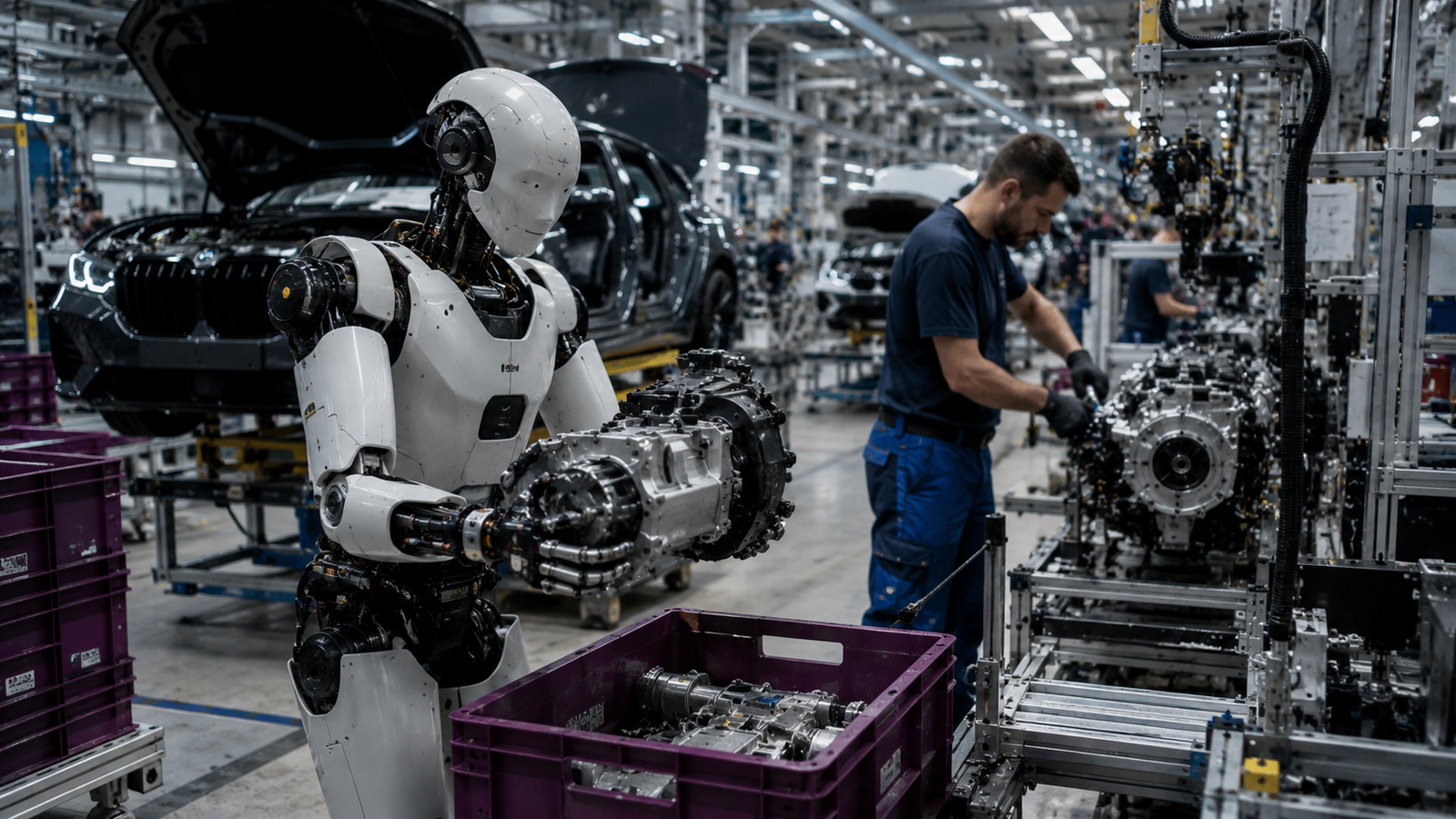
Mercedes is testing Apptronik humanoids for sorting and moving components. Hyundai plans to use Boston Dynamics robots to deliver parts directly to workstations, while Tesla is developing its own Optimus and sees it as a universal factory assistant.
However, a technical question arises: does a robot necessarily have to resemble a human? Car factories are already highly automated, so for a simple repetitive operation, a specialized manipulator can often be cheaper and faster than a bipedal machine. GM, for example, is experimenting with robots that have arms and grippers but no legs.
The main advantage of humanoids lies elsewhere. They are designed to work in an environment created for humans and can potentially perform several different tasks at once without reconfiguring the entire production line.
For now, this is more a testing phase than a revolution. Manufacturers are checking how capable robots are of working for hours, interacting safely with people, and justifying their high cost. In China, the price of modern humanoids can currently range from 300,000 to 500,000 yuan (3.7-6.2 million rubles), which also remains a serious barrier to mass adoption.
Read more materials:
- China announced the largest car recall: Tesla recalls almost 3 million cars due to door handles
- BMW released only 40 anniversary M3s — and all of them went to China
- Volkswagen's profit targets called "fantasy": trade union demands strategy review