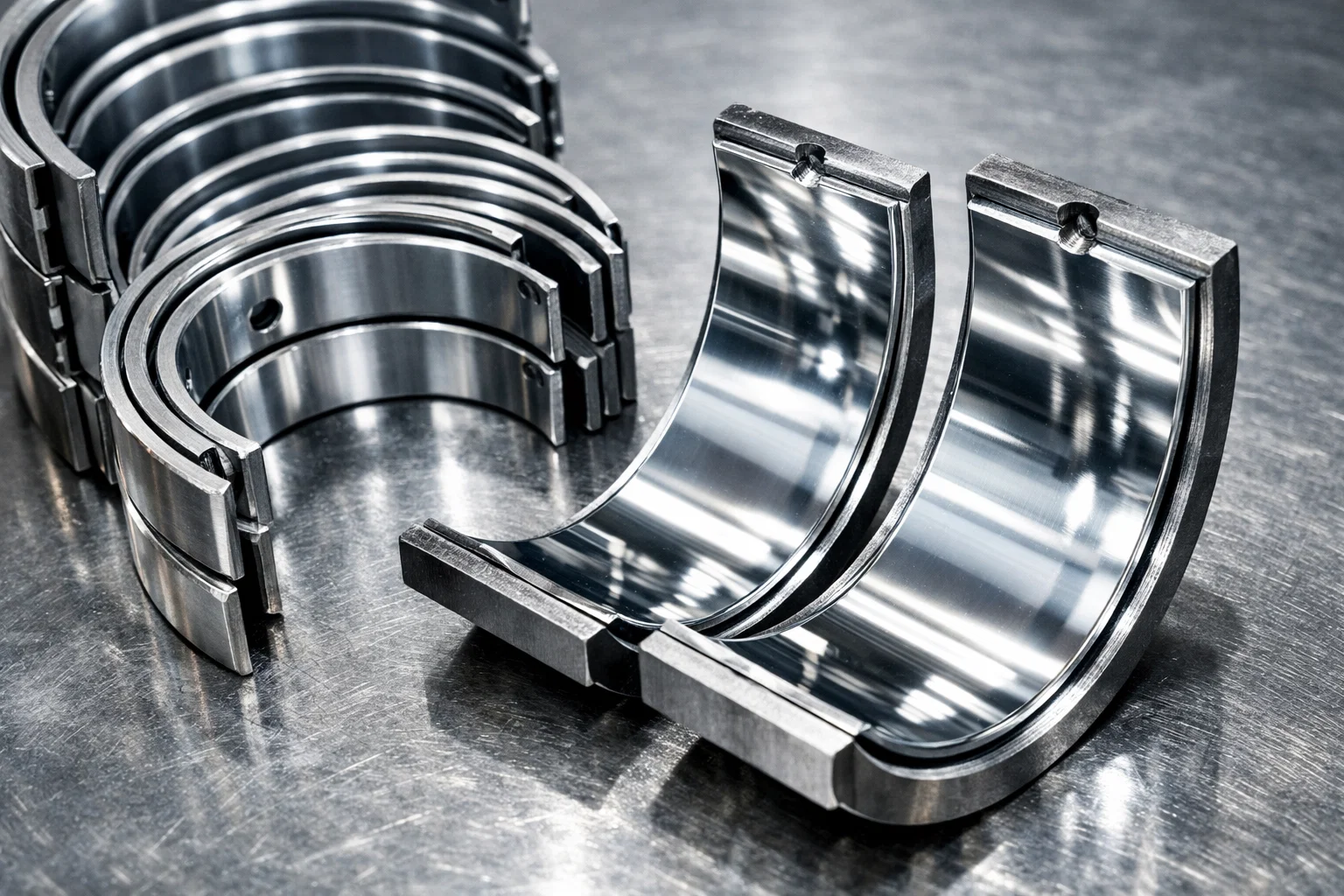
Inside any internal combustion engine, there are parts without which its normal operation would be impossible, although they look extremely simple. These elements include bearings - in technical terminology, "plain bearings." These are thin, perfectly polished half-rings (less often, solid rings) made of a soft alloy, the main task of which is to ensure smooth rotation of the shafts without direct mechanical contact between metal and metal.
Connecting rod bearings, in particular, are responsible for the "non-contact" interaction of the connecting rods and the crankshaft - a component that experiences one of the highest loads in the entire engine.
How Bearings Work
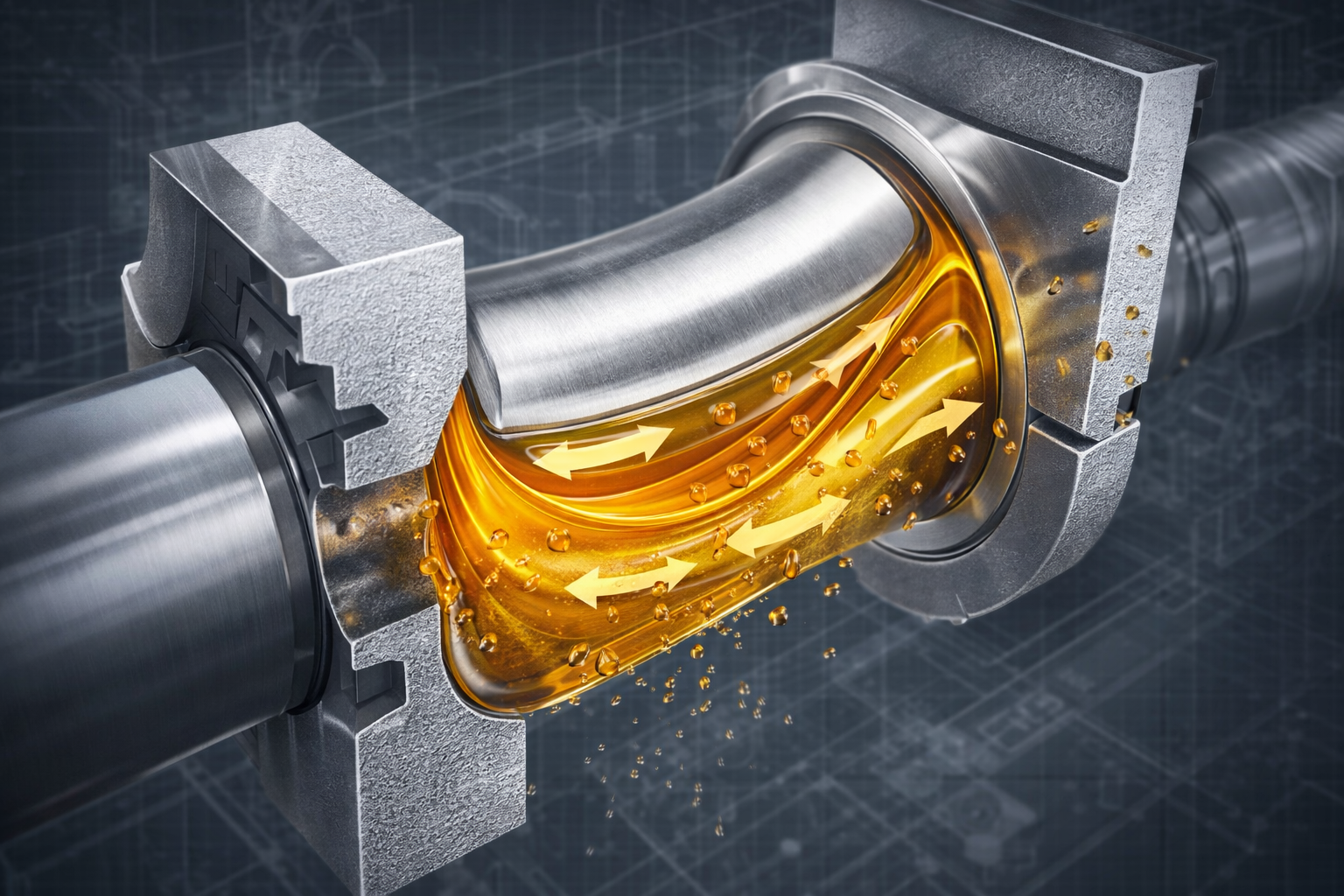
Already in the first seconds after starting the engine, an oil cushion is formed between the surface of the bearing and the journal, which is often called an oil wedge. It is in this thinnest layer of oil that the movement of parts relative to each other occurs. There is no physical contact between the metals - the shaft literally "floats" in the oil.
Thanks to this, several tasks are solved at once:
- friction is sharply reduced;
- local heating is reduced;
- surface wear is extended to hundreds of thousands of kilometers.
To ensure that these conditions are maintained for as long as possible, the bearings are made multi-layered. They are based on a steel strip, which provides strength and rigidity. A layer of copper or aluminum alloy is applied on top, and then a soft anti-friction coating. This design combines endurance, good break-in ability, and the ability to stably hold an oil film.
Why Engines Need Bearings
To put it simply - for the survival of the entire crank mechanism and related components. Plain bearings are used not only on the crankshaft, but also on camshafts, balance shafts, and other rotating engine elements. Their functions can be reduced to several key points:
- minimizing mechanical friction due to the oil wedge;
- partial damping of shock and variable loads due to the oil layer;
- holding the shafts in a given axial position and preventing distortions;
- protecting more expensive parts (cylinder block, crankshaft) in emergency modes.
The last point is especially important. In the event of a short-term drop in oil pressure, the bearings take the hit. They wear out or break down first, but often save the cylinder block from serious damage. And replacing a set of bearings is incomparably cheaper than performing a full-fledged engine overhaul.
What Types of Bearings Are There
There are not so many types of bearings, but each of them performs a strictly defined task:
- Main crankshaft bearings - fix the crankshaft in the cylinder block and ensure its smooth rotation.
- Connecting rod bearings - operate in the area of connection between the crankshaft and connecting rods, where the loads are maximum.
- Camshaft bearings - similar to main bearings, but designed for the camshaft in the cylinder head.
- Bearings of other shafts and axles - balance shafts, oil pump drives, etc. Often have a ring-shaped, rather than a half-ring shape.
For engine repairs, repair bearings of increased thickness are produced. They are used after grinding or milling the crankshaft journals and compensate for the increased clearance due to wear.
Separately, there are thrust bearings-half rings, which limit the axial movement of the shafts. They do not form an oil wedge in the classical sense, so they remain outside the scope of this topic.
Where Are the Bearings Located
In the crank mechanism, the bearings are located:
- between the main journals of the crankshaft and the beds of the cylinder block with covers;
- between the connecting rod journals and the connecting rods with their covers.
Simply put, the bearings "hug" the crankshaft at the most loaded points, forming a working oil clearance. Its value usually lies in the range of approximately 0.1-0.3 mm. A similar scheme is used for camshafts, balance shafts, and other internal engine axles.
Why Bearings Spin
Bearing spin is a situation when the bearing comes off its seat and begins to rotate with the shaft. At this moment, the normal oil supply is disrupted: the oil wedge disappears or becomes critically thin. Dry friction begins, and wear accelerates sharply - both in the bearing and in the shaft itself.
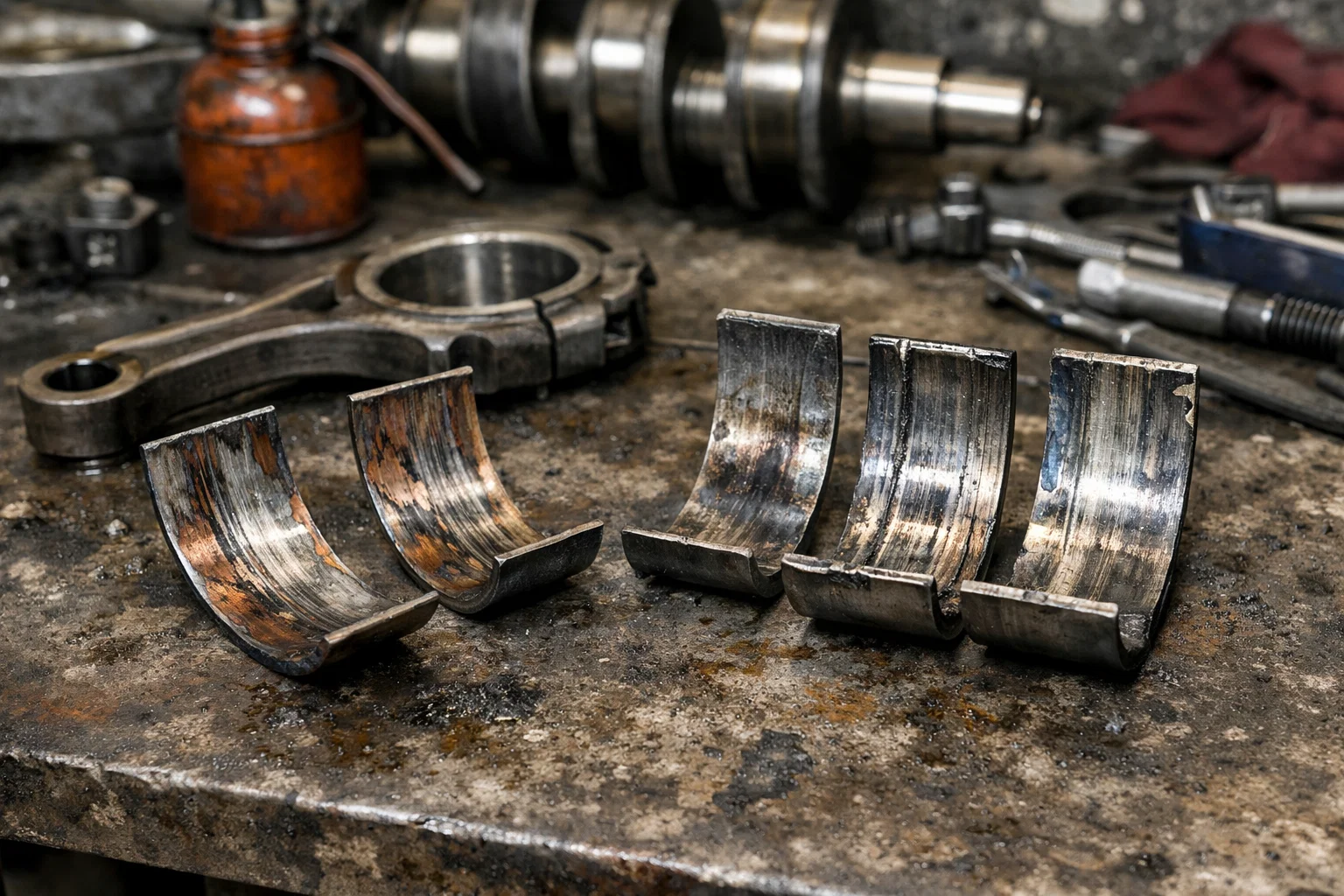
If we do not take into account natural wear and tear at huge mileages, in most cases the cause of the spin is related to operating conditions or maintenance. The most typical factors:
- unsuitable viscosity or low quality of engine oil;
- critical drop in oil level and air suction by the oil pump;
- engine overheating, in which the oil loses its properties;
- wear or ellipticity of the crankshaft journals;
- clogged oil channels or oil intake, problems with the pump;
- incorrect tightening of the main or connecting rod covers;
- aggressive tuning with an increase in loads above the calculated ones.
Signs of Spun Bearings
The problem can only be accurately confirmed after disassembling the engine, but there are a number of characteristic symptoms:
- short-term metallic knock during cold start;
- constant dull "diesel" sound even on a warmed-up engine, often described as a knock "from below" the engine;
- drop in oil pressure and illumination of the emergency lamp;
- presence of metal shavings in the oil pan;
- engine seizure - the most severe outcome.
Driving with a knock from under the hood almost guaranteed ends in engine seizure and overhaul.
What to Do If the Bearings Have Spun
There is only one solution here: immediately stop operation and do not start the engine until repaired. If the problem was caught at an early stage, sometimes you can limit yourself to replacing the bearings. But in practice, a complex of works is more often required:
- grinding or milling the crankshaft to the repair size;
- installation of repair bearings of the required thickness;
- flushing of oil channels and cleaning of the oil intake;
- checking the geometry of the crankshaft and connecting rods.
If the engine has been running for a long time with spun bearings - for hours or days - restoration may not be economically feasible. In such cases, it is often easier to install a used engine.
Read more materials on the topic:
- Engine Made of Plastic: Madness That Became History
- Frozen Injectors: What to Do and How to Avoid It in the Future
- Hydraulic Unit and Mechatronic: What Is the Real Difference