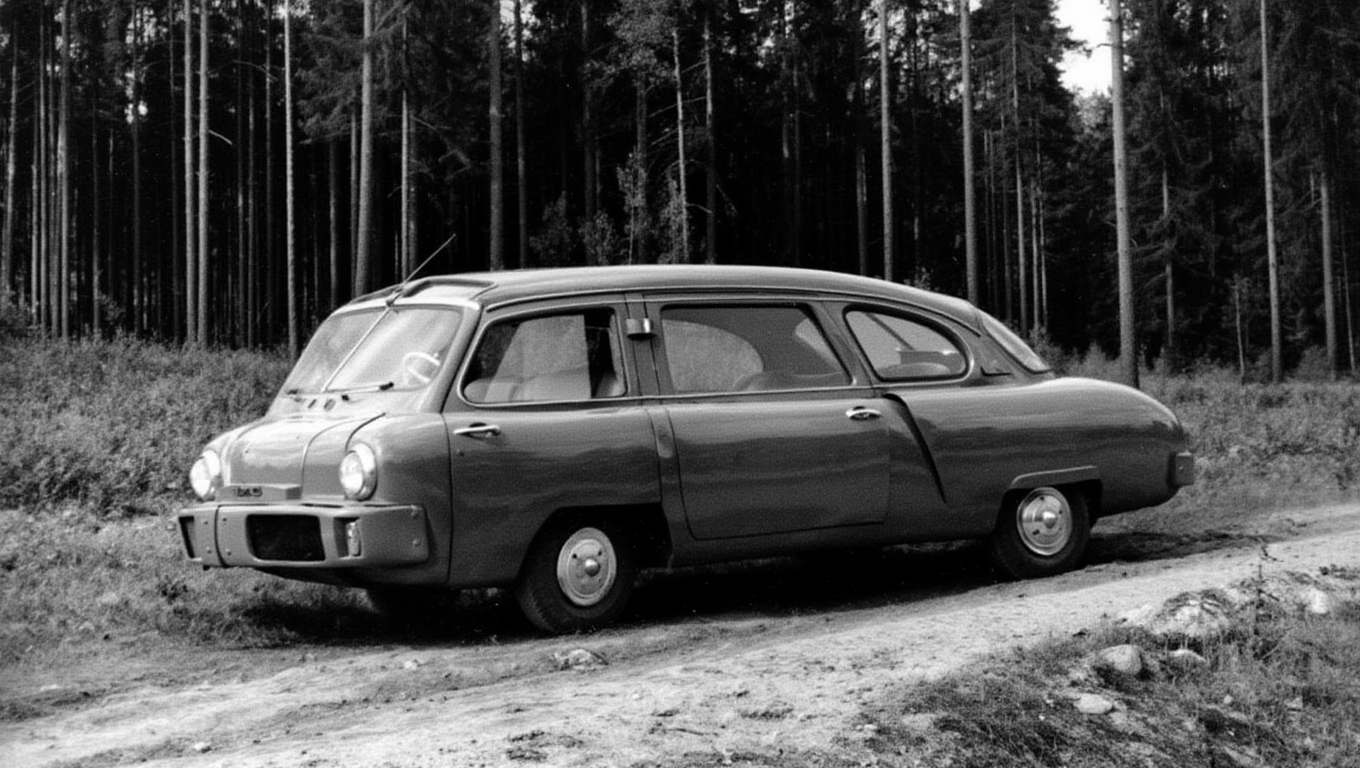
The experimental car NAMI-013 was developed in the late 1940s at the Scientific Automotive Institute in Moscow. The project became one of the boldest attempts to create a compact, economical, and mass-produced new generation car for the USSR. The car received an advanced layout and unconventional design but never reached mass production.
How the NAMI-013 Project Appeared
Work on the NAMI-013 began in 1948. The engineers were tasked with creating an affordable car for a wide audience — compact, lightweight, and inexpensive to operate.
The development was led by a team under the direction of Yuri Dolmatovsky. Specialists studied foreign experience, including small car models from Europe, and simultaneously sought their own technical solutions. As a result, a project emerged that sharply differed from the usual Soviet cars.
Unusual Design and Layout
The main feature of the NAMI-013 was the rear-engine layout. The engine was placed in the rear, which freed up space in the cabin and allowed the body to be made as compact as possible.
The car received a monocoque body, rounded shapes, and a streamlined silhouette. Outwardly, the car resembled futuristic concepts that would appear in the West only a few years later.
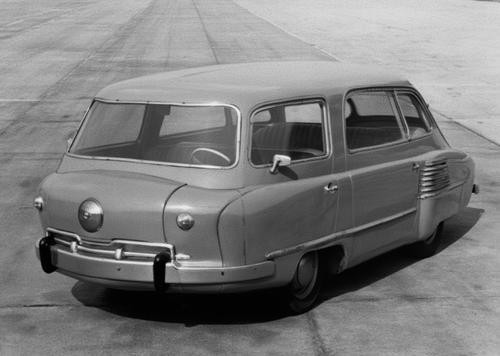
The cabin accommodated four seats, and the controls were made as simple as possible. The engineers focused on the average driver without special training.
Prototype Specifications
The NAMI-013 was equipped with a two-cylinder gasoline air-cooled engine with a volume of about 0.6 liters. The power was approximately 18 horsepower.
The maximum speed reached 80 kilometers per hour, and fuel consumption did not exceed 5 liters per 100 kilometers. By the standards of the post-war USSR, these were outstanding indicators.
The small weight and simple design made the car promising for mass production.
Why the Project Did Not Become Serial
Despite successful tests, the NAMI-013 did not receive support at the state level. The industry leadership bet on more conservative models based on foreign licenses.
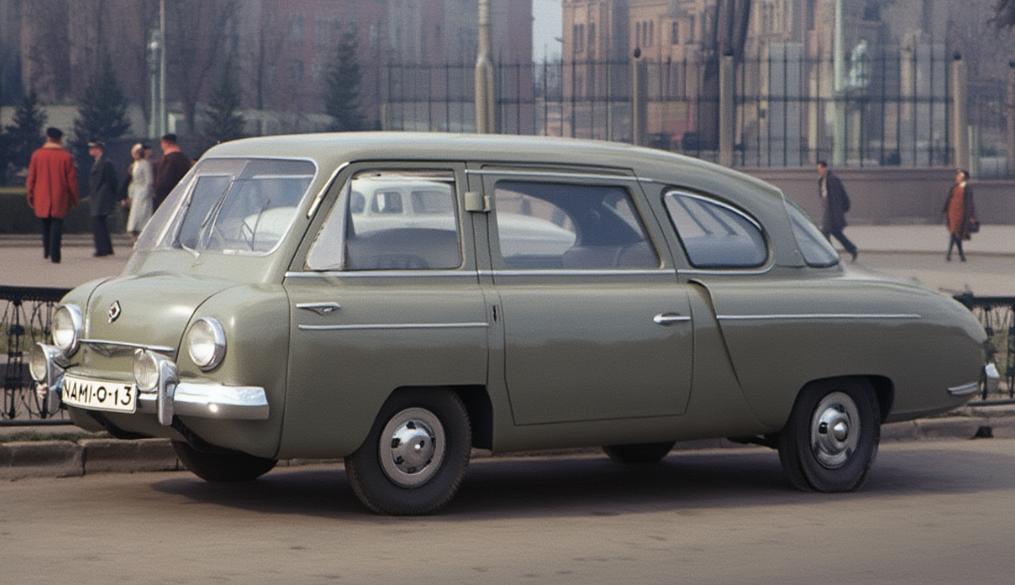
In addition, the factories were not ready to produce such an unusual car. A new production base and retraining of personnel were required. As a result, the project was closed, and the developments remained in the archives.
The Legacy of NAMI-013 Today
Today, the NAMI-013 is considered one of the most underrated projects of the Soviet automotive industry. The ideas of rear-engine layout, compactness, and economy were later implemented in other countries.
The preserved prototypes have become museum exhibits, and interest in the model is growing among collectors and researchers of the history of technology. The NAMI-013 proved that the USSR knew how to create cars of the future back in the mid-20th century.
Read more materials on the topic:
- LuAZ-969: The Strangest and Most Honest SUV of the USSR
- Why a Mass Diesel Engine from VAZ Never Appeared in Russia
- The Engine That Could Have Changed the Soviet Automotive Industry
Комментарии