Every spring, the picture repeats with frightening regularity. Car owners notice rust stains on the sills, swollen paint in the wheel arches, and corrosive streaks emerging from under the seals. The source of the problem has long been known — anti-icing reagents, which roads are generously treated with from November to March. Liquid mixtures based on calcium and magnesium chlorides have high penetrating power: they flow into the smallest cracks, accumulate under plastic covers, and linger in hidden cavities of the body for a long time, waiting for the first warm days. Then chemistry comes into play — the combination of moisture, salt, and oxygen triggers corrosion, which cannot be completely stopped by any anti-corrosion compound.
Against this background, the survivability of Soviet cars looks particularly paradoxical. Cars with primitive body protection, without galvanizing and modern primers, often lived to a ripe old age in quite decent condition. Moskvich and Zhiguli cars from the 1970s are still found on the roads with their original metal. The reason is not in some special "magic" steel. The fact is that the operating conditions themselves were different — primarily the approach to winter road maintenance.
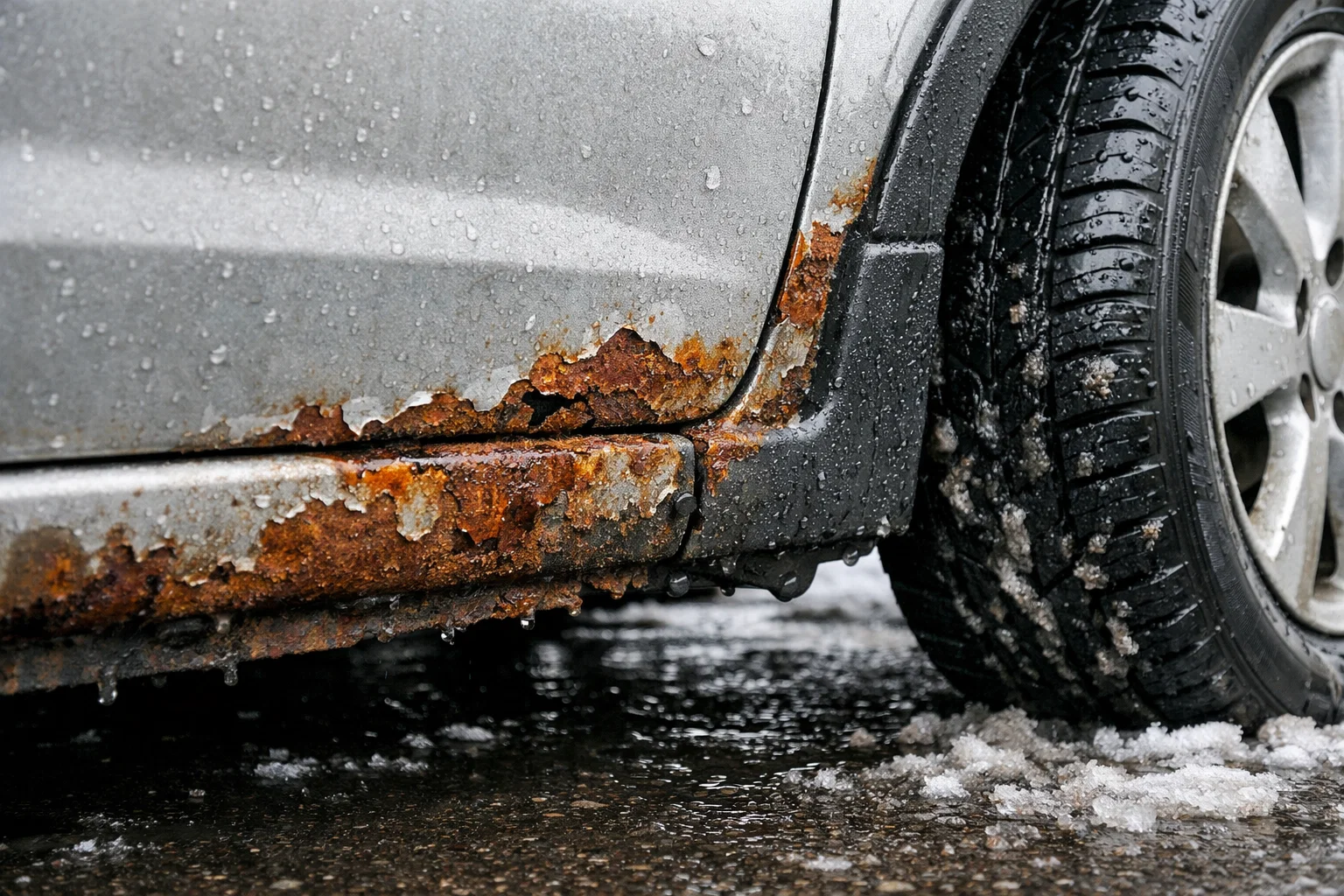
In the Soviet Union, liquid reagents, like those that today corrode even the factory protection of premium foreign cars, were not widely used. Instead of aggressive chemicals, mechanical snow removal and abrasive materials were used: sand, ash, and sand-salt mixtures. This approach was dictated not by concern for car bodies, but by climate and economic realities. However, the side effect was significant — the metal suffered incomparably less.
How the Soviet System Worked
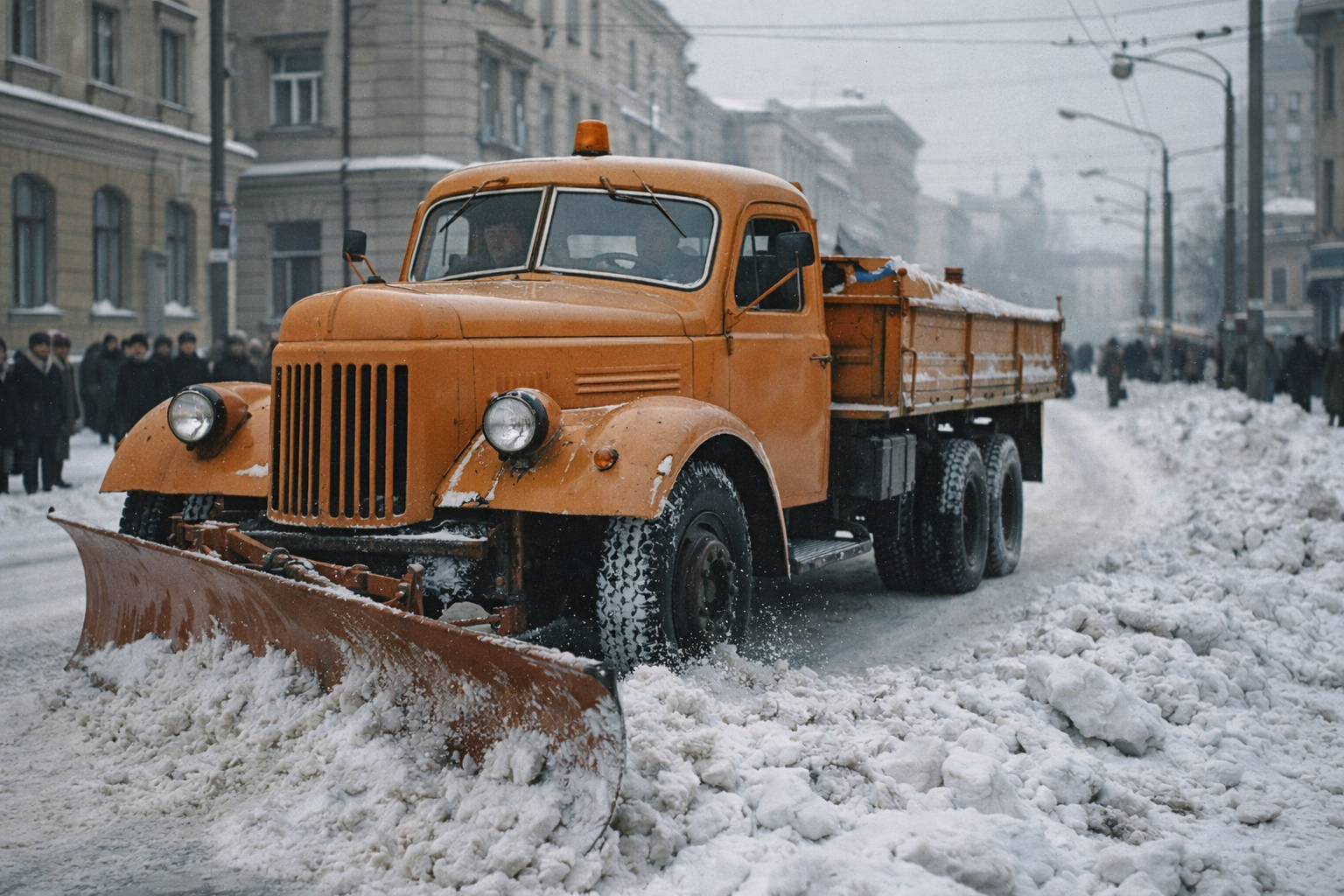
The basis of winter road maintenance was mechanical cleaning. Snow was removed with special equipment, often converted trucks. One of the most common examples is the ZIS-150 with a mounted blade-bucket. This heavy three-ton truck with a sturdy frame confidently worked on city highways, moving snow masses to the side of the road. The design was extremely simple: no electronics, a minimum of complex components, and repairs were carried out directly in the garages of communal services.
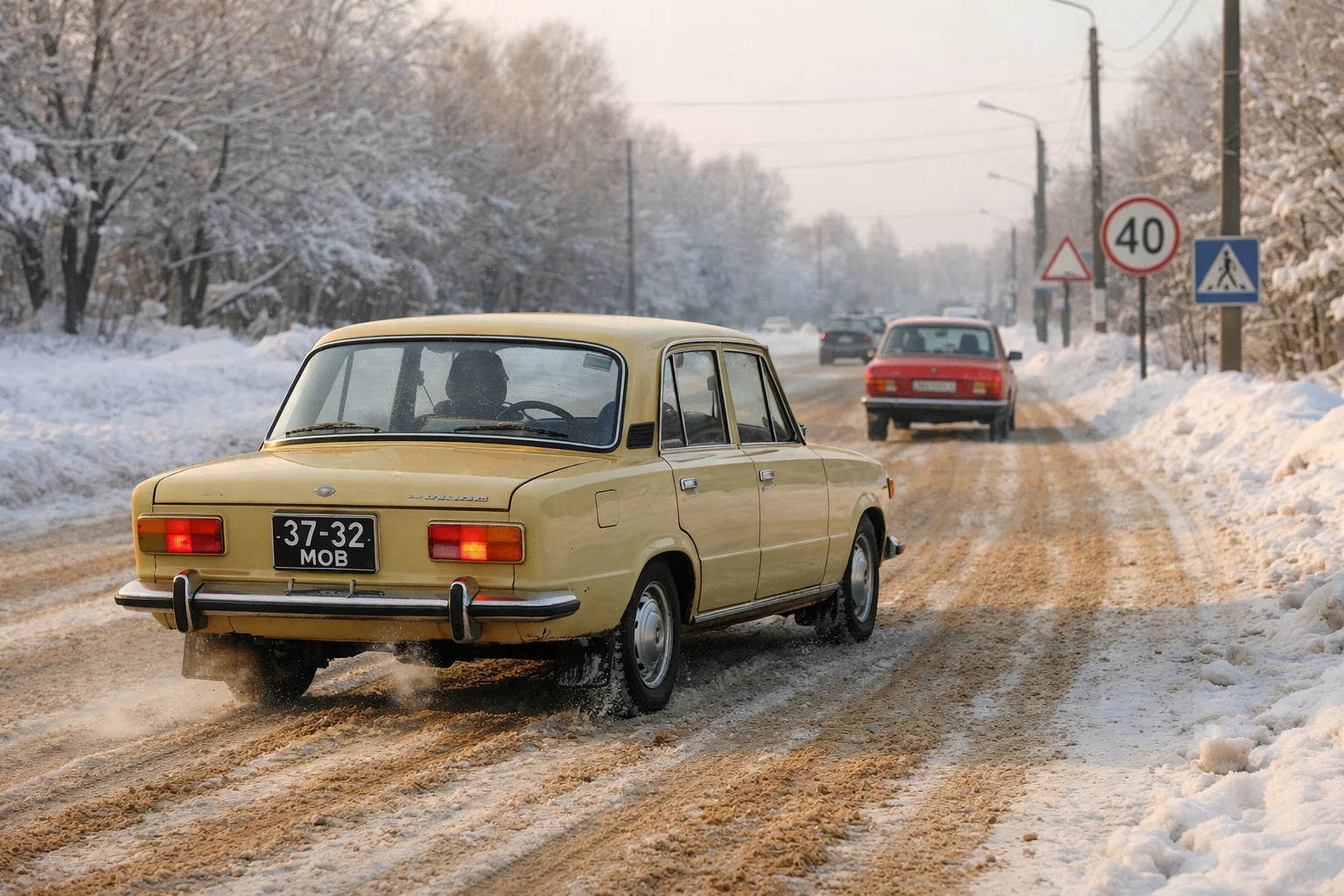
After cleaning, the roadway was sprinkled with abrasives — sand and ash. These materials dramatically increased the coefficient of friction between the tires and the icy asphalt. Sand remained effective until the next snowfall or until it was scattered by the wheels. Then the procedure had to be repeated. In the spring, all this mixture rushed into the storm sewers, clogged the grates, and required manual cleaning. Nevertheless, communal services coped: the volumes were relatively small and controllable.
When the frost weakened to −10…−15 °C, a sand-salt mixture was used, where about 90% was sand and only 10% was technical salt. The salt slightly melted the ice crust, and the sand penetrated into the resulting slush, providing grip. The concentration of salt remained minimal — sufficient for work, but insufficient for active metal destruction. The mixture quickly wore off under the wheels and was carried away by the wind, not having time to accumulate in the sills and wheel arches.
There was also a strict temperature limit. At −25 °C and below, ordinary salt lost its effectiveness, and in regions with severe winters, chemicals were completely abandoned. Only mechanical cleaning and sand were used. The roads remained snowy, covered with packed snow, but passable. Drivers moved slowly, most often on all-season tires — winter tires were not widely available. In icy conditions, chains were put on the wheels, and speeds in cities rarely exceeded 40–50 km/h.
Liquid reagents based on calcium and magnesium chlorides existed in the USSR, but were used extremely limitedly. They were expensive, required infrastructure for spraying, and did not provide fundamental advantages with the then organization of traffic. As a result, aggressive chemistry remained exotic, and car bodies mainly came into contact with sand and insignificant doses of dry salt.
Why Modern Reagents Destroy Metal
With the growth of the car fleet and the increase in average speeds, the requirements for winter road maintenance have changed dramatically. What was tolerated in the 1970s — snowpack and ice — became unacceptable. A city where traffic moves at a speed of 60–80 km/h cannot afford icy intersections.
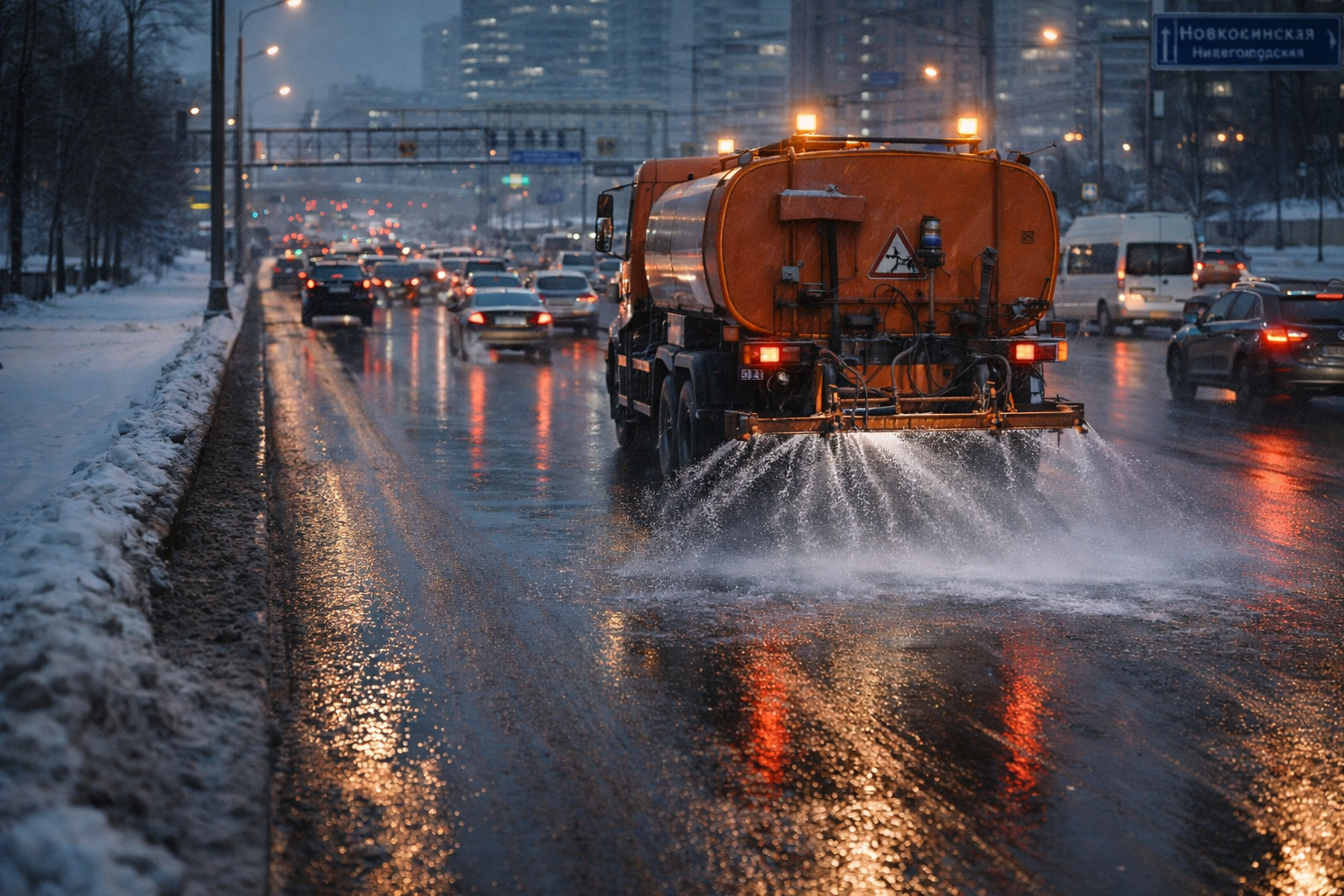
Modern reagents work on a different principle. Calcium and magnesium chlorides release heat when dissolved, actively melt ice even at −25…−30 °C, and work much faster. They are sprayed in liquid form, evenly covering the asphalt. The composition penetrates under the ice crust, destroys its adhesion to the road, and after 10–15 minutes the surface becomes clean. For a metropolis with millions of trips per day, this speed is critical.
However, it is the fluidity of these solutions that becomes a problem. Liquid reagents penetrate where dry salt never reached: under plastic wheel arch liners, into the gaps between body panels, into welds, under door seals. They settle on the inner surfaces of the spars, in the cavities of the sills, on the bottom, and linger there for a long time. Once dry, the reagent crystallizes, but at the first thaw or wash, it turns back into an aggressive solution.
Calcium and magnesium chlorides have a pronounced hygroscopicity — they attract moisture from the air. This means that even in dry weather, the metal on which traces of the reagent remain stays wet. And the combination of moisture, salt, and oxygen inevitably leads to corrosion, which continues continuously until it destroys the metal.
Modern cars are better protected than Soviet ones: galvanized steel, cataphoretic priming, and wax compounds in hidden cavities are used. However, this protection is not absolute. One chip from a stone, a scratch, or a scuff on the sill is enough — and the chemistry gains access to the bare metal. After 3–5 winters, through corrosion appears in the wheel arches and on the sills, even in premium segment cars.
The scale of application also plays an additional role. In the USSR, salt was used sparingly and locally, mainly on major highways. Today, reagents are used to treat everything: roads, yards, parking lots, sidewalks. The car is actually in a chemical solution from November to April.
Why There Is No Return
A logical question arises: if sand and minimal doses of salt preserved bodies, why was this system abandoned? The answer lies in the changed conditions.
In Soviet times, the average daily traffic intensity was many times lower. Personal cars numbered in the single digits per hundred families, and traffic jams in the modern sense were absent. It was possible to afford slow mechanical cleaning, repeated sanding, and movement at a speed of 40 km/h.
By the 1990s, the situation had changed radically. The level of motorization increased tenfold, and roads turned into continuous transport arteries. In such conditions, sand became useless — it was instantly scattered by the wheels. Mechanical cleaning could no longer keep up with snowfalls. Environmentalists additionally intervened: in the spring, tons of sand clogged storm drains, created dust, and polluted water bodies.
Liquid reagents solved the problem of efficiency. It is enough to spray the composition — and in 15 minutes the road is clean. Several cars per night are able to process tens of kilometers. This is economically efficient and gives an instant result.
At the same time, damage to cars was not included in the calculations. Corrosion of bodies is a private problem of owners, and not the area of responsibility of municipalities. The task of road services is traffic safety, not the preservation of metal.
Verdict
Soviet cars lasted longer not because their steel was better. Anti-corrosion protection remained primitive, and galvanizing was rarely used. But the bodies practically did not come into contact with aggressive liquid chemistry. Sand, ash, and minimal doses of dry salt provided passage and did not trigger large-scale corrosion processes.
Modern reagents are effective, but destructive. They penetrate into hard-to-reach areas, from where they cannot be completely washed out, and act constantly, turning any chip into a focus of rust. Even expensive foreign cars with factory galvanizing begin to rot after 5–7 winters of urban operation. And Zhiguli cars from the 1980s, which drove on sand and packed snow, still exist — with rust, but without through holes.
Returning to the Soviet system is impossible: the modern city will not withstand such a pace and quality of cleaning. However, it is important to understand the price we pay. Reagents are a conscious compromise: traffic safety in exchange for body life. There was no such choice before. Cars lived longer simply because the roads remained cleaner — in a chemical sense.
Read more:
- «Samara» and «Moskvich»: the main auto-rivalry of the late USSR
- What the negotiations between the USSR and FIAT about the overhead valve engine concealed
- Cars of the Moscow Olympics: from «Volga» to Mercedes