February 1986 became an important date for the capital's automotive industry: at the Moscow Lenin Komsomol Automobile Plant (AZLK), the first mass-produced front-wheel-drive car rolled off the assembly line — the Moskvich-2141. The car was destined to become both the embodiment of the industry's ambitions and the enterprise's main disappointment. In foreign markets, the model was known as Aleko. Forty years after production began, the "forty-first" is perceived as a symbol of the perestroika era — a time of great expectations and unrealized plans.
Work on replacing the rear-wheel-drive 408 and 412 models began as early as the early 1970s. By that time, the Zhiguli was already being mass-produced in Tolyatti, so the Moscow plant was assigned a different niche: it was supposed to create a larger car that would occupy an intermediate position between the Zhiguli and the Volga.
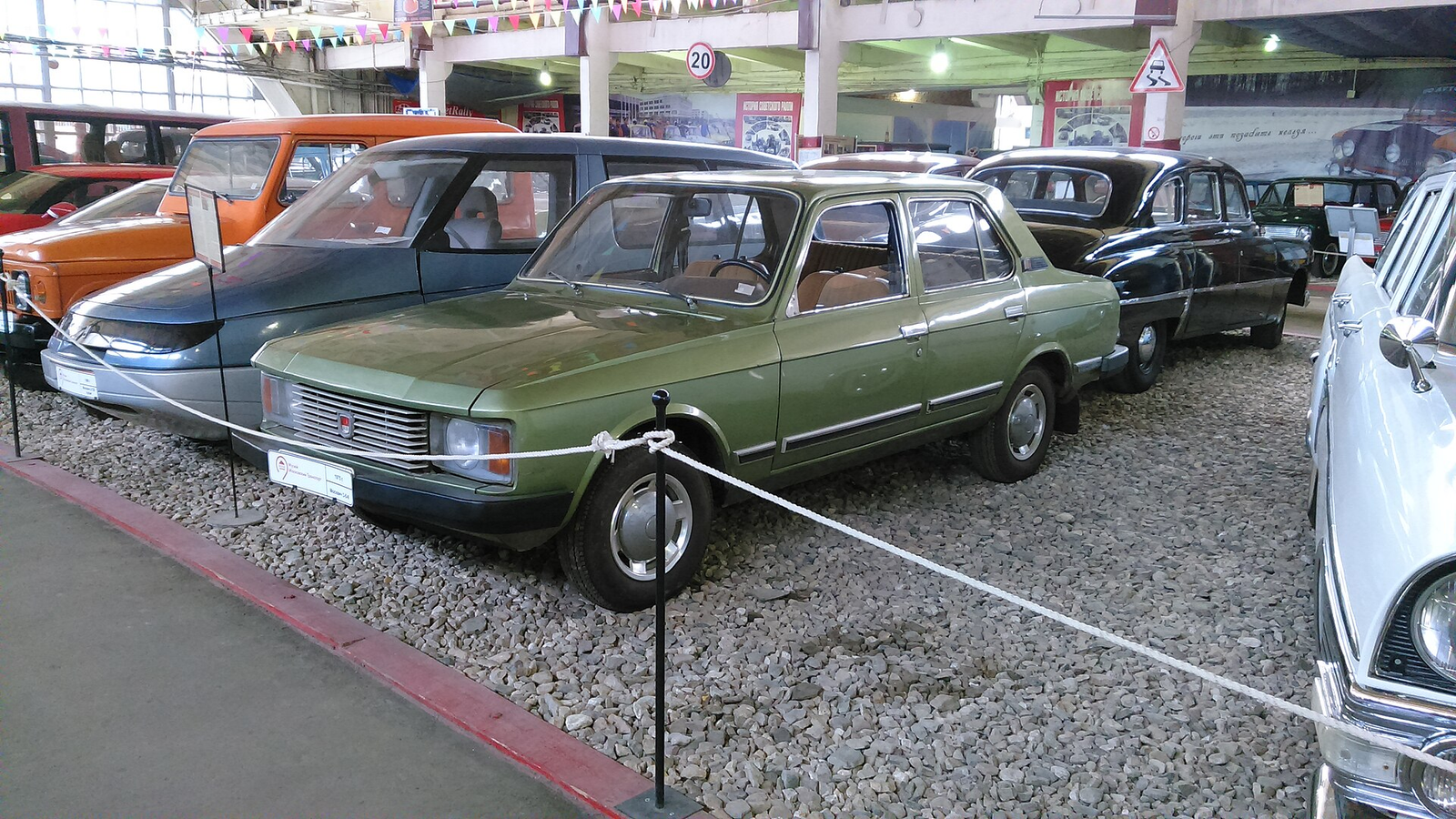
The first experimental developments — the Moskvich cars of the 3–5 series — retained the traditional layout with a longitudinally mounted engine and rear-wheel drive. In silhouette and overall architecture, they resembled earlier models. However, over time this path was deemed unpromising, and the team of engineers and designers began creating a fundamentally new automobile.
At the same time, in January 1976, the Moskvich-2140 entered the assembly line — essentially a modernized version of the 412. The body styling and interior changed, but the technical underpinnings remained the same. The cabin received a soft front panel made of foamed polyurethane covered with film — a similar solution had been used on prototypes of the 3–5 series. Production of the "fortieth" continued until 1988.
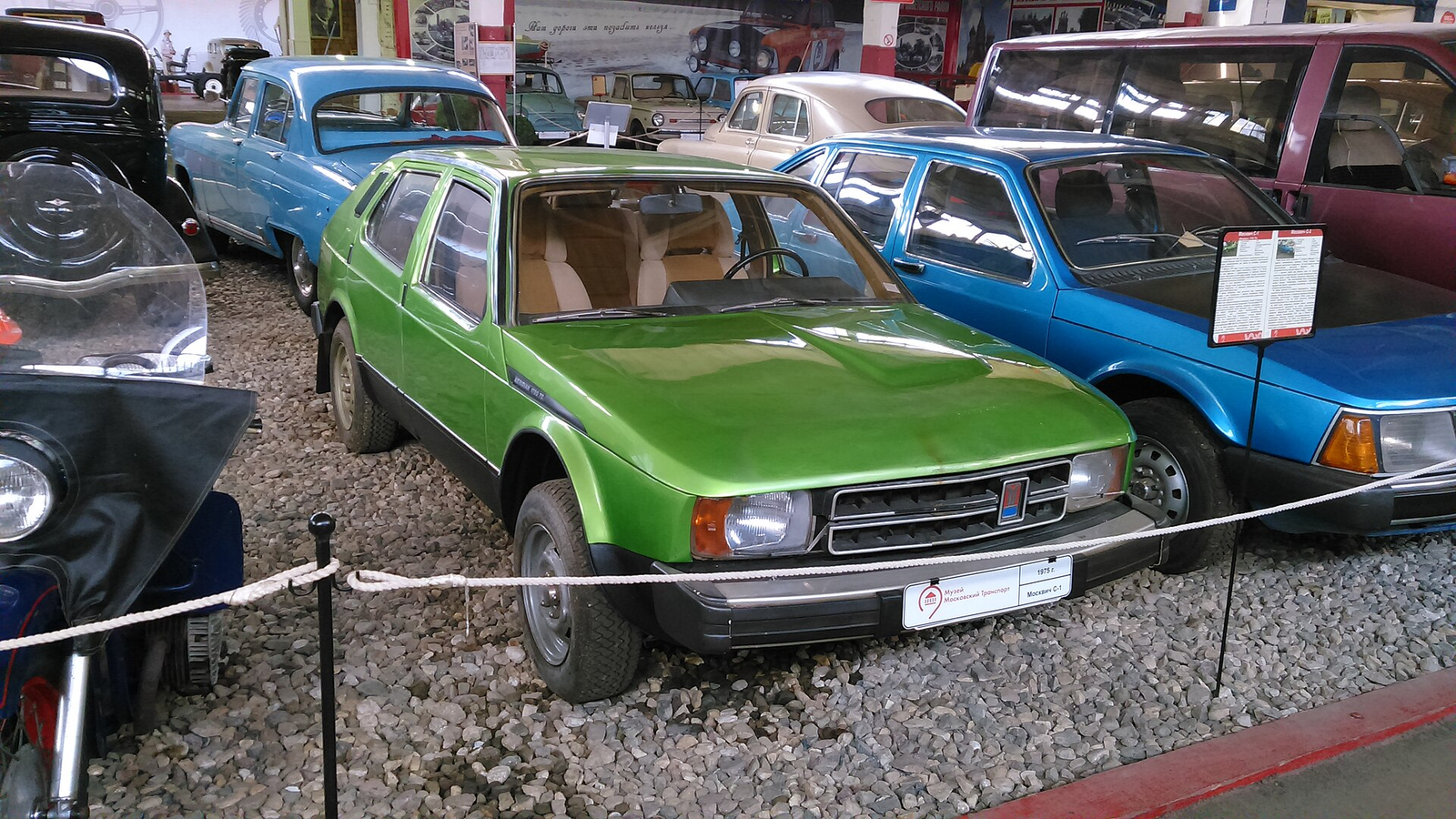
Meanwhile, work continued on the promising model. At the beginning of 1975, a full-size mock-up of the Moskvich S-1 was prepared, and by the end of the year a metal prototype appeared, unofficially nicknamed "Crocodile Gena" because of its bright green color. The layout remained rear-wheel-drive, and under the hood was the same Ufa engine from the 412 model — with a high-mounted carburetor and a massive air filter. To accommodate the unit, a characteristic stamping was made on the left side of the hood.
In 1976, a second version appeared — the S-2. It was produced only as a full-size mock-up, without building a running prototype. In the autumn of the same year, the third version was presented — the S-3. The car received a different appearance and an additional pair of side windows behind the rear doors, which made the silhouette visually lighter. The design of the S-3 series turned out original, without obvious foreign analogues of that time. Nevertheless, this version did not go into production: an administrative decision "from above" instructed the plant to orient itself toward a foreign model.
According to the recollections of former AZLK chief designer Igor Zaitsev, in the 1970s the leadership of the Ministry of the Automotive Industry set a specific benchmark — the Talbot Simca 1308. This car, developed by the European division of the Chrysler corporation, received the 1976 Car of the Year title — "Car of the Year in Europe." Earlier, in 1966, Fiat 124 had won a similar award, later becoming the basis for the VAZ-2101 after the purchase of the license and the construction of the plant in Tolyatti.
The Simca 1307–1308 was larger than the Zhiguli; its competitors included the first Volkswagen Passat. The French hatchback had a transversely mounted engine and a torsion-bar front suspension with transverse control arms. In the production Moskvich, a different scheme was used: the engine was placed longitudinally, while more advanced MacPherson struts were used at the front.
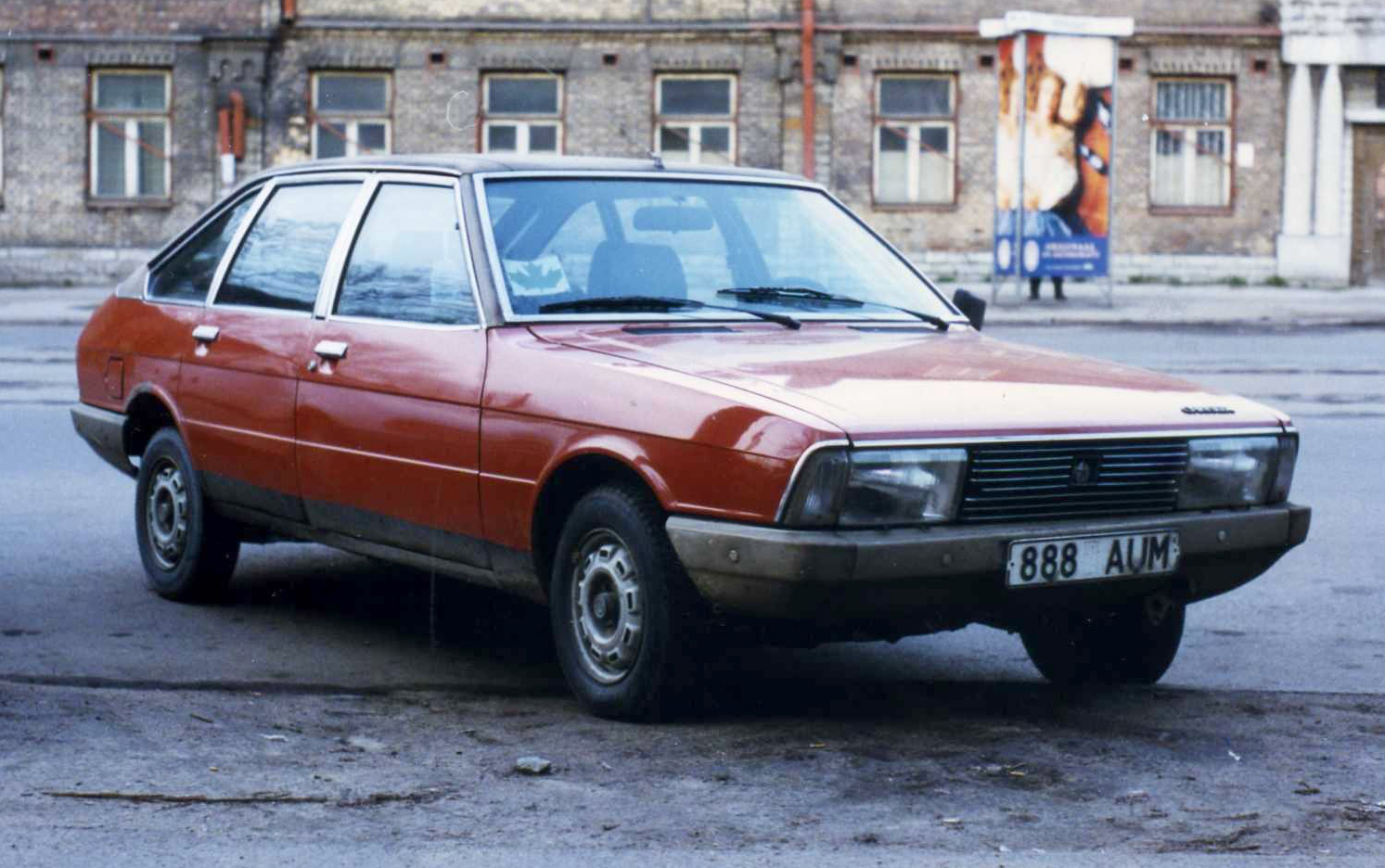
A Simca body shell was delivered to the plant, on the basis of which a mock-up powertrain carrier was created to study the features of front-wheel drive. The front end was effectively replaced by installing the longitudinal engine from the 412 model. This prototype, which received the factory nickname "Maksimka," became a stage in rethinking the design.
By 1981, the appearance of the future "forty-first" had evolved noticeably. Intermediate versions differed from the production variant — for example, by a radiator grille with contrasting stripes and a different front bumper. The side mirrors were apparently borrowed from the VAZ "five," which was explained by the workaround technology used to build the prototype.
If the body concept went back to the French model, the layout solutions with a longitudinal engine and MacPherson suspension had different roots: a similar scheme was used by the German Audi at the turn of the 1970s and 1980s.
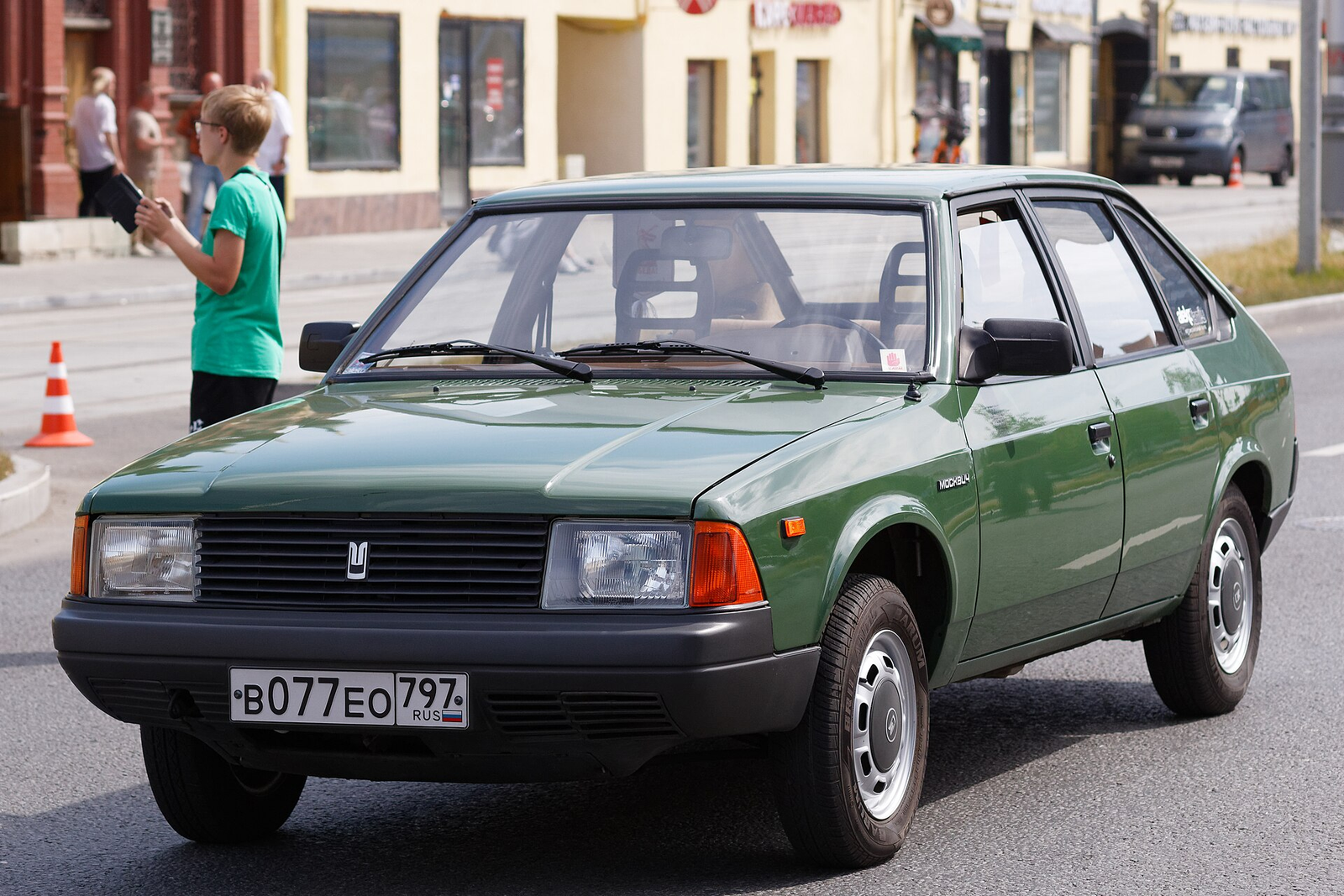
The interior of the production car also differed significantly from the prototype: the Simca cabin looked more avant-garde, whereas the Moskvich received its own design.
Over the years of production, various engines found their way under the hood of the "forty-first." In addition to the Ufa unit (including enlarged-displacement versions), a 1.6-liter VAZ engine was installed, and at the final stage — Renault power units, including a two-liter version. In the early 1990s, cars were even exported with Ford diesel engines. At the same time, AZLK's new engine production facility, for which experimental engines had been prepared, was never completed because of the changes in the country.
At the final stage, the car was produced under its own name, Svyatogor. The model's history ended together with the stoppage of the assembly line at the Moskvich plant in 2001. Thus, the Moskvich-2141 remained in history as a car that, in design and concept, aspired to the future but became hostage to the production and organizational difficulties of its time.
Read more articles:
- Right and left: the history of the road split
- Up to 600,000 rubles: a worthy alternative to Lada Granta
- Why MacPherson suspensions have ruled for 80 years already
Комментарии