The sharp, dry pop coming from the exhaust pipe of a sports car is hard to mistake for anything else. The sound is short, staccato, and often accompanied by a momentary flash of flame at the muffler's edge. For some, it's a characteristic aesthetic of motorsport; for others, it's a reason to think about the car's technical condition.
A logical question arises: why does a car "backfire" when revving? Is this a sign of incorrect engine operation or the result of a deliberate engineering setting? The answer is not so straightforward. Moreover, in most modern sports models, such acoustic effects are not accidental but the result of precise calibration of fuel injection and ignition systems.
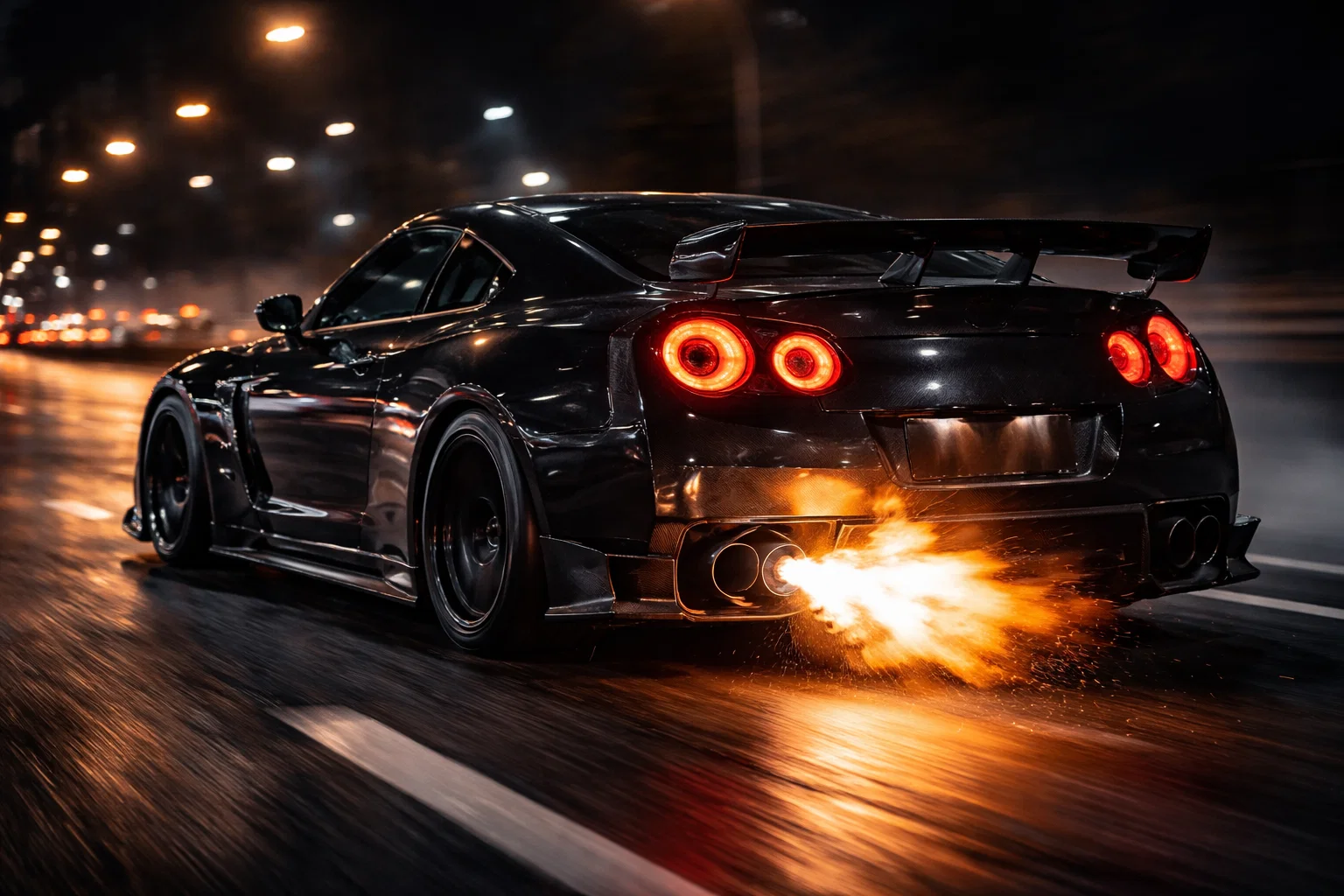
"Revving" refers to a sharp, brief press of the accelerator pedal without transmitting torque to the transmission or with the clutch partially disengaged. The throttle valve opens, the volume of incoming air increases, and the electronic control unit supplies more fuel. In a normal situation, the air-fuel mixture burns completely in the cylinder: pressure increases, the piston receives an impulse, and the exhaust gases leave the combustion chamber through the exhaust valve after the main combustion process is complete.
However, at high revs and a sharp change in operating mode, the phases may shift. Some of the fuel does not have time to fully oxidize inside the cylinder. If the mixture is enriched, which is typical for dynamic acceleration and sports settings, some unburned hydrocarbons enter the exhaust system.
The temperature of the exhaust manifold and turbine (if the engine is turbocharged) is extremely high, sometimes exceeding 800 °C. This is enough for the remaining fuel to ignite outside the cylinder. Local afterburning of the mixture occurs in the exhaust tract: the pressure briefly increases, a shock wave occurs, and the driver hears that very pop. From the outside, it may look like a short flash of flame. This is not an explosion in the everyday sense but a rapid ignition of a gas mixture in a hot environment.
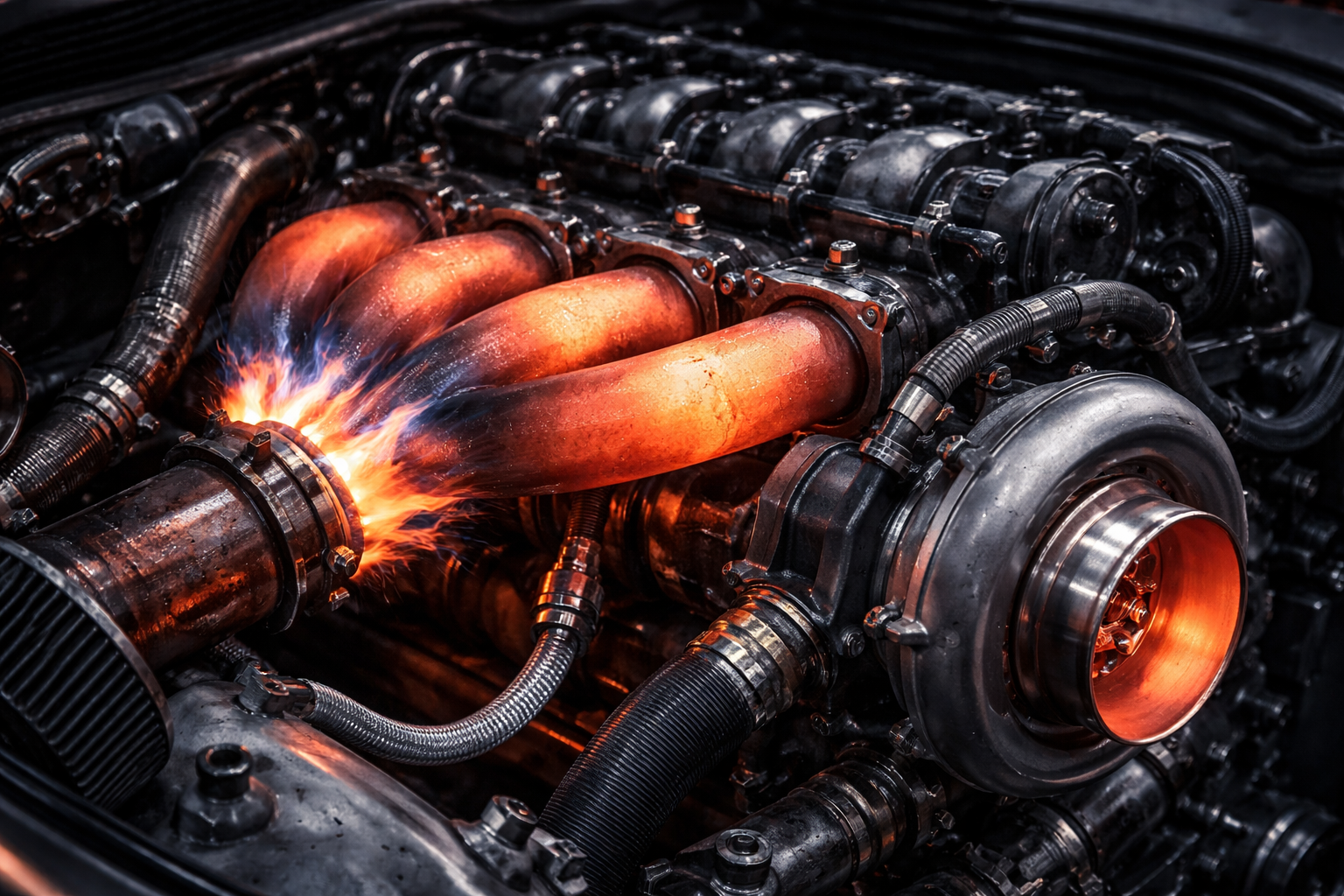
The ignition timing plays a separate role. In sports modes, some manufacturers deliberately shift it towards retardation—the spark occurs slightly later than in standard, economical settings. This strategy has two goals. The first is to maintain a high turbine temperature during gear changes, which reduces the effect of turbo lag. The second is to create a characteristic acoustic effect.
With late ignition, the combustion process partially approaches the moment the exhaust valve opens. The pressure in the cylinder is lower, and some of the energy goes into the exhaust system along with the hot gases and residual fuel, where afterburning occurs. Such algorithms are used in sports versions of production cars, including the M division of BMW and AMG of Mercedes-Benz. The setting is implemented programmatically through the engine control unit and is not a random side effect.
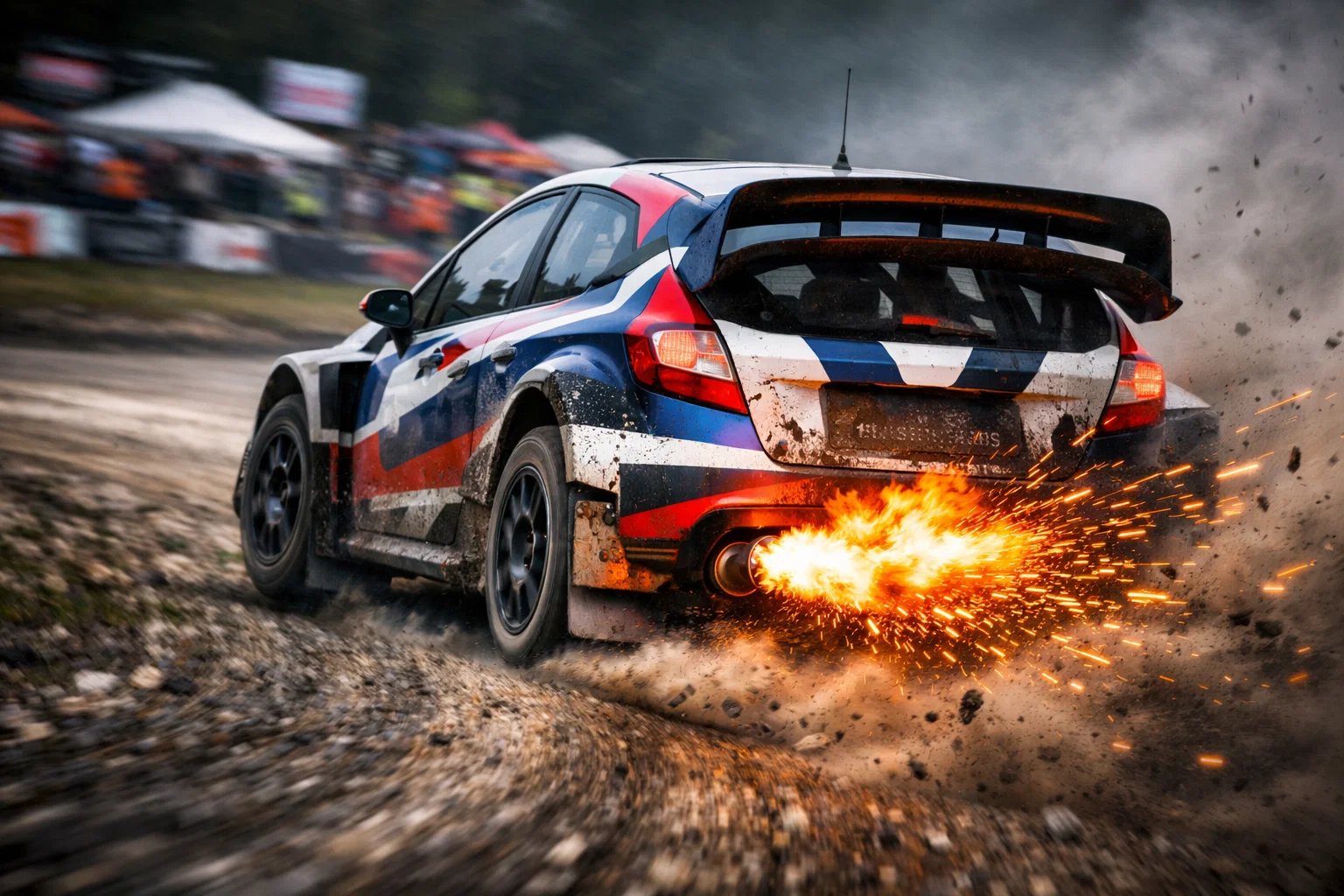
A special case is anti-lag systems, used primarily in motorsport, especially in rallying. Their principle is to maintain fuel supply when the throttle is released and to shift the ignition timing so that combustion occurs in the exhaust manifold in front of the turbine. The turbine continues to spin even without load from the engine. The effect is impressive: loud "shots" and flames. However, the temperature and mechanical loads on the exhaust manifold and turbocharger are extreme, exceeding normal modes. That is why a full-fledged anti-lag system is practically not used on civilian cars; sometimes, only a softer software imitation is found, known as pop and bang calibrations.
It is widely believed that such pops are characteristic only of turbo engines. This is not entirely true. Naturally aspirated sports engines with aggressive valve timing and an enriched mixture are also capable of afterburning in the exhaust, especially when the throttle is suddenly closed at high revs. Valve overlap increases the likelihood of some unburned mixture entering the exhaust tract, and the high temperature of the manifold completes the process.
A distinction should be made between controlled afterburning and signs of malfunction. In a sports version of a car, pops may be normal: the manufacturer takes into account the temperature loads, the strength of the exhaust system elements, and the life of the catalytic converter. In a regular production car, frequent backfires can indicate problems—ignition timing violations, oxygen sensor malfunctions, misfires, or leaks in the exhaust tract. In the first case, the effect is embedded in the control algorithms; in the second, it is a consequence of deviations in the operation of the injection and ignition systems.
The loudness of the sound is explained by the physics of the process. The flame front speed during afterburning in the exhaust system is high, and the volume of the pipes is limited. A shock wave is formed, and the metal body of the muffler begins to work as a resonator. The less complex the noise reduction system and the more direct-flow the design, the clearer and sharper the pop is heard. Conversely, standard multi-chamber exhaust systems effectively dampen such impulses.
Regulatory restrictions should also be considered: in some countries, the exhaust noise level is strictly regulated. For this reason, manufacturers often programmatically limit the intensity of "backfires" for certain markets, adapting calibrations to the requirements of local legislation.
Read more materials:
- How cars were started in the USSR in the cold
- Hydrolock: a second—and the engine is dead
- Metal crankcase protection: benefit or risk