Huawei has received new patents in China for automotive exterior designs and continued its expansion in the automotive industry. The documents were published on January 23 on the website of the State Intellectual Property Office of the PRC. The applicants were Huawei Technologies and Huawei Terminal.
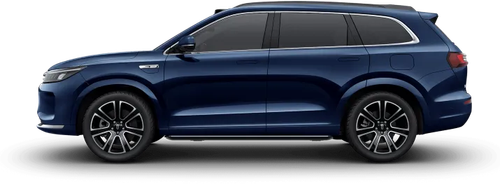
The patents cover several classes of cars at once — from sport liftbacks to executive sedans. One of them, filed in January 2022, describes a liftback with a sloping roof and a forward tilt of the body. In terms of proportions, the model is close to the Zhijie S7, but has a more aggressive silhouette. The front end is designed in the style of Aito and Zhijie, which indicates the formation of a unified design language of the brand.
Another patent, registered in February 2023, relates to a flagship sedan. The car received a long hood, a closed grill, end-to-end lighting equipment, and electronic mirrors. The design includes a laser lidar. The image is focused on the premium segment and competition with top Chinese models.
The third patent also represents a large sedan, but with a more pronounced concave front end. The model retained a long wheelbase, smooth lines, and large wheels, emphasizing its status.
The patents do not confirm the launch of mass production, however, their number indicates Huawei's systematic work on its own line of cars. The company is forming a universal design platform for different segments — from driver models to executive class.
Read more materials on the topic:
- Porsche and BMW are massively blocking in Russia
- BAW sharply reduced the cost of an SUV for Russia in a tricky way
- Chinese Jaecoo J8 opened doors and windows on its own in the cold
Комментарии