Since November 2020, one of the most notable digital transformations in the automotive sector has been launched in Russia. All new cars began to be registered exclusively with an electronic vehicle passport — E-PTS. Paper PTS were not immediately canceled, but their importance is gradually being minimized.
For some car owners, the transition has become a convenient and logical step forward, while others have taken the innovation with caution. To dot all the "i"s, let's figure out what E-PTS is, how it functions, what its advantages and limitations are, and how to interact with it in practice.
What is E-PTS and What is Its Fundamental Difference
The electronic vehicle passport is a digital form of vehicle registration that has replaced the paper PTS. Unlike the usual strict reporting form, the E-PTS does not exist as a physical document for the owner. It is a record in a unified state information system of electronic passports.
If the paper PTS had a limited number of columns and actually recorded only basic data, then the electronic format is a constantly updated car card that can be supplemented with information throughout its entire service life.
The electronic passport reflects data on:
- technical characteristics of the vehicle;
- all owners for the entire period of the car's existence;
- road traffic accidents;
- current restrictions and encumbrances;
- registration actions;
- other significant events related to the car.
It is important to take into account a fundamental point: E-PTS does not confirm ownership and does not belong to the list of registration documents that the driver must have with them. Ownership is established by a sales contract, and registration is confirmed by a vehicle registration certificate (STS).
Legislative Framework and Territory of Operation
The transition to electronic passports was enshrined in the decision of the Board of the Eurasian Economic Commission dated September 22, 2015 No. 122. The document defined the rules for the functioning of electronic passport systems for vehicles, chassis, and self-propelled vehicles.
The E-PTS system operates not only in Russia, but also throughout the Eurasian Economic Union. The unified database takes into account cars registered in:
- Russia;
- Belarus;
- Kazakhstan;
- Armenia;
- Kyrgyzstan.
This is especially important for vehicles imported from abroad or planned for further resale within the EAEU.
Do I Need to Change My Paper PTS to an Electronic One
Despite the mandatory electronic format for new cars, no one forces owners of already used cars to replace them. If a car has a valid paper PTS, it remains indefinite and fully retains its legal force.
However, there are important limitations:
- paper PTS are no longer issued since November 1, 2020;
- if a paper PTS is lost or damaged, recovery is only possible in the form of an E-PTS.
The simultaneous presence of a paper and electronic passport for one car is not allowed by law.
Where is the E-PTS Stored and Who Has Access to It
All electronic passports are stored in a secure state electronic passport system. Access to information is strictly regulated: each participant sees and enters data exclusively within the scope of their authority.
In particular:
- car dealers record sales and service operations;
- technical inspection operators enter information about passing the MOT;
- the traffic police reflects registration actions and official marks;
- accredited laboratories add data about the design of the car.
For the owner, this means that the document cannot be lost, damaged, or forged in the usual ways.
Why is an Electronic PTS More Profitable
The transition to digital format has given several tangible advantages at once.
1. Storage Reliability
E-PTS cannot be lost or damaged. Unlike a paper PTS, the loss of which required paying a state fee of 800 rubles and going through the recovery procedure, the electronic passport always remains in the system.
2. No Limits on Records
An unlimited amount of data can be entered into an electronic passport: changes of owners, pledges, leasing, design changes, information about the recycling fee. The problem of "running out of columns" disappears completely.
3. Transparent car history
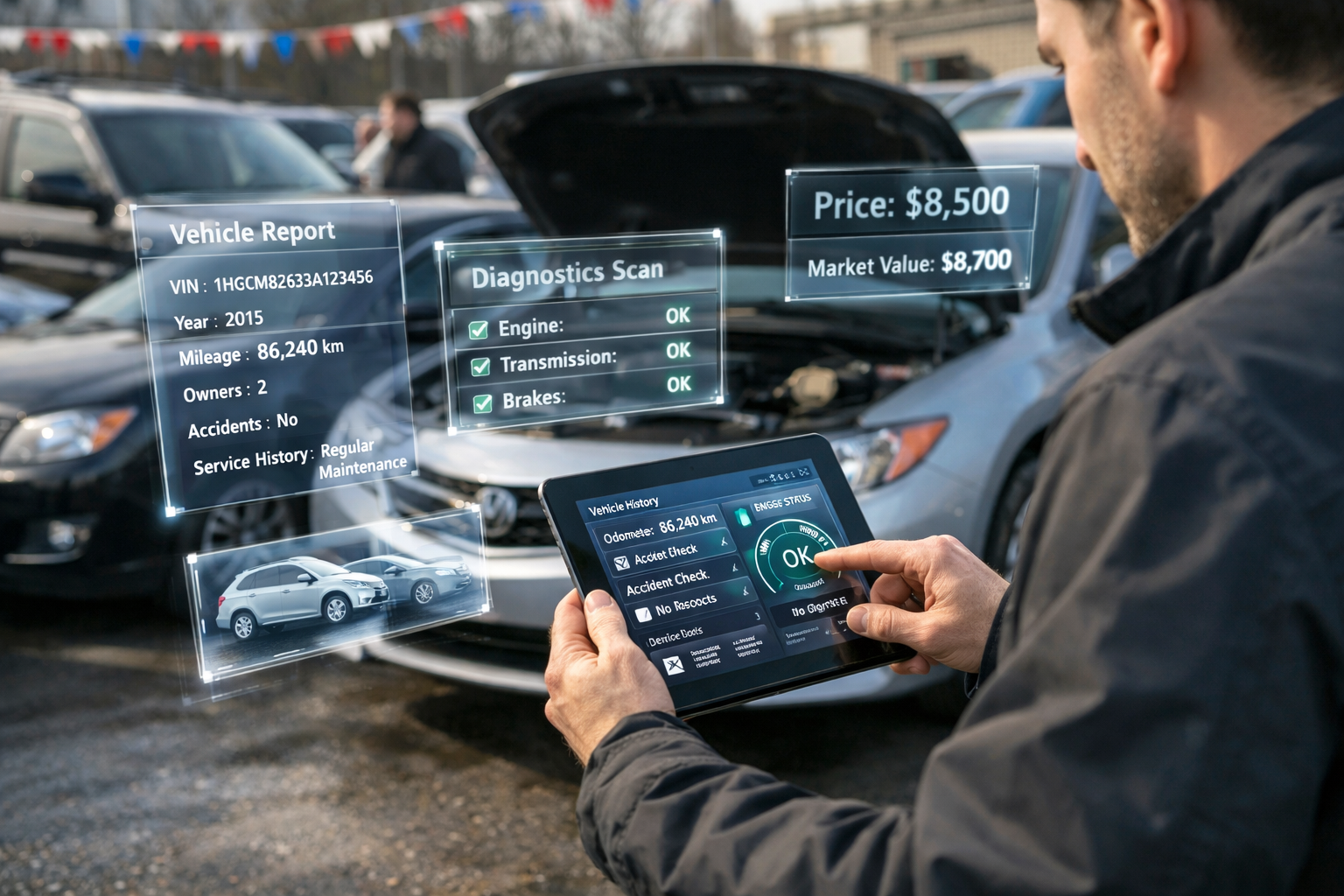
The availability of centralized data reduces the risk of fraud when buying a used car. A potential buyer can check accidents, restrictions and the status of the electronic vehicle passport in advance.
4. Remote access
An extract from the electronic vehicle passport can be obtained remotely, without visiting departments. The service is free for the owner, and there is a fixed fee for third parties — 250 rubles.
5. Increased transaction security
The electronic vehicle passport complicates schemes with document substitution and the use of "double" vehicle passports, which previously occurred in the market.
How to obtain an electronic vehicle passport
New car
When buying a new car, an electronic passport is issued either by the manufacturer or by the official importer if the car was produced abroad.
The buyer receives the electronic vehicle passport automatically and free of charge, along with the purchase agreement and a paper extract.
Voluntary replacement of a paper vehicle passport
To switch to electronic format, the owner applies to a testing laboratory accredited by the Ministry of Industry and Trade or a technical inspection point with the appropriate authority.
You will need:
- car;
- paper vehicle passport;
- vehicle registration certificate.
The electronic vehicle passport is issued on the day of application. The cost of the service is 600 rubles.
Who can make changes
Data editing is only available to authorized organizations:
- car dealerships;
- traffic police units;
- certification bodies;
- legal entities and individual entrepreneurs — vehicle owners.
Private individuals do not have the ability to independently change records, which significantly reduces the risk of forgery. Even the recording of a change of owner is carried out through the system and is a paid procedure.
Extract from the electronic vehicle passport
The extract has effectively replaced the paper vehicle passport for informational purposes. It can be obtained through the electronic passport system portal.
- for the owner — according to a simplified procedure;
- for third parties — for 250 rubles.
An extended extract with additional technical and legal data is also available.
Electronic passport statuses
When checking a car, you can see one of the electronic vehicle passport statuses:
- valid — the car is allowed to be operated;
- recycled — the vehicle is recognized as unsuitable;
- in the process of registration — the passport has not yet been activated;
- canceled — the car has not passed customs procedures or is outside the EAEU;
- extinguished — the design of the vehicle has been significantly changed.
This information is especially important when buying a used car.
Limitations and controversial points
Despite the obvious advantages, the system also has a number of limitations:
- making changes requires formal procedures and time;
- to register a transaction, the parties must be registered in the system;
- the electronic vehicle title is not yet used as an independent collateral for car loans;
- information about insurance policies is not directly stored in the electronic vehicle title, but is pulled from the PCA database.
The electronic vehicle title is not just a digital analogue of the paper vehicle title, but a full-fledged system for recording the history of the car. It increases market transparency, reduces the risk of fraud and saves owners from problems with the loss of documents.
At the same time, traditional documents do not disappear: the sales contract and vehicle registration certificate still remain key. The electronic passport forms a reliable digital "background" in which the entire biography of the car is recorded - from production to disposal.
Read more materials on the topic:
- Towing a car with automatic transmission: what is allowed and what destroys the gearbox
- Electric car vs. internal combustion engine car: where are the real savings
- From pads to algorithms: how brakes have evolved
Comments