China has published a detailed report on the development of the hydrogen fuel cell vehicle industry as of 2025. The document was presented at a strategic seminar in Hefei and covers almost all aspects of the market - from production and sales volumes to the level of component localization, cost structure, and the state of hydrogen refueling infrastructure. Despite significant technological progress, the report clearly shows that the path to mass adoption of hydrogen transport remains complex and controversial.
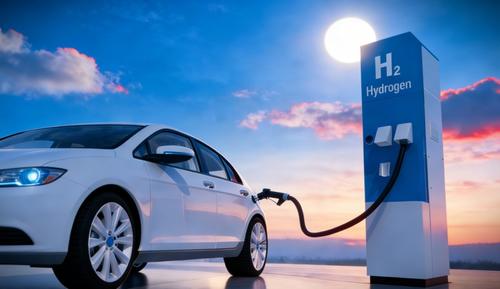
One of the key achievements of the industry has been the development of its own industrial base. According to Bao Lian, an academician at the Chinese Academy of Engineering, by 2025, the level of localization of the main components of hydrogen power plants exceeded 70%. This means that China has been able to significantly reduce its dependence on imported technologies in the production of fuel cells, control systems, and related equipment. At the same time, experts note that issues of cost, material life, and reliability still hinder scaling.
Production and sales statistics look less optimistic. According to the China Association of Automobile Manufacturers, 5,548 hydrogen fuel cell vehicles were produced in the country in 2024, and sales amounted to 5,405 units. In the first half of 2025, the pace slowed down noticeably: production reached 1,364 vehicles, and sales - 1,373, which is approximately 47% less compared to the same period last year. The total fleet of hydrogen vehicles is estimated at approximately 30,000 units, which is significantly lower than the previously stated target of 50,000.
It is important to note that the main volume of hydrogen transport in China still falls on the commercial segment. At the seminar, BAIC Foton, Qingling Motors, and Xiamen King Long presented their reports, focusing on trucks, buses, and logistics vehicles. Manufacturers shared their experience of operating equipment on real routes, talked about the technical evolution of models, and about which application scenarios are considered the most economically justified today.
The hydrogen refueling infrastructure is developing, but unevenly. As part of demonstration programs in China, more than 200 fuel cell vehicles are operated on more than 20 key freight routes with the support of more than 40 hydrogen refueling stations. Most of them are designed for a pressure of 35 MPa, which is suitable for commercial transport. By mid-2025, the daily hydrogen supply capacity was estimated at approximately 327,000 kg, and the average price in cities was about 26.7 yuan per kg.
Special attention in the report is paid to the cost structure, especially in the heavy truck segment. For vehicles with a gross weight of 49 tons, the fuel cell system accounts for about 53% of the total cost, and the hydrogen storage system - about 14% more. Thus, more than two-thirds of the car's price falls on only two key components. It is expected that thanks to technological improvements and increased production volumes, the cost of fuel cell systems by 2027 may decrease by more than 40%.
Participants in the final discussion agreed that the further development of hydrogen vehicles in China will depend on a comprehensive approach. The key factors are cost reduction, expansion of application scenarios, coordinated development of the entire production chain, and balanced infrastructure development.
Read more materials:
- AvtoVAZ Officially Explains Which Gasoline to Use in Lada
- Moskvich Announces Prices for the Moskvich 6 Sedan of the 2026 Model Year
- Tank Raises Prices for the Entire Model Range in Russia: Tank 500, 700, and 400 Become More Expensive
Comments