Today, it's hard to believe that a single car model could become a universal symbol-equally understood by workers, students, families, and an entire country. However, exactly 80 years ago, that's precisely what happened. The history of the Volkswagen Käfer is not just a chronicle of a specific car but a reflection of a time when society could still move in one direction and shared common goals.
December 27, 1945. Wolfsburg could hardly be called a city in the usual sense back then: it was more like a large construction site amidst wartime destruction. The country lay in ruins, materials were catastrophically scarce, and production relied on improvisation and ingenuity. Germany was just beginning to return to normal life. It was in these conditions that the serial production of the Volkswagen Typ 1 sedan started. It appeared not as a symbol of a "new beginning" and not as a romantic gesture, but out of direct necessity: cars were needed by the occupying forces, administrative structures, and an economy that was relearning how to function.
From this moment begins the journey of the car that would later become the most recognizable embodiment of the "Made in Germany" brand-a symbol of everyday freedom, accessible mobility, and, over time, pop culture.
The British Factor
The success of the future "Beetle" was due not so much to legends as to the harsh post-war reality. After 1945, the factory came under the control of the British administration, and the key figure of this period was Major Ivan Hirst. It was on the initiative of the British military that an order was placed in 1945 for 20,000 cars for their own needs. According to Volkswagen Group's archival materials, this contract provided the company with a clear direction, the necessary resources, and-no less importantly-time to recover.
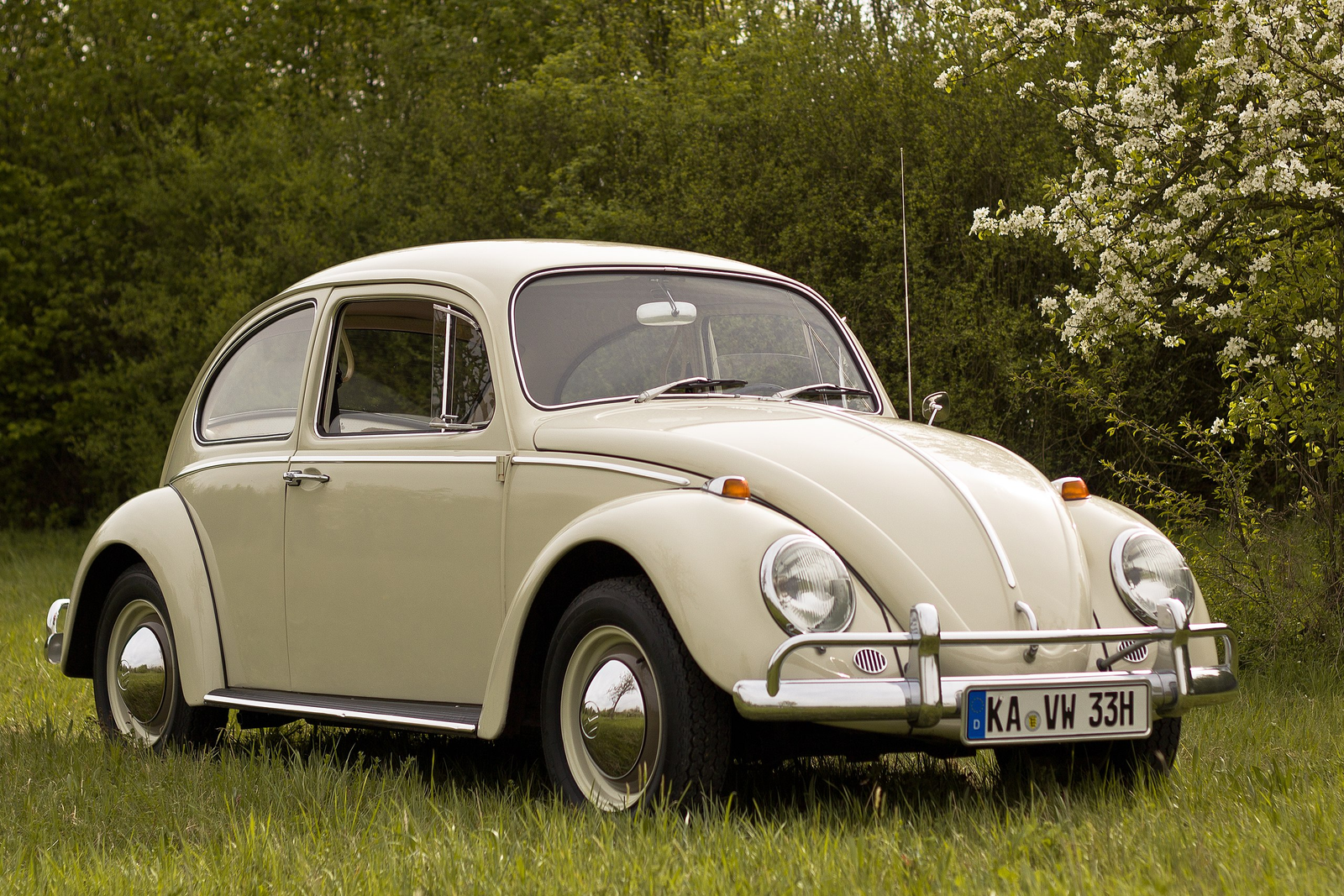
This fact significantly corrects the established myth. Initially, the "Beetle" was not conceived as a "car for everyone" at all. It was a pragmatic tool for post-war reconstruction. Its subsequent fate is all the more telling: it became a symbol not because it was intended to be, but because it coincided surprisingly accurately with the real needs of life.
From Ideological Project to Everyday Reality
The origins of the project go back to the 1930s, when Volkswagen was seen as a prestigious political initiative of Nazi Germany. The factory in Fallersleben, which would later become Wolfsburg, mainly worked on military orders during the war. Only after 1945 did the idea of a "people's car" first materialize into a real mass-produced product.
For post-war society, the "Beetle" became a car of great expectations. It symbolized affordable mobility, the opportunity to go on vacation on your own wheels, ease of maintenance, and the feeling that technology exists for people, not the other way around. Its rounded, almost friendly appearance contrasted sharply with the harsh reality of the time-and that's what made the car emotionally significant. For many people from Eastern Europe, the "Beetle" was the first Western car that did not repel but was perceived as understandable and "one of us."
When the Car Became a Representative of the Country
On August 5, 1955, Volkswagen celebrated the production of its millionth car-a golden "Beetle." This moment definitively cemented its transformation from a utilitarian object into a national symbol, as Autostadt materials remind us today.
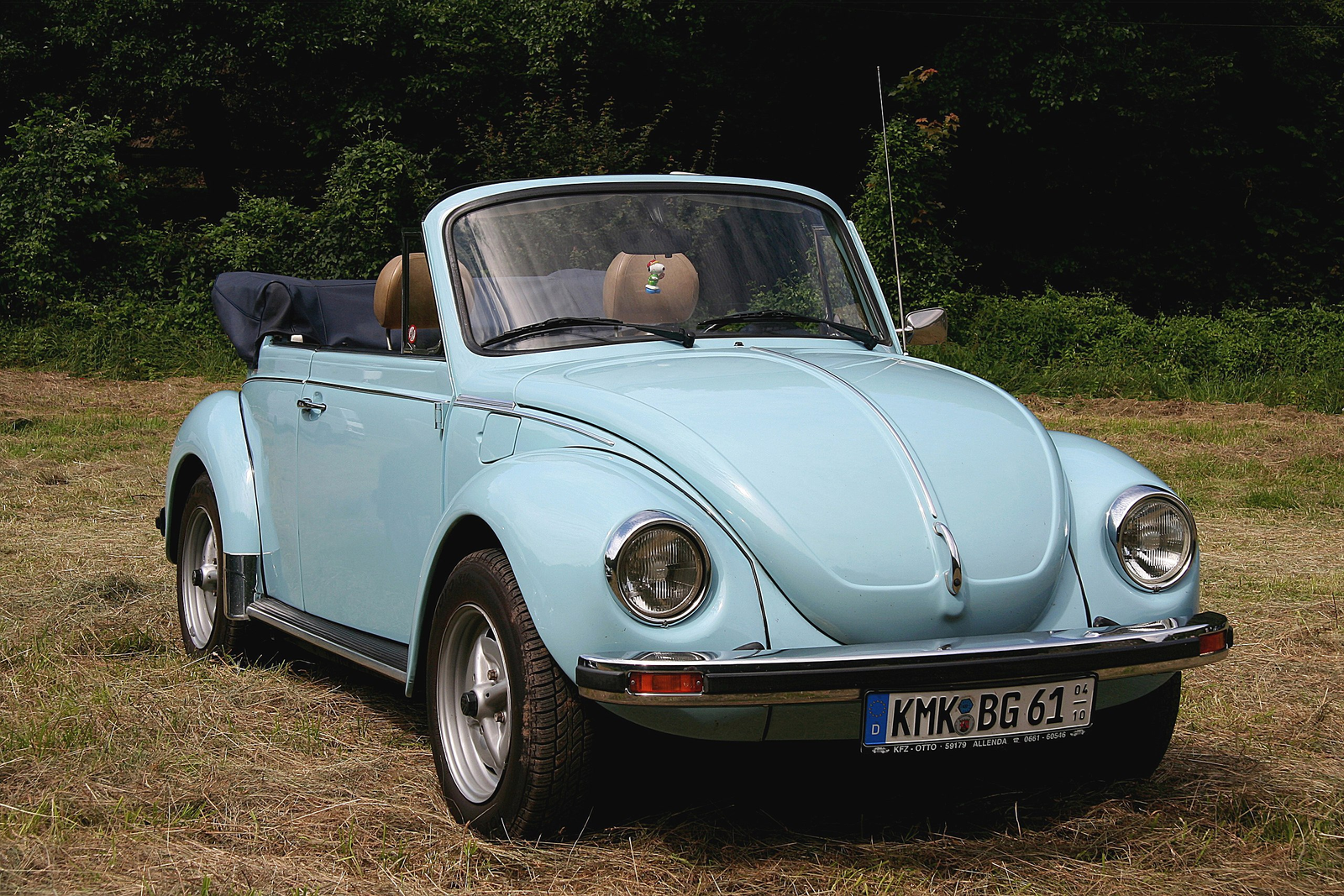
At the same time, exports were growing rapidly. In the 1950s and 1960s, the VW Käfer became a truly international product and a kind of cultural ambassador of West Germany-a state that had once again learned to produce, sell, and compete successfully in the global market.
Cultural Reinterpretation
A decisive role was played not only by the car's constructive simplicity but also by the language in which it was talked about. In 1959, the American advertising agency Doyle Dane Bernbach launched the "Think Small" campaign. Ironic and minimalist, it contrasted the compact "Beetle" with the chrome giants of its era and thereby changed the very approach to advertising, and at the same time, the idea of how to talk to the customer.
As a result, the VW Käfer became a double icon: technically modest but culturally revolutionary. That's why it is still perceived as something more than just an object of automotive nostalgia.
Almost 60 Years on the Assembly Line
In total, more than 21.5 million "Beetles" were produced worldwide. Production stretched for almost six decades. In Germany, it ended in 1978, but the life of the model did not end there.
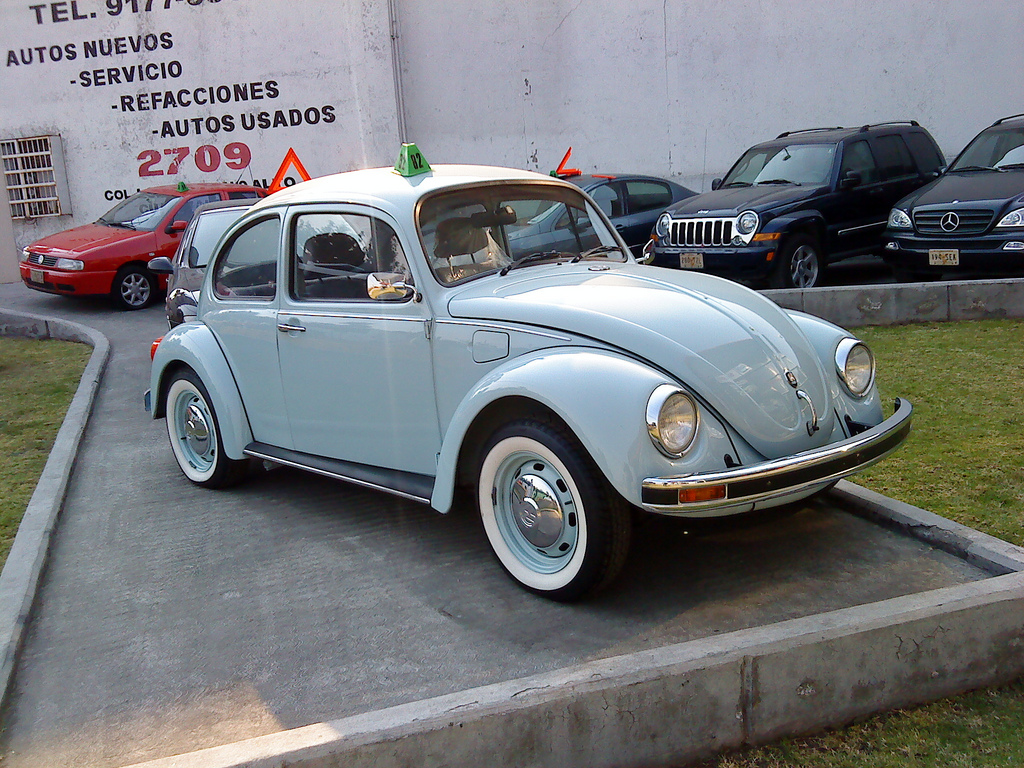
On July 30, 2003, the last original VW Käfer rolled off the assembly line in the Mexican city of Puebla. In honor of the farewell, a special series of Última Edición was released in a limited edition of 3,000 copies, as reported by Motor1.com and Auto Bild.
Why the Legend Cannot Be Repeated
Attempts to revive the image-the New Beetle, produced since 1997, and the Beetle model of 2011-clearly showed that icons cannot be copied. As ZDFheute notes, society has changed radically. Once, one car could become a common point of identity. Today, mobility is fragmented: lifestyles, market segments, technologies, and expectations have diverged in different directions.
The very meaning of the car has also changed. For the "Beetle" generation, it was the embodiment of progress and freedom. In the modern context, the car is simultaneously associated with ecology, urban problems, costs, and technological contradictions. One model is no longer able to combine all this into a single image.
Anniversary of a Time, Not a Car
The 80th anniversary of the VW Käfer is an anniversary not so much of a specific car as of an entire era. It was born as an ideological project, survived thanks to post-war pragmatism, became a symbol of the economic miracle and global culture, and then took its place in museums. The society that needed one common car-simple, reliable, and understandable to everyone-is a thing of the past. That's why the "Beetle" is not coming back today. It simply remains.
Read more materials on the topic:
- Car Reliability Rating: Toyota is First Again
- How Turn Signals Appeared
- Criminal Charges and License Revocation. Seven Fines That Are Easy to Forget in Winter
Комментарии