The topic of the superiority of Japanese cars for the domestic market over export versions comes up with enviable regularity. It is discussed in forums, in comments, in parking lots and car markets. As soon as you pronounce the cherished abbreviation JDM, you immediately hear a confident: "This is a completely different quality, not what is for export." Such statements have been around for many years, but the question itself is much more complex than it seems at first glance, and there is no single answer here.
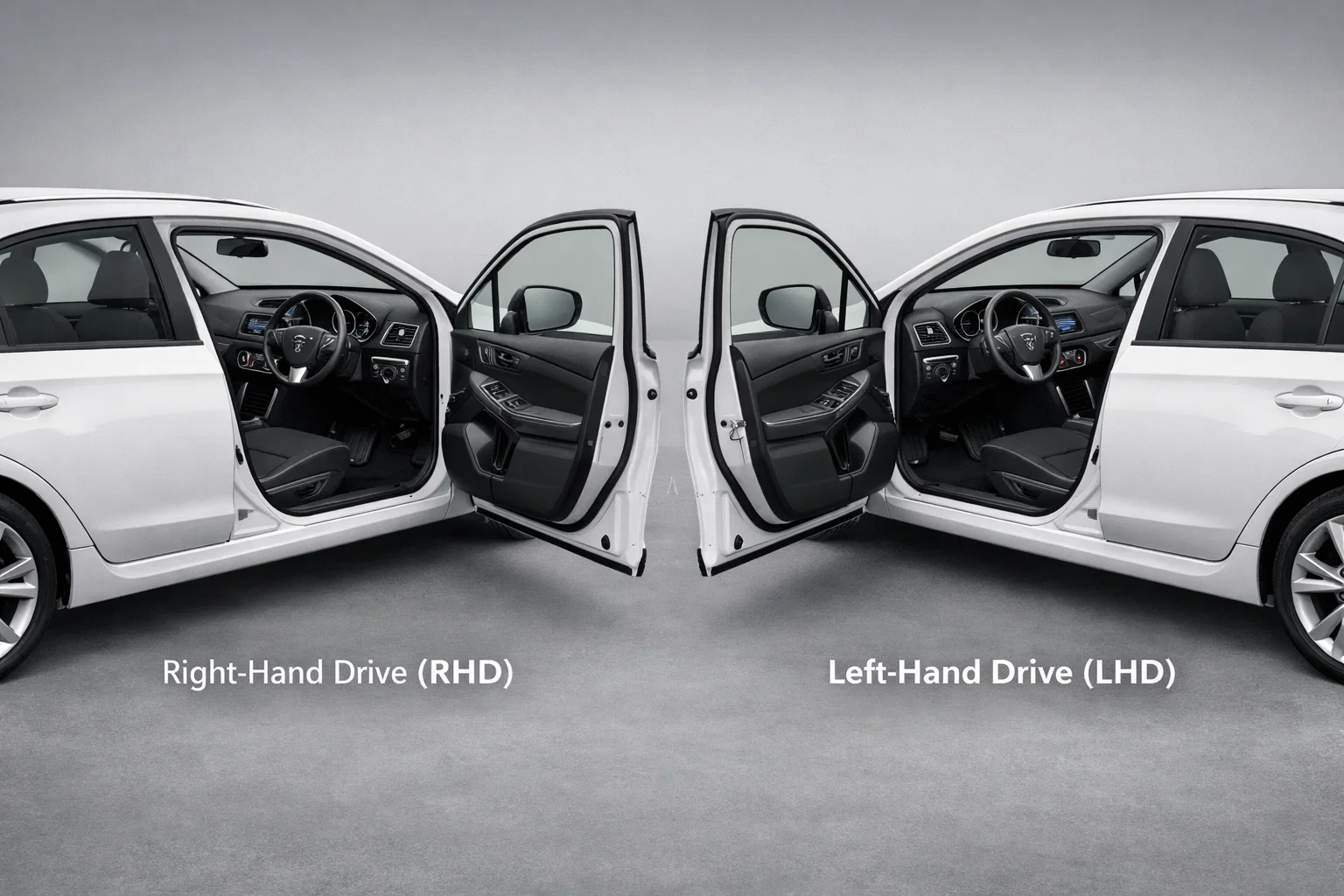
The idea that cars for the Japanese market are inherently better did not appear out of nowhere. In the 1990s and early 2000s, right-hand drive cars were massively imported into Russia from Japanese auctions. Against the background of worn-out European and American cars, they looked noticeably fresher: neat interiors, pleasant finishing materials, rich equipment, perky engines and high survivability. The conclusion suggested itself - if a car is made for the Japanese, then they get the best, and simplified versions are sent for export.
Different markets - different tasks
In practice, the Japanese automotive industry has always focused on specific markets and their requirements. The domestic market of Japan has a number of features: strict environmental standards, a complex taxation system, a cult of economy and compact size, as well as a regular and very expensive technical inspection. A car in Japan is not an object of ownership for decades, but a utilitarian tool that is changed relatively often.

Therefore, cars for the domestic market are really designed taking into account these conditions. However, this does not automatically mean "better". Rather, it is a fundamentally different approach to operation and owner expectations.
Build quality: not everything is so simple
One of the main arguments of JDM supporters is higher build quality. Indeed, many models for the domestic market were and continue to be assembled directly in Japan, while export versions are often produced in other countries. But at the same time, Japanese automakers have long built unified quality standards.
Factories in Japan, Great Britain, Turkey or other countries operate according to the same regulations and technologies. Differences are possible, but they are usually nuances, and not the fundamental gap that is often talked about in the comments.
Interior materials and philosophy of comfort
The issue of interior trim is also often cited in favor of the domestic market. Japanese versions really often pleased with soft plastic, velour instead of leatherette, a more "homely" atmosphere and pleasant little things. However, the reason for this is again not the greed of manufacturers.
The European and American markets traditionally focus on wear resistance, practicality and versatility. The Japanese buyer, on the contrary, is ready to put up with the fact that the interior loses its appearance faster, if in the first years of operation it feels more comfortable and cozy. This is a difference in philosophy, not in the level of respect for the client.

Equipment: generosity with reservations
Another frequent argument is the rich equipment of cars for the domestic market. Climate control where a regular air conditioner went for export, electric drives, advanced multimedia systems, cameras and electronic assistants appeared in Japan long before they became widespread in other countries.
But here, too, it all comes down to the specifics of the market. In Japan, the buyer is willing to pay extra for technology and comfort, while in other markets the manufacturer is forced to keep the price down by removing some options or transferring them to the list of paid additions.
Adaptation to operating conditions
There is also a downside, which fans of the domestic market talk about less often. Many Japanese cars are originally designed for a mild climate, good roads and short trips. The suspension may be comfortable, but not always designed for harsh operation. Anti-corrosion protection is often weaker, since Japan does not have such aggressive reagents and harsh winters as in Russia or Northern Europe.
Export versions, on the contrary, often receive reinforced suspension elements, other settings and additional protection, which makes them more durable outside of Japan.
Engines and transmissions: interest versus versatility
Engines and gearboxes deserve special attention. For the domestic market, there were really interesting versions of engines that were not officially supplied for export. However, this was accompanied by increased requirements for the quality of fuel, oils, difficulties with maintenance and finding spare parts.
Export power units are often simpler, less boosted, but at the same time more versatile and resistant to harsh operating conditions.
Factor of time
We cannot ignore the age of most cars that are cited today as an "example of Japanese quality". We are usually talking about cars 15–25 years old, created during the period when the Japanese automotive industry was at the peak of engineering boldness. It is not entirely correct to compare them with modern export models.
A modern car, regardless of the market, is a compromise between environmental standards, safety requirements, marketing and cost.
Myth or reality
The truth, as usual, lies in the middle. The superiority of cars for the domestic market of Japan is rather a beautiful half-truth, overgrown with legends over time. Such cars are neither better nor worse than export cars in an absolute sense - they are simply different. Sometimes more interesting in terms of equipment and atmosphere, sometimes less adapted to real life outside of Japan.
Everything is decided by a specific model, year of manufacture and operating conditions. The idealization of JDM is largely associated with nostalgia for the era when cars seemed more "soulful". But in a practical sense, a good car is not one that was intended for the domestic market, but one that best suits a particular owner and his conditions. Everything else remains a subject of conversation and romance.
Read more materials:
- The iconic Trabant from the GDR is being sold in Russia
- The Russian car market started the year with a decline
- New measures against fictitious vehicle inspections are being prepared in Russia
Comments