Translated with AI from the Russian original.
Selling a car privately is rarely limited to simply handing over the keys and receiving the money. For the seller, it is always a process in which the financial side is closely intertwined with legal nuances. Many people, after parting with the car, sincerely consider the story finished and breathe a sigh of relief. However, a few months later, they may face an extremely unpleasant surprise: letters from the State Traffic Safety Inspectorate with fines for someone else’s violations or notices from the tax inspectorate demanding payment of transport tax for a car sold long ago.
The reason for such situations lies not in inspectors’ mistakes, but in the procedure for state registration of vehicles. Until the new owner registers the car in their own name, in the official registers it continues to be listed under the previous owner. That means all consequences of its use — from automatic speeding fines to tax assessments — formally fall on that person. To avoid such problems, many sellers consider deregistering the car themselves immediately after the deal. But is this always possible, and is such a measure really necessary? Let us examine it in detail.
Why a sold car legally remains "yours"
After signing the sale-and-purchase agreement, the seller often gets the feeling that all formalities are over. In practice, however, the legally significant stage is only beginning. The current rules require the buyer to apply to any division of the State Traffic Safety Inspectorate within 10 calendar days after the transaction and register the car in their own name. Only after that does an entry on the change of owner appear in the registration databases.

However, in practice, far from everyone complies with this deadline. Some postpone the visit to the State Traffic Safety Inspectorate due to lack of time, some leave on a business trip, and some resell the car further without ever registering it in their own name. Deliberate disregard for the legal requirement is also common: the fine for late registration for individuals is 1,500 to 2,000 rubles and is not perceived as serious punishment.
Until the car is re-registered, all violations recorded by automatic cameras — speeding, running a red light, parking mistakes — are issued to the person under whose name the car is listed in the State Traffic Safety Inspectorate database. Transport tax is calculated in a similar way. The tax service annually generates assessments based on State Traffic Safety Inspectorate data as of a specific date. If at that moment the car is still registered to you, you will receive the payment notice, even if you actually sold the car long before that.
Formally, both fines and tax can be challenged by providing a copy of the sale-and-purchase agreement with the transaction date. But in practice, this means applications, visits to government agencies, and lost time, turning the sale of a car into a drawn-out and nerve-racking process.
Paper agreement: familiar, but risky
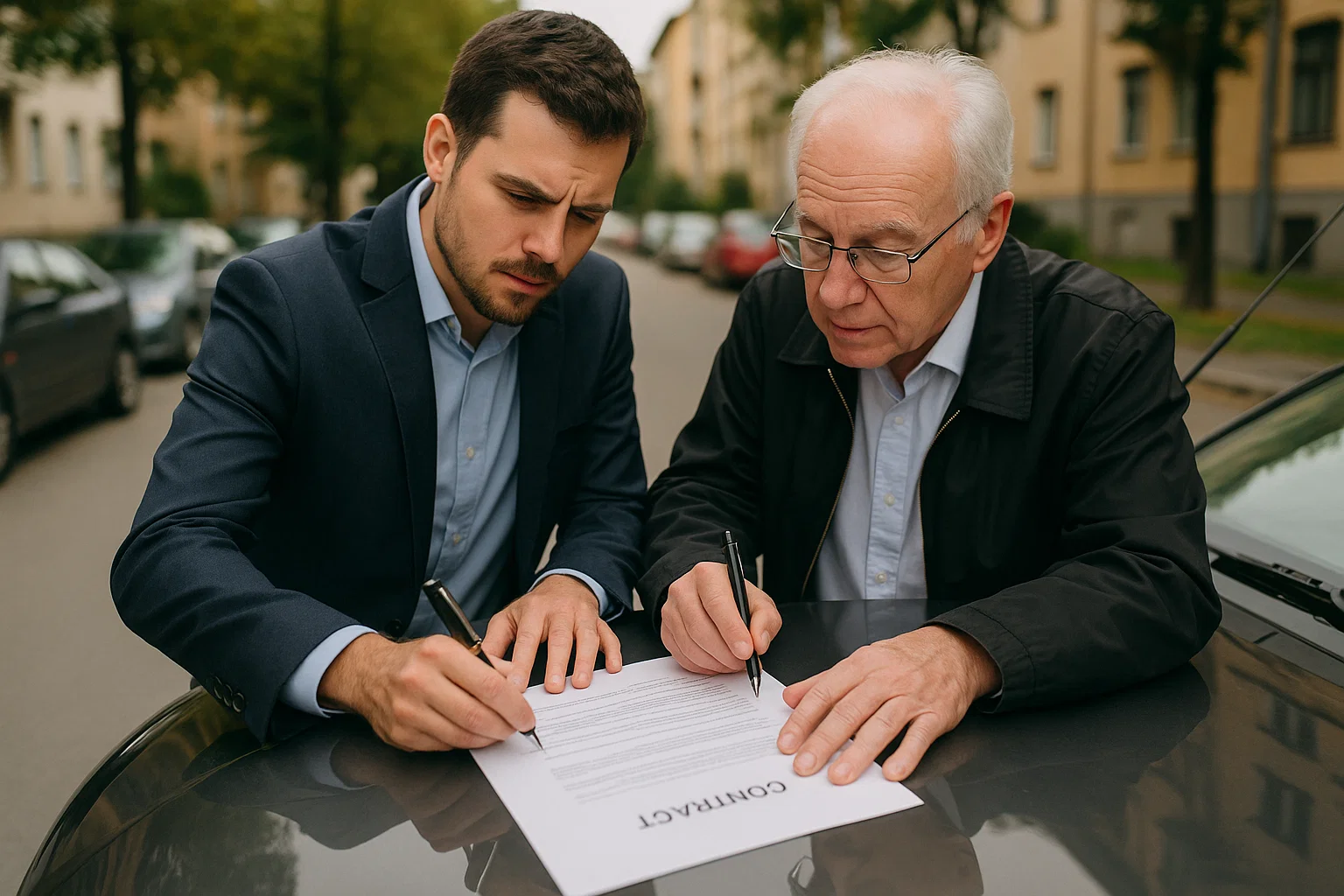
The classic way to formalize the transaction is a sale-and-purchase agreement in simple written form. It is filled out by hand or printed in three copies: for the seller, the buyer, and the State Traffic Safety Inspectorate. The document is signed by both parties, does not require a notary, and is completed quickly, without internet access.
It is precisely in this scenario that the seller is most vulnerable. Immediately after signing a paper agreement, it is impossible to deregister the car. The law establishes a clear sequence: first, the buyer must register the car in their own name within 10 days. Only after this period expires, if registration has not taken place, does the seller gain the right to initiate termination of registration.
In effect, the seller remains in a "suspended" state for at least a week and a half, fully dependent on the buyer’s good faith. The only way to control the situation is verification. Ten or eleven days after the transaction, it is necessary to visit the official State Traffic Safety Inspectorate website and use the "Vehicle Check" service by entering the VIN or state registration number. If it turns out that the car is still listed under your name, action must be taken immediately.
The seller has the right to apply to any division of the State Traffic Safety Inspectorate or submit an application through the Gosuslugi portal to terminate registration of the vehicle due to the sale. The application is accompanied by a passport, the vehicle passport with a note about the new owner, and the sale-and-purchase agreement. After that, the car is deregistered, and responsibility for fines and taxes is removed from the seller. At the same time, the buyer faces additional difficulties: to register the car, they will have to restore the registration, which often leads to conflicts between the parties.
Electronic agreement: instant protection for the seller
With the development of digital services, an alternative and safer option has appeared — an electronic sale-and-purchase agreement executed through the Gosuslugi portal. This mechanism was created specifically to eliminate the risks associated with waiting for the buyer’s actions.
The procedure begins with the creation of an electronic agreement in the personal account of one of the parties to the transaction. The document includes the parties’ passport details and information about the car from the vehicle passport and vehicle registration certificate. The second party receives a notification and confirms the terms by signing the agreement with an electronic signature generated during registration on the portal.

The key point is that after the electronic agreement is signed, information about the change of owner is instantly transmitted to the State Traffic Safety Inspectorate database. From a legal point of view, the car is considered sold immediately. Unlike a paper agreement, the seller gains the right to terminate the car’s registration at once, without waiting for the 10-day period to expire. An application for deregistration is submitted through the same portal, and the system automatically confirms it on the basis of the valid electronic sale-and-purchase agreement.
For the buyer, the procedure is also simplified: they have a full-fledged electronic document for registering the car and the same 10 days to register it, but without risk to the previous owner. The electronic agreement is free of charge and significantly reduces legal risks, although it requires both participants to have verified accounts on Gosuslugi, which sometimes becomes an obstacle.
Algorithm of actions for the seller
Based on the features described above, the seller should follow a clear plan. At the first stage, it is important to choose the method of formalizing the transaction. If technically possible and the buyer agrees, preference should be given to an electronic agreement through Gosuslugi. Yes, this will require a little more time during the meeting, but it will eliminate potential problems in the future. After signing the electronic sale-and-purchase agreement, the seller immediately submits an application to terminate registration — at that point, their participation in the process ends.
If the transaction is executed under a paper agreement, it is necessary to be prepared for a period of uncertainty. One copy of the sale-and-purchase agreement must remain with the seller. On the day of the transaction, an entry about the new owner is made in the vehicle passport. Next, it is reasonable to set a reminder for the 11th day after the sale and check the car’s status in the State Traffic Safety Inspectorate database. If the car has not been re-registered, you should not wait or rely on the buyer’s promises — the application for deregistration must be submitted immediately.
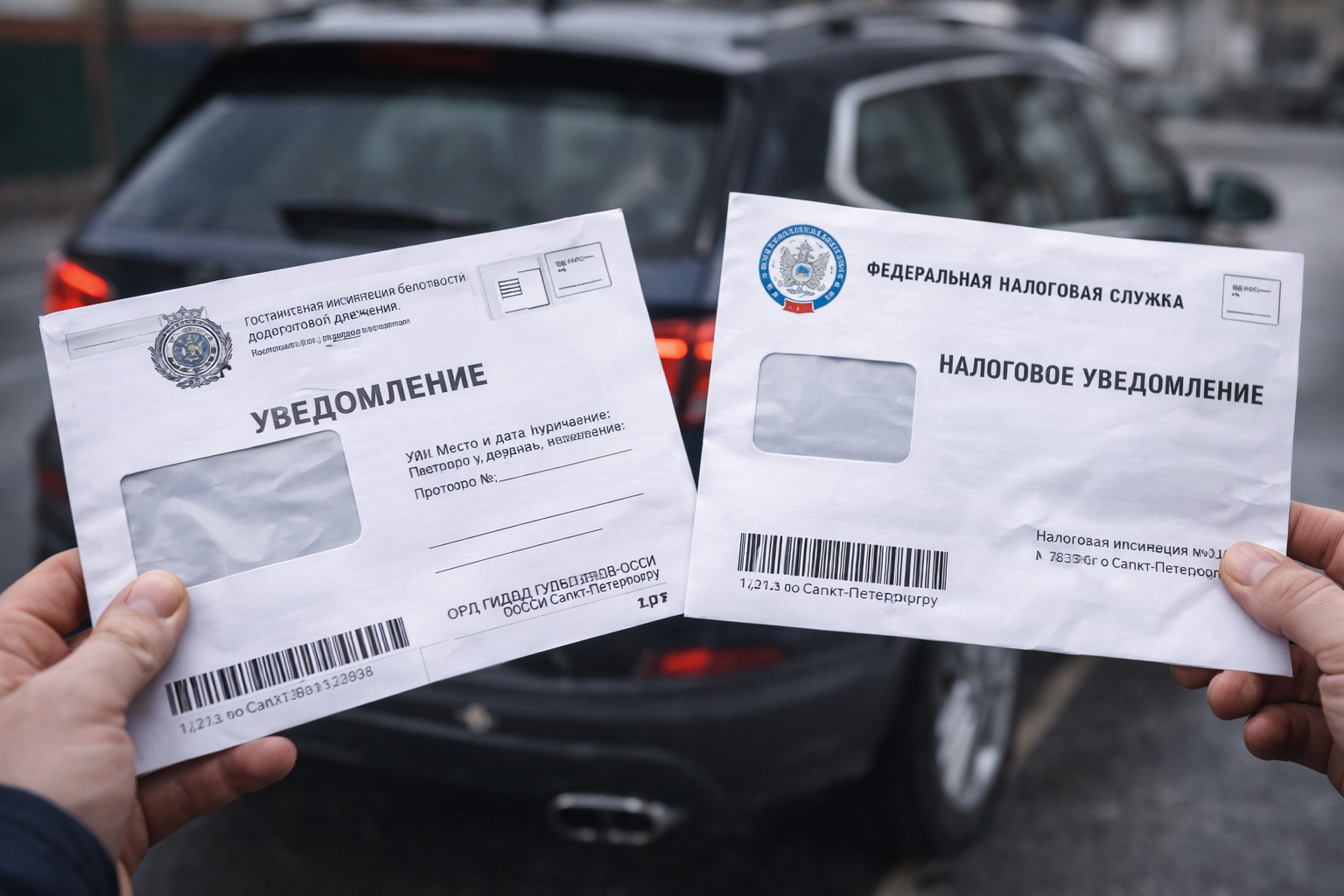
It is recommended to keep all documents related to the sale: the agreement, the acceptance-transfer certificate, and correspondence. They may be needed if fines or tax charges still arrive and have to be challenged.
From a legal point of view, the seller is not obliged to deregister the car after its sale — primary responsibility for registration lies with the buyer. However, practice shows that relying solely on another person’s good faith is risky. Deregistration is not an obligation, but the seller’s most important right, allowing them to protect themselves from financial and legal problems.
An electronic sale-and-purchase agreement through Gosuslugi radically simplifies this protection, allowing the connection with the car to be severed almost instantly. When using a paper agreement, the seller’s strategy should be active and consistent: control after the expiration of 10 days and quick action if the buyer remains inactive. Modern procedures provide all the tools needed to ensure that the sale of a car does not leave unpleasant "tails" in the form of fines, taxes, and disputes several months later. The main thing is to know these tools and use them in time.
Read more materials on the topic:
- Right-hand drive in Russia: authorities explained what to expect in 2026
- Spare parts against drivers: the new logic of insurers
- The holiday is coming to us? What changed for drivers from January 1, 2026