Comparing two iconic cars of the late Soviet era is not an easy task. These cars differed fundamentally in character and philosophy. It is not just about comparing the VAZ-2109 and AZLK-2141: in fact, these were the best developments that the two largest automobile corporations in the country were capable of. Moreover, these corporations were in constant competition with each other, including for the distribution of budget funding.
It was the Volga Automobile Plant and the Moscow Plant named after the Leninist Komsomol that provided the production of about 90% of all passenger cars in the USSR. In the second half of the 1980s, there was a catastrophic shortage of funds for the full development of the automotive industry. There was no talk of building new enterprises at all. In these conditions, the strongest had to survive - the one who could not only hold the market, but also ensure the inflow of currency through exports.
Therefore, the entry into the market in 1987 of the VAZ-2109 "Sputnik" and the new "Moskvich"-2141 became a truly significant event for the entire industry.
What united both models
The first thing that united both cars was the high price. The production of both the VAZ-2109 and the AZLK-2141 was extremely expensive for the factories. As a result, the cost of the "forty-first" reached 9632 rubles, and the more compact and lighter "nine" was officially sold for 9000 rubles.
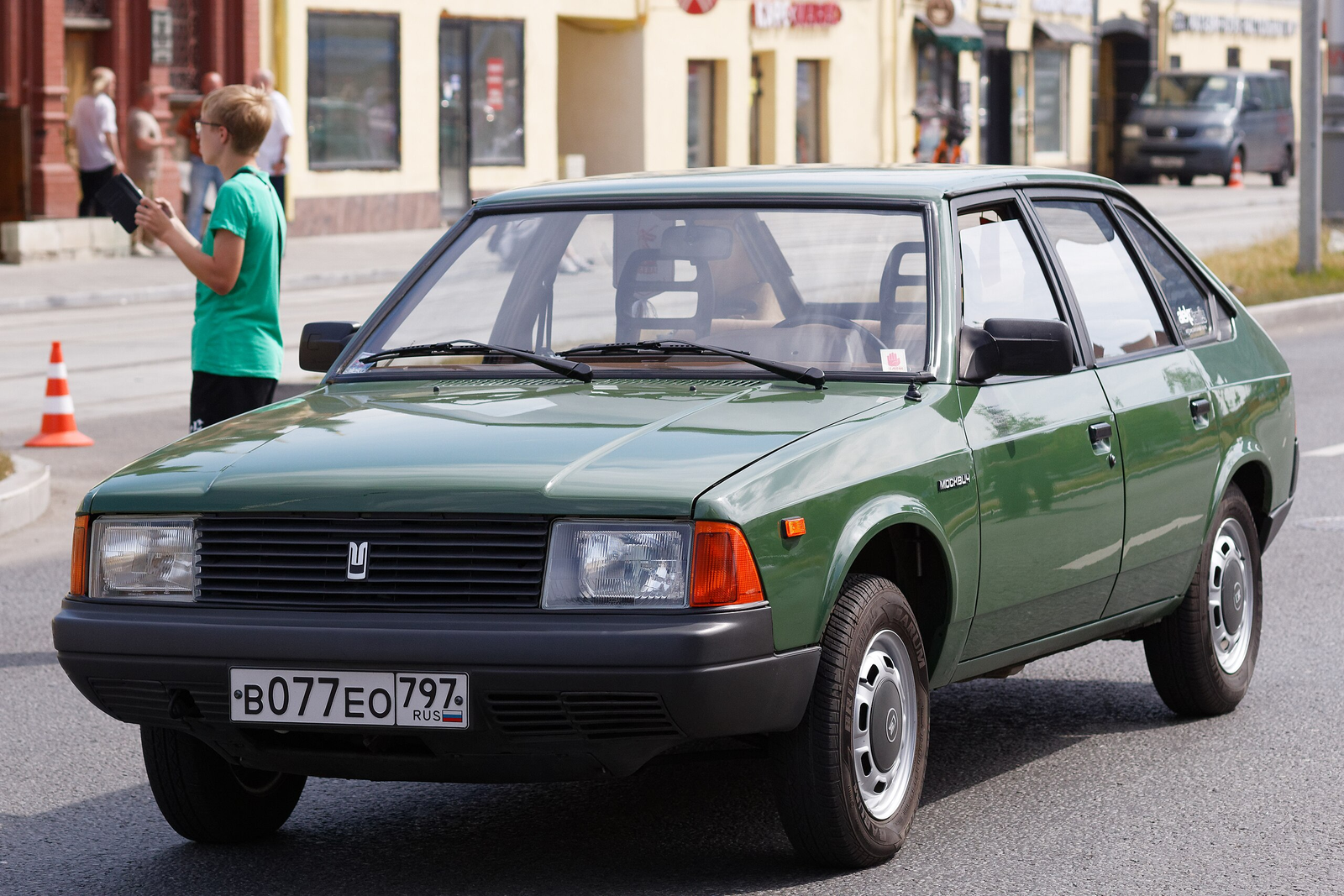
Both models had front-wheel drive, a modern design for those times, and decent dynamic characteristics. Buyers who managed to purchase a "Sputnik" or "Moskvich" often noted the feeling that the domestic automotive industry had finally broken with the aesthetics of the 1960s.
The first 5344 copies of the AZLK-2141, produced in 1987, were sold out almost instantly. Moreover, the earliest cars were equipped with a Zhiguli engine 2106-70, which was perceived as a sign of special status and was considered a kind of chic among metropolitan and regional business people of the middle level.
Later, the engines from the "six" ran out, and UZAM-331.10 began to be installed on the next batches. However, this did not affect demand in any way. Thus, in 1988, 21,812 cars were produced, and the entire circulation was sold without delay.
The "Sputnik" started even more confidently. In 1987, VAZ assembled 25,060 cars, and already in 1988, the production of "nines" increased to 101,345 copies. The Togliatti plant turned out to be much better prepared for the launch of the new model.
Evolution of "Samara"
Realizing the lag in engine power, in the 1990s, VAZ developed a more powerful version of the "Samara" with a 1.5-liter engine. In parallel, the appearance was slightly updated: a long wing appeared, the decorative mask above the headlights disappeared.
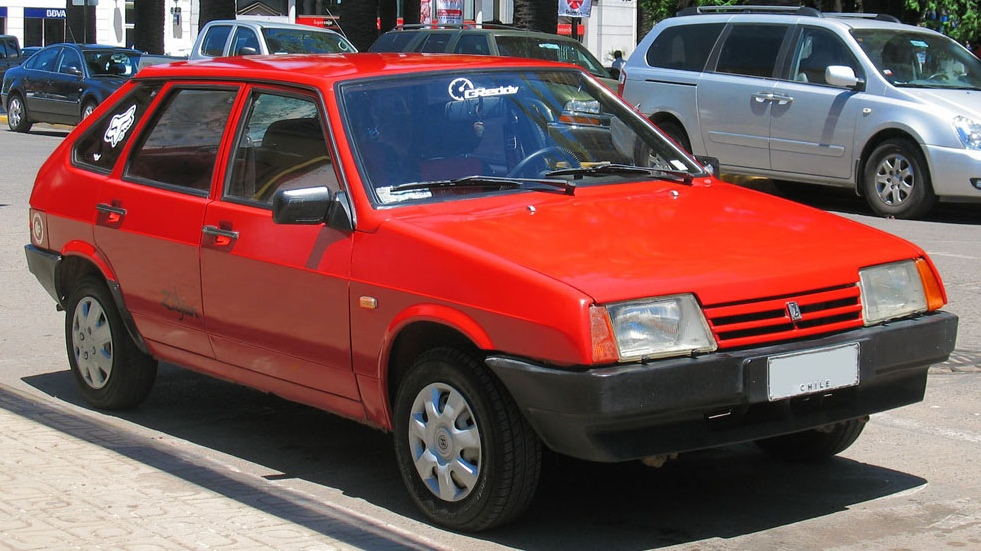
At the turn of the century, the VAZ-21099 received a new front panel with a more solid design, and most importantly, an engine with distributed fuel injection. It was this that allowed to maintain interest in the "Samara", despite the sharply increased competition from used foreign cars.
The height of the rivalry and attempts to save Moskvich
At some point, the management of AZLK realized that the popularity of the model was rapidly declining. The Moscow plant was not ready for the massive influx of used, but more attractive foreign cars. The prestige of owning a "Moskvich"-2141 noticeably faltered.
Fashion shifted towards used Audi and BMW, and wealthy buyers increasingly switched first to used, and then to new Mercedes-Benz.
In response to this, the factory hastily began to look for new images for the model. This stage largely became the beginning of the end. AZLK, with the support of the first leaders of Moscow, tried to maintain the reputation of the car by producing special versions: "Yuri Dolgoruky", "Svyatogor", even the diesel "Aleko".
An updated interior appeared, the engine volume of UZAM was increased to 1.8 liters, later they began to use Renault power units and individual imported components. Famous actors were invited for advertising campaigns, attempts were made to sell cars in Germany with large discounts - just to maintain interest in the model.
Strengths and weaknesses of AZLK-2141
It cannot be argued that the Moskvich-2141 was an unsuccessful car. On the contrary, as a family car, it looked very decent. In essence, it was one of the French models, adapted by AZLK engineers. There were no design flaws in the car.
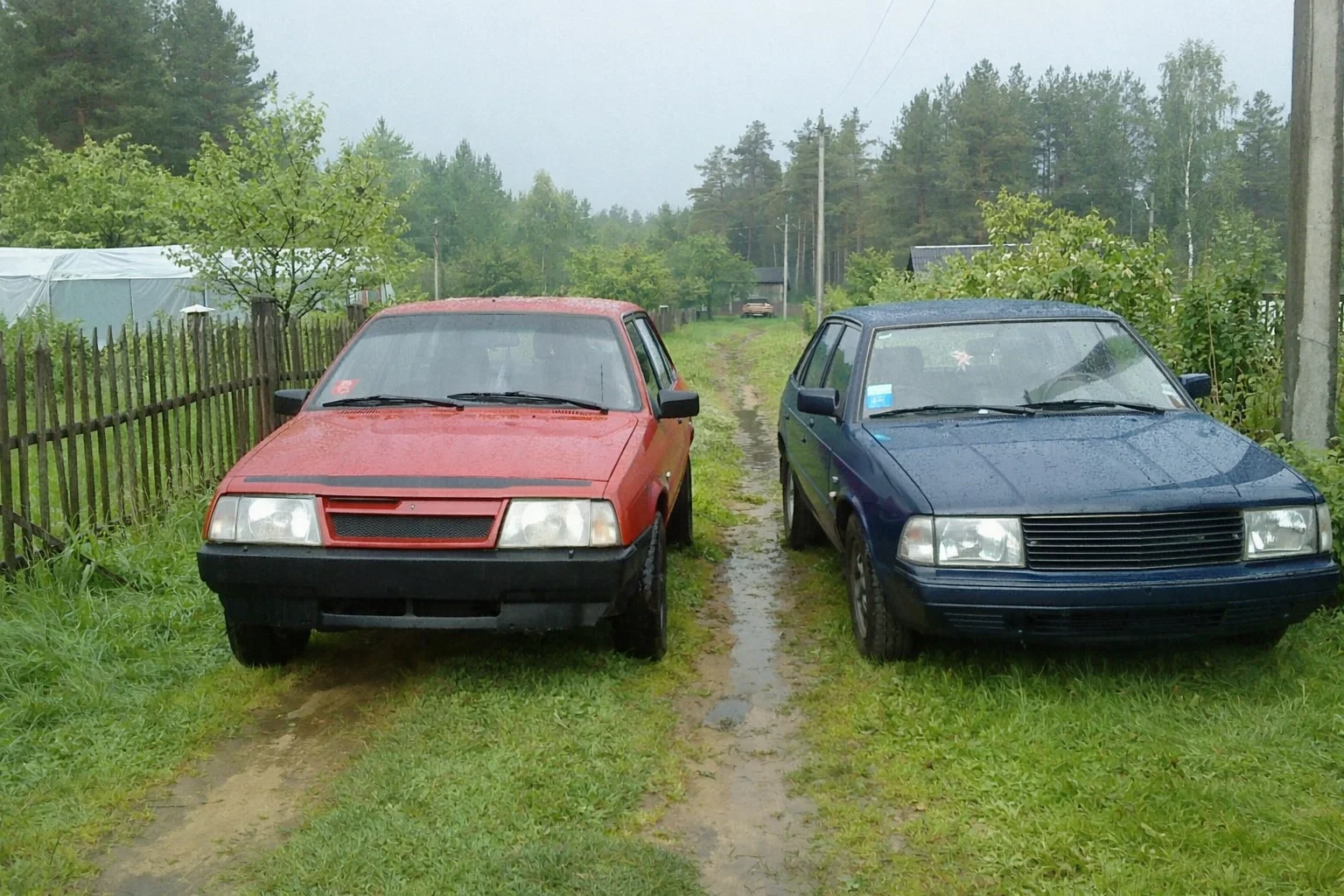
However, the car turned out to be larger and heavier than its competitor, which made it less dynamic and more clumsy compared to the "Sputnik" and "Samara". But the "forty-first" had an important advantage - an exceptionally soft and smooth ride, as well as a spacious interior, which easily accommodated five people. In Samara, a maximum of three or four passengers felt comfortable.
Paradoxically, this is what played against the model. Instead of reducing the cost and focusing on the mass buyer, the management of AZLK and the city authorities tried to turn the 2141 into a kind of elite car. As a result, people stopped buying it.
Why Samara won
At the Volga Automobile Plant, they initially relied on a different strategy. They understood that success would be ensured by affordable spare parts, a relatively low price and ease of operation.
Imported cars, massively imported into the country, often broke down, and the lack of service and shortage of parts made their maintenance extremely expensive. Against this background, the "Samara" with its maintainability and clear logic of ownership looked like the best choice.
It was thanks to the correctly chosen strategy of the "people's car" that the Volga Automobile Plant managed to stay afloat and not repeat the fate of AZLK and ZIL. As a result, the VAZ-2109 became a truly iconic car of the late 1980s and early 1990s.
Read more materials:
- Plastic in engines: progress or calculation
- Belarusian tractor withstood the ice test
- Parameters of the updated Aurus Senat revealed
Comments