In the spring of 2022, Motorinvest signed a special investment contract with the Ministry of Industry and Trade and is only now approaching the main stage - launching body welding and painting. So far, the full cycle has only been mastered for the Evolute i-Space series hybrid, but the updated i-Joy and i-Sky electric vehicles will join it in the spring of 2026. Thanks to the new system for calculating the utilization fee, the enterprise from the small village of Grebenkino has become one of the key beneficiaries of state support: in the coming years, almost all serial hybrids and electric vehicles of the Russian market will be born here. This became an ideal opportunity to walk through the welding and painting lines, which started on December 1 - exactly on the day the new rules were introduced.
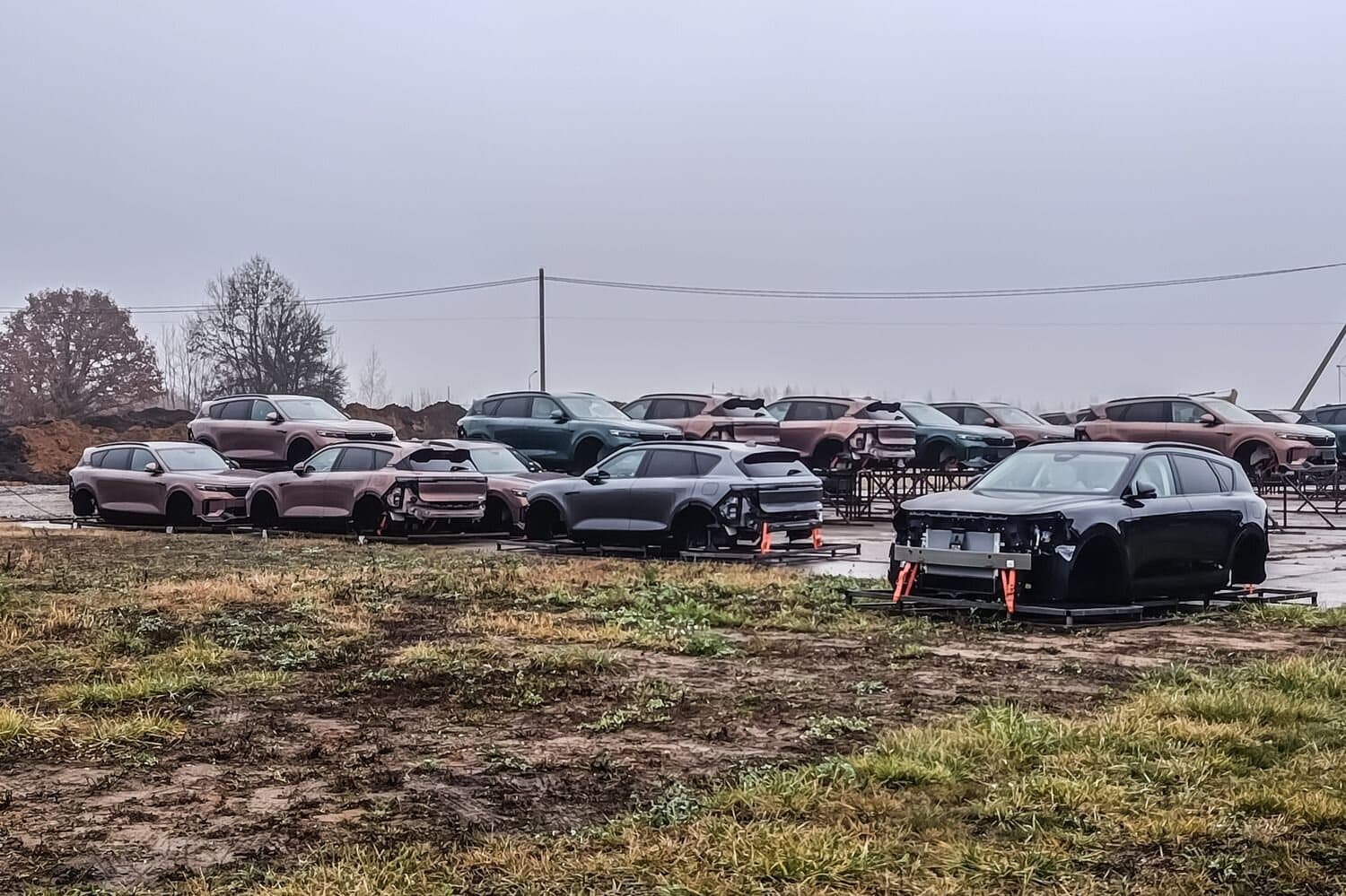
Interestingly, Motorinvest lived comfortably without its own body production: new benefits allow hybrid and electric models to bypass the utilization fee when reaching only 1000 localization points - many times less than required from ICE manufacturers. At the same time, several models of the plant have already confirmed more than double the reserve - over 2000 points, 1850 of which are awarded for scientific and design work, that is, in fact, for preparing the site for production.
In parallel, a new production geography is emerging: the second generation of the i-Joy, costing 1.8 million rubles, has been decided to be assembled in the Moscow region - legally through the company "DF Trading", actually on the territory of the former "Gzhel Electrosolyator Plant". In the Lipetsk region, on the contrary, a welding line is being prepared for the future localization of i-Joy and i-Sky bodies. That is why the practical i-Space became the first "object" for the full cycle - the bet is that the hybrid, in conditions of distrust of "electric cars", is able to become a sales driver. But so far the statistics are modest: from 51 to 78 cars per month, and the company does not hide - if the i-Space does not take off, the season will be difficult.
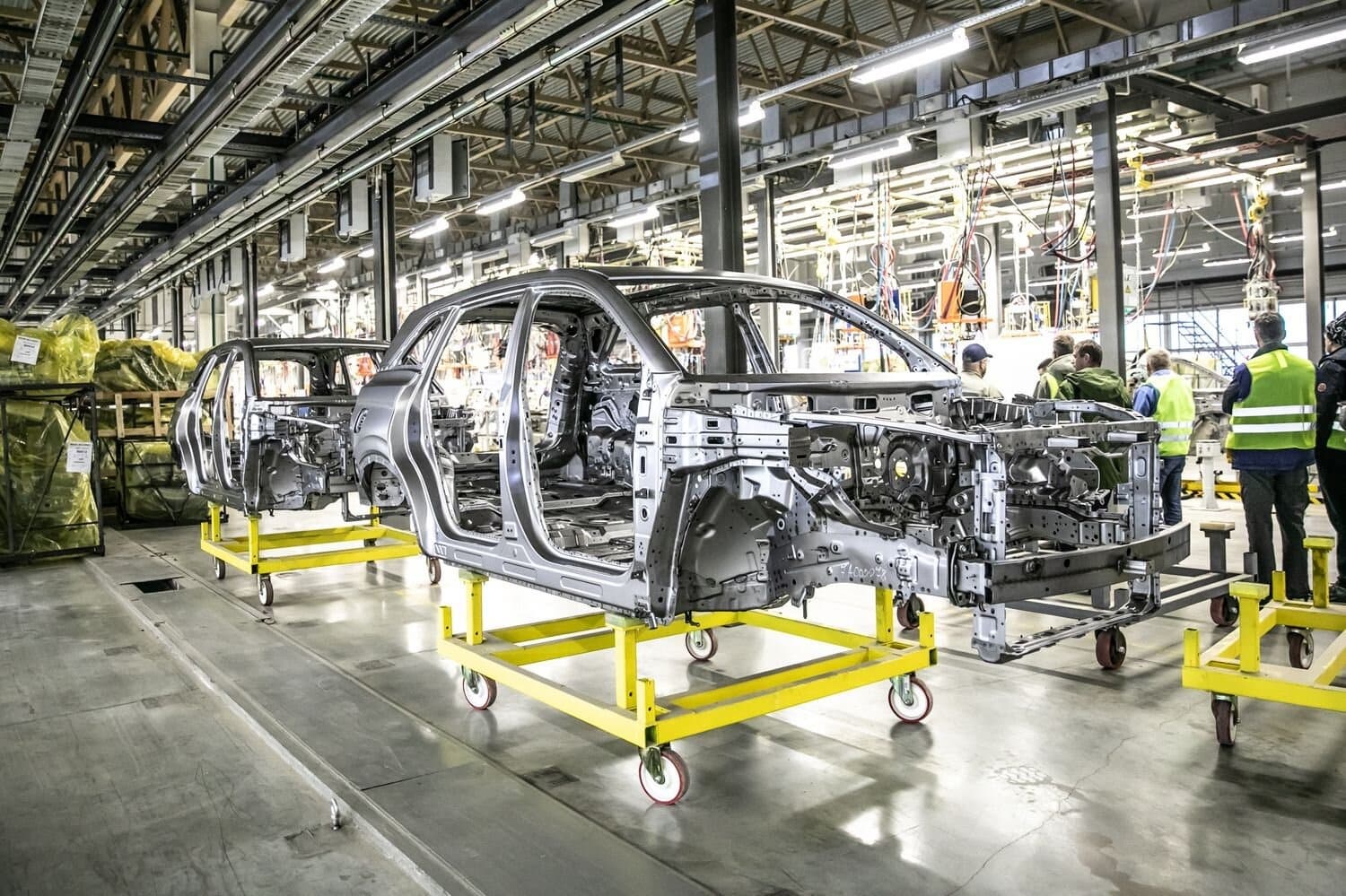
So far, the welding line has accepted only 70 finished bodies, but an important part of the processes has already been localized: technological fluids, primers, varnishes and acids - all of Russian origin. The color palette is currently limited to two shades, but three more will appear in the coming months. Paints are supplied by the Litum plant - a former division of Jotun Group. Stamping is now completely Chinese, but negotiations with NLMK are in full swing: it is planned to produce the hood, doors, fenders, trunk lid and, probably, the roof. To get additional localization points, you need to immediately provide at least 30% of the mass of body parts from Russian steel - this is exactly what the logistics are being built for.
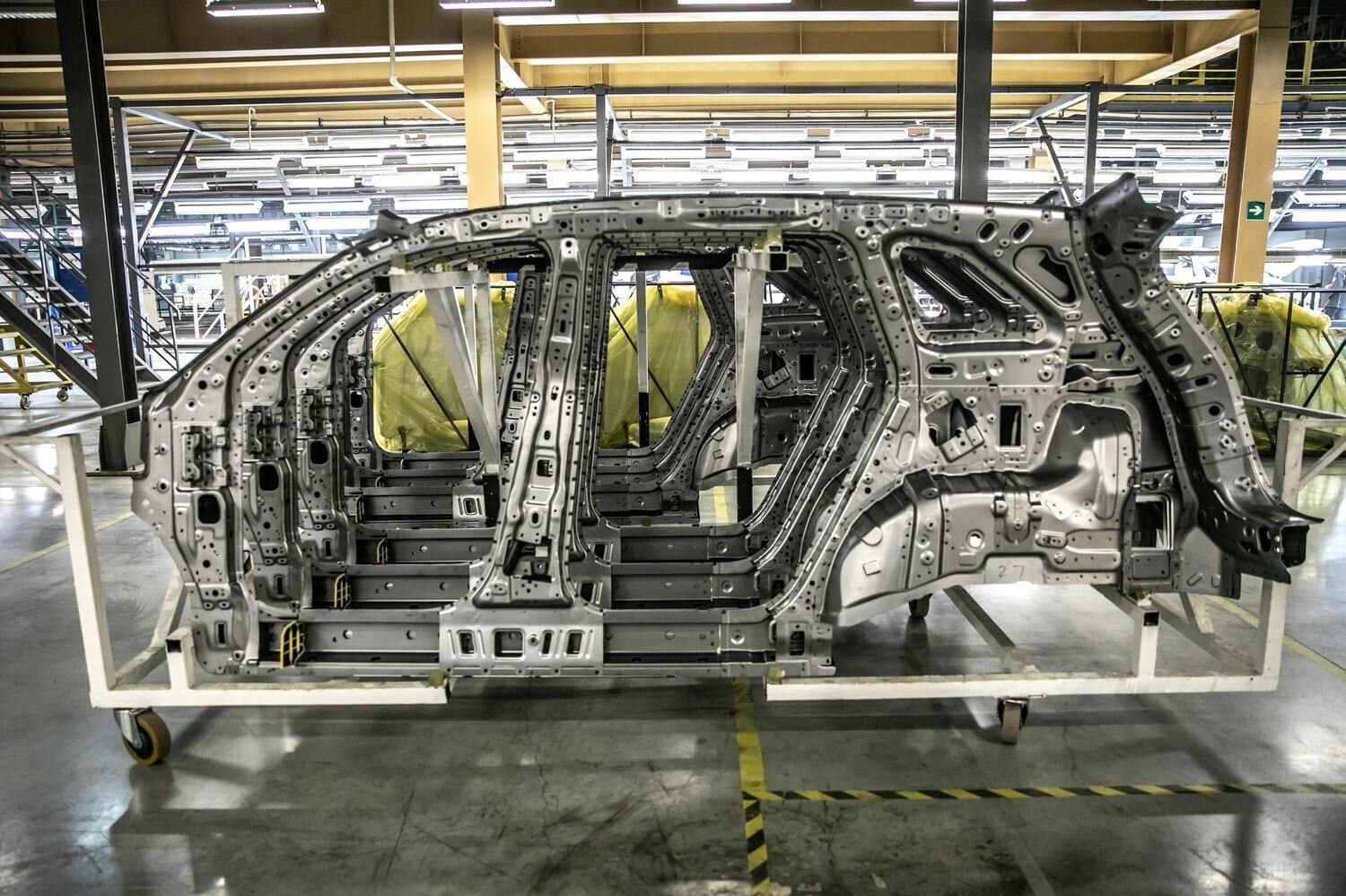
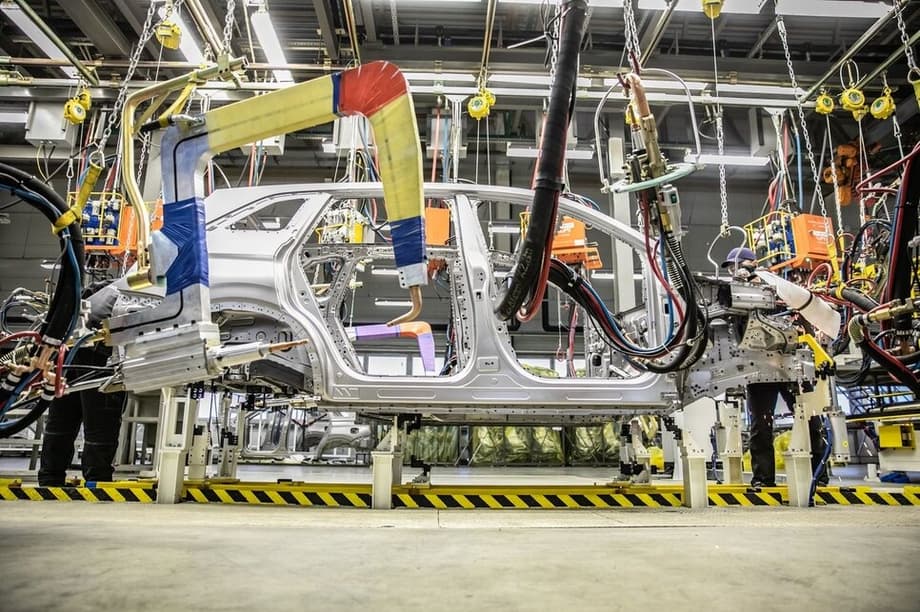
The welding method is still close to CKD-2: the body is assembled from large sub-assemblies, and the sidewalls come whole. The line consists of ten posts and stretches for only one hundred linear meters. Before welding, the parts are aligned by automation, and the operator works with tongs, welding amplifiers and guides. Then the body is sent to the main conductor, undergoes geometry control, door mounting and defect correction. Productivity - eight bodies per hour, but they plan to reach twelve by the spring by speeding up the conveyor and hiring additional operators.
The painting processes turned out to be even more laborious: the body passes through 13 baths, including phosphating, activation, degreasing and two stages of heat treatment at 200 degrees. The first layer of primer is applied in a cataphoretic bath, the second - by Japanese-made robots. Every technological day begins in the morning with a "test body", according to which the operation of the equipment is adjusted. Quality control is very strict: specialists with extensive experience work in the workshop, and teams from China monitor the slightest defects in the application of the primer. Improvements are still inevitable: the transport oil may not be completely removed, which is why the surface has to be cleaned and re-sanded manually.
About 15 masters are involved in painting, the rest are undergoing a four-month internship. In total, the company employs 794 employees, but the staff will grow to two thousand next year - due to the expansion of production to two new models. Theoretically, the painting line is capable of producing a body every four minutes, but so far only 20 pieces are produced per day: technologists assure that there is no need to rush now.
After the tour, the guests of the plant are traditionally fed in the local canteen - lunch costs 100 rubles, although salaries at the enterprise, according to employees, are not the highest. At the same time, active recruitment is underway at the Moscow region site: a mechanic is promised from 85 thousand, a line operator - from 80, a technologist - from 110 thousand rubles, which looks more attractive against the background of recent cuts in the industry.
The plant is really developing: new lines, investments, preparation for expanding the model range. But there is another side - due to the new utilization fee scheme, the mass market has actually been denied access to the usual foreign hybrids and electric vehicles. The future of Russian "green" technology is now concentrated in one place.
Read more materials:
Now on home

Two cars of the same era, created for currency export, but with different philosophies

The crisis, compromises, and wrong decisions that buried a promising model


Resident of Sverdlovsk Region Recovers 192,000 Rubles and Receives Compensation

At the end of 2025, the crossover topped the sales ranking of new cars in the capital

The legendary racer moves around in a wheelchair and is under constant medical supervision

What malfunctions do owners of the Togliatti flagship most often encounter?

Slow shifting in the cold is not normal, but the first sign of transmission problems

The car features improved design and electronics

Now it's Rolls-Royce

Even with the recycling fee, the car will cost less than from official dealers

The model also received new trim levels