The early 2000s were a difficult period for most Russian industrial enterprises, and the Gorky Automobile Plant was no exception. Factories were looking for products that could be successfully sold abroad and generate revenue in hard currency. At GAZ, they were actively experimenting with alternative versions and modifications of the Volga, trying to give it a more modern and attractive look.
However, even the updated design did not hide the main thing: the rounded body shapes still revealed the Soviet origin of the model with all its characteristic shortcomings. In the early 2000s, the situation changed with the arrival of a new owner — the Gorky Automobile Plant came under the control of Oleg Deripaska. It was then that the company received a strict directive to search for foreign alternatives and fundamentally different models.
How the GAZ-Siber Project Emerged
The result of these searches was the purchase of one of Daimler-Chrysler's car assembly plants. It was at this site that two mid-size sedans, the Chrysler Sebring and Dodge Stratus, were previously produced. The Chrysler Sebring was chosen for the Russian project, and there were several reasons for this decision.
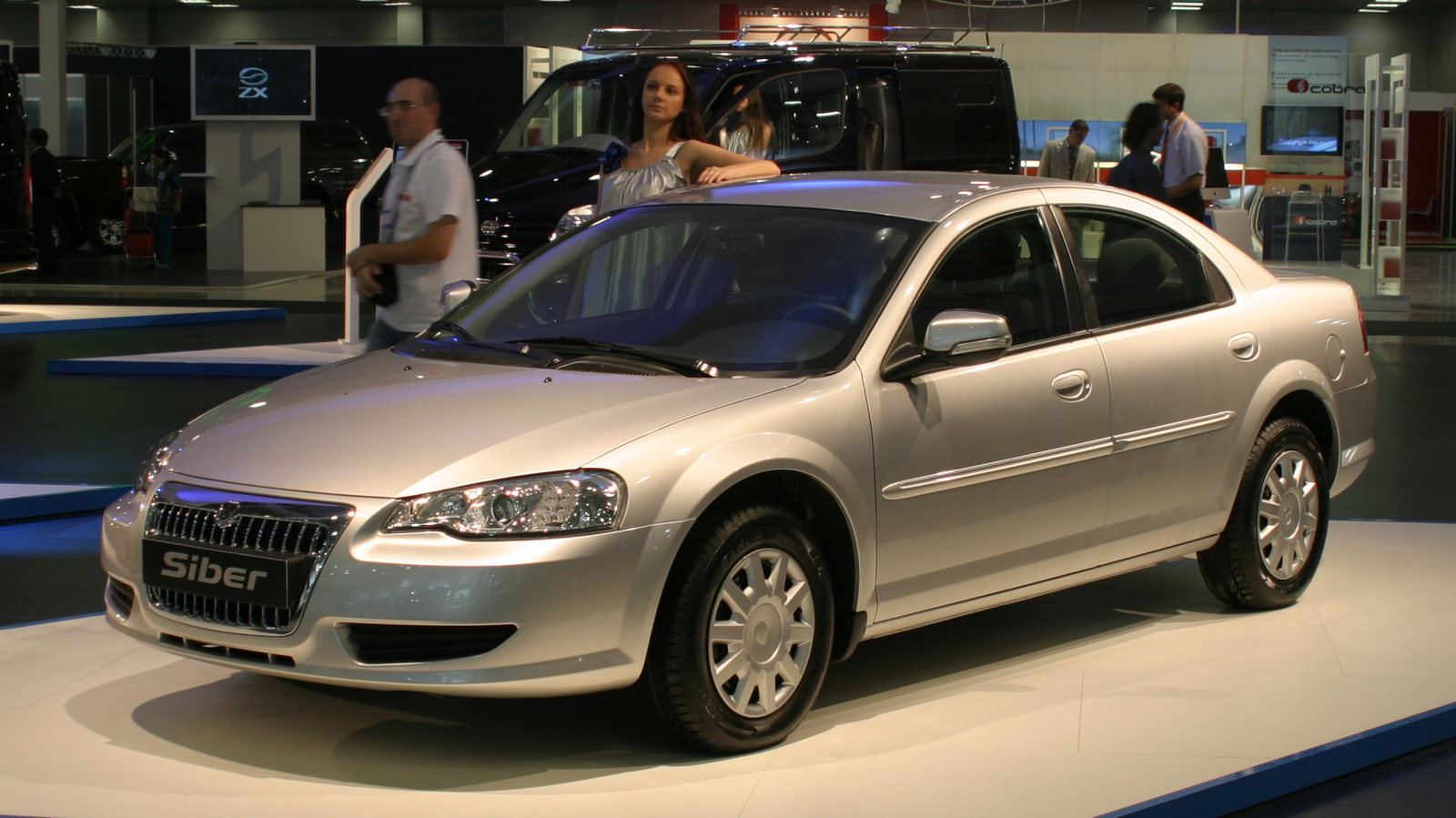
Firstly, the Dodge Stratus was considered too simple in terms of exterior design. Secondly, key elements of the Sebring's passive safety — the shape of the hood, headlights, radiator grille, and bumper — already met the requirements of Russian GOST standards, which significantly simplified the adaptation of the car for the local market.
Additionally, it was possible to save money on finding a design contractor. In the UK, a body shop called Ultramotive was found, which agreed to refine and adapt the appearance of the future GAZ-Siber. From a budgetary point of view, the contract looked very attractive. However, the choice of a British bureau to develop the design of the new model was atypical: in such projects, they usually turn to Italian or Swiss body shops, which are considered the world center of automotive fashion. There, however, different rates, deadlines, and much stricter requirements for the original design of the car apply.
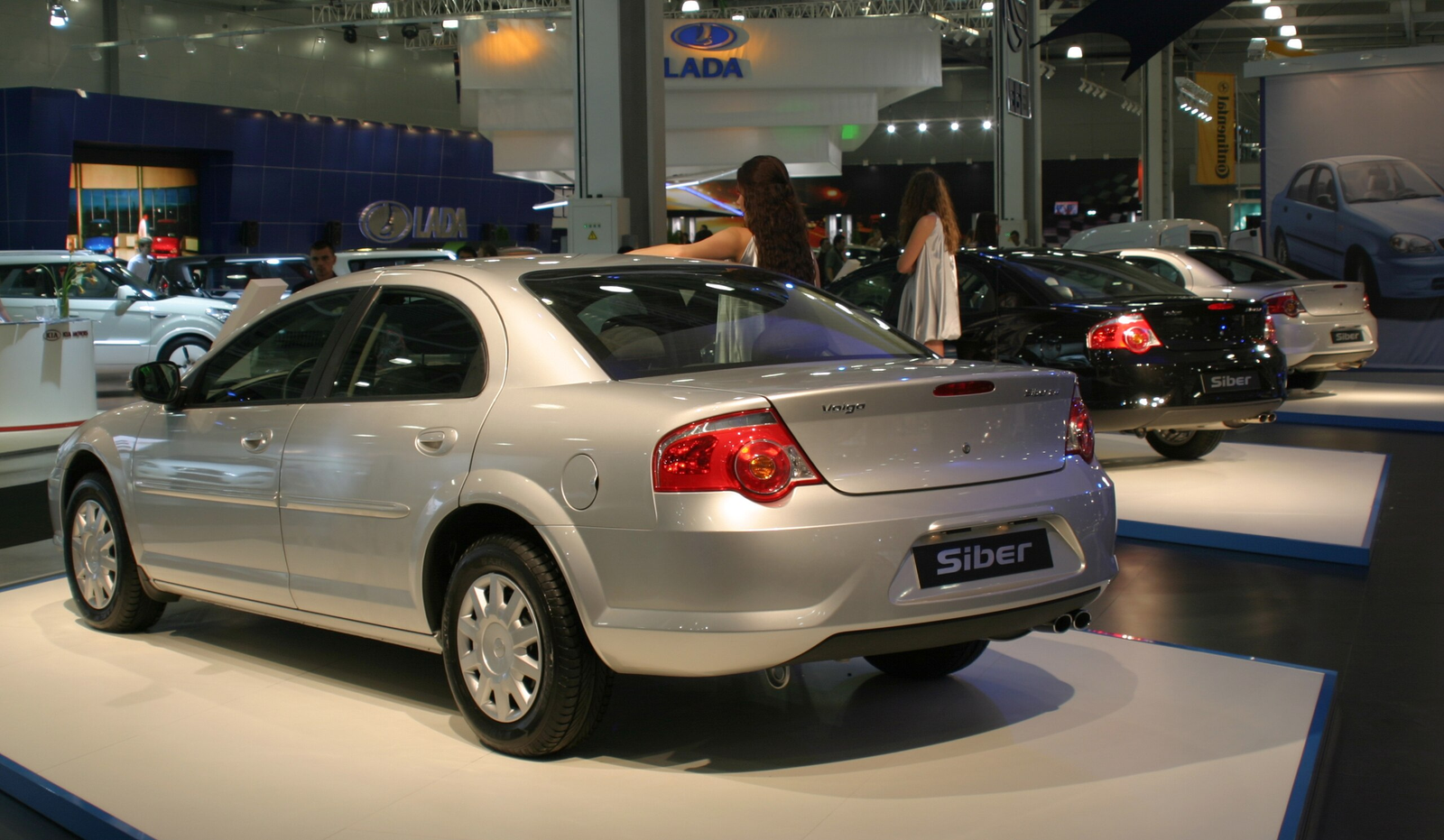
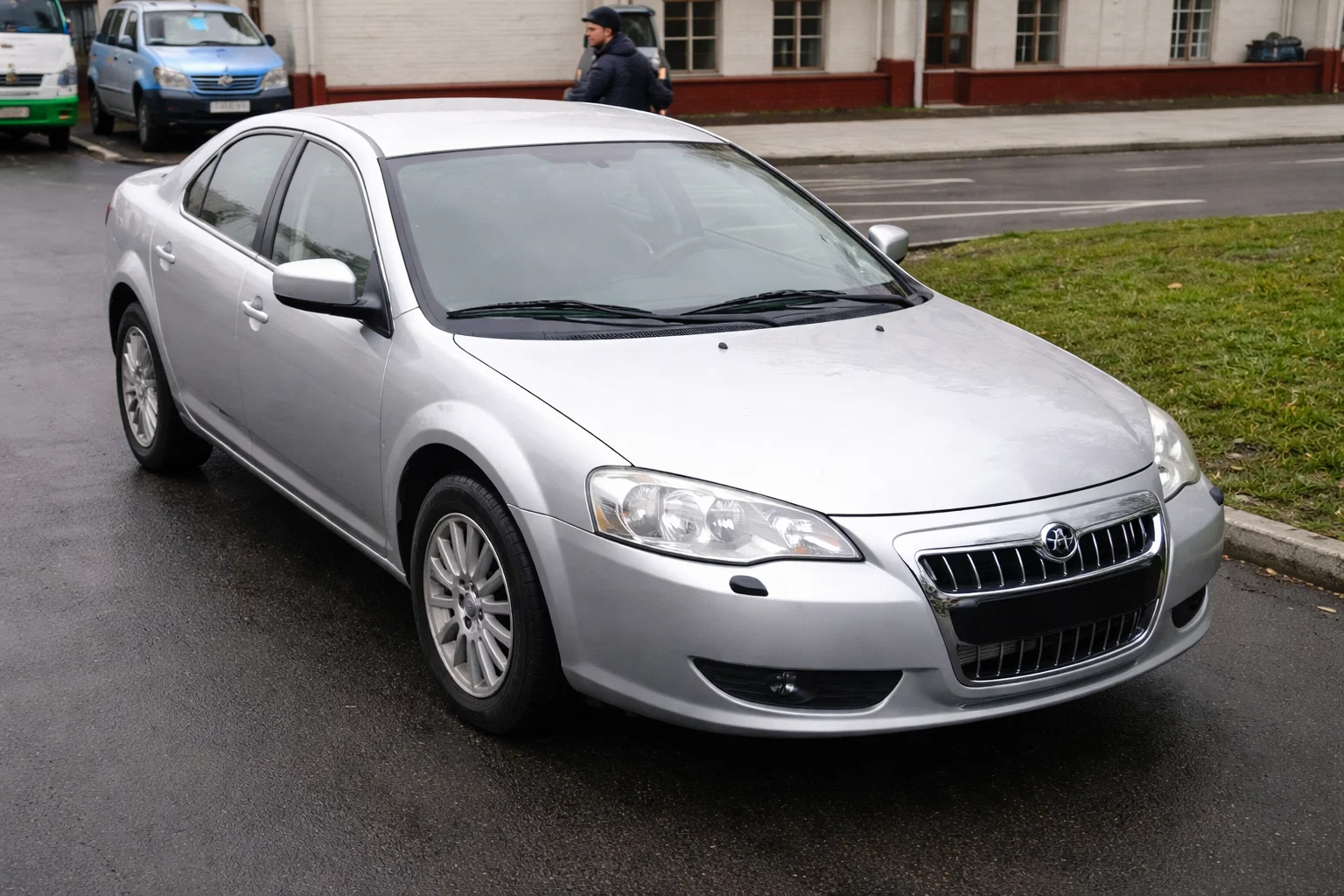
As a result, Ultramotive specialists limited themselves to replacing branded elements. The GAZ-Siber changed the radiator grille with the "bird" emblem, headlights, and bumpers, using components already available in the warehouses of the Gorky Automobile Plant. They did not rework the cladding and general contours of the body. As a result, the car retained its American proportions, but noticeably lost its effectiveness.
The new prototype received an adapted interior — the version of the interior that GAZ was able to produce on its own. At the same time, the car lost the smooth ride characteristic of American sedans, which became one of the key differences from the original Sebring.
Technical Solutions and Their Consequences
In the process of adaptation, the ground clearance was reduced and the suspension stiffness was increased. On smooth city streets, the GAZ-Siber demonstrated quite decent handling and an acceptable level of comfort for passengers. However, outside the city, on broken intersections and uneven roads, the car noticeably shook.
At the same time, the equipment looked competitive by Russian standards of that time. The sedan was equipped with airbags, an anti-lock braking system, and air conditioning. For most domestic buyers, this set would be quite enough.
Key difficulties arose with the power unit. Initially, the American specialists involved in the launch of production insisted on installing a standard Chrysler engine with a volume of 2.7 liters. They emphasized that the buyer would accept the GAZ-Siber only if the car provided dynamics and a sense of real speed, and all other parameters would be secondary.
The project management adhered to a different position. They abandoned the more powerful engine, focusing on simplifying the design. As a result, in the early years, the GAZ-Siber was equipped with 2.4-liter engines with a capacity of 143 horsepower, produced in Mexico. Buyers were offered two transmissions: a four-speed automatic transmission and a five-speed manual, both of quite decent quality.
The engines themselves turned out to be expensive, and the engines of the Zavolzhsky Motor Plant did not meet the required power level. At the same time, ZMZ promptly raised prices for its units, taking advantage of the situation. Despite the efforts of the specialists of the Gorky Automobile Plant, the final cost of the car turned out to be high.
Crisis and End of the Project
In 2008, the Siber-Volga sedan was estimated at about half a million rubles. However, it was at this moment that the main test began. The global financial crisis of 2008 led to the actual collapse of supplies and production chains.
The Gorky Automobile Plant tried to maintain the production of GAZ-Siber for some time, but low demand quickly made the project economically unprofitable. The mass Russian buyer never came to the model. Only three to five thousand cars were sold per year, while at least ten thousand were required to reach self-sufficiency, even with state support.
In 2010, the production of GAZ-Siber was finally stopped. The remaining cars were distributed among small companies and taxi services.
What Could Have Been Done Differently
According to experts, in addition to the financial crisis, the decisions of the developers themselves played a significant role in the closure of the GAZ-Siber program. First of all, the basic concept of the car should not have been changed. Preserving the original design and a more powerful engine would have allowed promoting the model as a Chrysler-Volga. In that period, confidence in the American automotive industry was noticeably higher than in the products of the Nizhny Novgorod plant.
In addition, the launch of a fundamentally new model designed to replace the Volga should have started with the search and development of a suitable engine. The best cars, motorcycles, airplanes, and boats are traditionally created according to this principle: first, a successful power unit is selected, and then the entire structure is formed around it. A diesel engine with high torque would also be considered as an alternative.
In 2008, the cost of diesel fuel was significantly lower than gasoline prices, and a car with such an engine would have a chance of demand even at a high price. Finally, the Chrysler Sebring model itself was not the optimal replacement for the Volga. For success, it was necessary to look for a car that was as close as possible in body and interior proportions to at least the GAZ-3102.
Read more materials on the topic:
- Why Soviet trucks lived for decades
- Cherry and not only: how the VAZ-2109 became a symbol of the era
- Forgotten breakthrough: how NAMI-013 could have changed the Soviet automotive industry
Комментарии