In the constellation of iconic Japanese sports cars, there are recognized stars of the first magnitude - Toyota Supra and Nissan GT-R, whose names are spoken with bated breath. However, there are also more modest luminaries in this constellation, among which the Honda Prelude occupies a special place. This car never claimed the laurels of a superhero of the Japanese automotive industry, but managed to gain its own success story and earn the sincere love of drivers around the world.
Unlike its eminent compatriots, the Prelude initially moved along a different philosophical trajectory. It was not a drag strip or track day monster, but an elegant and affordable sports car for everyday use. Front-wheel drive platform, compact dimensions and reasonable power - Honda created not an asphalt destroyer, but a faithful companion for those who appreciate handling and balance.
The birth of a legend: the first steps
By the end of the 1970s, the automotive market began to transform. A new category of buyers appeared who had already outgrown ordinary family sedans, but were not ready to sacrifice comfort and practicality for the sake of pure sport. They were looking for a golden mean - a car with character, but without fanaticism; dynamic, but not ruinous to maintain; compact, but not cramped. It was this audience that Honda targeted, starting the development of a model that was supposed to fill the vacant niche.
In November 1978 in Japan, and then in 1979 in Amsterdam at the European premiere, the world saw the first generation Honda Prelude. Although the car had many features in common with the Accord of that time, the developers created a unique two-door body for it and a modernized chassis with independent suspensions of all wheels - a technical solution that distinguished the novelty from competitors.
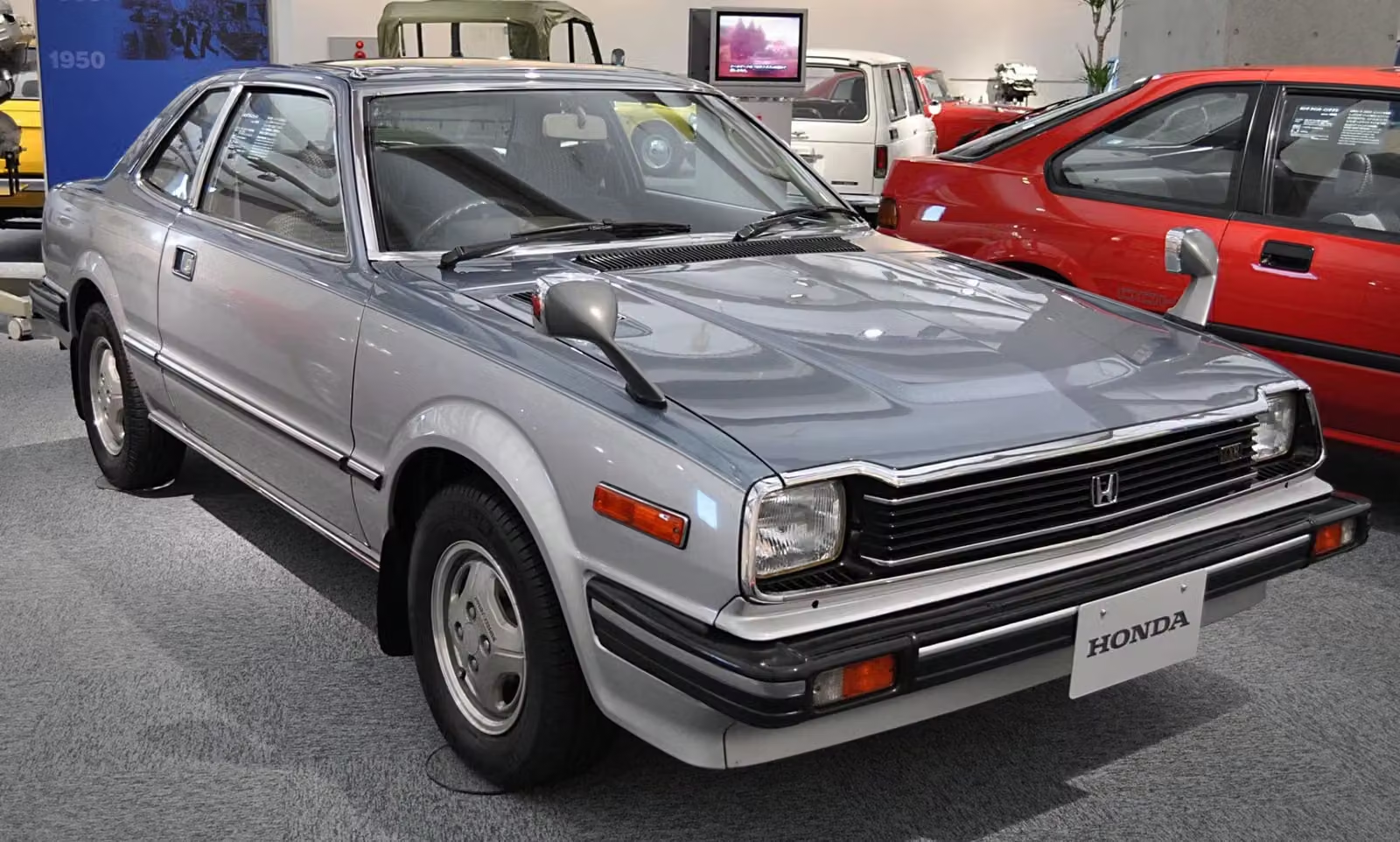
The power units of the first Prelude were not impressive on paper - four-cylinder engines with a capacity of 80-90 horsepower seemed modest even by the standards of that time. However, in combination with a small mass of 900 kilograms and compact dimensions (just over four meters in length), the car demonstrated very lively dynamics. Buyers could choose between a five-speed manual gearbox and a three-speed "automatic".
Despite its apparent simplicity, the first Prelude quickly gained recognition. American automotive journalist Brock Yates, known as a biographer of Ferrari and a reviewer for the influential Motor Trend publication, called the model the best purchase in the price category up to $7,000. The success was not only on paper - by 1982, Honda had produced more than 313,000 copies of the first Prelude, with 80% of the cars finding their owners outside of Japan.
Growing up and technological breakthrough
In the fall of 1982, the second generation Prelude appeared on the scene, which was radically different from its predecessor. The car grew in all dimensions - the wheelbase reached 2450 mm, and the total length was 4374 mm. The design became more modern, with fashionable retractable headlights and plastic bumpers, corresponding to the aesthetics of the 1980s.
The technical component also underwent significant changes. The engine range has expanded and become more diverse: from the basic carburetor 1.8-liter engine with a modest 100 hp to an impressive for its time two-liter injection unit with 16 valves, developing an impressive 160 hp in the Japanese market. In Europe, due to stricter environmental standards, the power was limited to 137 hp, and the American versions were content with only 110 hp.
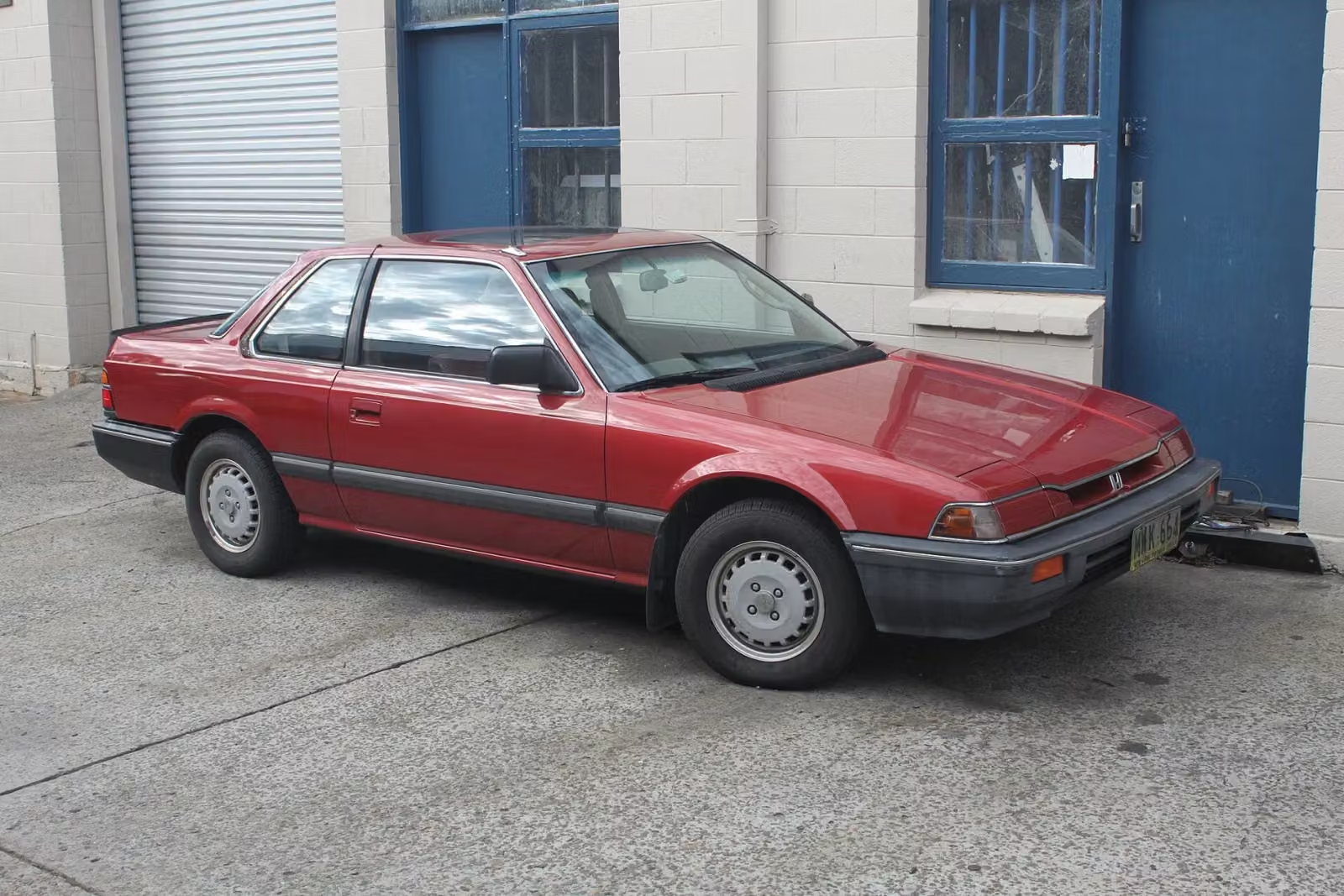
Even in the European specification, the second-generation Prelude demonstrated impressive dynamics - acceleration to 100 km/h took about 9.5 seconds, which was an excellent indicator for a front-wheel drive coupe of the early 1980s. The American market received the novelty with particular enthusiasm - almost 350,000 copies were sold in the USA during the production period, which became a phenomenal result for a niche sports model.
The era of innovation: the third generation
In 1987, Honda made a technological breakthrough, introducing the third generation Prelude. The appearance of the car became more aggressive and wedge-shaped, with a drag coefficient of only 0.30. The designers used an interesting solution, connecting the rear lights into a single light line - a technique that decades later would become a popular trend in automotive design.
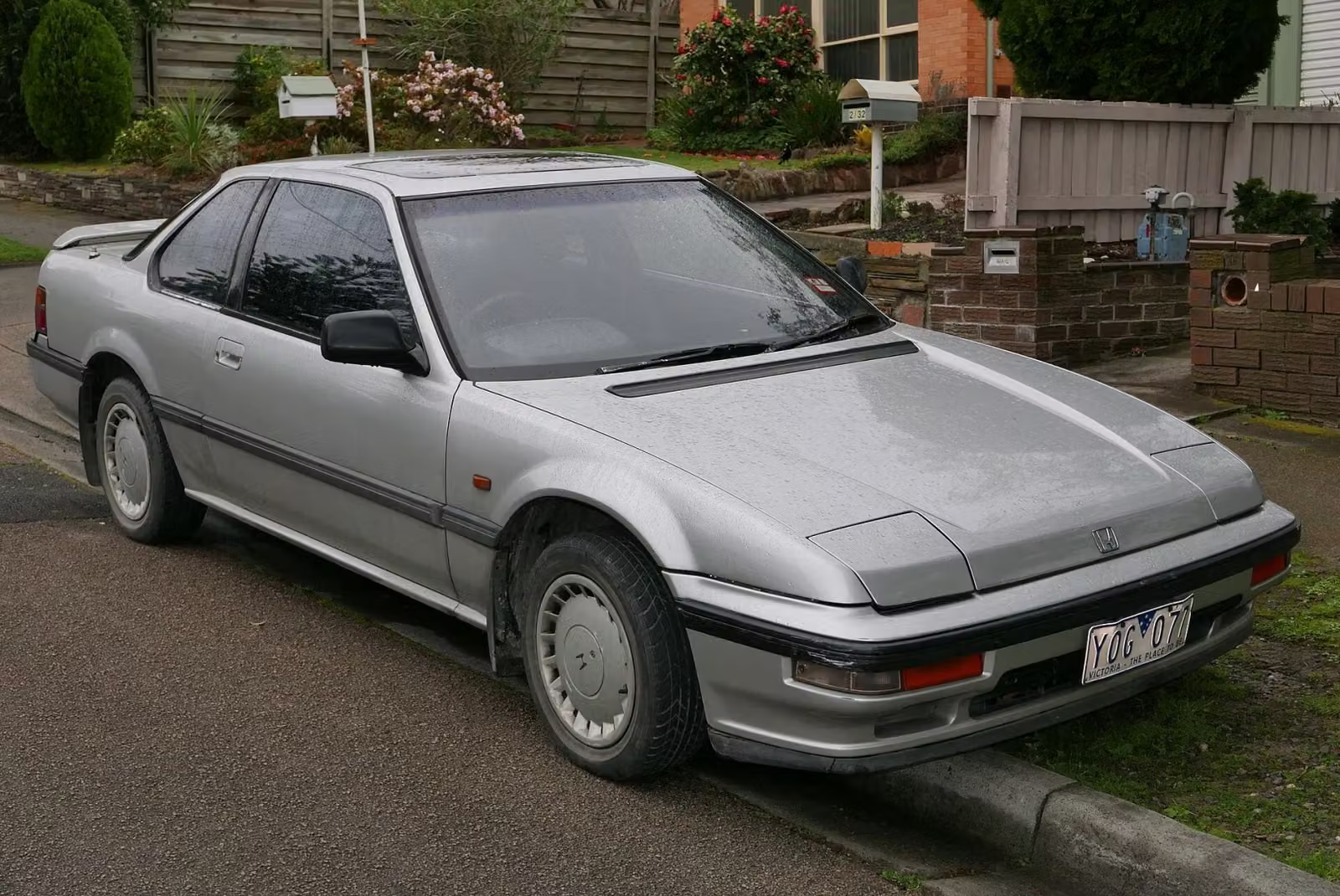
However, the main innovation was the revolutionary 4WS (Four-Wheel Steering) system - a fully controlled chassis. Depending on the speed and driving conditions, the rear wheels could turn either in the same direction as the front wheels (at high speeds to increase stability), or in the opposite direction (when maneuvering at low speeds to increase maneuverability). The effectiveness of this technical solution was confirmed by specialists from Road & Track magazine, who conducted comparative tests in 1987. The Prelude with the 4WS system overcame the car slalom at a speed of 105.4 km/h, ahead of even the Chevrolet Corvette, which showed a result of 104.4 km/h.
This generation of Prelude finally cemented the model's reputation as a technologically advanced sports car capable of competing with more expensive and prestigious cars in terms of handling and driving experience.
Change of style: the fourth generation
In 1991, Honda introduced the fourth generation Prelude, which marked a radical change in the design concept. Angular lines in the style of "origami", characteristic of the previous model, gave way to smooth and streamlined shapes. The headlights stretched to two-thirds of the width of the front, and the body acquired soft, rounded outlines. This transformation was the responsibility of designer Yuki Korosu, who created an image focused not only on the Japanese, but also on the global market.
The technical side of the project also did not stand still. The rear wheel steering system received electronic control, becoming even more efficient. But the real star of this generation was the H22A1 engine with 200 horsepower with the legendary VTEC variable valve timing system. This engine allowed it to spin up to an incredible 7200 revolutions per minute for an ordinary "civilian" car, providing vivid emotions behind the wheel.
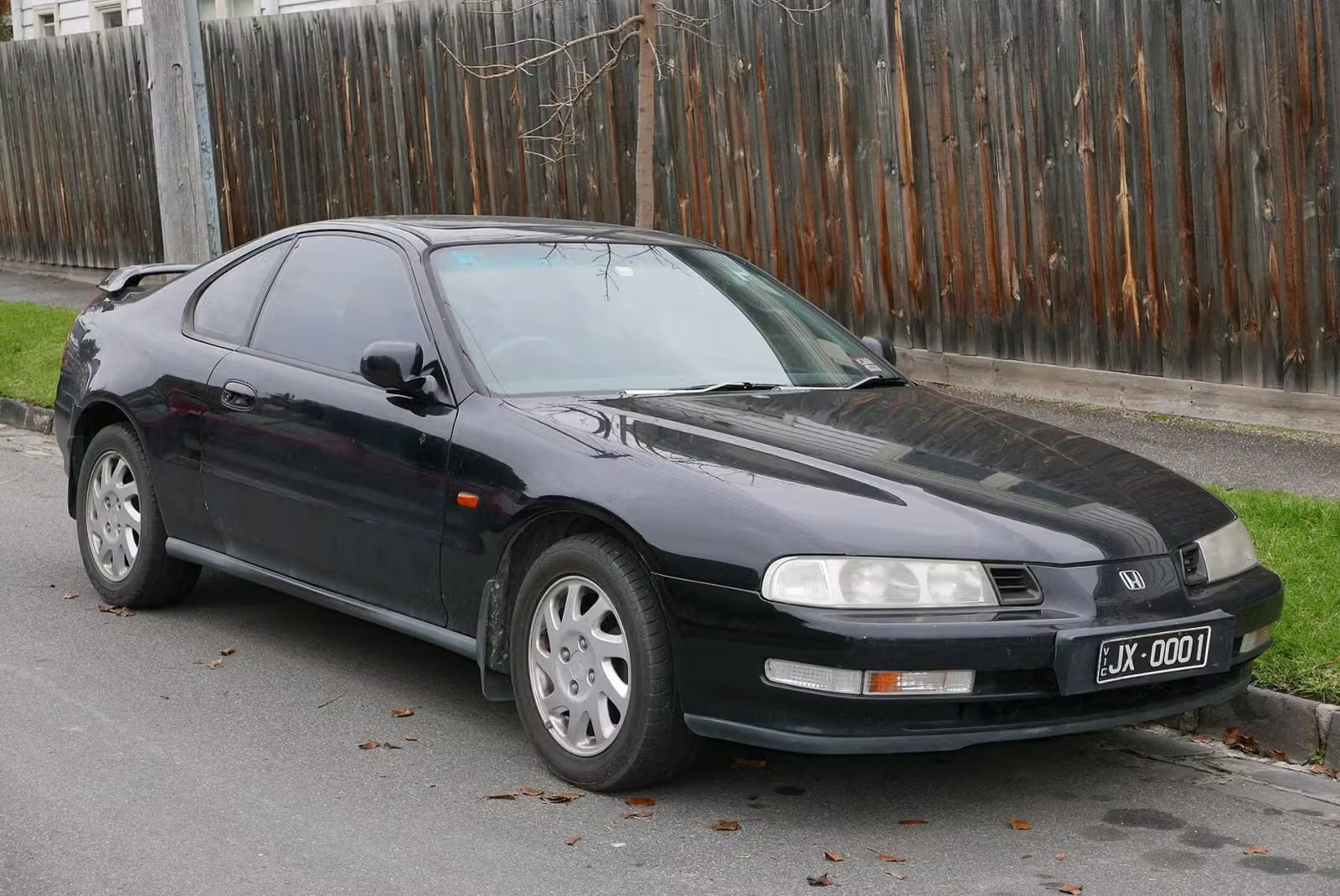
Professional automotive journalists highly appreciated the novelty. In a large-scale comparative test conducted by the authoritative publication Car and Driver in 1992, the Prelude took second place among eight sports coupes, second only to the all-wheel drive Eagle Talon. Experts especially noted the perfect balance between dynamic characteristics and handling.
However, despite the technical advantages and positive press reviews, sales of the model in the United States for the first time in history did not reach the mark of 100,000 copies. The automotive market began to change, and sports coupes gradually gave way to other types of vehicles.
Final chord and new beginning
The fifth generation Prelude, introduced in 1997, returned to a more angular and strict design, but this did not help to reverse the trend of falling sales. Despite the introduction of the innovative ATTS (Active Torque Transfer System), which redistributed torque to the outer wheel in a turn to improve handling, and impressive dynamics (acceleration to 100 km/h in 6.5 seconds), interest in the model continued to decline. During the entire production period of the fifth generation, just over 58,000 cars were sold in the United States.
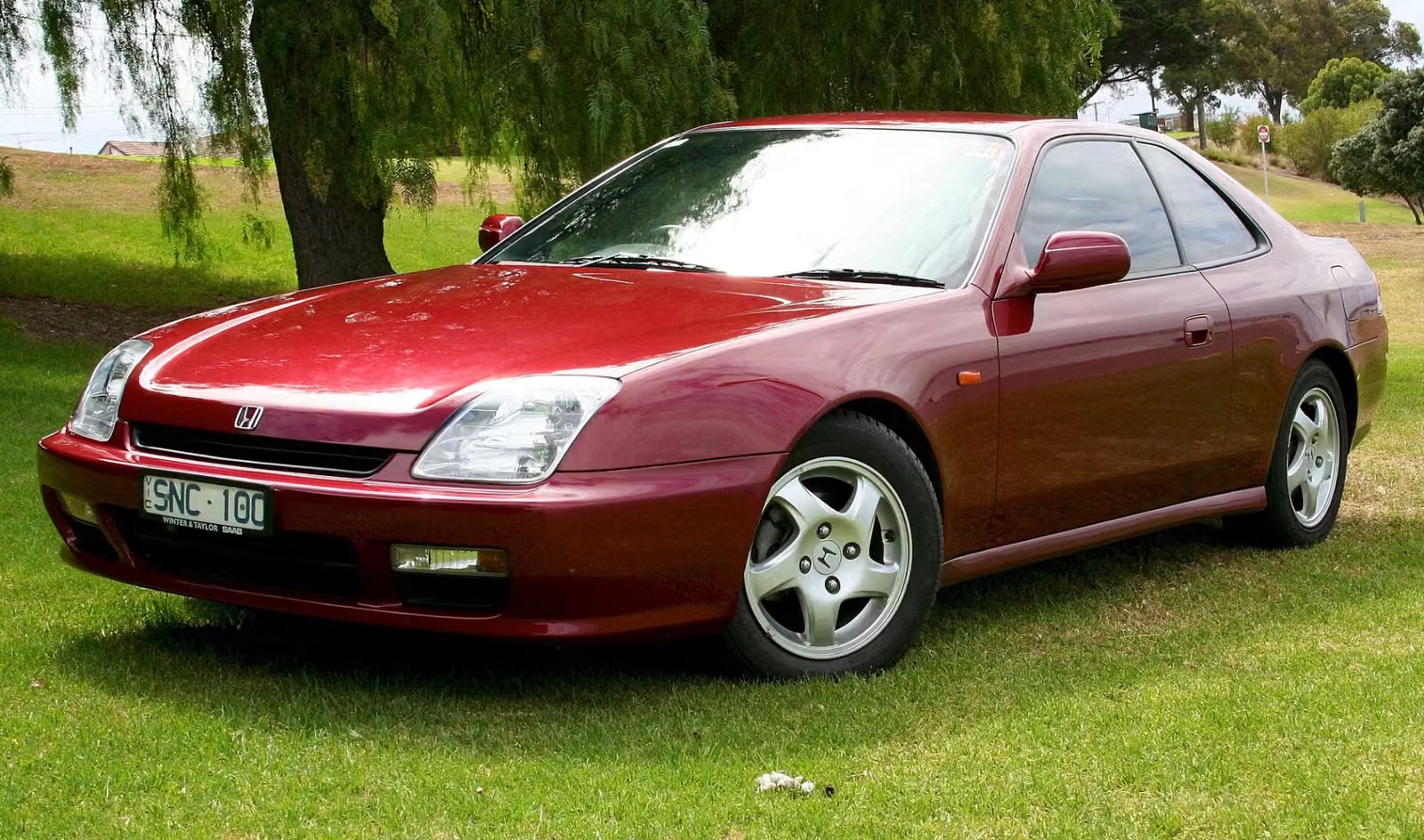
In 2001, Honda made a difficult decision - the production of the Prelude was discontinued. The era of compact sports coupes gave way to the era of crossovers and SUVs, and the legendary model became a victim of changing market preferences.
However, the story of the Prelude received an unexpected continuation. In September 2025, to the surprise of the automotive community, Hondaintroduced the sixth generation of the model. The new Prelude is equipped with a modern e:HEV hybrid power plant with a capacity of 203 horsepower. Whether the revived legend will be as successful as its predecessors remains to be seen, but the very fact that the iconic model has returned in the era of electrification and SUV mania evokes sincere respect for the Japanese manufacturer, who was not afraid to go against market trends.
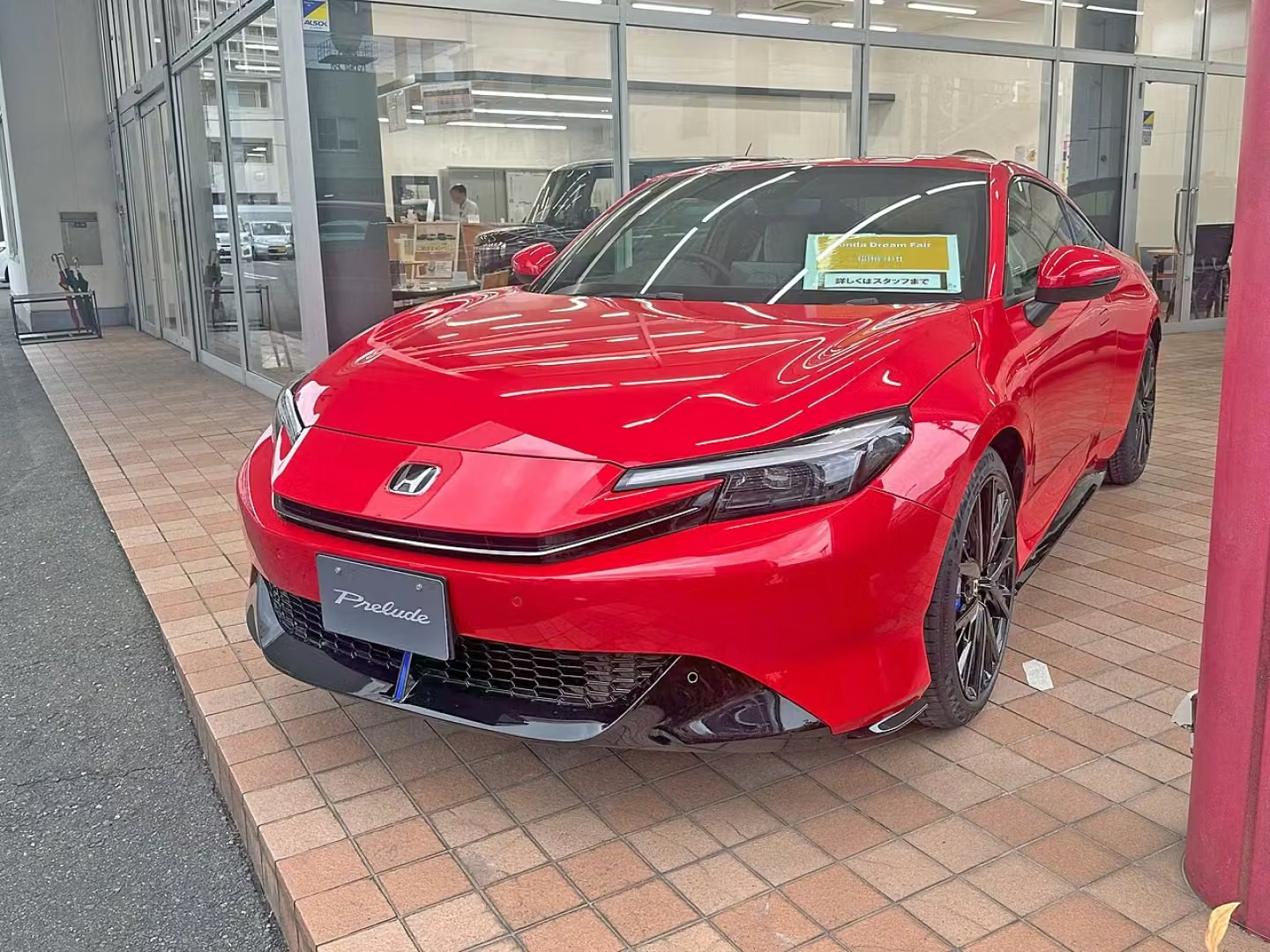
Throughout its history, the Honda Prelude has come a long way from a relatively simple sports coupe to a technological leader in the segment. The car was never the most powerful or the fastest, but always offered a unique balance between performance, handling and everyday practicality, winning a devoted army of fans around the world.
Read more materials on the topic:
- How VAZ and GM jointly created a Russian SUV: the history of the development of the Chevrolet Niva - a 50-year journey
- Total analysis: why did the Japanese install rear-view mirrors in the wings?
- Top 5 cars of the big German three, which are not threatened by price increases due to the increase in the recycling fee
Комментарии