Against the backdrop of talks about the new recycling fee, possible restrictions on right-hand drive cars, and the rising cost of compulsory motor insurance, many owners of Japanese crossovers are considering changing their cars. The Toyota Harrier, one of the most popular right-hand drive models in Russia, is gradually turning into a "retirement" car: it is chosen primarily for its reliability, simplicity, and predictability. The Chinese Geely Atlas Pro, surprisingly, became popular not due to the disappearance of competitors, but thanks to the successful first Atlas. Therefore, the question of replacing a "Japanese car" with a "Chinese car" no longer seems so strange.

For the price of an all-wheel drive Harrier with a 2.0 naturally aspirated engine, you can import one for 2.3-2.5 million rubles at auction, and for the same money, you can find two- or three-year-old Atlas Pros with a mileage of up to 30 thousand and a remaining warranty on the market. At the same time, the difference in classes is not so critical: although the Harrier traces its roots back to Lexus, it is structurally quite conservative, while the Atlas Pro is a product of the late 2010s, without ultra-modern solutions, but also without archaism.
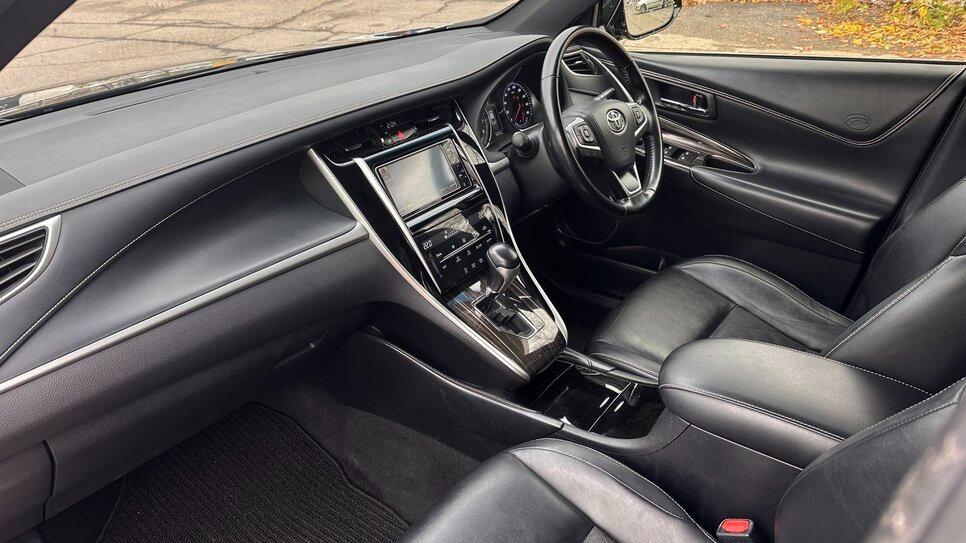
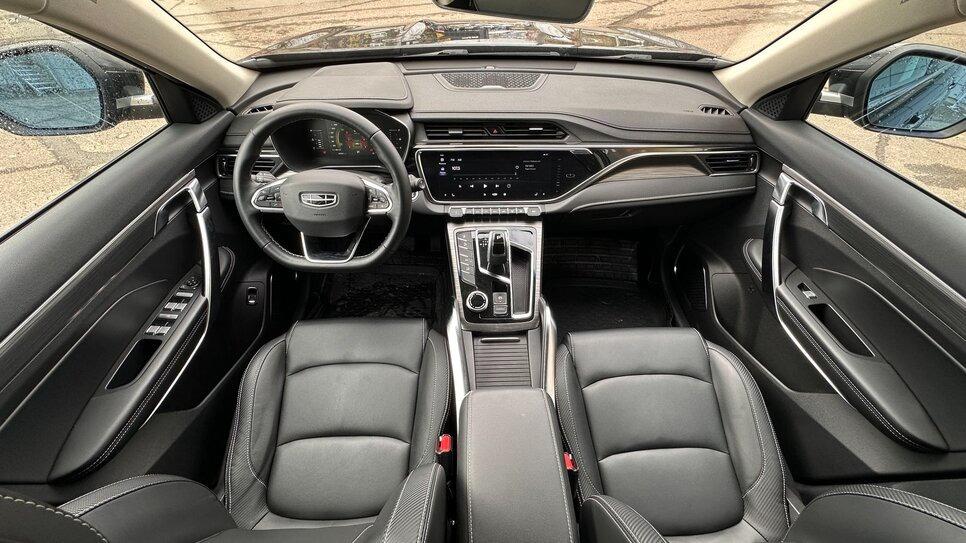
The Harrier's interior is a cozy but outdated "furniture set" with a touch-sensitive climate control unit and a minimum of physical buttons. The multimedia system is tiny, without modern functions, and there are no heated seats or steering wheel. In the Atlas Pro, the interior is simpler and more understandable: there are climate control buttons, all-round cameras, heated seats, pockets, normal cup holders, and basic assistants. The Harrier's instrument panel is easier to read, but the Atlas Pro's digital display has too much graphics. In terms of materials, there is parity, although rattles and squeaks of panels are found in the Geely.
There is almost equal space in the back of the cars. The Harrier is longer, but the Atlas Pro wins in terms of height and thoughtful fit. The Geely has heated rear seats and USB ports, which are not available in the Harrier. The Toyota's trunk is noticeably larger - 409 liters versus 378 liters for the Geely, and it is more convenient in shape, but there is no electric drive for the lid.

Dynamics are the main disadvantage of the Harrier with the 3ZR-FAE naturally aspirated engine. In order for the car to accelerate at least confidently, you need to press the gas pedal all the way, and acceleration from 80-120 km/h takes too long. This turns into a problem on the highway. The Atlas Pro with a turbocharged engine and a "robot" drives more briskly, although it noticeably fades after 120 km/h. The three-cylinder engine is noisy, and the standard Giti tires add a hum, but the overall comfort is higher thanks to the large wheelbase and suspension settings, in which, as they say, Lotus engineers participated.
The Harrier's suspension is simple and durable, but many find it a bit harsh - help only in 17-inch wheels. The Atlas Pro's suspension is tenacious, the car handles decently, but sometimes bushings require attention and the rear panels begin to creak. In terms of power, the Harrier relies on Toyota's reputation: the engine is resourceful, but capricious to oil and fuel, the pump often leaks, requires periodic cleaning of the throttle and intake, and the timing chain stretches by 150 thousand. The variator is reliable if you change the oil every 25-30 thousand.
The Atlas Pro uses the JLH-3G15TD engine - the same "Volvo" three-cylinder engine. After the 2021 upgrades, fatal breakdowns are almost never encountered. With proper maintenance, the resource reaches 200-250 thousand kilometers, and the 7DCT330 gearbox is considered one of the best in Geely: yes, it sometimes pushes in traffic jams, but it lives long if you change the oil every 40-50 thousand. The flywheel fails more often than other elements, but the cases are isolated, and the warranty on the engine and gearbox is 150,000 km.
In terms of corrosion, the Harrier usually holds up better, although stones actively hit the glass and hood. The first Atlases suffered from corrosion, but the Atlas Pro partially fixed the problem: the main complaints remain about the fifth door trim. The Geely's electrics are more capricious - the climate, multimedia, or electronic handbrake periodically glitch.
If you remove emotions and the already familiar right-hand drive, then the Atlas Pro can really become a more practical replacement: it is more modern, faster, sometimes more comfortable and supported by the manufacturer. The Harrier, on the other hand, relies on the good old Toyota aura of reliability - but technically it is outdated, and the new market realities make betting on Chinese models more and more logical.
Read more materials:
- AvtoVAZ officially explained what gasoline should be poured into Lada
- "Moskvich" announced prices for the Moskvich 6 sedan of the 2026 model year
- Tank raised prices for the entire model range in Russia: Tank 500, 700 and 400 have risen in price
Комментарии