When you hear the word "turbo" today, you think of German cars from the 90s, aggressive Saabs, or modern compact sports cars. But the real beginning of production turbocharging is not related to Europe or Japan. The first to take this step was the USA, and it happened back in 1962.
It was then that Oldsmobile introduced the Jetfire coupe, the world's first production turbocharged passenger car. It even beat the Chevrolet Corvair Monza, which appeared on the market just a few weeks later. However, the real revolution was not in the use of turbocharging itself, but in the unusual way of combating detonation chosen by General Motors engineers.
Aluminum V8 with a Turbine and... Extreme Compression Ratio
In the early 60s, the American market was fascinated by large naturally aspirated V8s, but Oldsmobile developers sought to create a lighter and more dynamic car. The base was an all-aluminum 3.5-liter engine (215 cubic inches): compact, light, but rather modest in power - only 155 hp.
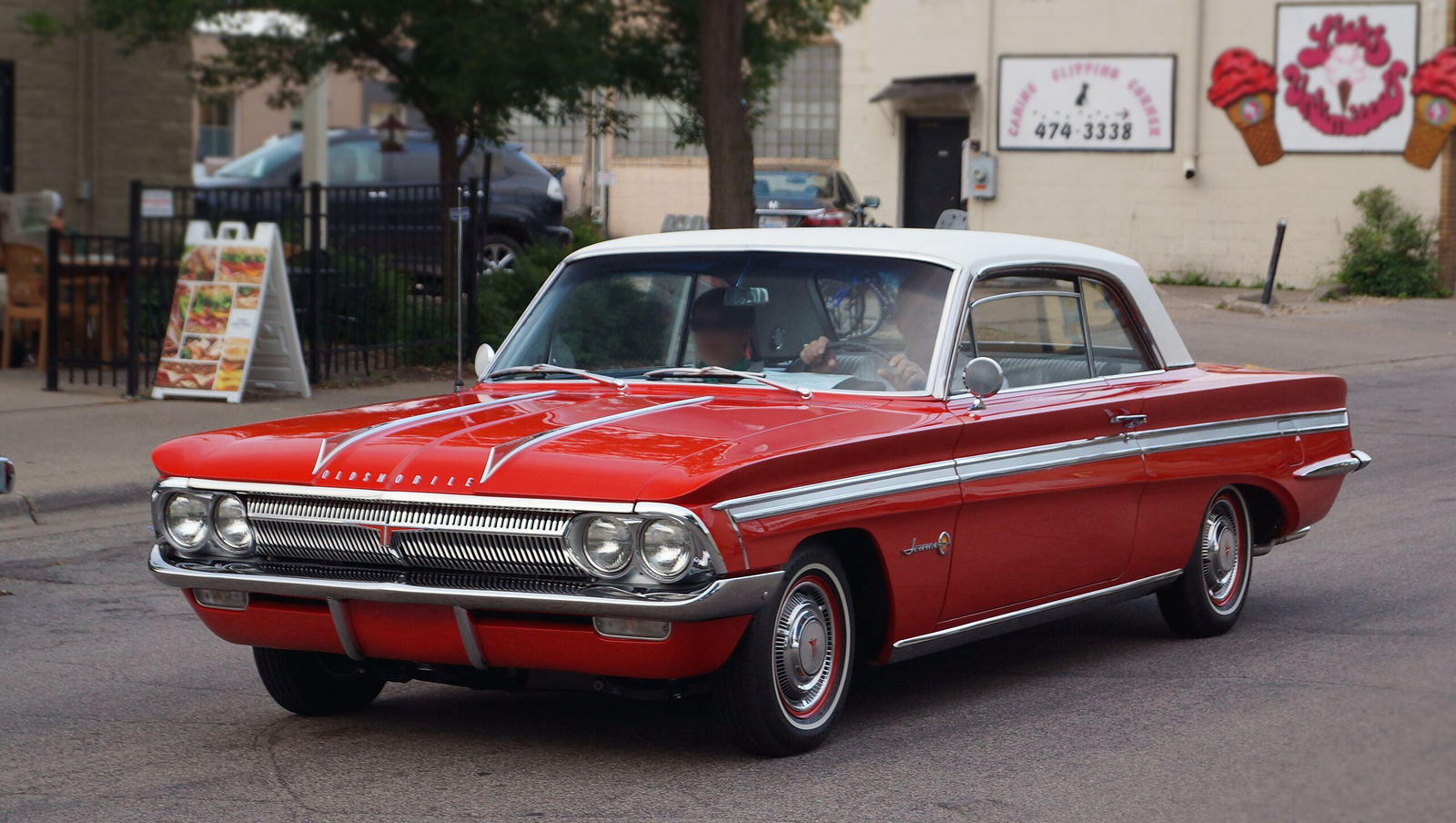
To achieve a significant increase in traction, the engine was equipped with a Garrett T5 turbocharger. But the engineers decided to maintain a high compression ratio - 10.25:1, typical for naturally aspirated units of that time, in order to avoid a drop in traction at low revs. With a boost of about 0.35 bar, such an engine, running on gasoline from the early 60s, was virtually doomed to instant destructive detonation.
Nevertheless, the Jetfire accelerated confidently and demonstrated impressive characteristics. The secret lay in a separate mixture cooling system.
Turbo Rocket Fluid: The Liquid That Saves the Engine
The solution to prevent detonation was suggested by the aviation industry during World War II. An additional reservoir with a special Turbo Rocket Fluid was placed under the hood.
Its composition was simple and extremely pragmatic:
- methanol - about 50%;
- distilled water - about 50%;
- a small amount of anti-corrosion additives.
As the boost pressure increased, the system automatically sprayed this mixture into the intake tract - through a separate carburetor. Evaporating, water and methanol effectively cooled the heated air and fuel-air mixture, preventing auto-ignition. As a result, the power increased to 215 hp, and acceleration to 100 km/h took about 8.5 seconds - an impressive figure for that time and a hit in the elite formula "1 hp per 1 cubic inch."
There was even a separate boost indicator in the cabin with the loud name TURBO CHARGER - a detail that emphasized the uniqueness of the engine.
An Idea Ruined by Human Factor
The technology worked brilliantly - but only if there was Turbo Rocket Fluid in the tank. Fluid consumption depended on driving style, and active drivers had enough for a maximum of 300-400 km. At the same time, the supply could only be replenished at official dealers.
In practice, the following happened:
- owners forgot to check the fluid level;
- saved money and postponed buying a new portion;
- the system detected an empty tank and turned off the boost, opening the pressure relief.
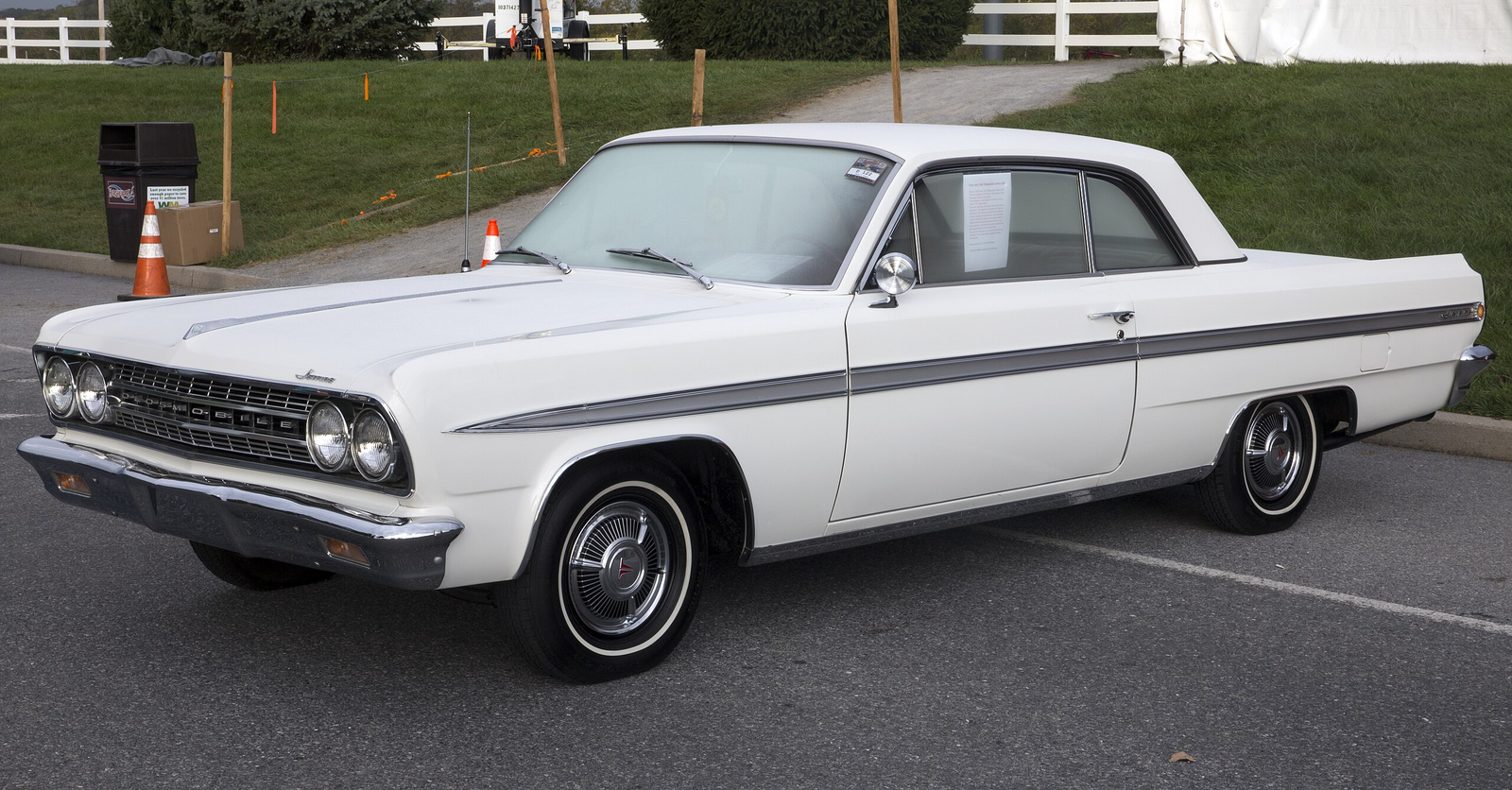
A car with a high compression ratio, but deprived of the help of a turbine, lost dynamics, became uneven in responses and noticeably increased fuel consumption. This annoyed buyers who were not ready to monitor another specific fluid in the car.
The mass client of the early 60s demanded simplicity: get in and go. The Jetfire was not like that.
Short Life and Rarest Legacy
The model's production did not last long. Already in 1963, production was stopped, limited to approximately 3,700 units. Moreover, a program was launched to refine already sold cars: dealers dismantled the turbo system for free and replaced it with a conventional intake with a four-barrel carburetor. Most owners agreed to this offer.
That is why genuine Jetfires with original equipment are extremely rare today and highly valued by collectors.
Main Conclusion
The story of the Oldsmobile Jetfire has become proof: a combination of turbocharging and a high compression ratio is possible if the mixture temperature is effectively controlled. Half a century later, a similar approach will reappear on production sports cars - for example, in the BMW M4 GTS with a water injection system.
The Jetfire showed that engineers can solve any technical problem. But if operation requires regular and unusual actions from the owner, the mass market simply will not accept such a car.
Read more related materials:
- Volkswagen XL1: The most economical hybrid in the history of the brand
- French technology outside the rules: 5 solutions that no one else had
- Why engine power is measured in horsepower
Комментарии