JAC RF8 is a local version of the Chinese minivan, assembled in Yelabuga on the same line as the Sollers SP7. Formally, the cars differ only in emblems, but the manufacturer expects to bring the RF8 to a more "premium" level and attract not only family buyers, but also the corporate segment. While the color palette is limited, new shades are promised to be added in the near future. The first thing you notice behind the wheel is acoustic comfort: double glazing and dense sound insulation allow you to talk on the highway without raising your voice. The smoothness of the ride is also impressive: the suspension is not pneumatic, but on a flat surface it creates the feeling that the car is slightly floating above the road. At the front there are McPherson struts, at the rear there is a multi-link suspension, familiar from most modern models.
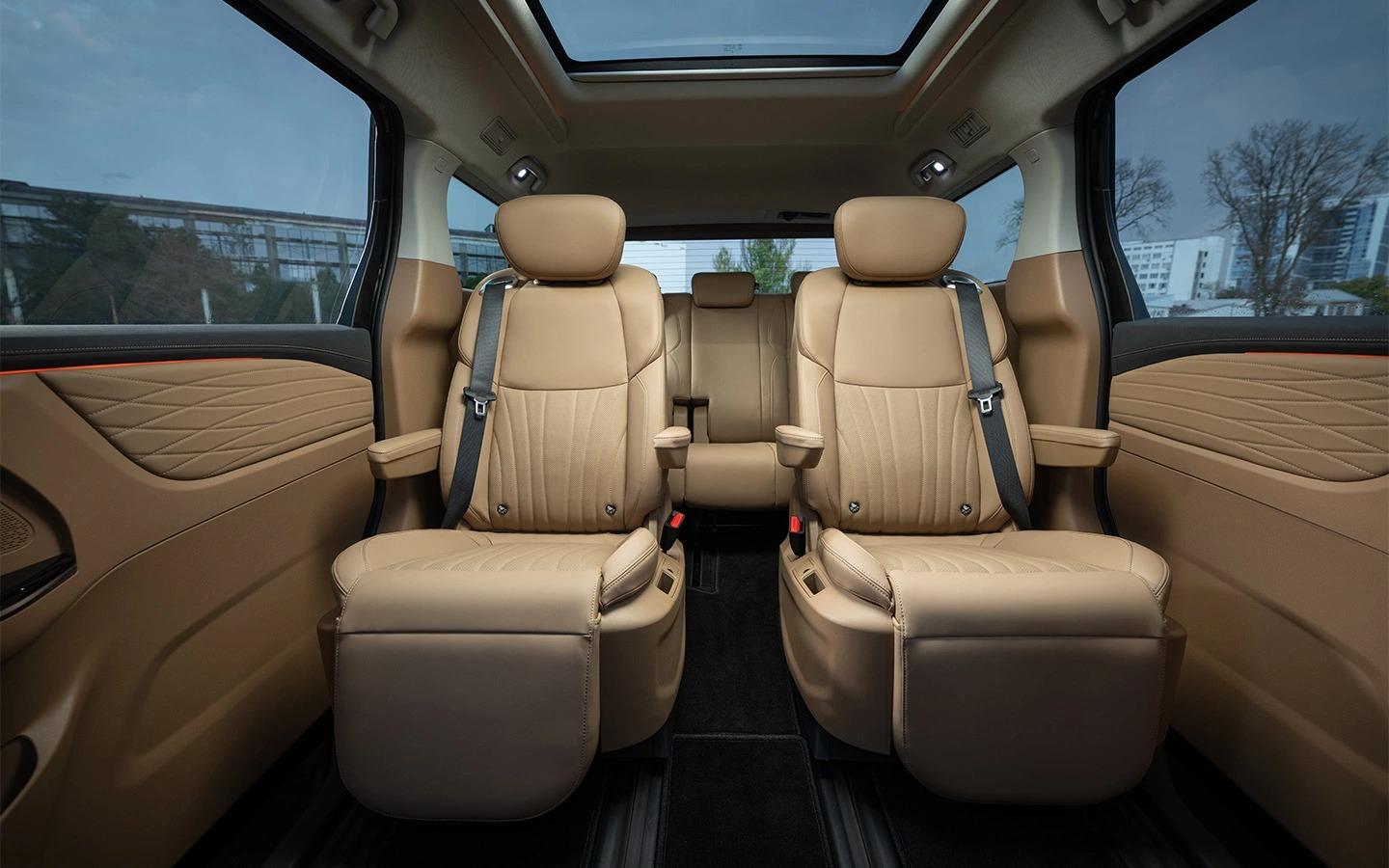
The interior tries to match the declared class: soft finishing materials, leather surfaces, electric sliding doors, massage chairs and folding tables. However, some solutions are surprising. For example, the rear climate remained single-zone, although the front system is separate. The table is made of hard plastic - a laptop on it tends to move when passing through wavy sections. And the lack of horizontal electric adjustment of the seats was explained by the fact that long runners move faster manually. But the side windows go down almost completely, which is rare for models of this format. The trunk with the seats folded reaches 2500 liters, and in the usual configuration it can accommodate several medium-sized suitcases.
The central panel is made in the brand's signature style: digital instruments combined with multimedia, a floating console, metal accents. The frames of the screens are wide, but the main feature is the preserved set of physical buttons. Climate control, driving mode selection, camera activation - everything is available without having to rummage through the menu. The set of electronic assistants includes adaptive cruise control, sign recognition, automatic braking, lane keeping and a complex of 540-degree surround view cameras with a "transparent chassis" mode. The interface is not the fastest, but understandable, and the location of the keys under the elbow takes some getting used to.
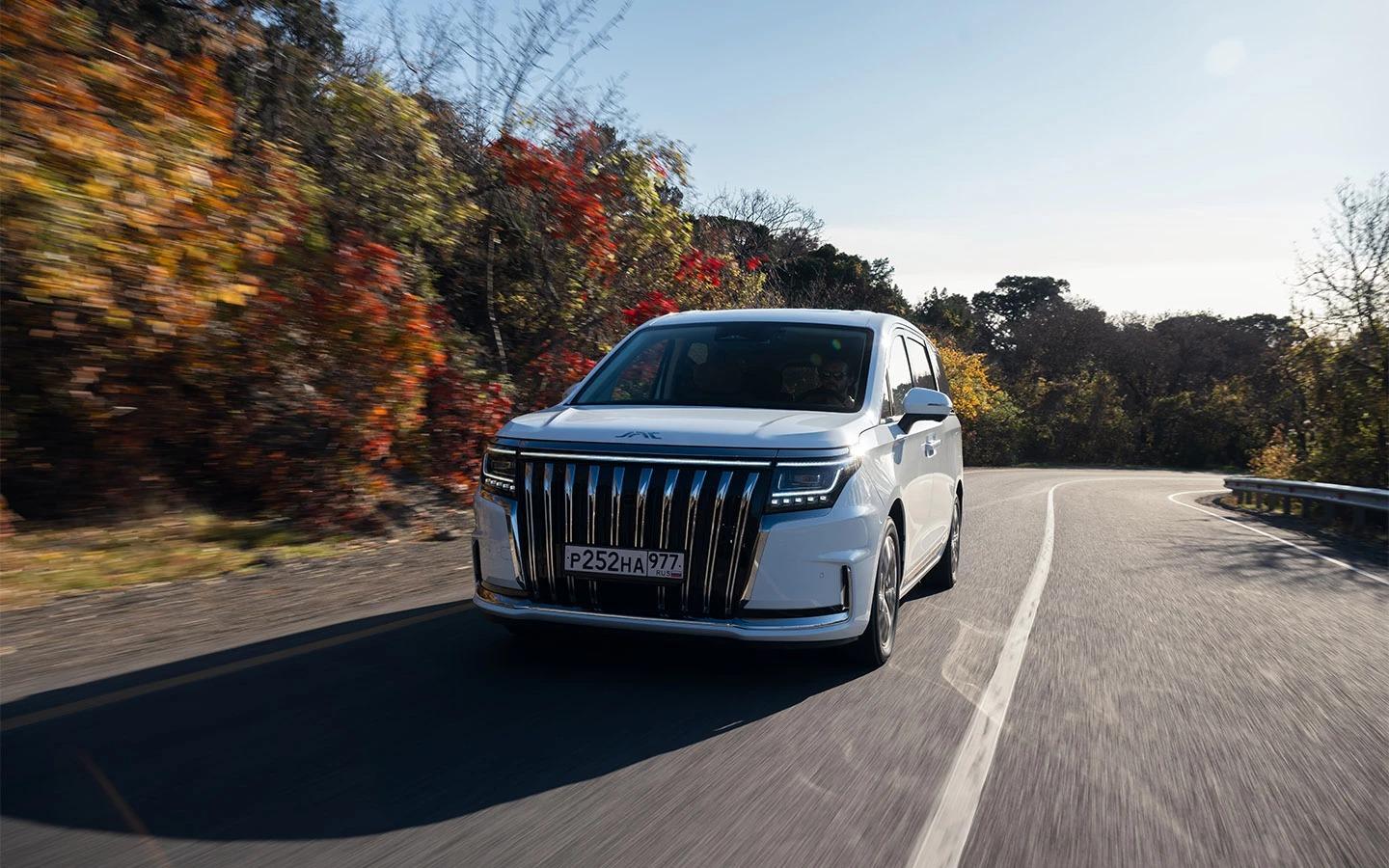
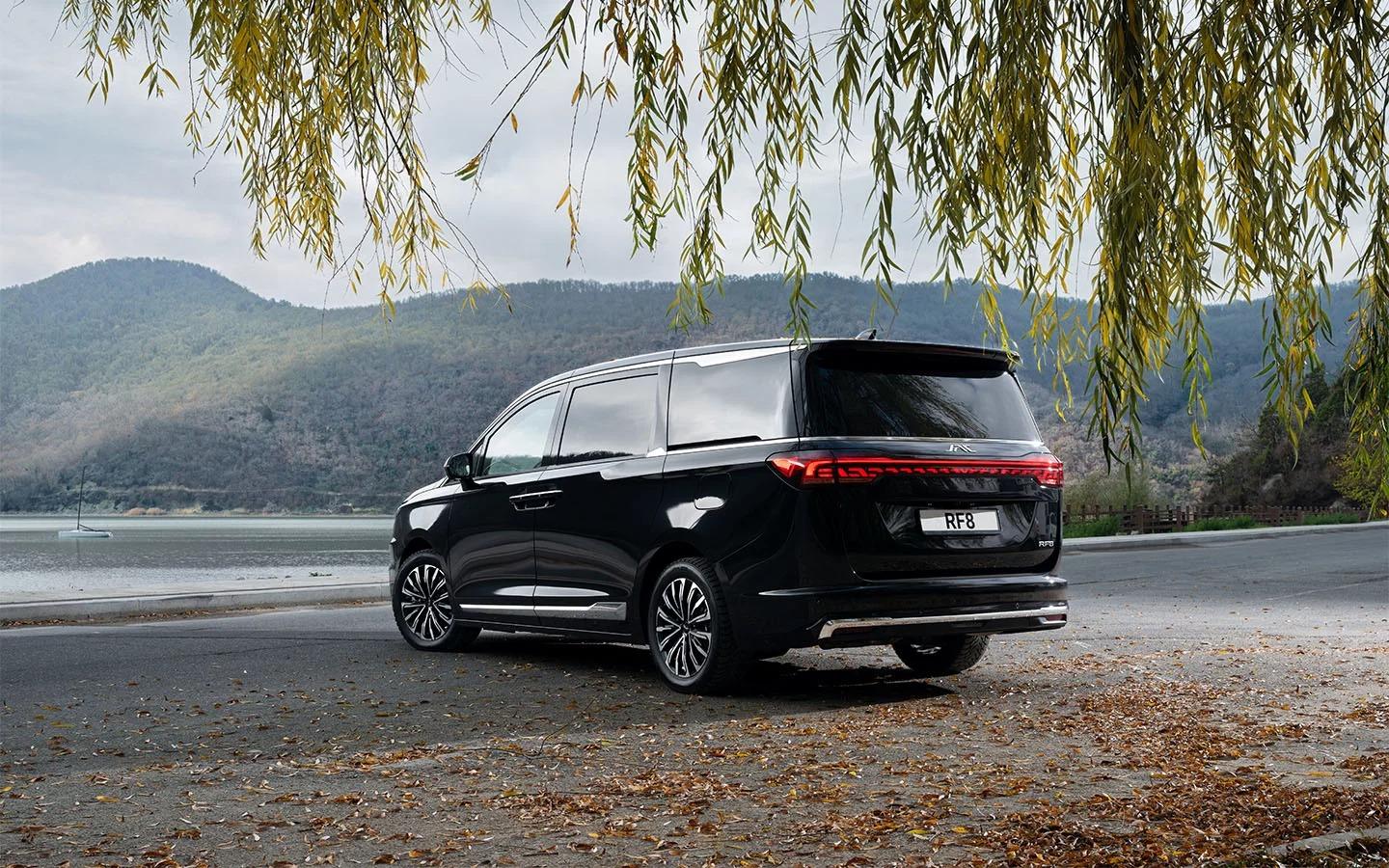
The appearance of the RF8 is restrained: traditional minivan proportions, a large grille, straight body lines. The car is clearly designed not for effect, but for transporting passengers at a calm pace. An interesting detail is the unusual graphics of the rear lights, especially noticeable in the dark. Under the hood is a two-liter gasoline turbo engine with 236 hp, specially detuned for the Russian version. The gearbox is an eight-speed automatic with a torque converter. The manufacturer does not disclose who produces it, but emphasizes the "proximity" to Aisin solutions. The drive is only front, which is important to consider before traveling on loose surfaces.
The dynamics of the RF8 are perky for this format, and the mode settings noticeably change the behavior on the gas. In "Sport", the engine holds revs longer, and this is tiring on long journeys. For everyday mode, standard settings are enough - overtaking on the highway is confident, traction is enough. The weak point is body roll. On sharp rearrangements and closed turns, the car noticeably leans, although the stabilization system works clearly and does not allow critical situations. But on a straight line, the RF8 behaves very smoothly: the car does not float along the lane and confidently holds the course. Future owners will also like the smoothness of the suspension on broken surfaces.
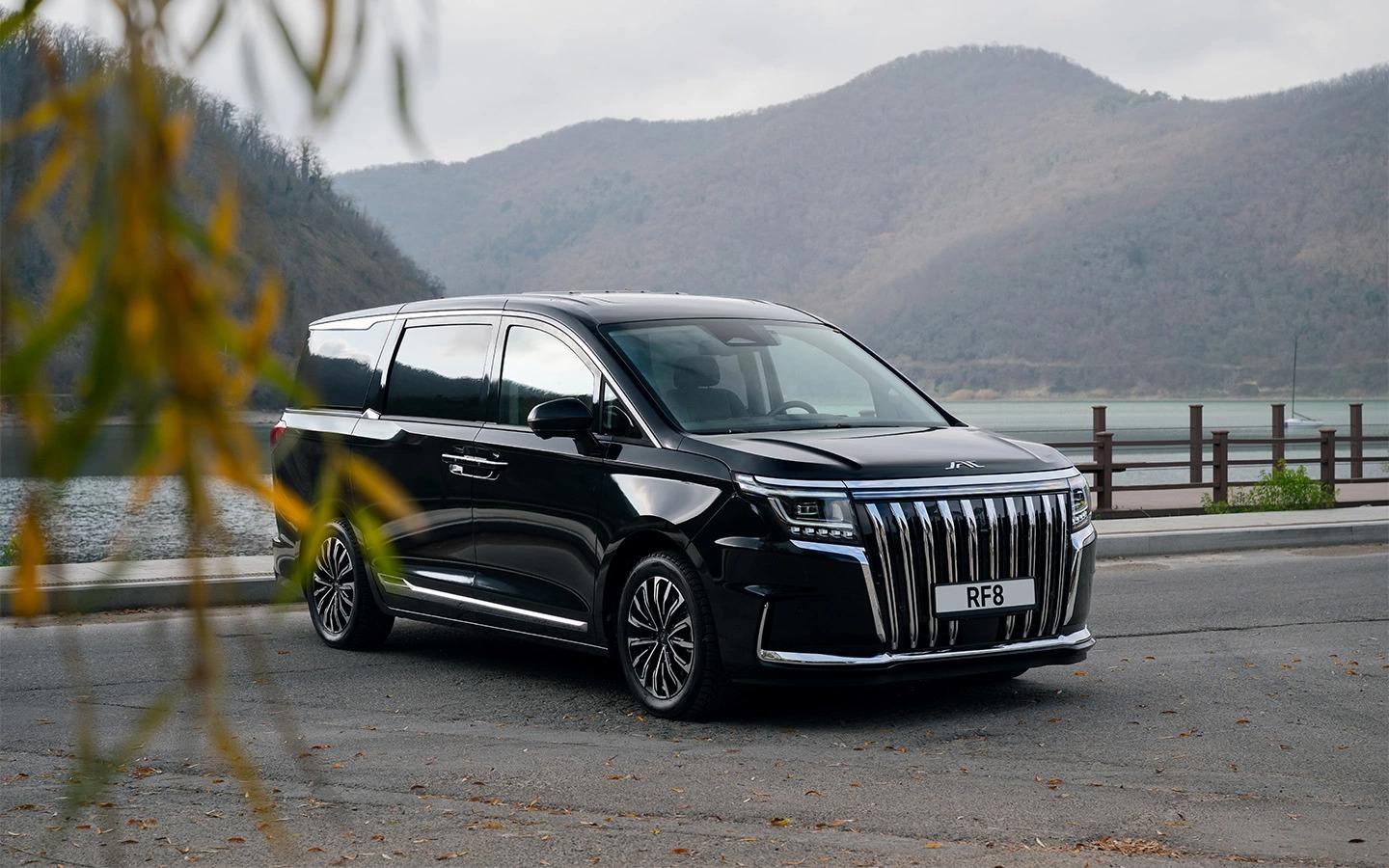
In terms of equipment, the model is closer to the business class: seat ventilation and heating, a lot of compartments, convenient electric door drives. But saving on details is visible: limited functionality of the rear climate, controversial table materials, a small number of convenient little things that are used to in premium models. At the same time, the RF8 in some parameters looks more attractive than the related Sollers SP7. The Russian version is more expensive - 4,990,000 rubles against 4,800,000 rubles for JAC, although technically the difference is minimal. The SP7 has a slightly higher engine output, but the equipment of the Chinese "original" is richer, and it seems more logically priced.
With all the focus on comfort and a business approach, the RF8 does not qualify as a full-fledged premium - precisely because of the small compromises that are immediately noticed in this class. But the localization of production makes the model potentially attractive for the corporate segment: taxi fleets, transfer services, hotels will certainly pay attention to the capacity and equipment. Ground clearance allows you to go off-road easily, but front-wheel drive imposes restrictions. If we compare the RF8 and SP7, the paradox remains the same: the Chinese version looks more convincing than the Russian version and is cheaper at the same time.
Read more materials:
- AvtoVAZ officially explained what gasoline should be poured into Lada
- "Moskvich" announced prices for the Moskvich 6 sedan of the 2026 model year
- Tank raised prices for the entire model range in Russia: Tank 500, 700 and 400 have risen in price
Комментарии