To realize ambitious agricultural and industrial plans, the Soviet Union desperately needed tractors, primarily tracked ones. The "Stalinets" model almost completely replicated the American Caterpillar 60, down to the last bolt. However, the production technology, as well as subsequent simplifications concerning materials and individual components, were developed and implemented by Soviet engineers.
How the First Tractor Was Born
To master the production of the new machine, twelve of the most trained specialists from the Leningrad Design Bureau were sent to Detroit, to the American factory. There, they were to adapt the technology for manufacturing parts, designed for the most modern equipment, to the machine tool park of the still-under-construction Chelyabinsk Tractor Plant. It is noteworthy that the plant itself was designed by American specialists.
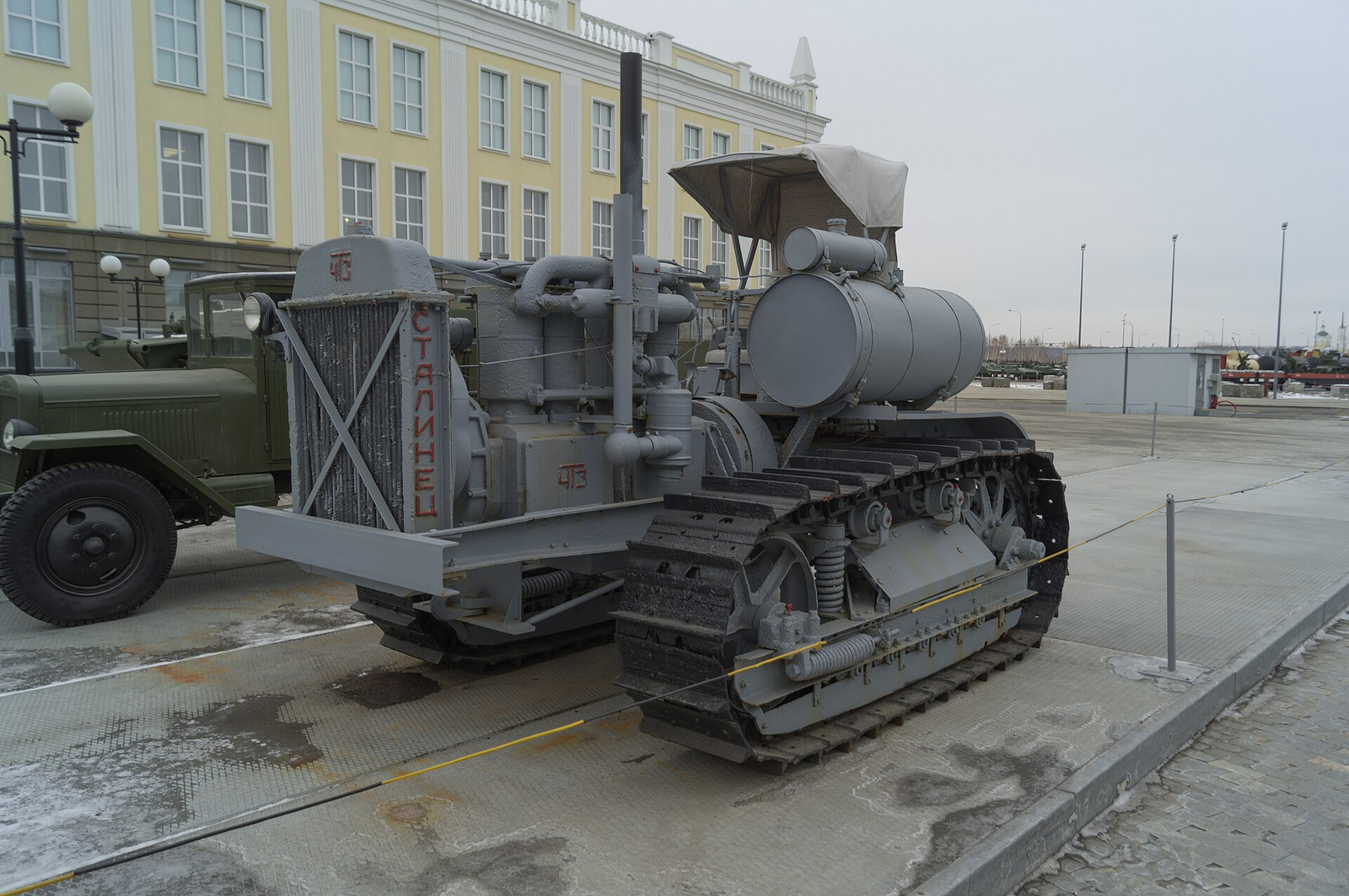
The work turned out to be large-scale. Twelve Soviet engineers, with the participation of local colleagues, developed the simplest but most viable technological process and a set of parts. Just a year after the completion of the ChTZ construction—in February 1931—the first tractor was assembled in Chelyabinsk. Another nineteen machines were then manufactured. By the end of 1934, the number of "super tractors" produced reached 10,000 units.
The new machine, of course, could not be left under the name Caterpillar. It was named "Stalinets." Since the engine with a working volume of 18.7 liters (not diesel) developed only 60 hp, the index "60" was added to the name. The tractor weighed 10.5 tons, and according to contemporaries, it was able to tow a couple of the same machines.
What Was the Secret?
In fact, the huge tractor was not intended for agriculture. The state needed it primarily for construction and the needs of the military-industrial complex. Until the Chelyabinsk plant reached full production capacity, there was no question of transferring equipment to other areas: the machines were sent to build roads, railway embankments, pits, foundations of factories and power plants.
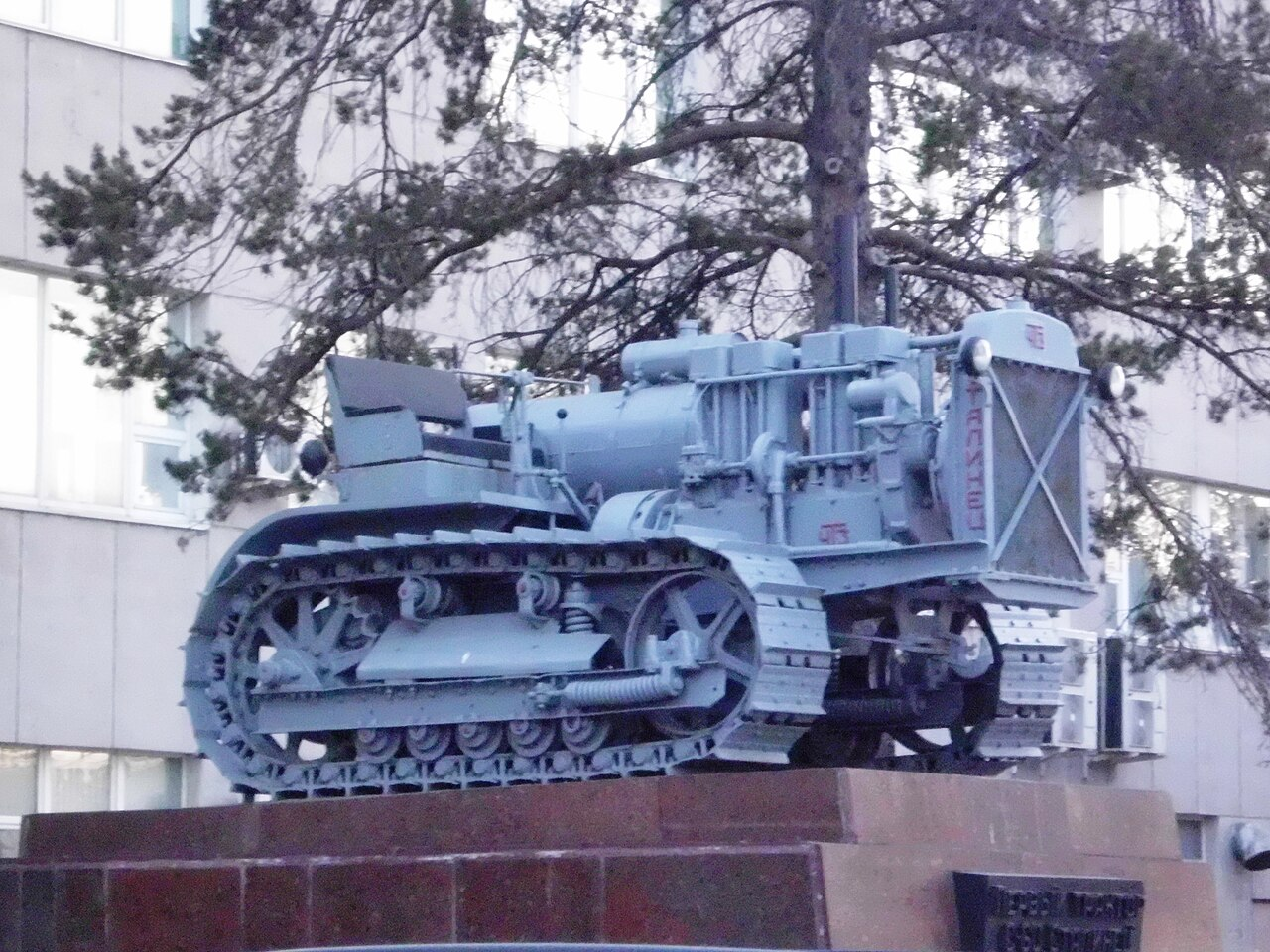
The first thirty "Stalinets" worked on the construction and expansion of the ChTZ itself. There they were tested—reliability was checked in various conditions: at night, in heavy rain, in frost. It happened that the engine was not turned off for days. The design developed by the Americans was not revised; it was the technology of manufacturing units that was improved.
Interestingly, the Caterpillar 60 was originally designed to work on stony soils and far from civilization. In the United States, a large-scale construction project was also launched at that time: President Roosevelt involved the unemployed in laying railways in remote areas. Therefore, the American tractor received an extremely simple and at the same time reliable tracked chassis. Subsequently, its design solutions were used on Soviet machines, including the T100 and the T-130 bulldozer, which were produced at ChTZ in the 1970s.
Control Features
By the 1930s, the "Stalinets" had a classic chassis and control scheme: multi-disc side clutches, band brakes, side gears. The design used two wheels, two upper guide rollers and five reinforced lower ones.
Control required considerable physical effort. Forged steel handles had to be literally squeezed: two handle-levers were responsible for locking the left and right clutches, and two pedals were responsible for braking each track. It was easier to turn the tractor than to keep it straight.
When driving in first or second gear, the body vibrated so much that to talk to the mechanic, you had to hold the oil caps—they rang from the shaking. That is why the body was made riveted: welded seams would not withstand such loads.
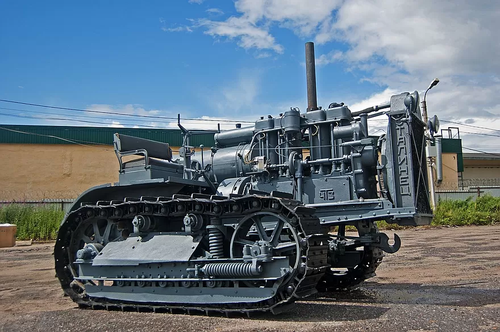
When working on the machine, a cloud of unburned fuel was constantly hanging. Soot settled on metal, clothes, face and hands. The tractor driver could be recognized from afar. Only strong men were allowed to drive—starting the engine manually required considerable strength, especially given the working volume of 18.5 liters.
In winter, it was almost impossible to do without an assistant. Before starting, the mechanic poured hot liquid grease into all the oilers—there were dozens of them. Often the pallet was heated with an ordinary torch—not only in winter, but also in cool weather.
The main advantage was considered to be the engine—albeit primitive in design, but extremely reliable. It ran on a heavy fraction of kerosene—ligroin. The same fuel was used by excavators and diesel locomotives that appeared in the 1930s at construction sites in the United States.
Design and Resource
The tractor was almost entirely made of cast iron. Only individual elements of spars and chassis, fuel tank, levers, rods and gearbox were made of rolled steel suitable for forging and heat treatment by quenching.
The engine was a massive crankcase, inside which the crankshaft and camshaft were located. All this was in a common oil bath with a volume of 40 liters. The lubricant simultaneously performed the functions of cooling and protection against oxidation and scoring.
Four independent cylinders were attached to the cast-iron block. Pistons and rings were also cast iron; rubber cuffs and oil scraper rings were absent. Tightness was ensured by a jute fiber stuffing box impregnated with oil. In terms of resource, such a machine could work for about twenty years, for example, in a quarry.
Read more materials:
- Why MacPherson suspensions have been ruling for 80 years
- Traffic police traps on the road: what you need to know so as not to be left without rights
- Cylinder deactivation: saving or illusion?