Body corrosion is one of the key problems faced by car owners. Rust does not always appear where it is easy to notice: it can form in hidden cavities and hard-to-reach places. In just a few months, a small focus of oxidation turns into a through damage, and it becomes almost impossible to restore the body to its factory condition. A natural question arises: why are bodies not made of stainless steel, which is protected from such problems? Let's look into the details.
Are there stainless steel cars?
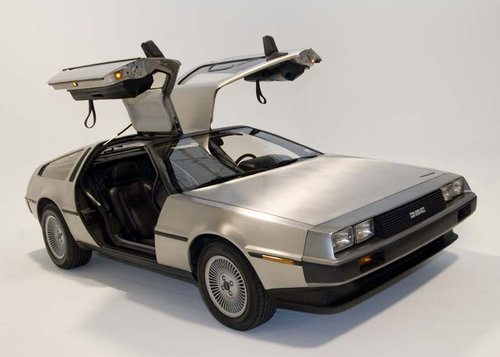
In the annals of the automotive industry, there are models whose body is made of stainless steel. One of the most famous projects is the DeLorean DMC-12, which went down in history thanks to the cult film "Back to the Future." The frame body of this car, made of composite materials, was sheathed with millimeter-thick stainless steel, giving the car a characteristic metallic sheen.
There is also a more modern example - Tesla Cybertruck. The non-trivial body of the pickup with angular geometric shapes is also made of stainless steel. At the same time, the manufacturer introduced impact-resistant glass. Thanks to these solutions, the creators of the "Cybertruck" have rethought the traditional concept of the car.
Nevertheless, stainless steel has not been widely used in the mass production of cars. There are a number of reasons for this that prevent the mass introduction of metal that is protected from corrosion.
Processing and welding difficulties
Looking at the body of the Tesla Cybertruck, it is impossible not to notice its sharp, angular shapes. In many ways, this design is associated with the use of stainless steel, which is much more difficult to process and form. When stamping body panels, deformations and stresses occur, so the metal does not hold the specified shape well. Parts have to be welded using argon welding or laser technologies, which requires additional costs and specialized equipment.
Stainless steel is stronger and stiffer than ordinary carbon steel, so it will not be possible to give it an aerodynamic smooth shape even with the use of advanced stamping technologies. At the same time, the mass of the body turns out to be much larger, which requires an increase in the power of the power plant, as well as the installation of a highly efficient braking system. On the other hand, the car is under pressure from strict environmental regulations on emissions.
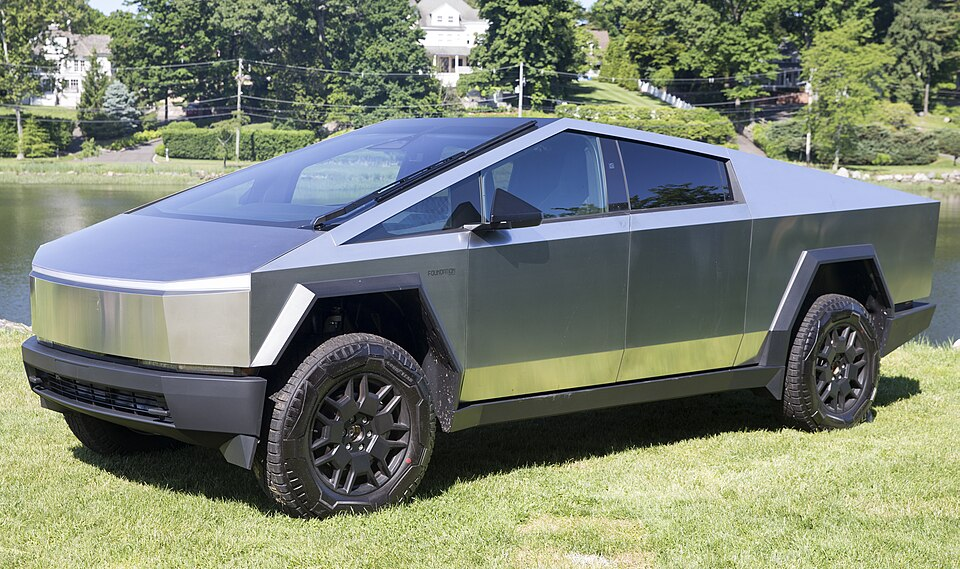
But the difficulties do not end there - stainless steel is much more difficult to paint, and the paintwork holds worse. That is why both DeLorean and Cybertruck have a characteristic metallic sheen without painting. If such a surface is damaged, it is very difficult to eliminate the defect, and even a minor scratch will be clearly visible on the polished body.
Economic impracticality
The body of a car can technically be made of stainless steel, but in this case the question of economic feasibility arises. The cost of the material is many times higher than the traditional method of production. Considering that the body of a modern mid-size car weighs about 400 kilograms, the cost of the vehicle will increase by tens of percent for the end buyer.
Some manufacturers make body elements from aluminum, which is more expensive than steel, but much lighter. This metal is resistant to corrosion, but under certain conditions it is also susceptible to oxidation processes. However, even aluminum has become limited to use only in motorsport and on premium brands. As a rule, it is used to make the hood, fenders and trunk lid. In rare cases, there are aluminum doors that can significantly reduce the weight of the car.
From an economic point of view, high-quality galvanizing of the body made of ordinary steel is much simpler and more profitable. Yes, it will not make the body eternal, but manufacturers do not set such a task. Cars become obsolete, new technologies appear, companies need to maintain sales and earn money - that is why ordinary carbon steel with a protective coating is still the best solution for mass production.
Stainless steel in the automotive industry is more of an exotic and marketing ploy than a practical solution. High cost, processing complexity, large mass and design limitations make it unsuitable for mass production. Modern technologies for protecting ordinary steel - high-quality galvanizing, cataphoretic priming and multi-layer paintwork - provide sufficient protection against corrosion for the entire life of the car.
Read more materials on the topic:
- Top 5 legendary engines that changed the automotive world
- GAZ-24 "Volga": analysis of the legend
- Psychology of car color: what the choice of shade says about the driver
Комментарии