Every automotive power unit is the result of engineering research. However, some of them become not just the basis of the car, but a real legend, changing the idea of what is possible. We present the top five engines whose complexity and technological superiority have conquered the entire automotive world.
Ferrari 4.5L V8 (458 Italia) - swan song of naturally aspirated engines
This power unit is the last breath of the era of naturally aspirated engines, a symbol of the times when environmental standards had not yet gained the upper hand over emotions. At the time of its debut, it had a record specific output for production naturally aspirated units - 127 horsepower per liter of displacement.
This eight-cylinder V-engine revved up to an incredible 9,000 rpm, creating a unique acoustic symphony and providing instant response to the accelerator pedal. To achieve such characteristics, technologies from Formula 1 were used: lightweight pistons with graphite coating to minimize friction, a system for changing the geometry of the intake manifold, and direct fuel injection at a pressure of 200 bar.
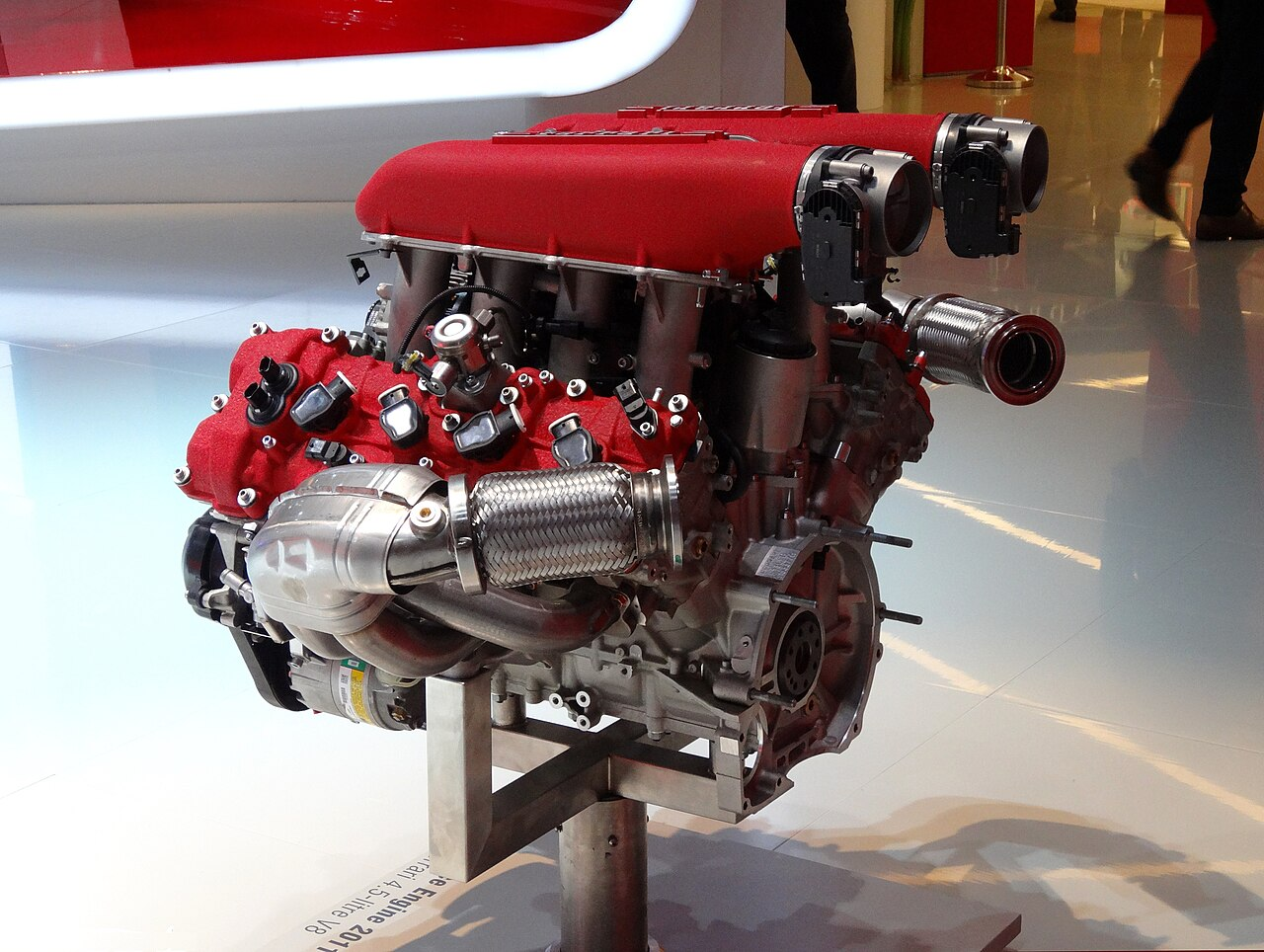
The evolution of this engine was the version for the 458 Speciale model, where the power was increased to 605 horsepower. However, its legacy was interrupted with the arrival of the turbocharged V8 in the Ferrari 488 model, marking the end of the era.
Interesting fact: the seven-speed dual-clutch transmission on the 458 Italia does not have a traditional gear lever - the driver controls the gears exclusively via paddle shifters, which emphasizes the car's racing philosophy.
BMW S70/2 (1992) - the heart of the greatest supercar
Although technically not the most complex engine in this selection, its significance is that it became the heart of an outstanding supercar of its time and one of the greatest cars in history. The six-liter V12 with VANOS variable valve timing system was created specifically for the legendary McLaren F1.
It combined the highest reliability (lifespan of about 250 thousand kilometers!) with fantastic power for a naturally aspirated unit and a flat torque curve throughout the entire rev range. This engine remained a piece of engineering art. Its spirit continues to live on in modern high-revving naturally aspirated engines of the BMW M division.
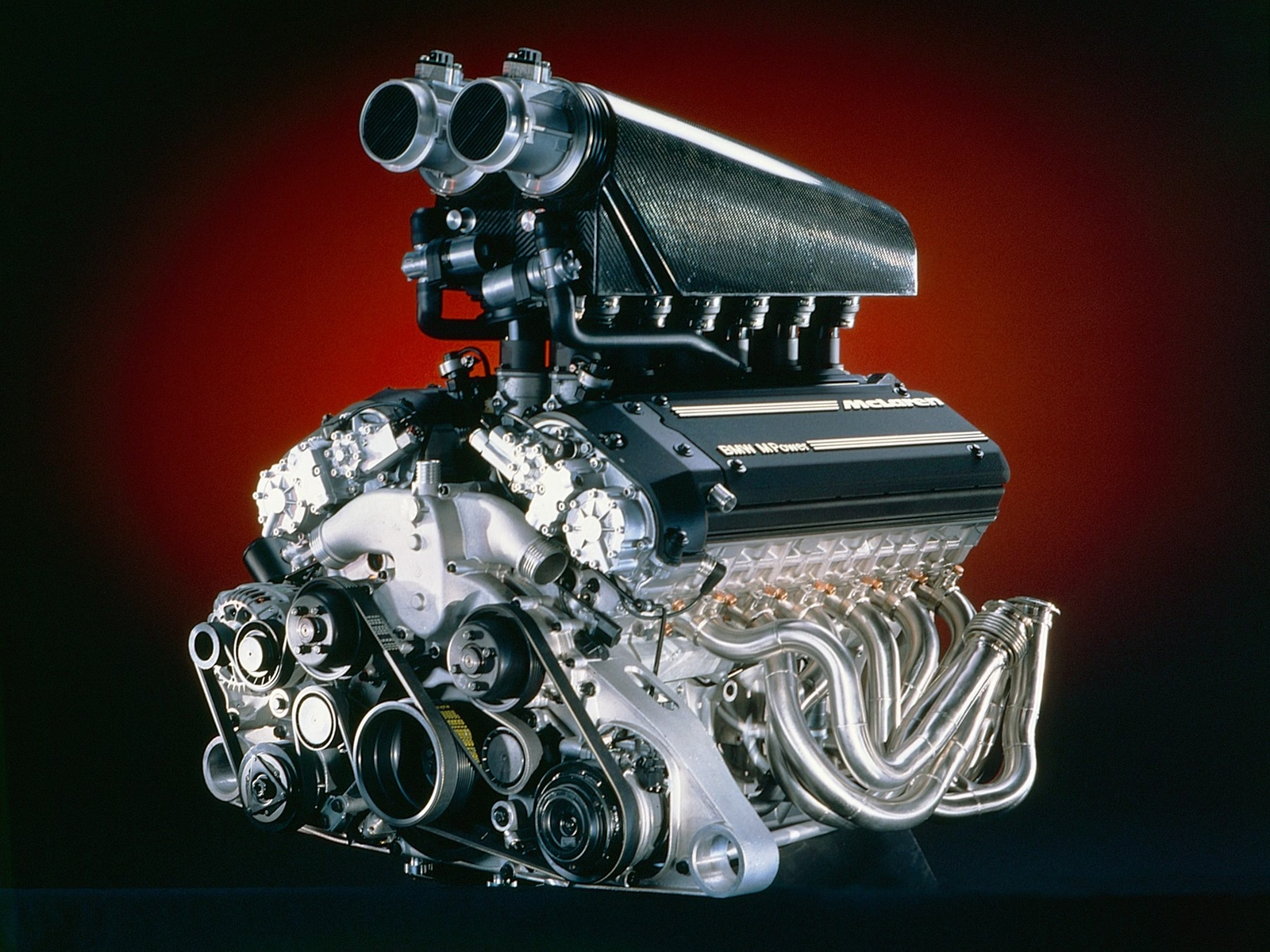
Interesting story: initially, Gordon Murray, the creator of the McLaren F1, wanted to use a Honda power unit, but the Japanese refused, citing the fact that their engine "is already in the best car in the world" - the NSX supercar. This refusal forced Murray to turn to BMW, which ultimately gave rise to one of the most iconic unions in the automotive industry.
Bugatti W16 - engineering space on earth
This is the only sixteen-cylinder engine in the world with a W-shaped configuration, which is essentially two eight-cylinder blocks from VR engines connected at a 72-degree angle. The result is four rows of cylinders, 64 valves and four turbochargers, creating an incredible symphony of power.
Debuting in 2005 on the Veyron model with a power of 1001 horsepower, by 2016 in the Chiron model the power was brought to 1500 hp, and in the latest version for the Mistral roadster - to an impressive 1600 hp.
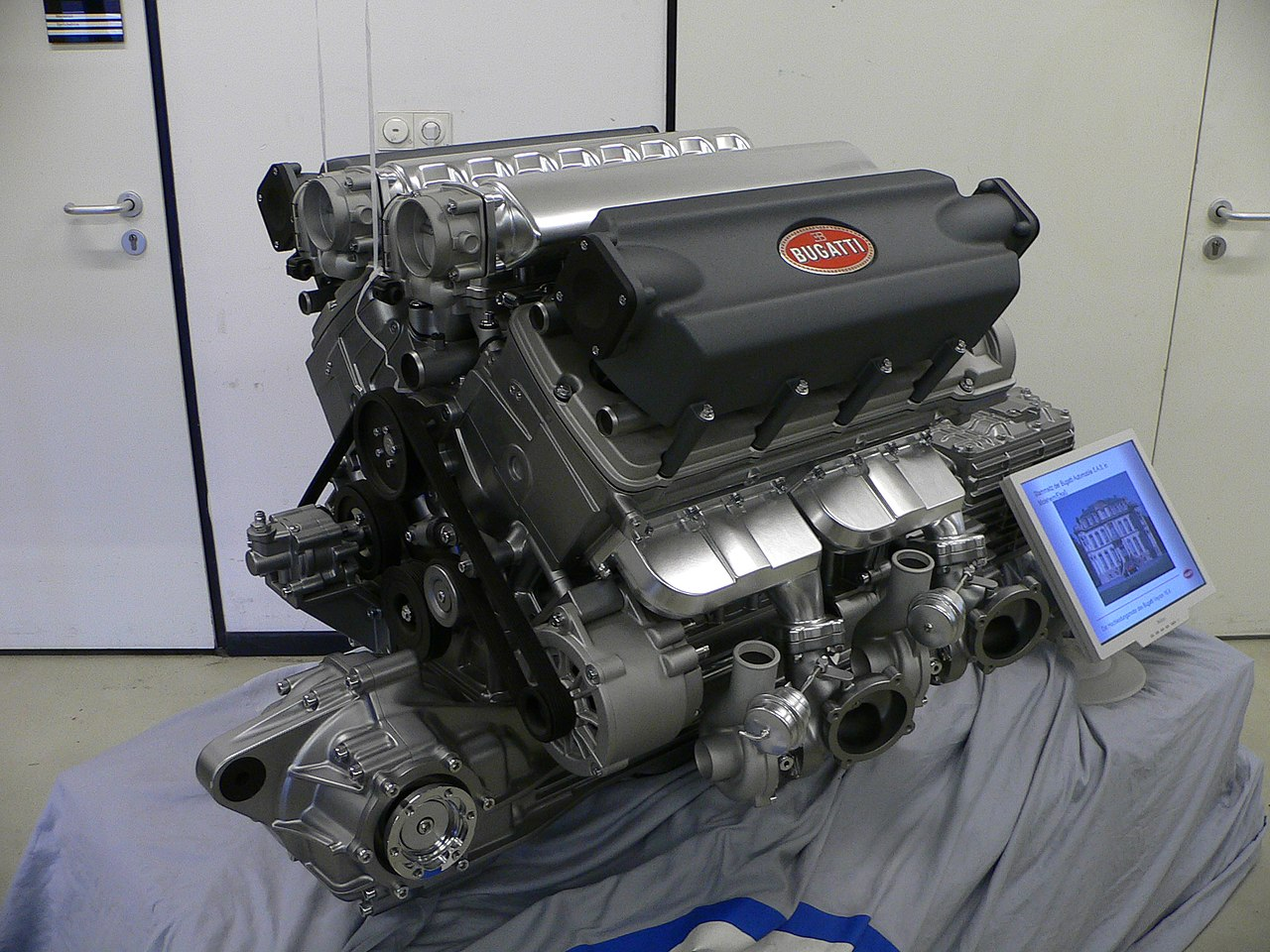
It takes two highly qualified technicians six full working days to assemble one W16 engine, consisting of 3,500 parts. The cooling system of this unit includes three main radiators and pumps up to 40 liters of coolant. The Mistral model will be the last car with this legendary engine, completing an entire era of W16 in automotive engineering.
This engine is not just a technological achievement, it is a manifesto of engineering courage, proving that in the era of electrification there is still a place for crazy ideas and their implementation at the highest level.
Toyota 1JZ-GTE - Japanese philosophy of reliability and power
This 2.5-liter inline six-cylinder engine was originally equipped with two parallel CT12A turbines, and after a major upgrade in 1996, it received one larger turbine and a VVT-i variable valve timing system, which radically improved elasticity and response.
The first generation (1990-1995) produced 280 horsepower, and after the update, the torque increased from 363 Newton meters to 379 N·m, reaching its peak at 2400 rpm. The engine life is estimated at 500 thousand kilometers or more, even with active use, which is the gold standard of reliability.
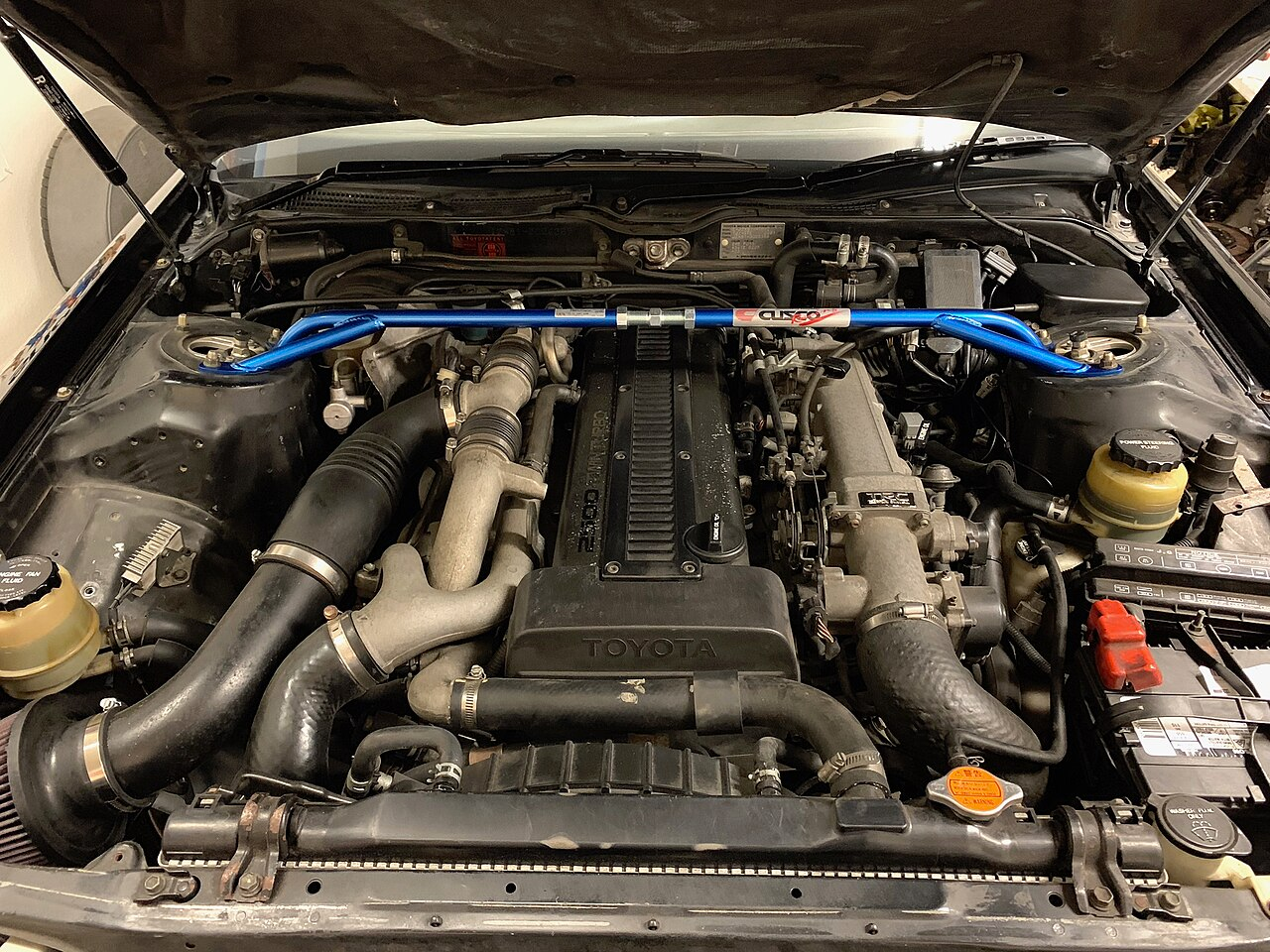
Interesting detail: the cylinder head was developed with the participation of Yamaha, whose logo can be found on the timing belt cover - evidence of the collaboration of two Japanese giants.
This engine has become iconic among tuners and drift enthusiasts due to its ability to withstand a significant increase in power without serious modifications. Many copies are boosted to 500-600 hp and continue to work reliably for decades.
Mazda 13B-REW (1991) - the pinnacle of the rotary revolution
This is the pinnacle of the evolution of Wankel rotary piston engines in mass automotive engineering. Two rotary chambers, sequential turbocharging (two turbines connected in stages depending on the engine speed) and a fantastic ability to rev up to high speeds made this unit unique. The engine was incredibly compact, lightweight and allowed creating cars with ideal weight distribution along the axles.
The culmination of the development of rotary technology was the R26B engine, with which Mazda won a historic victory in the legendary 24 Hours of Le Mans race in 1991, becoming the only Japanese automaker to win this prestigious marathon.
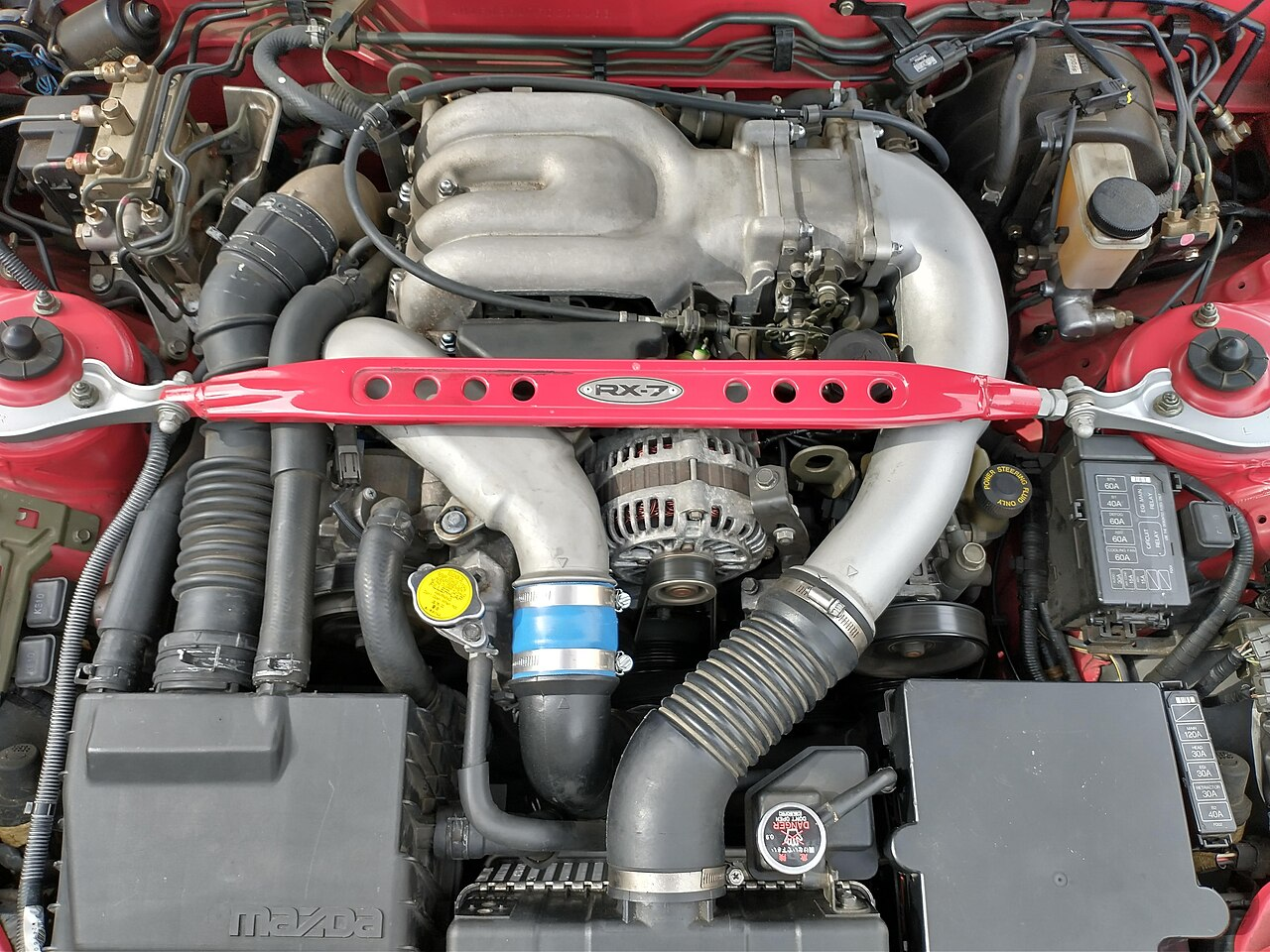
The main "enemy" of this engine is its own appetites. It consumed a lot of fuel and, more critically, engine oil, which was used to lubricate the apex seals. And the relatively low life of these seals has become a byword among owners, although for many enthusiasts its unique character, high revs and unique sound were worth all the hassle and maintenance costs.
Legacy of legends
These five power units are united by one thing - they not only moved cars, they moved the industry forward. Each of them became a symbol of its era: Ferrari V8 - the last anthem to naturally aspirated engines, BMW S70/2 - proof of the possibility of creating a reliable supercar unit, Bugatti W16 - a manifesto of engineering courage, Toyota 1JZ-GTE - the gold standard of the balance of power and reliability, and Mazda 13B-REW - a unique experiment that showed an alternative path for the development of engine building.
These engines remind us that a car is not only a means of transportation, but also an embodiment of human striving for perfection, speed and emotions. In the era of electrification, they become even more valuable, turning from engineering solutions into works of art that will inspire generations of car enthusiasts.
Read more materials on the topic:
- Top 5 legendary Formula 1 cars that changed the history of motorsport
- Five legendary cars that made all-wheel drive mainstream
- Legendary cars from movies: how much do they cost today
Комментарии