With the onset of cold weather, the question of how to quickly and efficiently warm up a car becomes paramount again for drivers throughout Russia. Some turn on the heater immediately after starting the engine, others wait until the engine warms up a little. It would seem like a trifle, but it depends on how quickly the interior becomes warm and how much the engine will be loaded. Why do opinions differ so much, and which method is actually more effective?
How the car heating system works
The car heater is simpler than it seems, but it works according to quite precise physical laws. When the engine starts, the coolant (antifreeze) begins to circulate through the system, gradually heating up. This hot flow passes through the heater core — a small heat exchanger where the air supplied by the fan receives the required amount of heat and enters the passenger compartment.
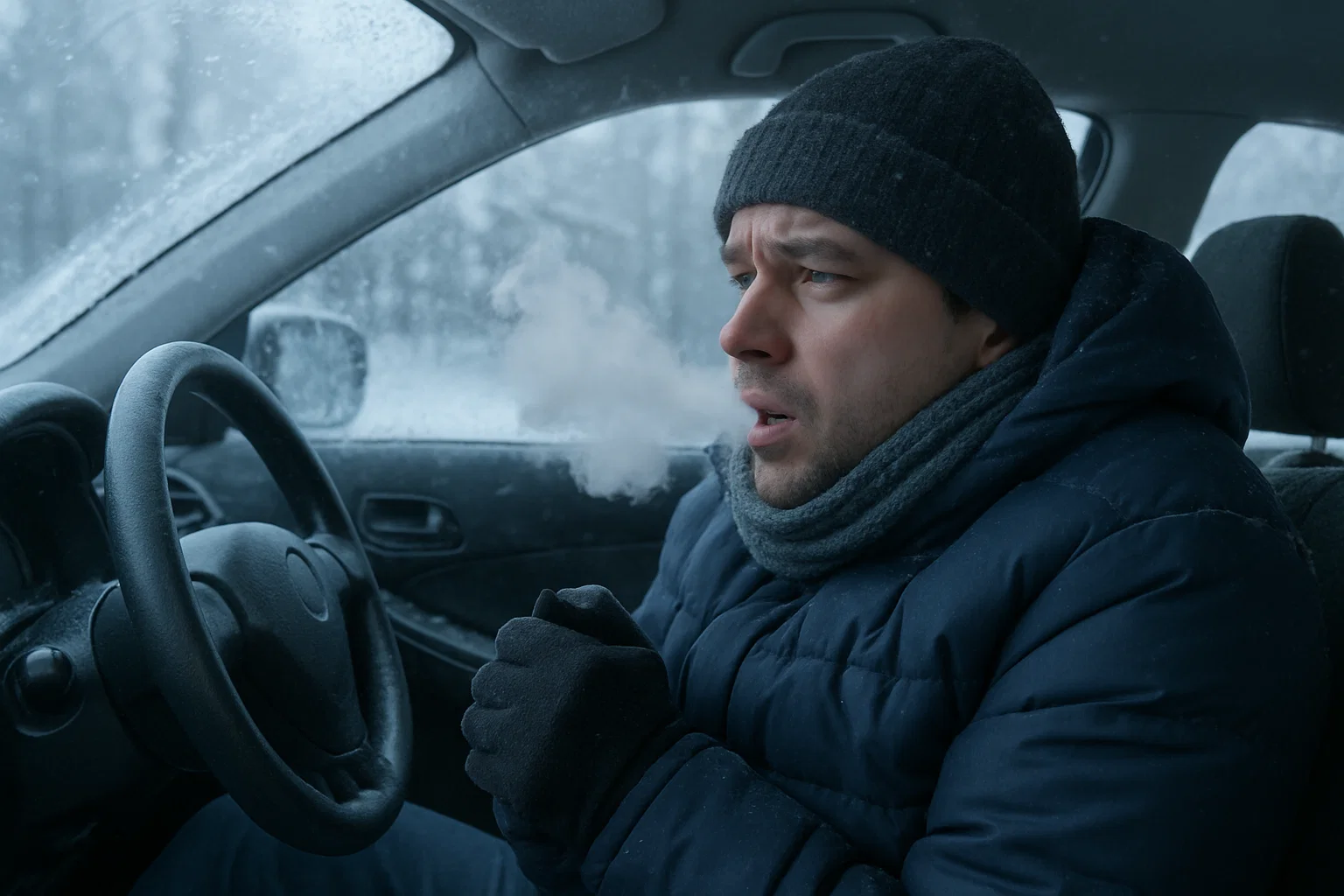
The driver can adjust the blowing force and air temperature by changing the fan speed or the direction of the flows. In modern cars with climate control, the system does this automatically, based on many parameters — the temperature of the engine, the air in the cabin and outside. However, even in such cars, it is important to understand the principles of the system in order to use it as efficiently as possible in winter.
Checking in practice: turn on the heater immediately or wait?
To determine which method warms up the interior faster, experts conducted a series of experiments. The car was started under the same conditions — with the coolant temperature around –10 °C.
First test: the heater was turned on immediately after starting the engine, at maximum heat and medium fan speed. The result — a comfortable +20 °C in the cabin was reached after 12 minutes 34 seconds of continuous operation.
Second test: the heater was turned on three minutes after starting, when the engine had time to warm up a little. In this case, the temperature in the cabin rose to a comfortable level in 11 minutes 45 seconds — almost a minute faster.
Third test: they tried to improve the results of the second test and supplemented it with the additional use of the recirculation mode (when air circulates inside the cabin without the inflow of cold air from the street), showed the best result: only 9 minutes 53 seconds to comfortable heat. This method turned out to be the most effective.
Why you shouldn't turn on the heater right away
At first glance, it seems logical to turn on the heating as soon as the engine starts. But the physics of the process works against this solution. Until the coolant warms up, the heater core remains cold, and the fan drives icy air through the cabin. This not only does not speed up the warm-up, but also forces the engine to work in more difficult conditions, because part of the heat is taken away prematurely.
When the engine warms up a little, the cooling system starts to work more efficiently — heat exchange becomes more intense, and the cabin is filled with warm air much faster.
The role of recirculation: why it really helps
The recirculation mode is one of the most underrated tools. When it is turned on, the air in the cabin is not taken from the street, but is driven in a circle. This allows you to quickly increase the temperature inside and avoid heat loss, which occurs when mixing a cold external flow.
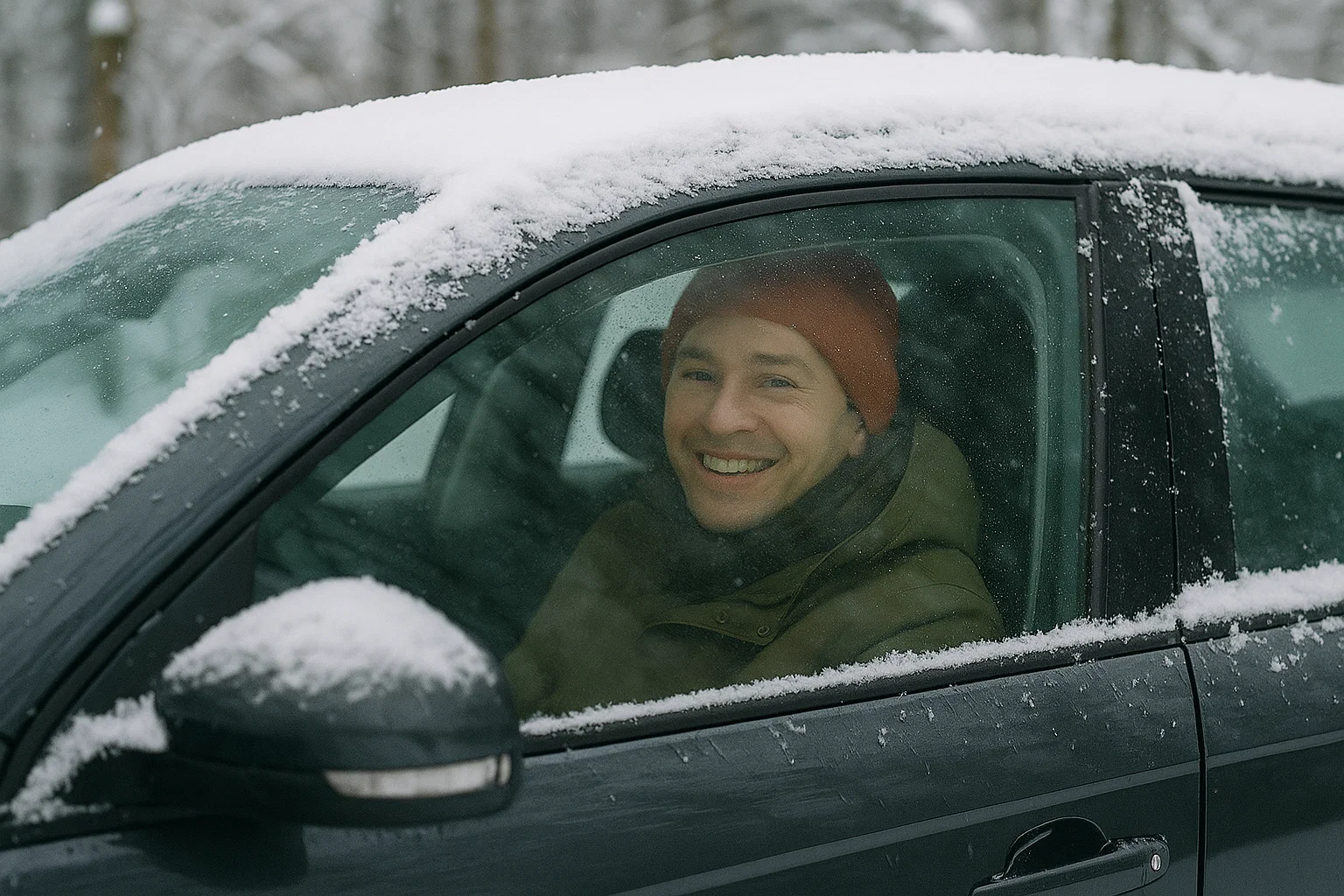
Experts advise using recirculation in the first 5–7 minutes of warm-up, while the engine and heating system are reaching operating mode. After that, it is better to turn it off to avoid fogging of the windows and ensure normal ventilation.
Optimal warm-up strategy in winter
The results of research and the practical experience of thousands of drivers allow us to draw an unambiguous conclusion:
- Don't rush to turn on the heater. Let the engine run for 3–5 minutes after starting — during this time the antifreeze will warm up and be able to efficiently dissipate heat.
- Use recirculation. Turn it on at the beginning of warm-up — this will speed up the heating of the cabin by several minutes.
- Trust the automation. In cars with climate control, you should not interfere with the system's algorithms — it regulates the moment the fan is turned on and the intensity of the blowing itself.
- Monitor the condition of the system. A dirty heater core or a weak fan can significantly slow down the warm-up.
A little patience — and it will be warmer in the cabin
The wait-and-see tactic when warming up in winter is not only more comfortable, but also more rational. The engine runs in a more gentle mode, fuel is consumed more economically, and warm air appears faster.
And if you add recirculation and a little patience, the cabin will warm up in less than ten minutes — an excellent result for the harsh Russian winter.
Read more materials on the topic:
- When legends lose their luster: 5 cars that disappointed
- BMW X5 fourth generation: sporty character, hybrid efficiency and a few compromises
- Review of BYD Sealion 6: a hybrid that drives like an electric car, but without excitement
Comments