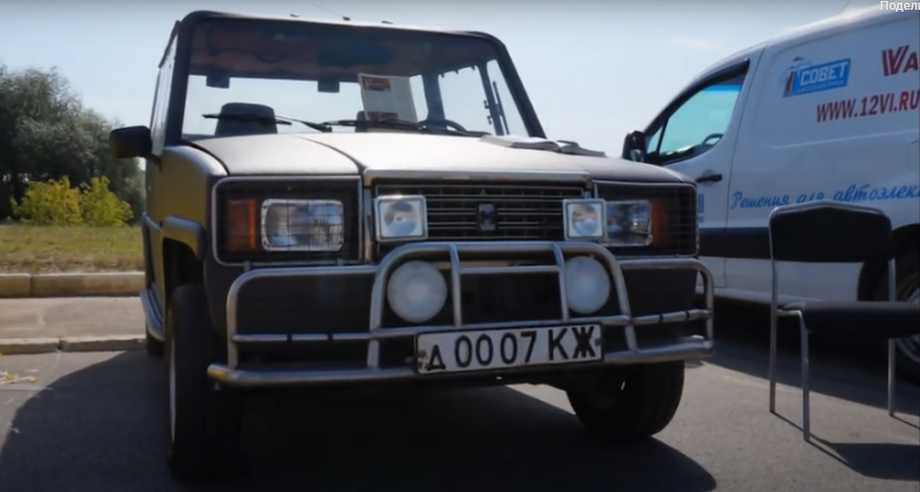
Imagine the mid-1990s - a country in turmoil, with roads resembling a proving ground for SUVs. At this time, when the domestic auto industry was in crisis and the market was flooded with used foreign cars, a sensation appeared in Kaluga - the "Magistr-1600", a car that seemed like science fiction back then. It was unofficially nicknamed "Zhiguliwagen" - and for good reason. This unusual project combined the boldness of engineering thought, folk ingenuity, and a purely Russian belief that "we can if we want to".
From Kiosks to Cars
The creators of the "Magistr" were not auto giants, but an enterprising Kaluga firm known for its mobile trading kiosks. These mobile kiosks brought the company profit and, most importantly, confidence in their own abilities. A logical step forward was to move from trailers to a real car. Thus, the idea was born to create an affordable crossover suitable for Russian roads and not ruinous for the buyer.
The idea did not end there; the engineers decided to offer customers not only a finished car, but also a kit for self-assembly - a solution that sounds relevant again today against the backdrop of rising prices for new cars.
Technology Based on VAZ
To reduce the cost of the project, the "Magistr" was built on components and assemblies from the Volga Automobile Plant. It was based on a shortened VAZ-2105 platform with a wheelbase of only 2300 mm. Under the hood was an engine from the "six" - a 1.6-liter gasoline engine with a capacity of 78 hp.
The drive is rear, although the engineers also conceived an all-wheel drive version based on solutions from the "Niva". Even the spare tire was placed under the hood - a characteristic detail referring to off-road traditions.
Almost a Crossover
The main pride of the project was the ground clearance - 278 mm, compared to the standard 170 mm for ordinary "Zhiguli". This made the "Magistr" a real hero of dirt roads and unpaved roads. The car received a reinforced front suspension and rear leaf springs, which allowed it to withstand up to half a ton of cargo.
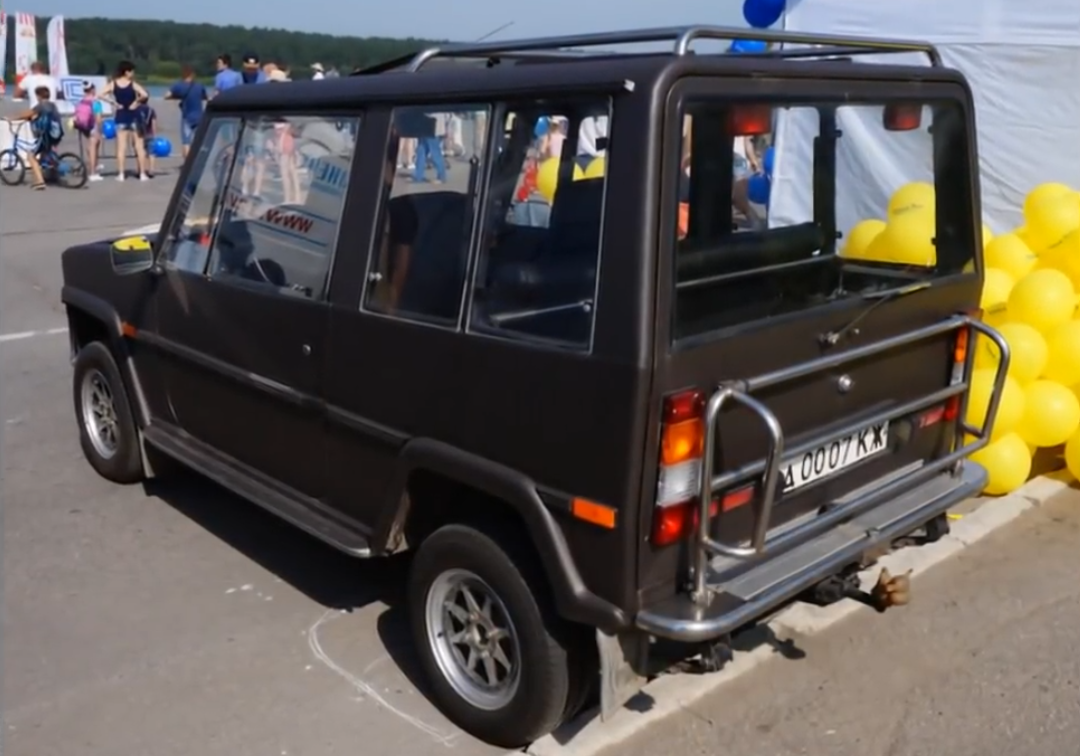
The dimensions of the crossover are 3570×1670×1790 mm. At the same time, up to seven passengers could be accommodated in the cabin - two folding seats were installed in the trunk.
Appearance with Character
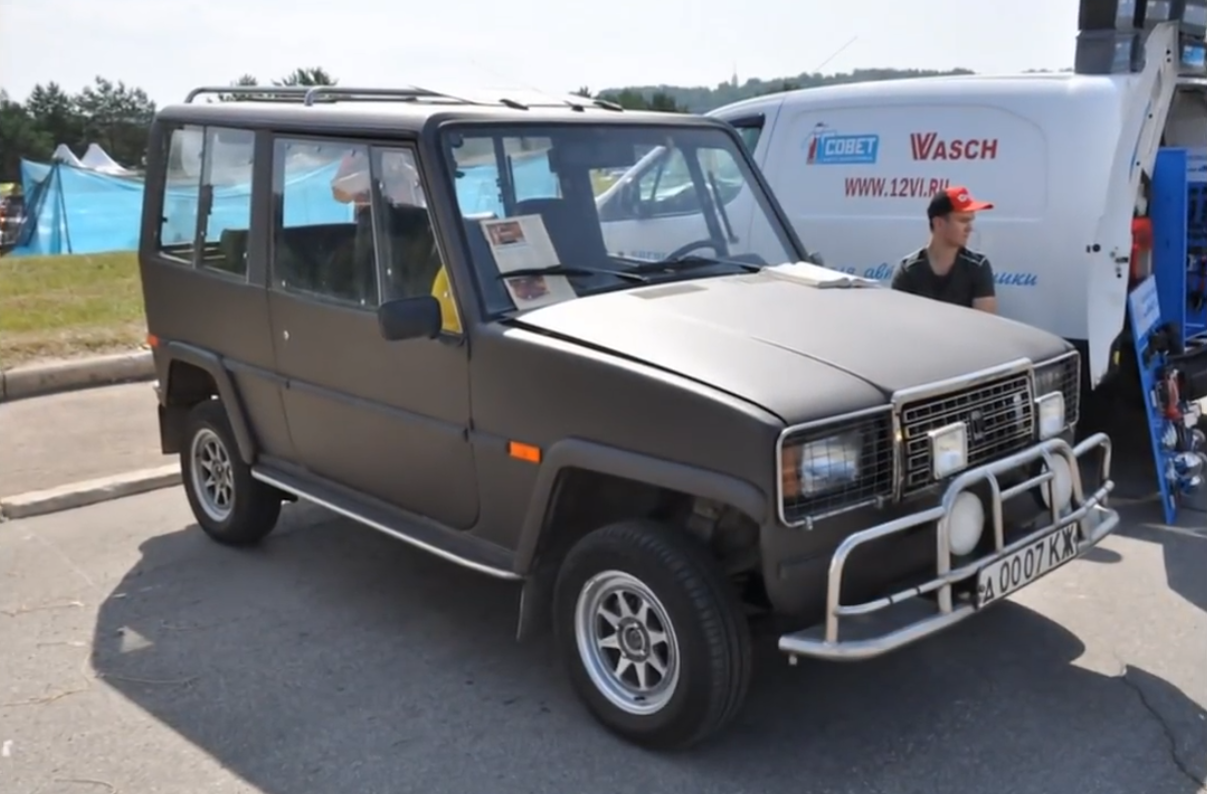
The design of the "Magistr-1600" turned out to be remarkably distinctive. The radiator grille and hood were borrowed from the VAZ-2107, but the body is completely original - made of fiberglass, with straight lines and rough shapes.
The combination of square proportions, a high roof, and a short base evoked strong associations with the Mercedes-Benz G-Class, hence the popular nickname - "Zhiguliwagen".
The interior, of course, resembled the "Zhiguli", but it also had pleasant features. For example, an adjustable steering column - in those days, a real luxury for a domestic car.
Big Plans and a Sudden Finale
In 1993, the "Magistr-1600" debuted at the Moscow Motor Show. The public, tired of monotonous cars, greeted the novelty with enthusiasm. The manufacturer planned to produce several hundred cars a year, and the prototype even passed tests at NAMI and at the VAZ base.
But the story ended suddenly. No one knows the exact reasons for the failure of the project: perhaps the tests revealed shortcomings, perhaps there were not enough funds, or the priorities of the company owners changed.
One way or another, the "Magistr-1600" did not reach the assembly line.
A Car Ahead of Its Time
Today, the "Magistr-1600" seems like a curiosity, but in the early 90s it was a real breakthrough for private Russian engineering. Compact, tall, family-friendly, and cheap - this is what a domestic crossover should have been.
Its creators offered solutions that the auto industry only returned to decades later: unification of components, simplified assembly, modularity, and the possibility of DIY construction.
The "Magistr-1600" remained a one-off project, but it occupies a special place in the history of the domestic auto industry. It became a symbol of that era - a time when enthusiasm and ingenuity could give birth to a car capable of competing, at least in idea, if not in technology.
And although this Russian "Zhiguliwagen" never made it to the roads of the country, it proved the main thing: even in the most difficult times in Russia, there were people ready to build dream cars - with their own hands and against all odds.
Read more related materials:
Now on home

Two cars of the same era, created for currency export, but with different philosophies

The crisis, compromises, and wrong decisions that buried a promising model


Resident of Sverdlovsk Region Recovers 192,000 Rubles and Receives Compensation

At the end of 2025, the crossover topped the sales ranking of new cars in the capital

The legendary racer moves around in a wheelchair and is under constant medical supervision

What malfunctions do owners of the Togliatti flagship most often encounter?

Slow shifting in the cold is not normal, but the first sign of transmission problems

The car features improved design and electronics

Now it's Rolls-Royce

Even with the recycling fee, the car will cost less than from official dealers

The model also received new trim levels