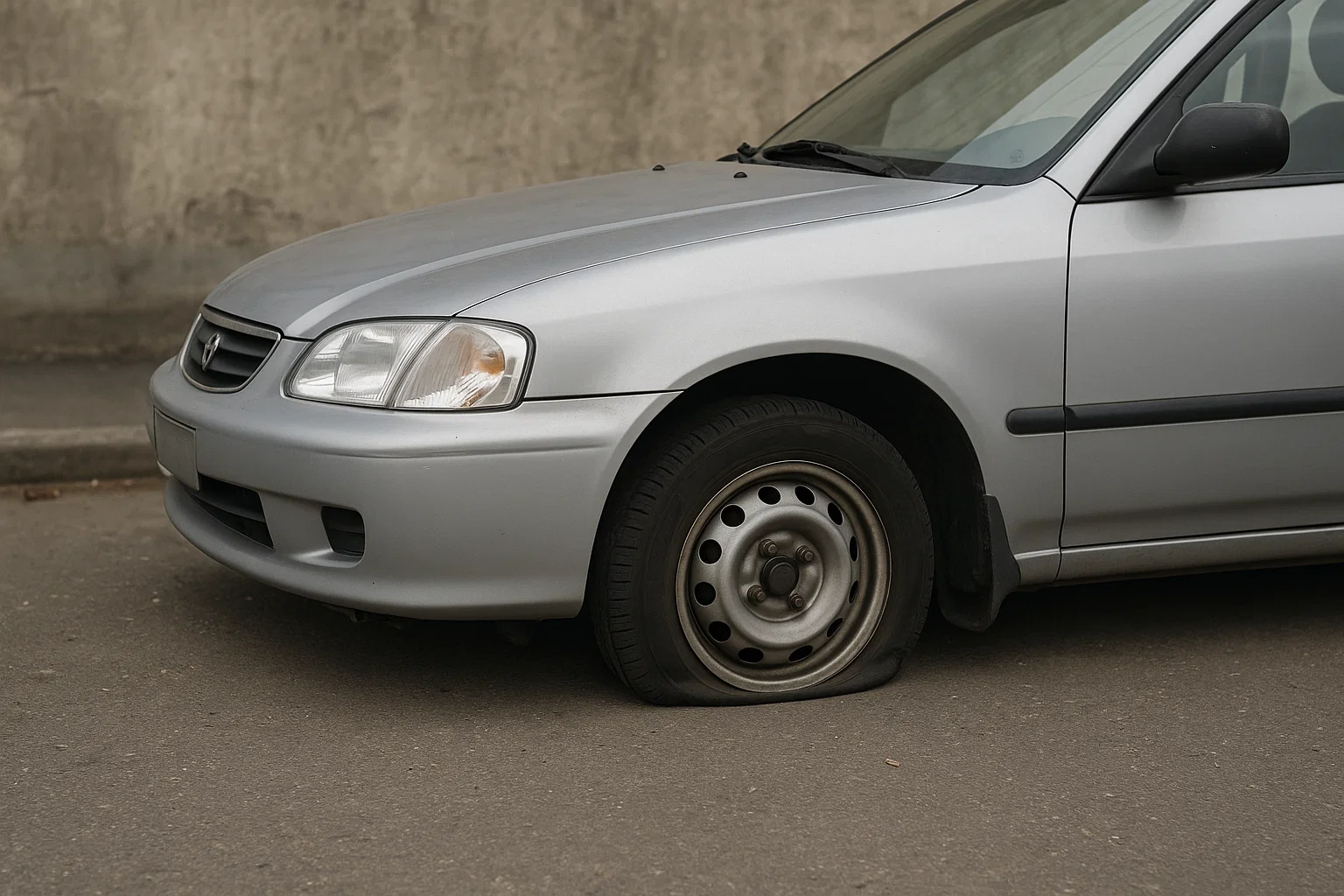
Every driver knows the situation when a tire suddenly goes flat in the middle of the road. But there is no need to panic - today, even without the help of a tire service, you can fix the problem yourself. The main thing is to have a "tire repair kit" at hand - a compact set of tools and materials for emergency repairs.
Such a kit is a real "key to salvation" on the road. With its help, you can quickly patch a puncture and continue driving to the nearest service station without waiting for a tow truck.
Emergency Sealant: Express Help or Risk for TPMS?
The fastest way to "revive" a punctured wheel is to use an emergency sealant. This thick liquid is pumped through the valve directly into the tire, often using a car compressor. Inside, the sealant spreads over the surface and seals a small hole, restoring pressure and allowing you to get to the tire shop without a jack.
But the method has nuances. The aggressive composition of the sealant can disable sensitive TPMS pressure sensors, which are equipped in modern cars. Once inside, it clogs the sensor mechanism, and it stops working - replacement is not cheap.
In addition, after such a repair, the master will have to clean the inner surface of the tire and the disc from the sticky mass for a long time. And most importantly, the sealant is only effective for small punctures (up to 5 mm) and will not cope with side cuts. That is, it is more of a "temporary patch" than a full repair.
String Repair: A Reliable Way to Get to the Service
The most popular way to repair with your own hands is to use a rubber string. This method does not require special equipment and is suitable for repairing the tread - the working part of the wheel.
The repair kit includes:
- spiral awl for cleaning the hole;
- tool with an eyelet for installing the string;
- glue activator;
- several rubber strings.
Step-by-step repair algorithm:
- Find the puncture site. If the nail or screw is still in the tire, do not pull it out until preparation.
- Remove the foreign object and clean the hole with an awl with rotational movements.
- Thread the string into the eye of the tool and cover with glue activator.
- Insert the string into the hole, leaving the ends 1-2 cm long on the outside, then sharply pull out the tool.
After a couple of minutes, you can continue driving. However, it is worth remembering: the string is a temporary solution. It does not restore the structure of the cord, so after returning home, it is better to go to a full tire service.
Patch and Mushroom: Repair According to the Rules
If you want a reliable result, and not a temporary measure, it is better to entrust the repair to specialists. In the tire service, the puncture is eliminated from the inside with a patch or the so-called "mushroom".
When installing the patch, the tire is disassembled, the inner surface is cleaned, glue is applied and the patch is pressed. After cold vulcanization, a monolithic, airtight connection is obtained.

The mushroom is considered a more technological solution: its leg fills the puncture channel, and the wide head covers the damage from the inside, restoring tightness and protecting the cord from moisture.
As for side cuts, self-repair is strictly prohibited here. The sidewall experiences enormous loads, and a poor-quality patch can lead to a tire explosion on the go. In this case, only professional service with the use of hot vulcanization and reinforcing patches helps.
What to Choose: Sealant, String, or Patch?
The choice depends on the situation:
- Sealant - a quick but temporary way to get to the tire service. It can damage TPMS sensors and complicate subsequent repairs.
- String - the best option for self-repair on the road. Reliable enough to safely get to the city, but does not replace professional repair.
- Patch or mushroom - the standard of quality and durability. This repair restores the tire completely, but requires disassembly and special equipment.
After any repair, be sure to check the tire pressure. It must match the value recommended by the manufacturer. It is best to have a compact compressor with you - it will help maintain the required pressure and avoid repeated problems.
A flat tire is not a disaster if you know how to act. Sealant will help you quickly get to the service, the string will reliably wait out the road, and a patch or mushroom will restore the tire completely. The main thing is not to ignore the damage and always keep the pressure in the wheels under control.
Such a simple prevention will save you both money and nerves, and most importantly - will ensure safety on the road.