Production of Tenet cars at the Kaluga plant of AGR Holding officially started in August, and by the end of November, the company had already celebrated the production of its 30,000th car. This is especially significant considering that the Tenet brand is not even a year old, and the plant itself belonged to Volkswagen until recently and was adapted for completely different technologies. To understand how it was possible to quickly rebuild the production chain, we followed the entire path of the car - from welding the bare body to final inspection and laboratory tests.
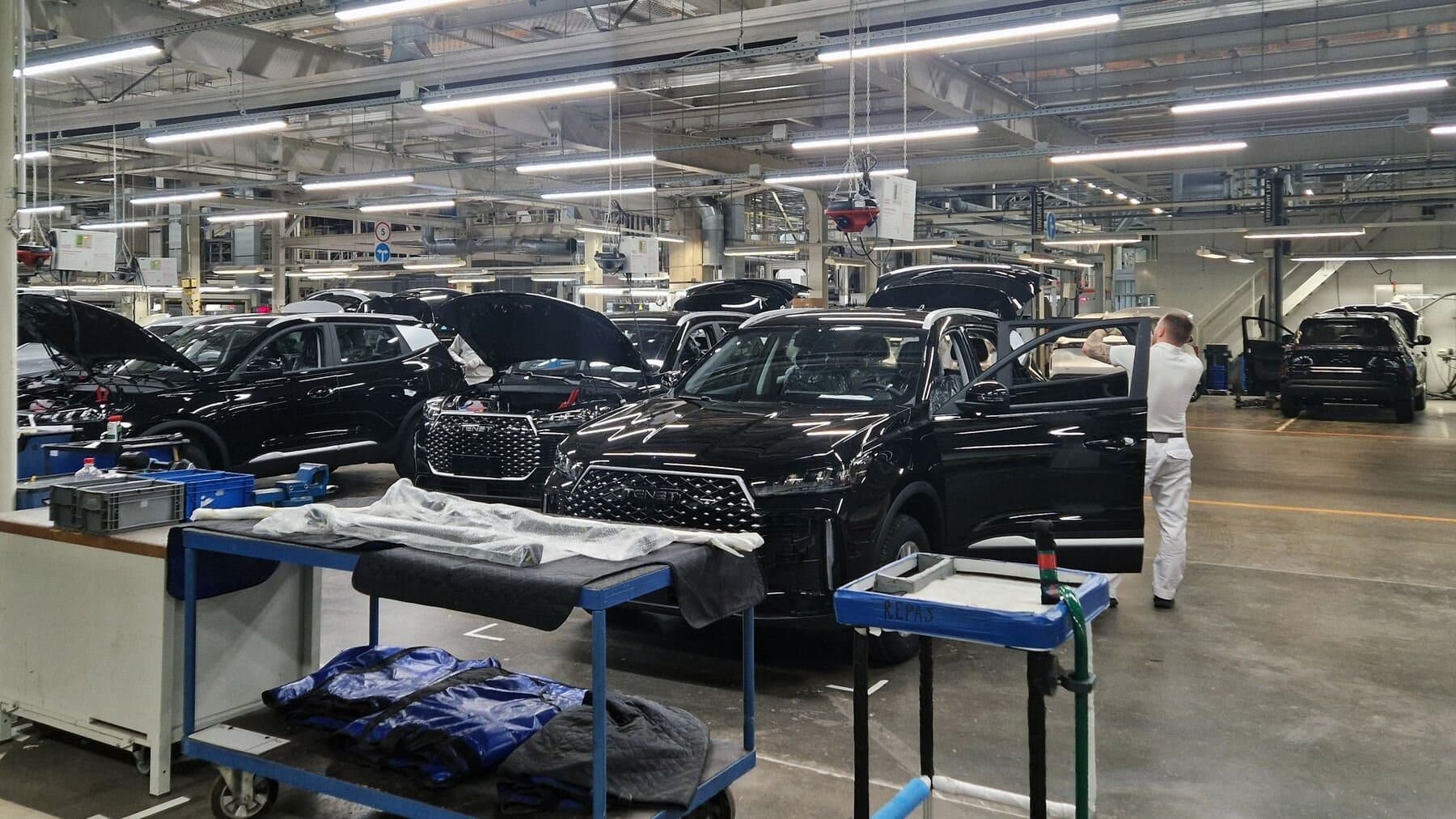
Yes, disputes about how much Tenet can be considered "Russian" do not subside. AGR Holding's production partner, Defetoo, is not officially associated with any major Chinese automaker, but the similarities with Chery models are obvious. However, the fact remains: the architecture for the new crossovers was indeed rebuilt almost from scratch. Previously, the VW plant's capacity reached 225,000 cars per year, now a potential of 194,000 is proposed. The difference reflects a deep modernization of processes and adaptation of technological chains to the Tenet platforms.
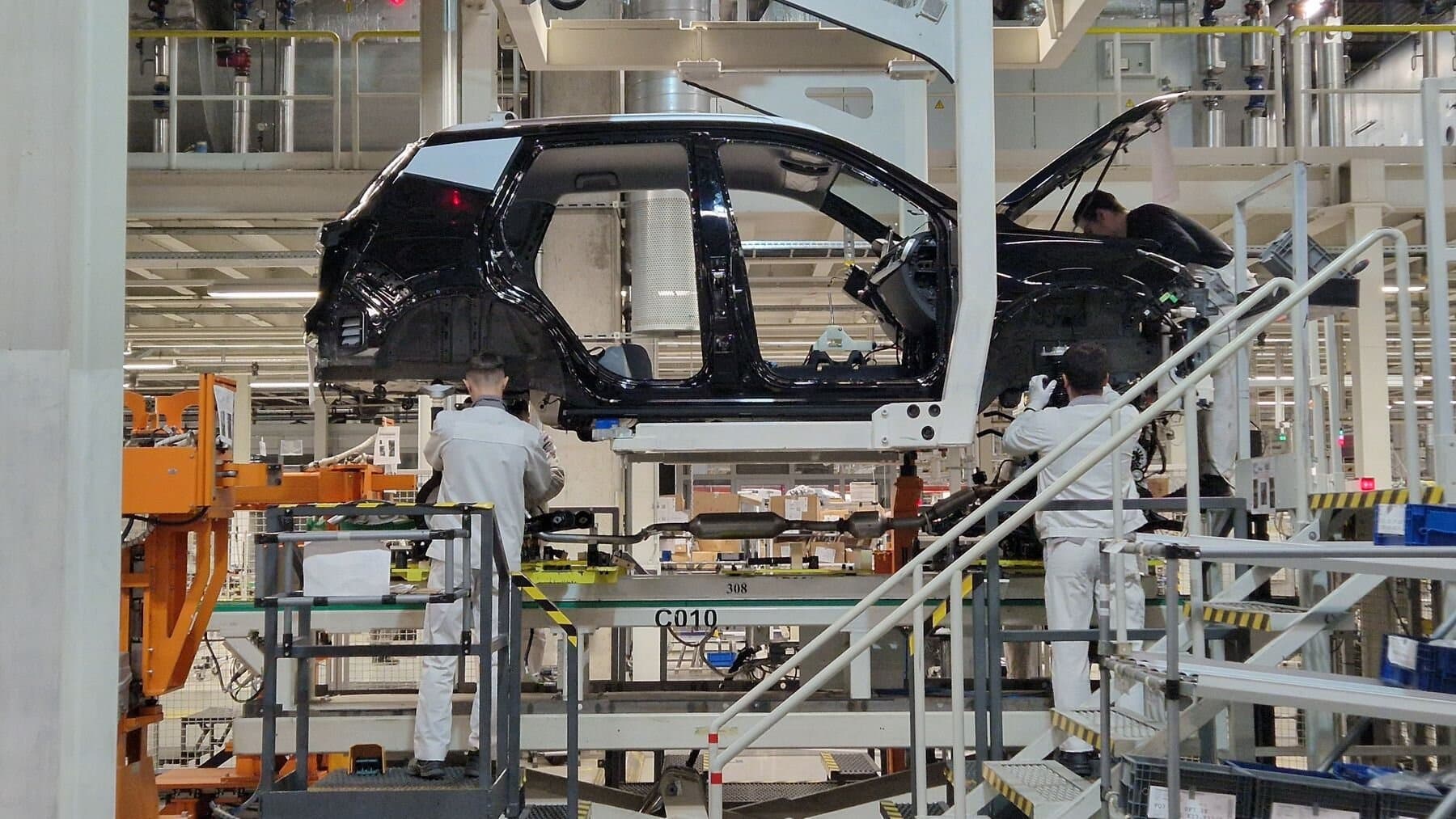
The welding shop - the heart of production - occupies almost 72,000 m², has a conveyor length of 3.3 km, and is capable of producing 41 bodies per hour. It employs 681 people and 332 robots, providing an automation level of around 90%. Bodies are assembled from pre-stamped elements - the plant does not yet have its own stamping production. Floors, roofs, and sides are welded in parallel on separate lines, then the parts undergo mandatory visual inspection. If defects are identified, the sub-assembly is sent for correction.
A gigantic debugging process was carried out to launch production. More than 200 test bodies were manufactured, of which 50 were subjected to detailed inspection according to more than 2100 parameters: 1784 control points for welding geometry, 235 functional dimensions, and 115 rigid suspension points. Some of the bodies underwent strength tests with the rupture of welded and adhesive joints - the technology is actively used in modern cars, and equipment also had to be adapted for it.
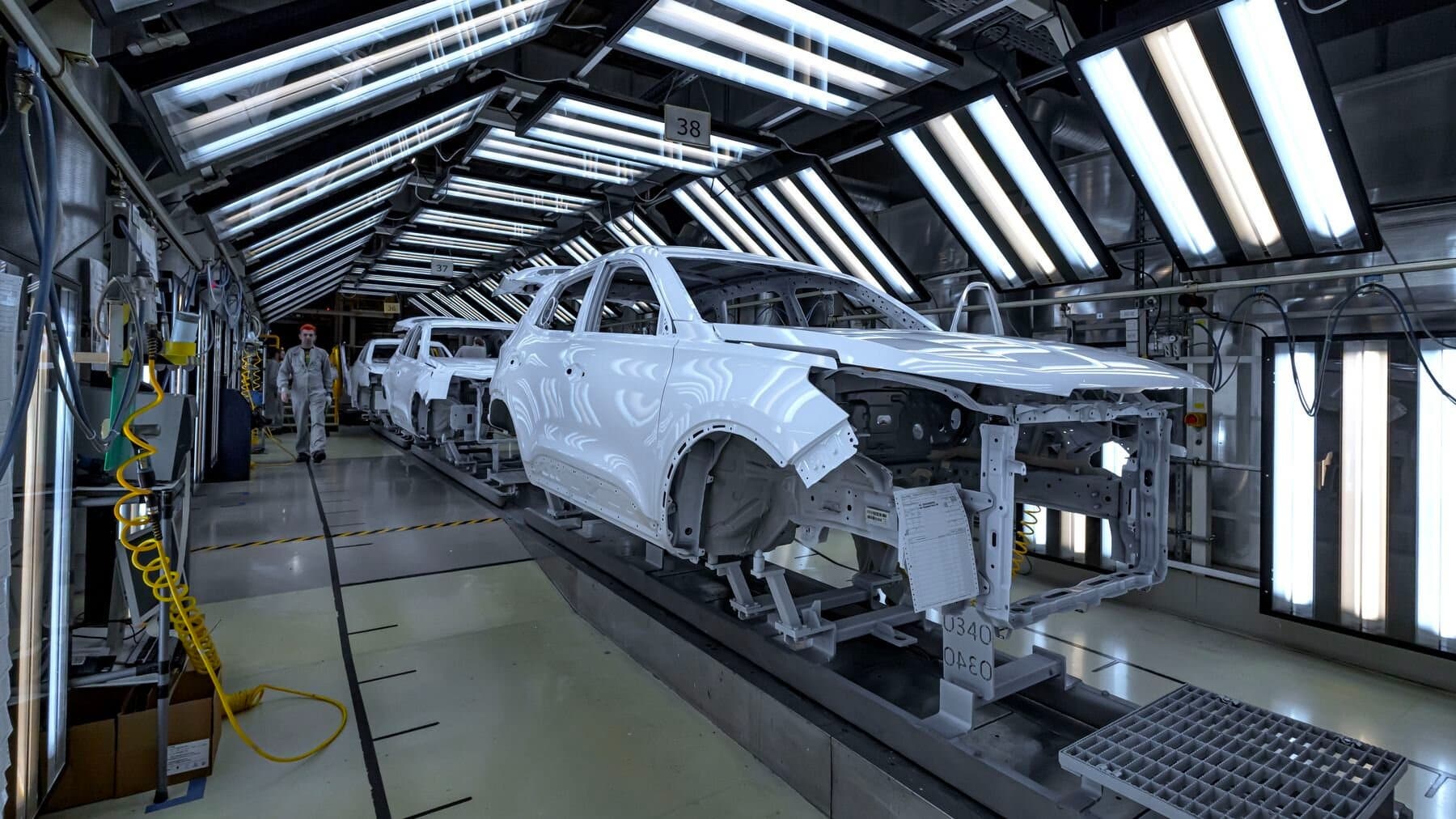
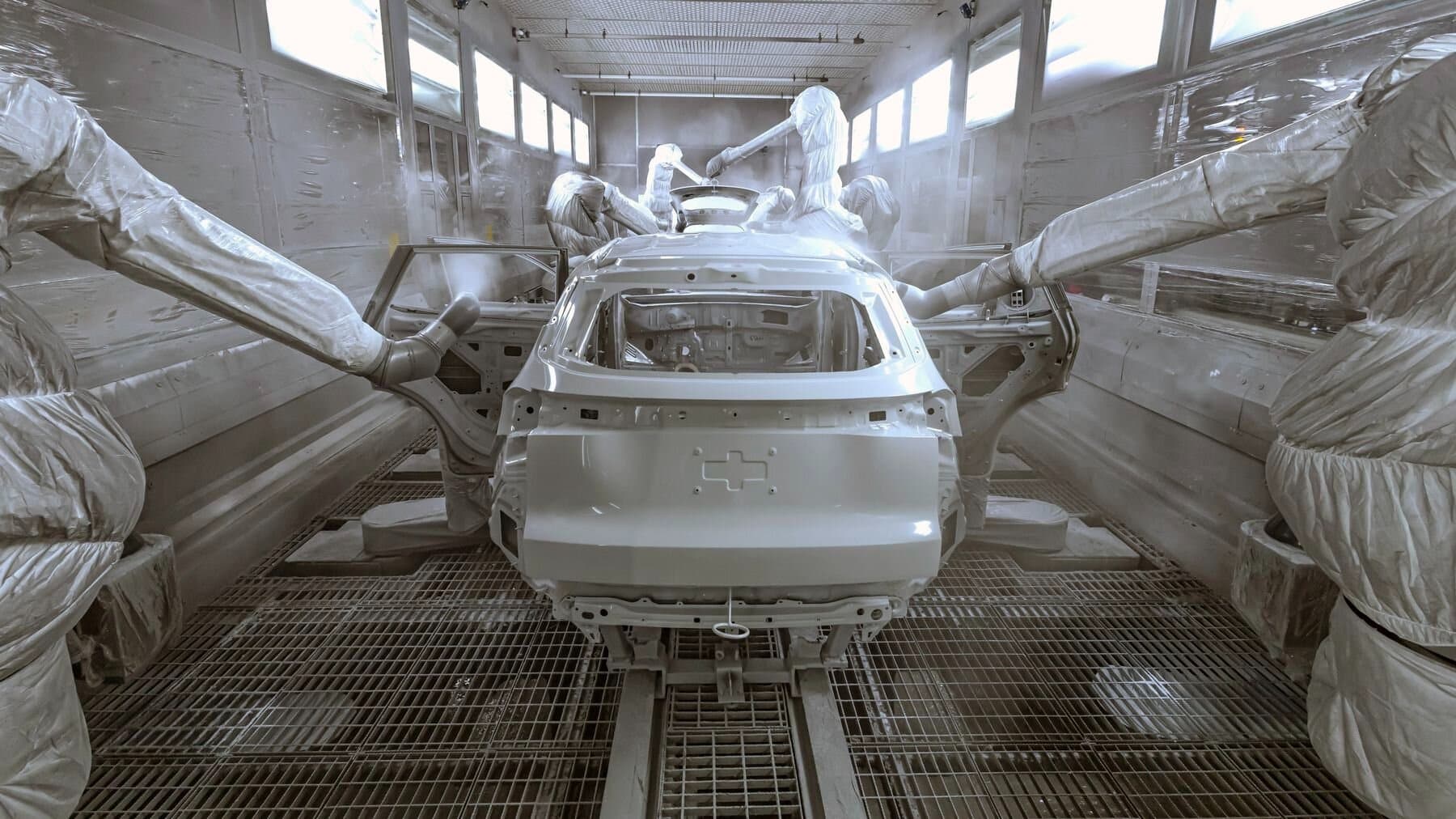
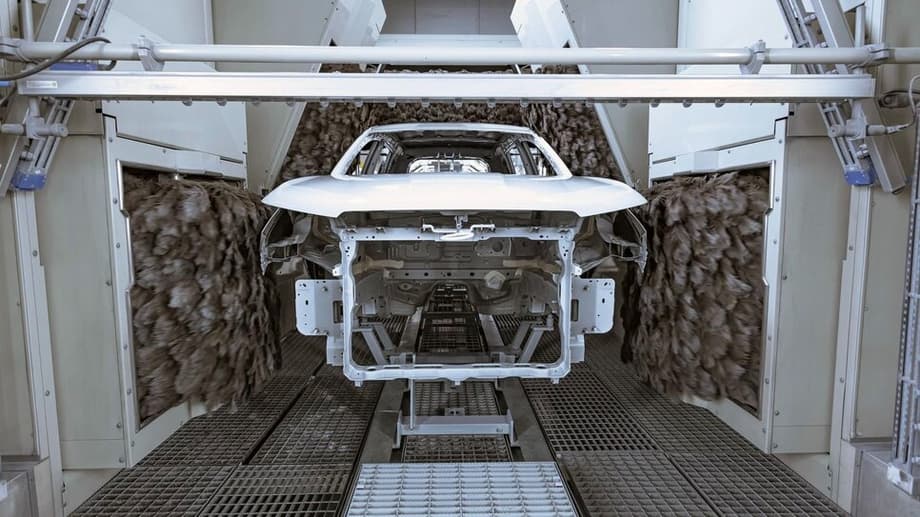
An important modernization was also the paint shop with an area of 36,000 m². The application of all coatings, including primer, enamel, and varnish, is fully automated here. 57 robots are working, and personnel only have access to equipment maintenance areas. Before painting, the bodies undergo degreasing, phosphating, and cataphoretic priming using RoDip technology - the body is rotated in a bath so that the material penetrates all hidden cavities. For the Russian market, the LCP indicators were strengthened: if the norm for China is about 90 microns, then at the plant, the layer is brought up to 120-130 microns for individual zones. After the varnish, the body undergoes drying, cleaning with ostrich feathers, and manual sealing of seams.
The assembly shop is the opposite of welding: the level of automation here is only 5%, but this is standard for final lines. 1,352 employees work on 58,000 m², assembling cars at 129 stations with electronic torque wrenches. Each tightening moment is recorded - the system knows who, when, and which bolt tightened. The power unit is installed at the so-called "wedding", where pre-assembled front and rear subframes, steering, and pipelines are supplied in advance. Engines and gearboxes are still imported from China, but AGR Holding is exploring options for localizing engine production, as it was during the Volkswagen era.
After assembly, the cars are sent for quality control. The cars undergo adjustment of wheel alignment angles, a vibration stand for "shrinkage" of suspension elements, a rain chamber, and a separate air tightness test, which reveals even the smallest leaks. The plant operates a large quality department with an area of 3,500 m² with two laboratories, seven measuring machines, and protruding body samples that are selected at different stages of production. Control geometry, gap measurements, LCP condition, unit and suspension tests - all this is carried out selectively every day.
Perhaps the main impression after the tour is that the plant really operates as a full-fledged modern enterprise, and not as a temporary site. Much remains to be done: there is no own stamping shop, there is no local assembly of engines, some of the equipment is left in reserve. But it is already obvious that the restart of the Kaluga plant has become the largest project of the Russian automotive industry in recent years. If localization continues to grow, the plant will be able to compensate for the growing recycling fee, which means keeping prices for Tenet within more acceptable limits. And then the real warehouses near Kaluga will really begin to be freed from already produced cars, letting new ones through - in the direct and figurative sense, "new Russian" cars.
Read more materials:
Now on home

Two cars of the same era, created for currency export, but with different philosophies

The crisis, compromises, and wrong decisions that buried a promising model


Resident of Sverdlovsk Region Recovers 192,000 Rubles and Receives Compensation

At the end of 2025, the crossover topped the sales ranking of new cars in the capital

The legendary racer moves around in a wheelchair and is under constant medical supervision

What malfunctions do owners of the Togliatti flagship most often encounter?

Slow shifting in the cold is not normal, but the first sign of transmission problems

The car features improved design and electronics

Now it's Rolls-Royce

Even with the recycling fee, the car will cost less than from official dealers

The model also received new trim levels