In late 2021, the Chinese electric vehicle market was the most dynamic on the planet: dozens of new products every month, rapid technological development, and a fight for dominance. In this environment, Great Wall Motor, the leader in ICE crossovers, suddenly felt like a relic of the past. They urgently needed a high-profile statement about their transition to an electric future. That's how Mecha Dragon appeared - a project that was supposed to be a technological breakthrough. And it became one... but only on paper.
Technological Manifesto in Anime Style
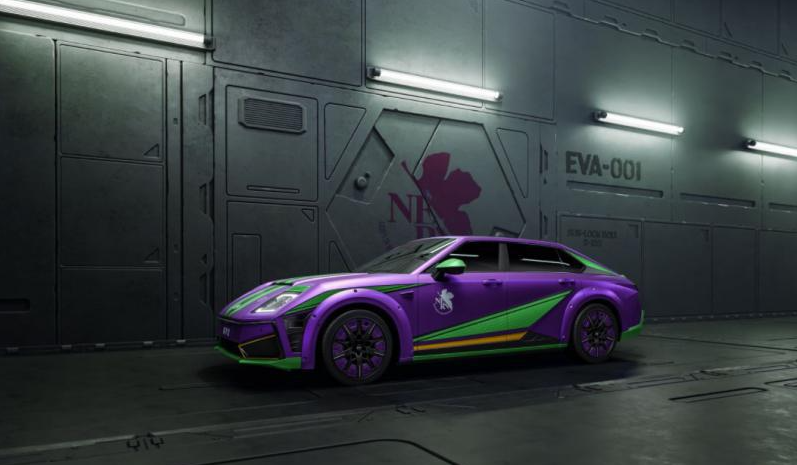
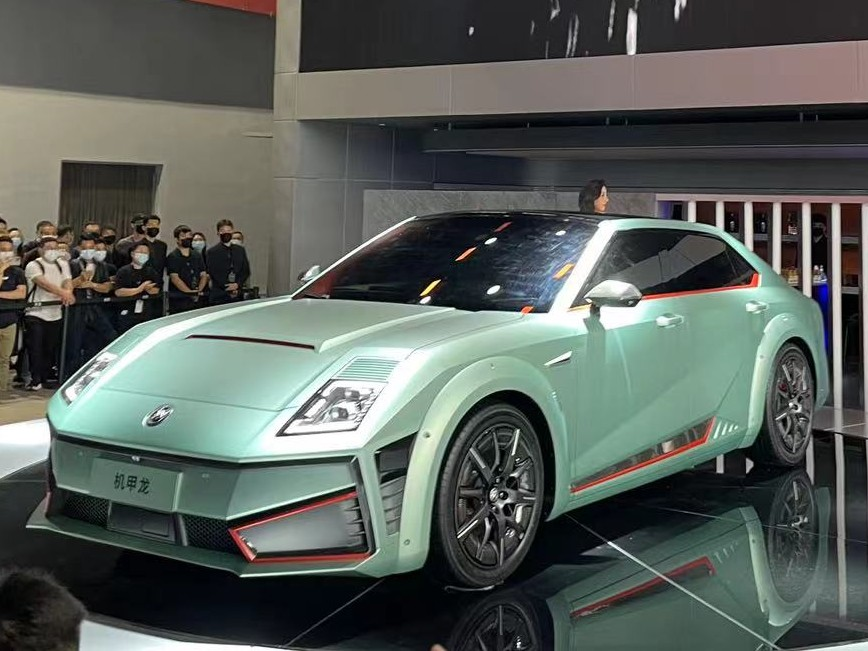
The premiere in Guangzhou in 2021 resembled a blockbuster presentation. A liftback with sharp planes, giant air intakes, and complex lighting, with a name referring to Japanese fantasy. In addition, a collaboration with Neon Genesis Evangelion ("EVA") was announced to launch a limited edition Mecha Dragon EVA. GWM wanted to give the car the status of a cultural symbol of a new era.
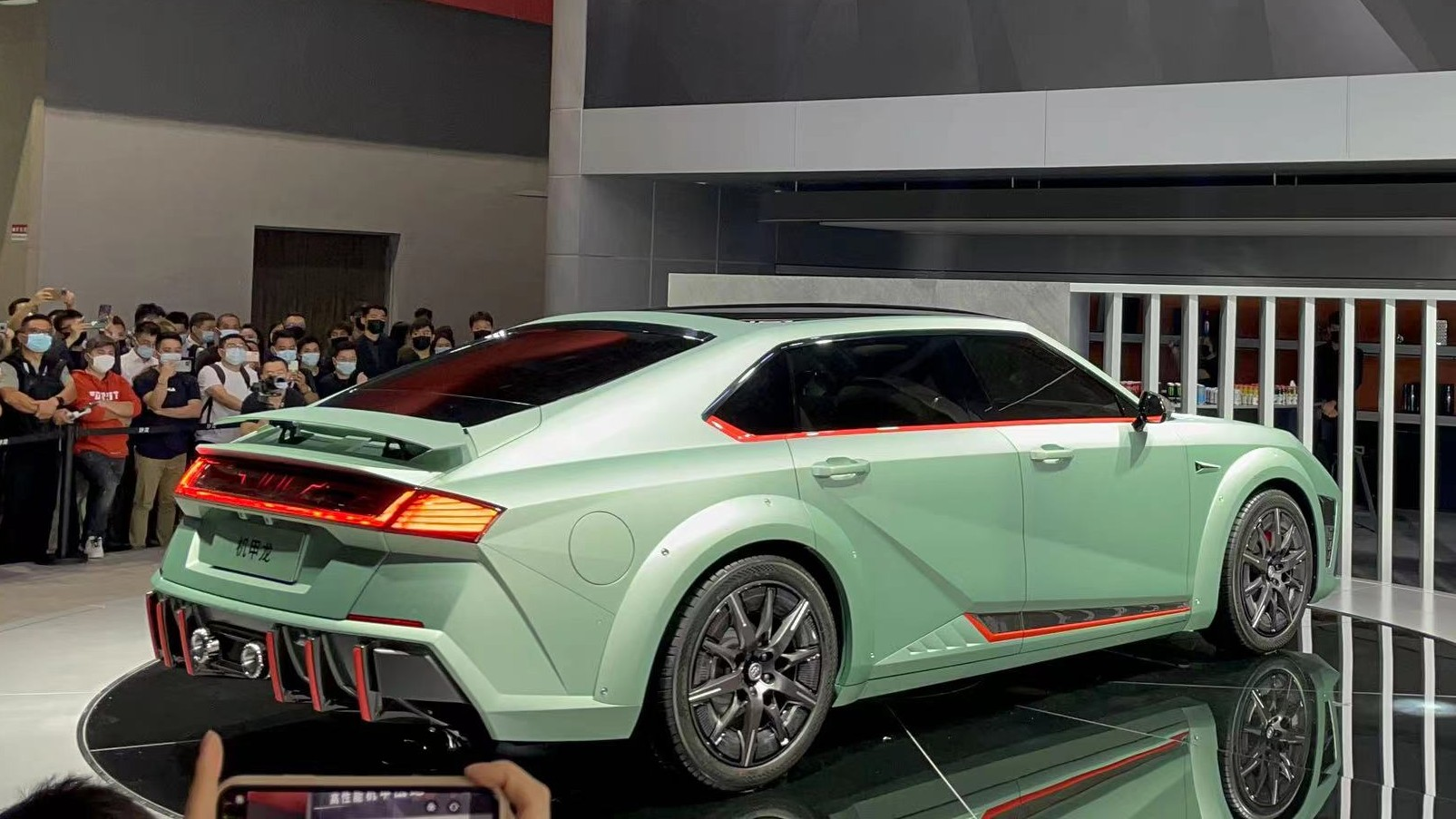
The signature element was the mock "exhausts" with lighting and synthesized sound from Harman. In the world of EVs, where silence dominates, this looked like both a challenge and an attempt to regain lost emotions.
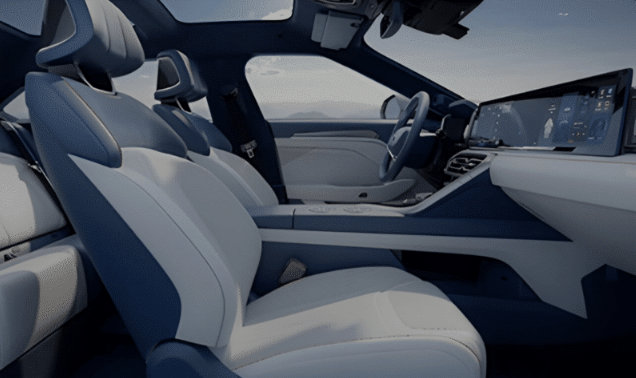
The cabin turned into a digital cockpit: a panoramic 27-inch 4K display, a separate instrument panel, projection, and tactile panels on the steering wheel. The voice assistant "Xiao Jia" was able to maintain a full dialogue with each passenger. It felt like not a car, but a technology demonstrator.
Engineering Maximum of 2021
The basis was an 800-volt architecture - a rarity for that time. The declared charging power of up to 480 kW promised a theoretical +400 km in 10 minutes. This parameter was an absolute market record. Battery capacity - 115 kWh, one of the largest in the class.
Two electric motors produced 544 hp, providing acceleration to 100 km/h in 3.7 s. But the main innovation was the autonomous driving system:
- 4 lidar sensors - an industry record
- 7 cameras + 5 radars + 12 ultrasounds - a total of 38 sensors
- Huawei computing unit at 400 TOPS
The level of automation was declared as L3+ - the ability to move without driver intervention in real-world scenarios.
At the start, Mecha Dragon looked like almost the most technologically advanced EV on the planet.
A Competitor Who Was Simply on Time
Zeekr 001 acted as a natural rival. A similar body format, similar dynamics, but a completely different approach:
- fewer experiments
- better preparation for mass production
- 30% cheaper with similar characteristics
While GWM was demonstrating the future, Zeekr was already selling in the thousands. Buyers made a pragmatic choice: technologies that work today.
Strategy Errors and Lost Pace
Delivery Delays
A series of 101 limited edition copies sold out in 3.5 hours. But then the postponements began, and the level of trust began to fall rapidly.
Branding Failure
The car debuted under the new sub-brand Salon, but soon the project was transferred to the ORA brand - a manufacturer of budget EVs. A $76,000 car in a family of city compact cars is a marketing conflict that undermines positioning.
Market Development Turned Out to Be Faster
Technologies that shocked in 2021 (800 V, lidars, ultra-fast charging) became standard by 2023 for BYD, Xpeng, NIO, and others. The product lost its uniqueness even before its release.
When the Market Changes Faster Than Engineers
By 2024, the climate for premium EVs in China had become aggressive: some startups are leaving, others - such as Xiaomi - are tearing up the market. Producing a complex and expensive liftback without obvious advantages was already economically pointless.
The release of Mecha Dragon remained episodic - the project was quietly curtailed.
Result: A Genius Who Didn't Make It
Mecha Dragon is not a failure. It is a victim of being ahead of its time.
- Too complex for quick implementation
- Too expensive for the market
- Showed the future too early
Its contribution is not sales, but influence. Four lidars and charging at 500 kW forced competitors to drastically accelerate development and rewrite technological strategies. But while Great Wall was demonstrating the limits of the possible, other manufacturers were already implementing them in production cars.
Read more related materials:
Now on home

Two cars of the same era, created for currency export, but with different philosophies

The crisis, compromises, and wrong decisions that buried a promising model


Resident of Sverdlovsk Region Recovers 192,000 Rubles and Receives Compensation

At the end of 2025, the crossover topped the sales ranking of new cars in the capital

The legendary racer moves around in a wheelchair and is under constant medical supervision

What malfunctions do owners of the Togliatti flagship most often encounter?

Slow shifting in the cold is not normal, but the first sign of transmission problems
The car features improved design and electronics

Now it's Rolls-Royce
Even with the recycling fee, the car will cost less than from official dealers

The model also received new trim levels