This Mitsubishi Pajero III can hardly be called a weekend country car. It is constantly on the move: business trips, long routes, protected natural areas and regular off-road driving. The 2003 car has long passed the age that is considered \"comfortable\" for ownership, but the safety margin laid down by the engineers allows it to remain a full-fledged working tool even after 400,000 kilometers.
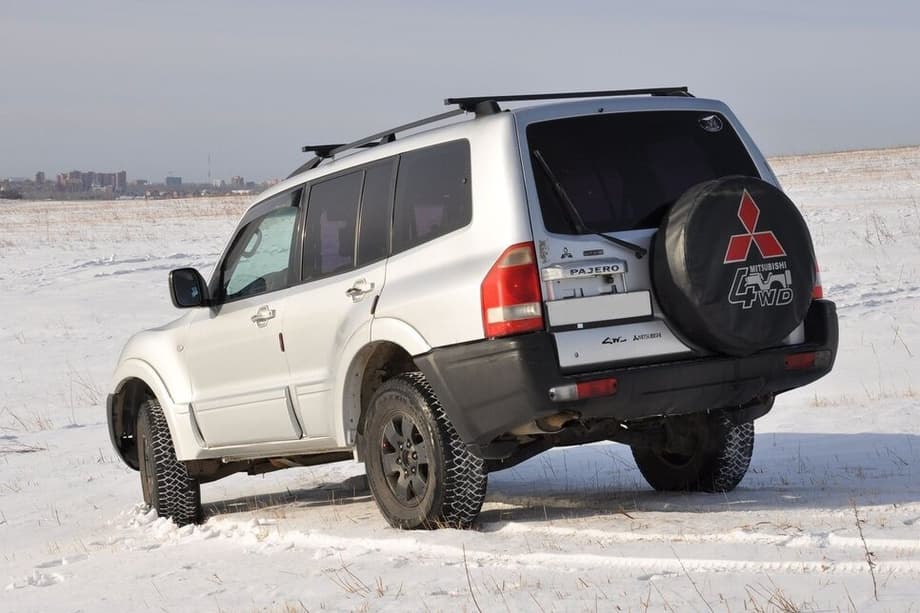
The third generation Pajero became a turning point for the model. While the Pajero II was a classic old-school frame SUV, in late 1999 Mitsubishi decided to take a bold step. The car received an integrated frame and fully independent suspension, which looked almost revolutionary for a large SUV of that time. At the same time, the ground clearance increased to 235 mm, and the center of gravity, on the contrary, dropped. The appearance became more aggressive due to the inflated wings, which not everyone liked, but made the car's image recognizable. Buyers were still offered short-wheelbase three-door and long-wheelbase five-door versions.
This particular example was bought in 2017 with already solid mileage - just over 200,000 kilometers. The car was originally intended for the markets of the Middle East and Southeast Asia, but the reasonable price made it an attractive alternative to the much more expensive Toyota Land Cruiser Prado. Over the following years, the Pajero traveled another 190,000 kilometers, which for a company car means intensive and far from gentle operation.
In terms of driving performance, the Pajero III remains a universal car in the full sense of the word. On the highway, it is stable and predictable, confidently holds a straight line and does not frighten with excessive rolls. The suspension comfort is peculiar: small bumps are transmitted more harshly, but the car swallows large potholes and ruts without strain. Off-road, the geometry of the body, high ground clearance and Super Select 4WD transmission with a downshift and rear differential lock play a decisive role. As long as the SUV does not \"sit on its belly,\" it continues to drive - that's why it is compared to a hippopotamus.
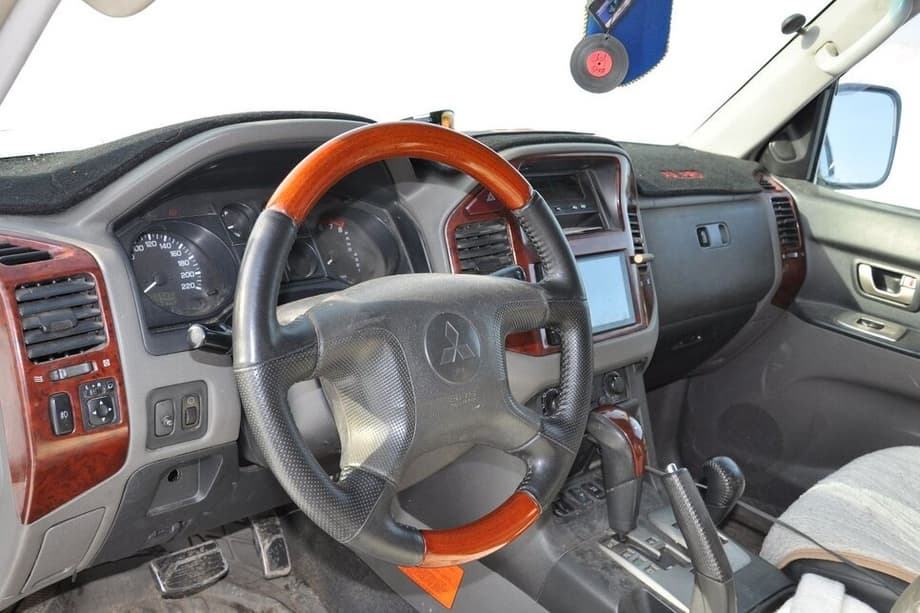
A significant part of the mileage is for the transportation of goods. The second and third rows of seats are more often used as part of the cargo compartment, and the rear suspension regularly works under load. To compensate for sagging, pneumatic springs were installed inside the standard springs - a simple and effective solution that allows you to adjust the stiffness and ground clearance depending on the conditions. Additionally, the car received a small body lift of about 2 cm, which noticeably helped when driving on ruts, snow and rocky fords.
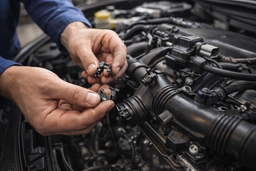
Under the hood is a 3.0 V6 6G72 series gasoline engine, one of the oldest and simplest Mitsubishi engines. A cast-iron block, belt-driven timing, distributed injection and hydraulic compensators make it unpretentious, but age and harsh operating conditions still take their toll. Over the years of ownership, it was necessary to replace individual elements of the cylinder head, exhaust, pump, sensors, ignition coils and exhaust system components. The oil is changed every 8000 km, and its consumption remains within reasonable limits - about 200-300 ml between changes.

The appetite of such a Pajero is appropriate. In ideal conditions on the highway, you can manage about 13 liters per 100 km, but in winter or with active use of all-wheel drive, the 90-liter tank empties noticeably faster. An additional problem was corrosion of the fuel tank - dirt and moisture accumulate between it and the protection, which eventually led to the replacement of the entire tank.
The transmission as a whole has proven to be reliable. The four-speed INVECS-II \"automatic\" and transfer case with electronic control did not cause serious problems with regular oil changes. But the suspension and drives required attention: after the lift, the wear of the CV joints accelerated, and cheap analogues quickly failed. As a result, the owner came to the conclusion that saving on these parts is not justified. There are also enough age-related traces on the body - corrosion under the linings, replacement of wings and sills, unpainted bumpers as a practical solution for off-road driving.

Despite all the investments and age, the Mitsubishi Pajero III continues to perform its tasks without discounts for years. It remains a reliable working SUV that is not afraid of harsh conditions and long runs. The plan for the future is simple - to continue operation in the same mode, maintaining the equipment in working order. And, judging by the accumulated experience, the safety margin of this \"hippopotamus\" is far from exhausted.
Read more materials:
Now on home

Net Loss Under RAS Increased 11 Times
Police, Ministry of Emergency Situations, bailiffs and towing services: who has the right to violate the integrity of the car
Price reaches 2.1 million rubles, delivery time - up to 7 months

Prices, Configurations, and Specifications of Models Revealed

Prices for LADA Granta start from 680,000 rubles
Disposable Parts as the New Reality of the Automotive Industry

Two cars of the same era, created for currency export, but with different philosophies

The crisis, compromises, and wrong decisions that buried a promising model


Resident of Sverdlovsk Region Recovers 192,000 Rubles and Receives Compensation

At the end of 2025, the crossover topped the sales ranking of new cars in the capital

The legendary racer moves around in a wheelchair and is under constant medical supervision