The automatic transmission has long become a familiar part of the everyday life of motorists. It eliminates tedious work with the clutch, makes driving in traffic jams and on the highway noticeably more comfortable, and reduces the load on the driver. However, convenience comes at the cost of a more complex design and increased sensitivity to operating errors.
One of the most controversial and potentially dangerous issues is towing a car with an automatic transmission. What to do if the car suddenly breaks down? Is it permissible to tow it on a cable, like a car with a manual transmission? And can the "automatic" itself act as a tow truck? Incorrect actions in such situations often end in expensive transmission repairs, comparable in cost to a major engine overhaul.
To avoid fatal errors, it is important to understand how the automatic transmission works and why towing is a special mode with strict restrictions for it.
Why towing is a high-risk zone for automatic transmissions
The key difference between an automatic transmission and a "manual" is hidden inside its design. In a classic hydromechanical automatic transmission, the oil pump plays a vital role. It is responsible for several critical processes at once: it creates the pressure of the ATF working fluid, thanks to which friction clutches are engaged, it provides lubrication for all rotating parts, and it removes excess heat through the cooling system.
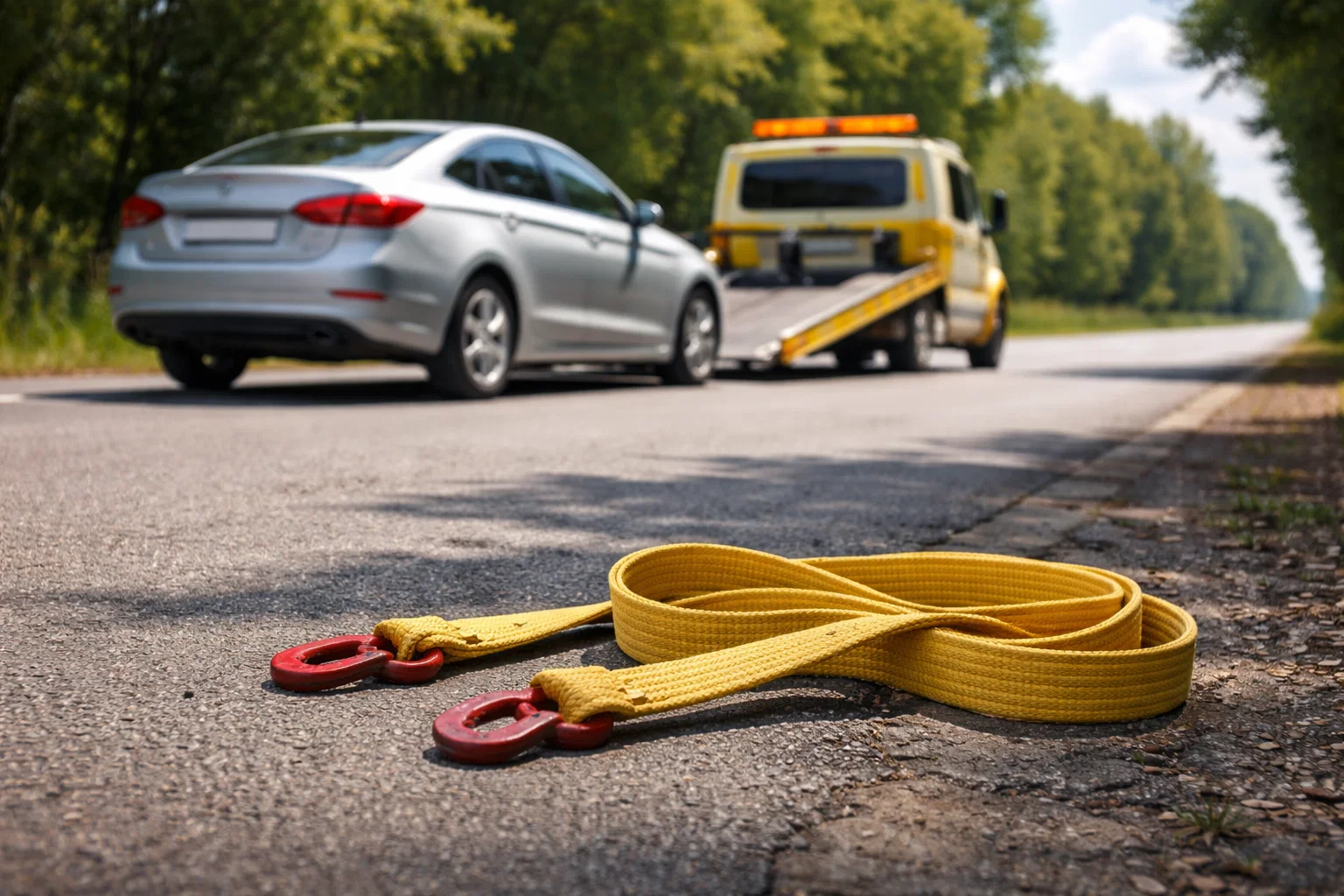
The fundamental point is that this pump is driven by the engine. If the engine is not running, the pump is stopped. This means no pressure, lubrication, or cooling. At the same time, the car's wheels can still rotate the transmission elements - and this is where the main danger lies.
Engine stalled: why towing in "neutral" kills the gearbox
The most common scenario is that the car stalls and does not start due to a dead battery, problems with the fuel system, or ignition. By analogy with a manual transmission, many drivers turn on the "N" mode and start towing. For automatic transmissions, this is almost a guaranteed path to a major overhaul.
When the engine is off, the oil pump does not work. The drive wheels force the shafts, gears, and friction elements inside the gearbox to rotate, but there is no lubrication. The metal works "dry", the temperature rises rapidly, and after 2-5 kilometers of such towing, the gearbox can receive critical damage.
The conclusion here is unambiguous: it is strictly forbidden to tow a car with an automatic transmission on a flexible hitch with the engine off. The only safe transportation options in this situation are a tow truck with full loading or partial loading with the drive wheels raised. Any other method is a direct risk of being left without a transmission.
Engine running: when towing is allowed, but with reservations
If the engine starts and runs stably, the situation changes. The oil pump is functioning, the gearbox receives lubrication and cooling. In this case, towing is possible, but only as a temporary measure - to get to the nearest service or safe place.
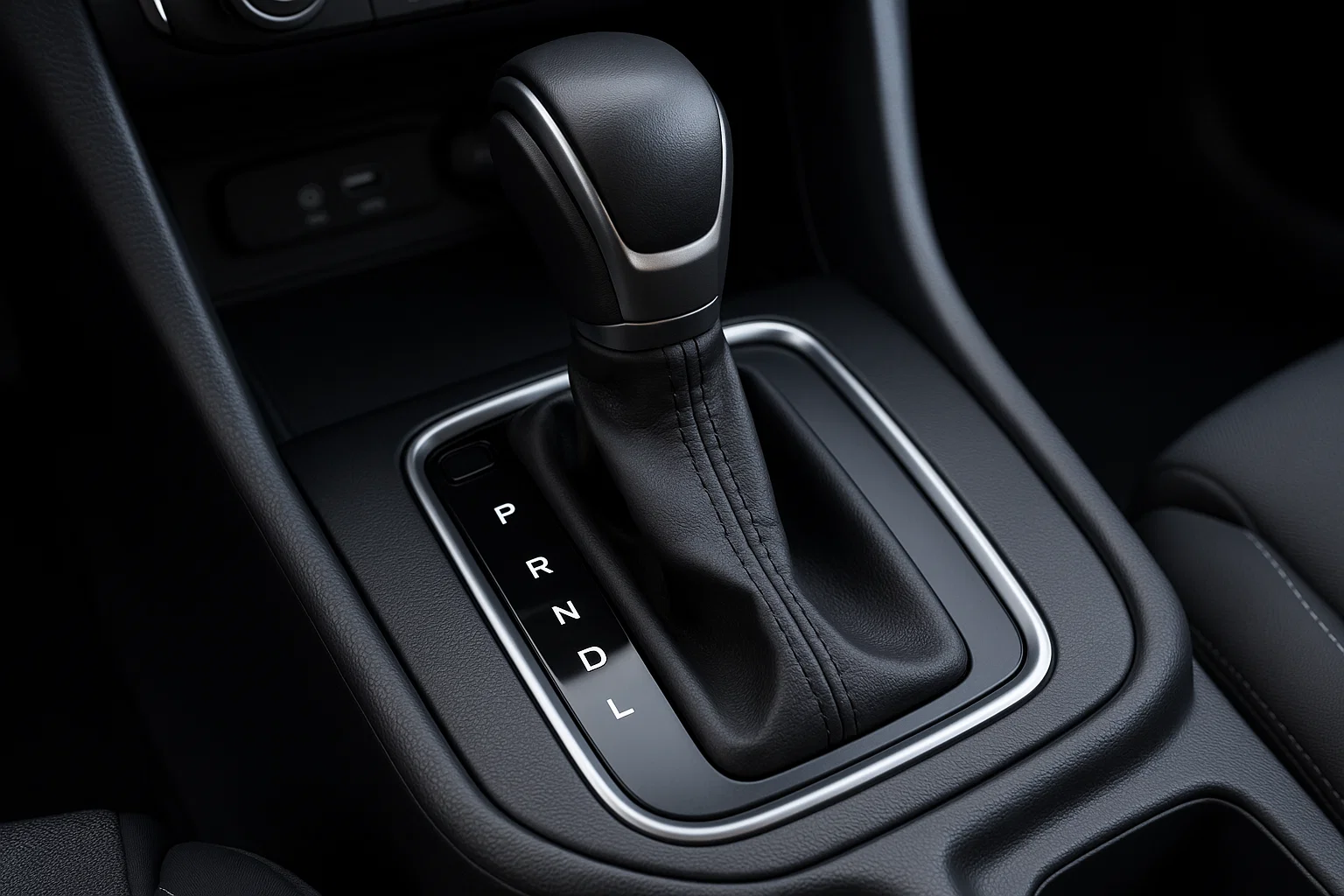
At the same time, it is necessary to strictly observe the restrictions, which are similar for most cars:
The speed should not exceed 40-50 km/h. The permissible distance is usually up to 20-40 km, and for CVT variators this limit may be even lower. The gearbox lever must be in the "N" position. The ignition should be left on so that the steering wheel is not locked. Additionally, it is allowed to turn on the heater to the maximum mode - this helps to remove heat from the engine and the transmission cooling system.
Even with the engine running, such towing remains a serious load for the automatic transmission, since the pump operates at idle speed and is not always able to provide ideal lubrication conditions. Therefore, we are talking about a forced and short-term solution.
Can a car with an automatic transmission be a tow truck
A car with an automatic transmission can act as a tow truck. When the engine is running, the gearbox receives normal oil pressure and cooling. However, the load on the transmission and power unit increases many times, so there are also important rules here.
First of all, it is necessary to take into account the permissible weight of the towed cargo. This data is always indicated in the operating manual, and it cannot be exceeded. It is important to remember that not only the weight of the trailer or the second car is taken into account, but also the total weight with the cargo.
To reduce the load, it is recommended to use the manual mode of the gearbox (M or +/-), fixing the gear. This avoids constant switching and overheating. You should start moving as smoothly as possible, without sudden accelerations and wheelspin, since it is at these moments that the friction clutches experience the greatest wear.
During prolonged towing, especially in hot weather or in mountainous areas, you should carefully monitor the temperature of the engine and transmission. If possible, it is better to give preference to a rigid hitch - it reduces jerks and shock loads.
Clear rules without exceptions
Towing a car with an automatic transmission with the engine off on a cable is not allowed - in this case, only a tow truck is needed. Towing with the engine running is possible, but strictly limited in speed and distance. It is allowed to use a car with an "automatic" as a tow truck if weight limits and correct driving techniques are observed.
Saving on calling a tow truck for several thousand rubles often ends with the repair of an automatic transmission for 100-200 thousand. The automatic transmission is a complex and sensitive unit that does not forgive disregard for the rules. It is much more reasonable to play it safe than to be left without a car for a long time and with serious financial losses.
Read more materials on the topic:
- From pads to algorithms: how brakes have evolved
- Shock absorbers under threat: how to understand that the suspension is giving up
- Tire overheating: a hidden threat that drivers forget about
Comments