Modern automotive technology, especially power units, is now impossible to imagine without polymer materials. The development of technology and strict economic requirements force engineers to replace metal parts with plastic ones more and more often. In some cases, this is justified and technically sound, but not always is this choice dictated solely by concern for reliability.
In recent years, more and more specialists — including car mechanics working with premium brands — have noted a disturbing trend: plastic with a limited lifespan is increasingly used in engine construction. The first thought that comes to car owners' minds is a trivial saving on materials. It is believed that instead of high-quality polymers produced, for example, in Germany or Brazil, cheaper analogues from China or India are purchased.
Such a scheme does exist, but it has an indirect relationship to the real situation. Supply departments do not choose material "according to mood." Plastic for the engine is purchased strictly in accordance with the requirements of designers and technologists. And it is they who usually determine what the lifespan of the part will be.
How it all started
Looking back, one can recall the surprise caused by the first steps towards the mass use of plastic. About thirty years ago, with the advent of new models like "Sputniks" and "Samaras," motorists were amazed by the heater radiator, made of thin aluminum tubes with plastic collectors. At that time, there was a firm belief: the radiator must be exclusively copper.
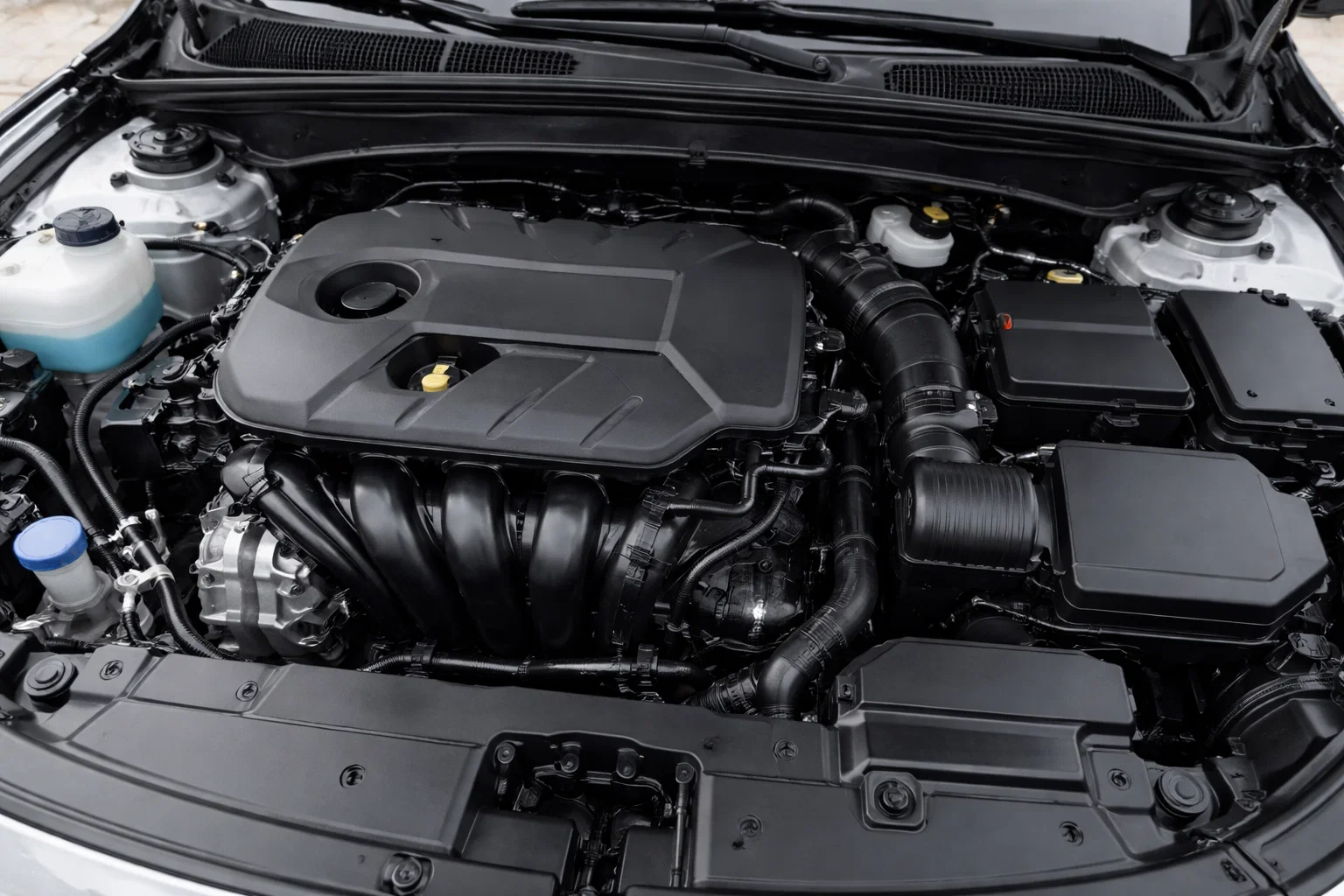
However, the experiments did not end there. Radiators were followed by plastic covers, thermostat housings, pumps, expansion tanks, and then more serious elements — intake manifolds and even oil pans. Today, almost all engine sensors have become plastic, and fuel tanks have long been made of polymers. According to experts, in the near future, up to 60% of the engine parts nomenclature may be made of plastic — solely to reduce production costs.
Opportunities exist, but they are not always used
At the same time, the chemical industry has long had materials that are not inferior to metals in terms of resistance to vibrations, temperature changes, exposure to fuel and motor oil. Such polymers exist and are successfully used in industry. But there is a nuance — their cost is significantly higher.
That is why designers and technologists often choose cheaper options. The result is compromise solutions that formally meet the requirements, but in practice demonstrate a limited lifespan.
A good example is the first plastic thermostats. Many remember how much trouble they caused: the housings deformed, leaks appeared, the valves jammed. As a result, the engines required repair and replacement of parts. Over time, the design was improved, and plastic still replaced brass. There are many such stories — this is a consequence of saving without sufficient practical testing of solutions.
"Disposable" elements as the new norm
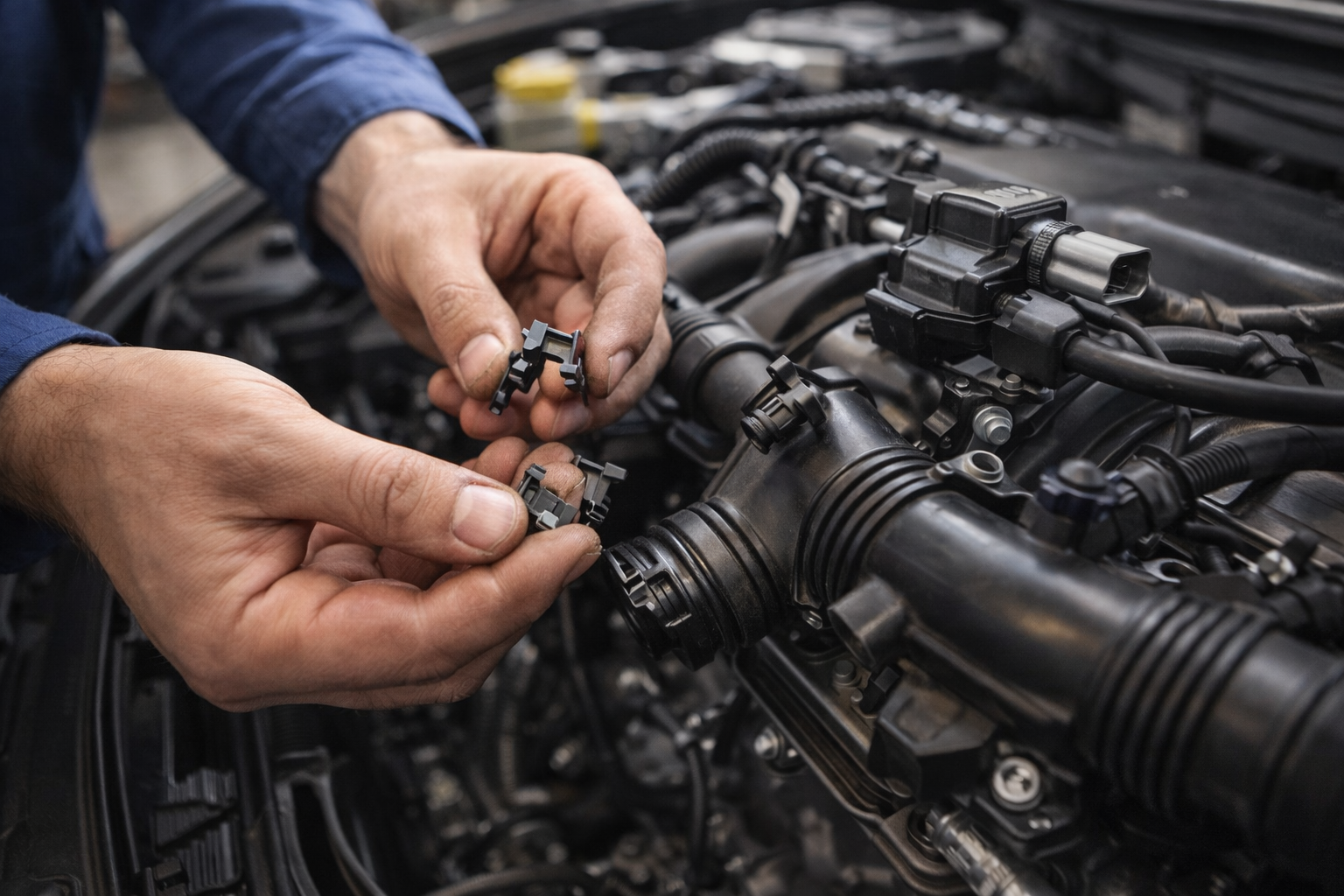
In modern engine construction, the conscious use of short-lived plastic components is increasingly evident. One of the most striking examples is the wiring harness attachment on adhesive clips. It is worth removing the harness to get to the desired unit in a cramped engine compartment, and it is no longer possible to return it to its place. You have to either improvise or buy a new, virtually disposable fastener.
The same logic applies to sensors, pipes, retaining rings, plugs and other small elements. The example of cylinder head gaskets is especially indicative. Once, a complex paronite gasket with steel rings was placed under the cylinder head. The installation process required high accuracy, thorough preparation of surfaces and careful tightening of fasteners.
Today, this design is often replaced by a special sealant. Removed the head — buy a new composition. It costs many times more than the previous gasket, and its correct application requires experience and accuracy. Formally, the process has become simpler, but from the owner's point of view, it has become more expensive and complex.
Planned obsolescence as part of the economy
A similar situation is observed with cooling radiators, sensors, plugs and other elements. The production of plastic parts is cheap, but disassembling them without damage is often not easy even for a professional mechanic.
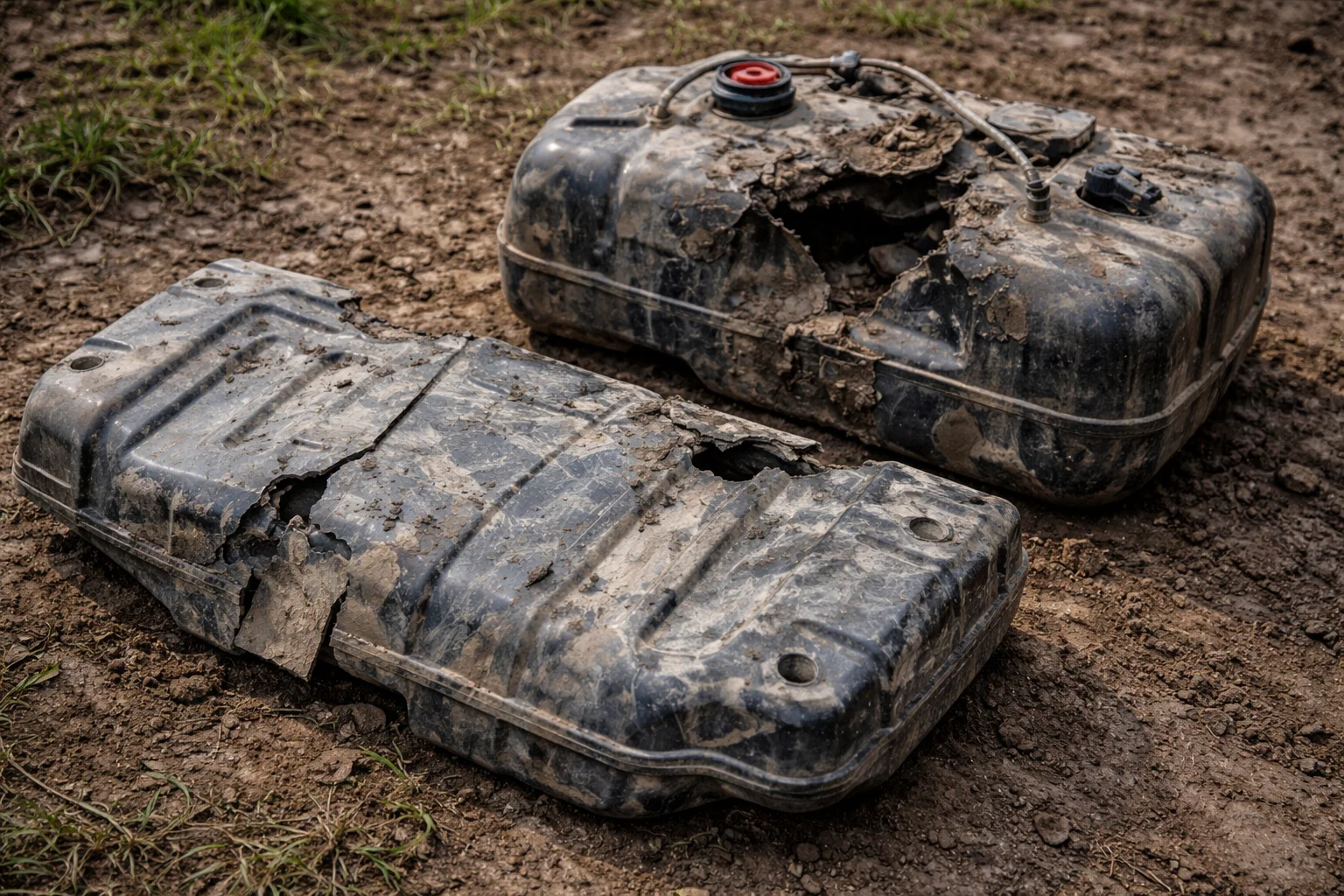
Short-lived plastic manifests itself in oil pans, protection, and fuel tanks. After trips off-road, to fishing or hunting, plastic elements are often damaged, while metal analogues withstood such loads.
The reason for this approach lies on the surface. Most plastic engine parts cost the manufacturer significantly less than aluminum or brass ones. At the same time, repair of such components is almost impossible. If craftsmen could still restore a metal pump or thermostat, plastic excludes such a possibility.
As a result, the owner is forced to buy a new part, which costs no less than a metal one. For automakers and suppliers, this means a stable and very tangible source of profit.
Read more materials:
- Zhiguli engines: the debate between carburetor and injection
- Driving schools in Russia will begin to be ranked from 2027
- Belarusian tractor passed the ice test
Comments