Winter for a car owner is a constant struggle for a normal view. However, the most annoying situation arises not in the parking lot, but directly while driving. The temperature outside is around −10 °C, dirty snow slush flies from under the wheels, you pull the washer lever, the wipers honestly start working - and at that moment it turns out that not a drop comes out of the nozzles. A situation familiar to many.
At first glance, everything looks illogical: "non-freezing" liquid is poured into the tank, "up to −30 °C" is prominently indicated on the canister, and the system seems to be blocked dead. Where does this problem come from and why does the washer stop working even with high-quality liquid? Let's try to figure it out without myths and guesses.
Why Nozzles Freeze Even If the Liquid Is Winter
The main reason lies in the physics of the process, namely, in the evaporation of alcohol. The washer nozzle is a tiny hole located at the very edge of the system. While driving, the jets are constantly blown by the oncoming flow of cold air. The alcohol contained in the non-freezing liquid evaporates faster than water. As a result, almost pure water gradually remains on the tip of the nozzle, which instantly turns into an ice plug at sub-zero temperatures.

There is also a second, no less common factor. Before pouring in the winter composition, many forget to completely use up or drain the remnants of summer water from the system. Such water can freeze not only in the nozzles themselves, but also deeper - in the lines under the hood, forming a dense ice "plug" that the engine heat does not always reach.
Quick Defrosting Methods: What Can Be Done on the Road
If the washer stops working right on the way, there are several proven and relatively quick solutions.
The first and most effective option is lock de-icer. A small can with a thin nozzle (liquid for locks or glass de-icer) is perfect for this task. It is enough to inject the product directly into the nozzle hole, and after 20-30 seconds the ice plug begins to melt.
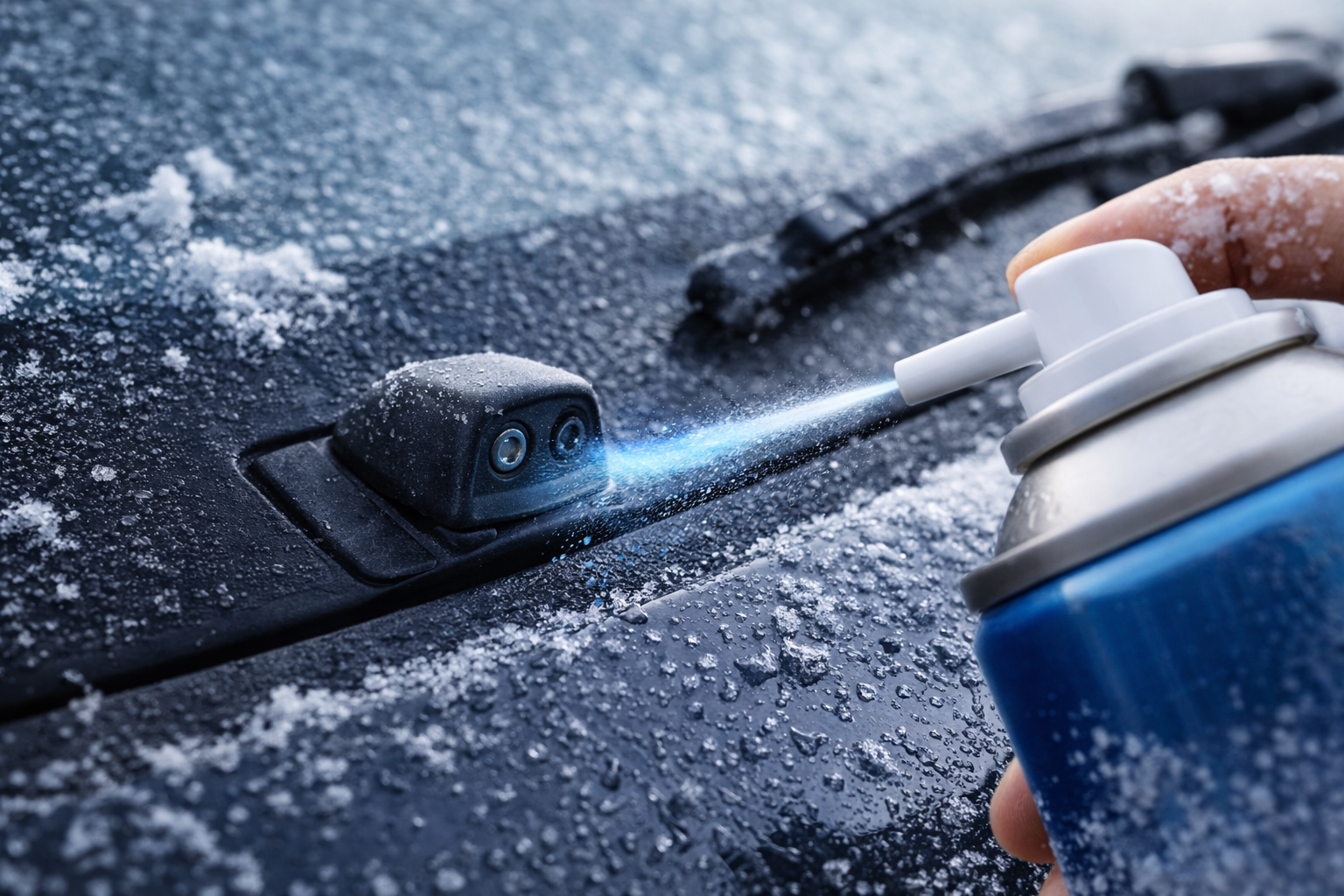
The second way is a warm parking. This is the most reliable, but also the slowest solution. It is enough to drive, for example, into the underground parking of a shopping center and leave the car for an hour. While you are doing your business, the car completely thaws. It is important not to miss the moment: as soon as the system starts working, it is necessary to immediately thoroughly flush it with fresh and high-quality winter liquid.
How to Get Rid of the Problem for a Long Time: Technical Solutions
If you do not want to start every frosty morning with attempts to "revive" the washer, it is worth considering more capital options.
One of the most effective solutions is the installation of heated nozzles. On many modern cars, they are provided from the factory, but for most budget models, such jets can be installed separately. Power is supplied to the nozzles, and the heating element heats exactly the area where ice most often forms. Now such kits can be inexpensively ordered from China and installed yourself according to the instructions, or entrust the work to a service.
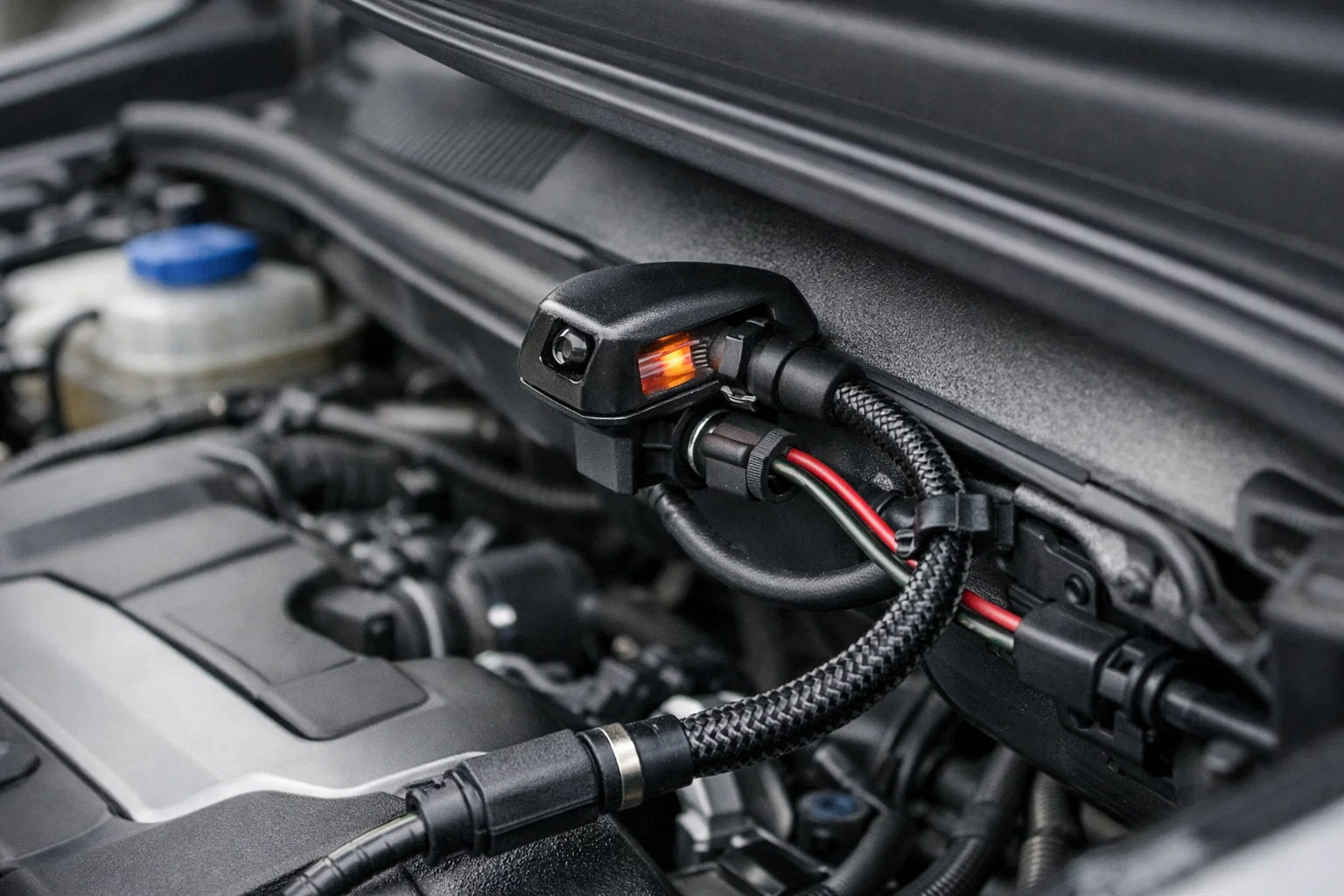
Thermal insulation of the tubes gives an additional effect. Sometimes the washer lines pass in "cold" areas of the underhood space. Wrapping the tubes with ordinary building insulation for pipes helps to retain heat from the engine and reduce the risk of ice formation.
Another element is a check valve. This is a small part that prevents liquid from flowing back into the tank, so it is constantly in the tubes near the nozzles. In winter, this approach is ambiguous: on the one hand, air does not enter the system, on the other hand, if the liquid freezes, it is at the very exit. Therefore, here it is especially important to use a really high-quality winter composition.
Practical Experience and Nuances
From experience, we can draw a simple conclusion: the most reliable option remains heated nozzles. Even when using not the highest quality liquid, they allow you to avoid regular problems with the washer supply.
As for various defrosting agents, they do not work the same. Specialized compounds for locks, which are more expensive, show themselves best. Silicone sprays or WD-40 in this role are ineffective. After treating the nozzles with a high-quality de-icer, the washer can work normally for several days, but it must be taken into account that the product is gradually washed away by the liquid itself. Therefore, the treatment has to be repeated every few days.
Finally, a logical question arises: why do some cars almost never have such a problem? The answer lies in the design of the system. In some cars, the lines receive more heat, in others, the nozzles themselves are arranged differently, which reduces the likelihood of ice plugs even in severe frost.
Read more materials on the topic:
- Car myths that drivers still believe in
- Exhaust resonator: what is it for
- How to protect the underbody of a car from rust with your own hands