There was a time when all-wheel drive transmissions were considered the prerogative of completely different categories of vehicles. But five iconic models from this collection rewrote the established rules and demonstrated that the advantages of such a system work perfectly in passenger cars as well.
Despite the fact that all-wheel drive was actively used on trucks, all-terrain vehicles, and military equipment, it also demonstrated significant advantages in civilian cars - in particular, it increased the level of safety due to improved contact with the road surface.
Over the next twenty years, 4WD and AWD systems gained popularity in production cars. Nowadays, this technology has become a standard solution that is included in the lineups of numerous manufacturers.
1966-1971 Jensen FF
Jensen is one of those manufacturers that have disappeared from the automotive map, but which, according to classic car enthusiasts, deserve a second birth.
During its heyday, the British company created several truly outstanding models, the main one being the Interceptor - an elegant four-seater grand tourer with Italian body design and an American Mopar unit under the hood.
This car became the most commercially successful model in the history of the small British company.
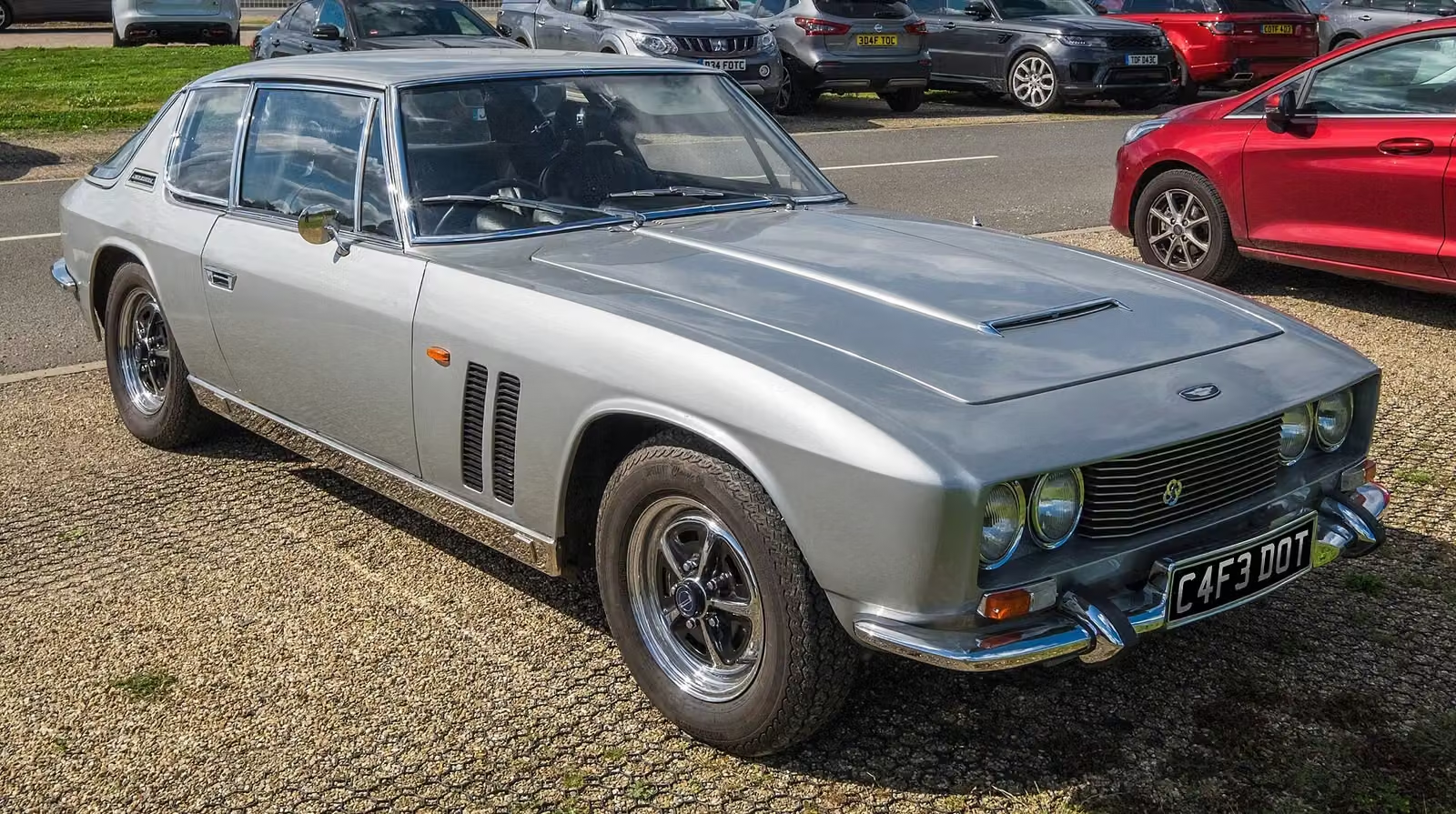
Based on the Interceptor, Jensen engineers developed a version designated FF. Outwardly, it was practically no different from the standard Interceptor, but it went down in automotive history as the first production passenger car with an all-wheel drive system.
The technology, called Ferguson Formula (FF), was created by Ferguson Research and was based on an innovative all-wheel drive transmission originally intended for Formula 1 racing cars.
Equipped with a 6.3-liter Chrysler 383 V8 engine that transmitted torque to all four wheels, the Jensen FF is rightfully considered one of the most revolutionary grand tourers of its era.
1972-1981 Subaru Leone
The Jensen FF convincingly demonstrated that an all-wheel drive system is not only applicable in passenger cars, but also significantly improves their dynamic characteristics and handling.
Nevertheless, due to its design complexity, Jensen could only produce the FF with right-hand drive, which radically narrowed the model's commercial prospects.
A year after the production of the all-wheel drive Jensen ceased, the Japanese company Subaru introduced the 4WD system into the newly introduced Leone lineup - for the first time in world practice, all-wheel drive became available in a mass-produced passenger car sold on various continental markets.
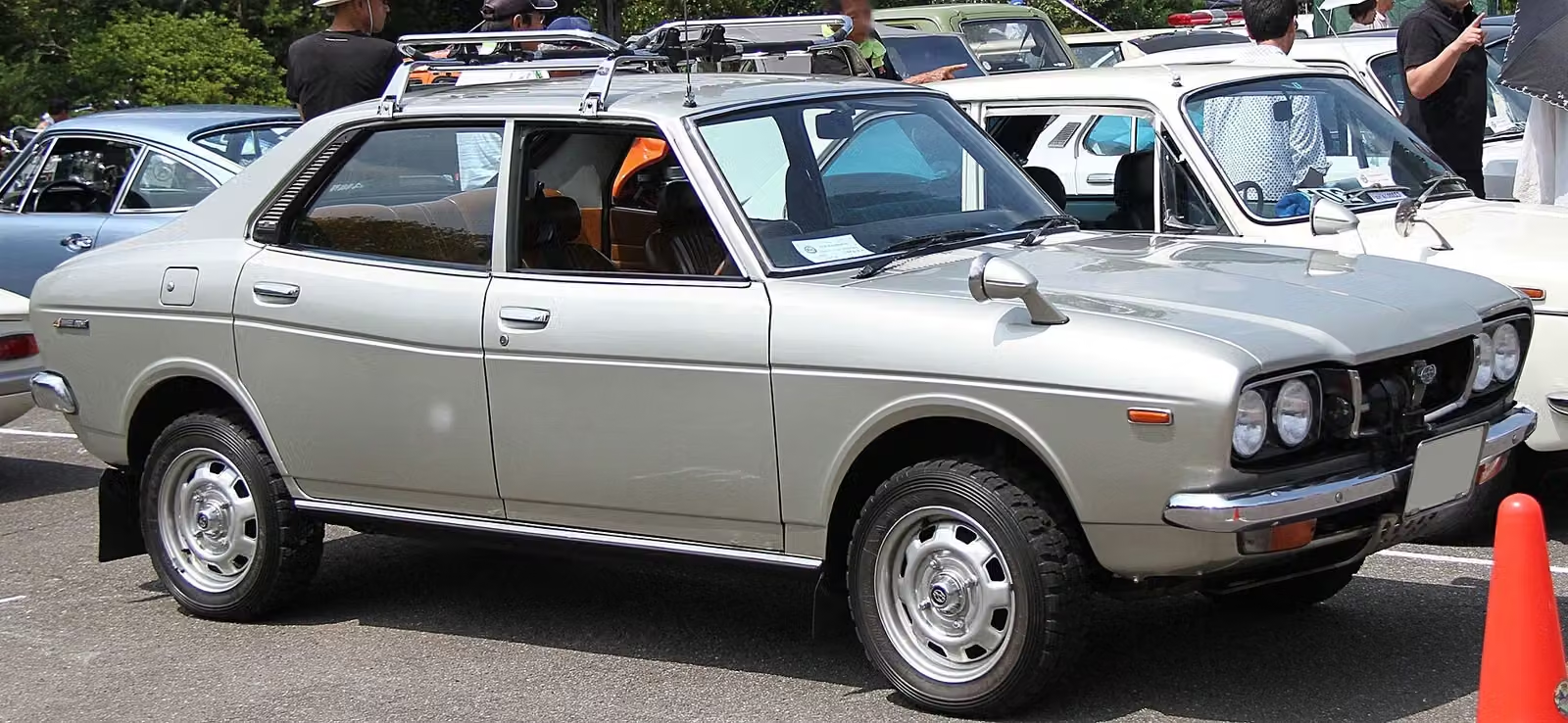
Initially, the all-wheel drive configuration could only be obtained for the station wagon body, but by the end of the seventies it also appeared in the sedan and pickup truck (known as the Subaru BRAT).
Today, Subaru and all-wheel drive are virtually synonymous. It was the rally modifications of the Impreza WRX with permanent all-wheel drive that brought the Japanese brand worldwide recognition.
However, it is the Leone that remains a historical milestone: this car not only popularized all-wheel drive, but also formed the foundation for all subsequent Subaru models.
1980-1988 AMC Eagle
Today, larger station wagons and hatchbacks built on passenger car platforms are known as crossovers - and, as you know, they are hugely popular. But have you ever wondered where this phenomenon originates?
Most automotive historians agree that the first production car that can be classified as a crossover was the AMC Eagle, produced from 1980 to 1988 (yes, not the Soviet VAZ-2121 "Niva", which is still more likely to be classified as an SUV).
This model, offered in various body styles, was an all-wheel drive interpretation of the compact AMC Concord.
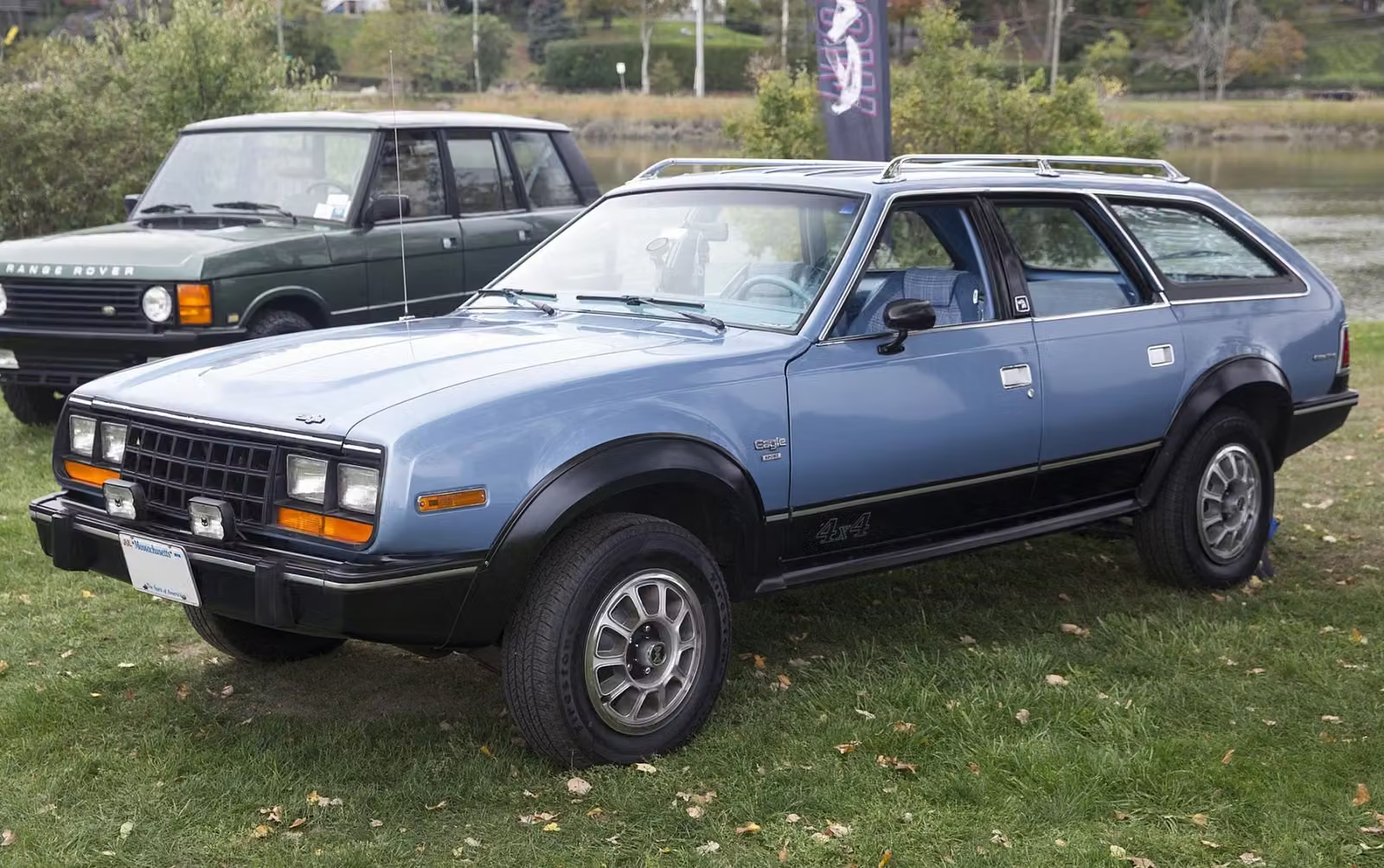
AMC, now consigned to history, actually combined the body of the production Concord with a chassis developed by the Jeep division, equipped with an all-wheel drive system and increased ground clearance.
This combination of a passenger car and off-road qualities was absolutely unprecedented for the American automotive industry, so the Eagle quickly won over buyers.
With impressive cross-country ability, economical power units and the comfort of a traditional passenger car, the AMC Eagle became one of the most iconic American production cars of the eighties.
1980-1991 Audi Quattro
While the AMC Eagle was causing a sensation in the United States, on the other side of the Atlantic, European car enthusiasts were conquered by the all-wheel drive Audi Quattro.
This now iconic model was originally developed as a rally car, and, according to legend, the team of engineers working on the project used the British Jensen FF as a source of inspiration.
The Quattro received an innovative permanent all-wheel drive technology with three differentials, thanks to which it not only dominated the world of rallying, but also forever transformed this type of motorsport.
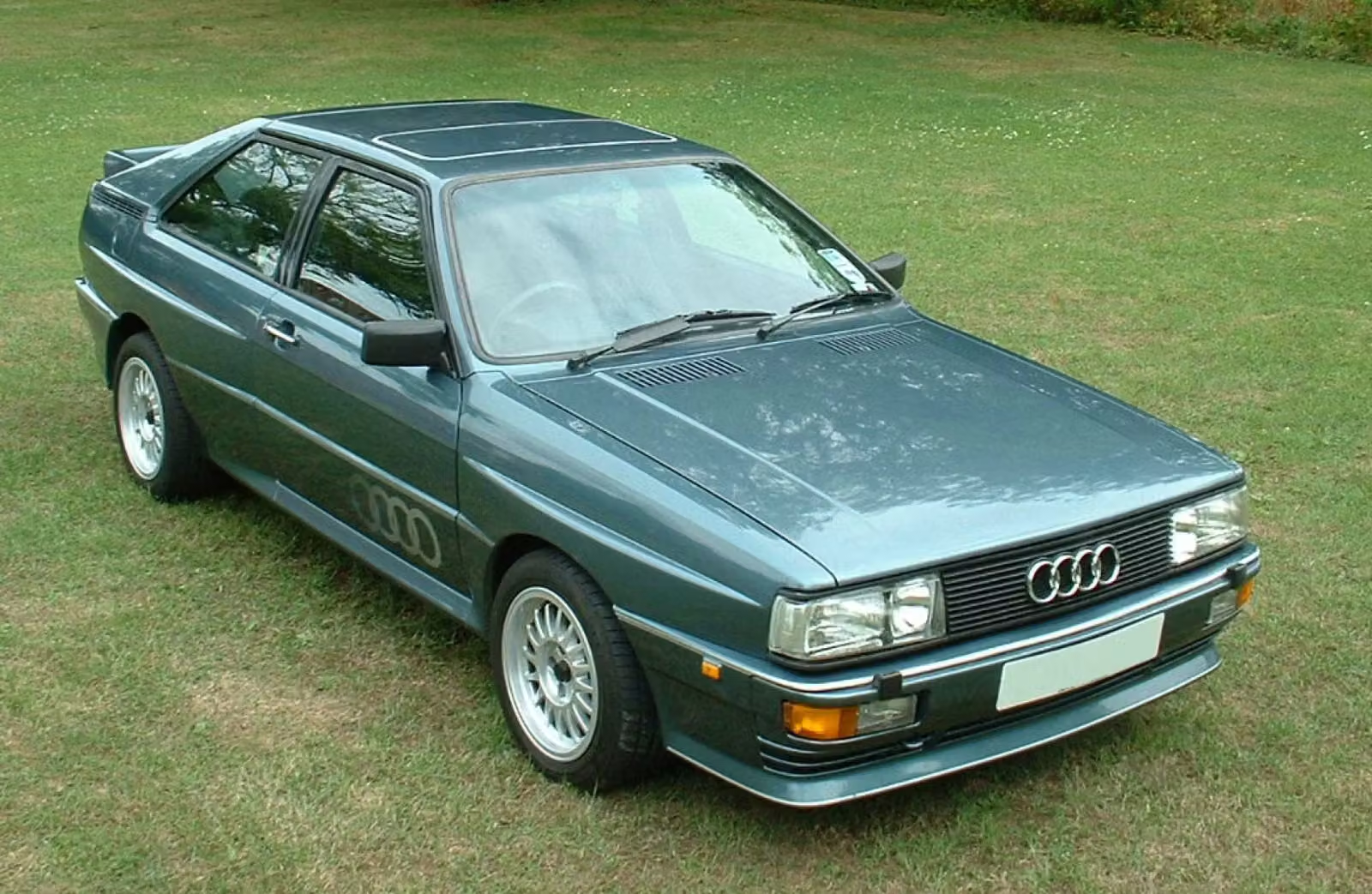
Since, according to the regulations in force at that time, a racing car had to have an almost identical road version, Audi released a production version of the Quattro - a sports all-wheel drive coupe that became available to a wide audience.
Currently, almost every Audi model is offered with the quattro system - as standard or as optional equipment - and this is largely due to the legendary first Quattro.
1986-1993 Porsche 959
Porsche is another legendary car manufacturer that today equips a significant part of its lineup with all-wheel drive, although in the first decades of the company's existence the situation was completely different.
The 356 and its successor, the 911, were classic rear-wheel drive sports cars, and the 911 retained this configuration until the eighties.
Like Audi, the German company decided to try its hand in rally competitions and developed a modified version of the 911 with an all-wheel drive system, which subsequently evolved into the advanced PSK (Porsche-Steuer Kupplung) transmission.
This improved version of the 911 became the winner of the 1984 Paris-Dakar Rally, and then transformed into the legendary 959.
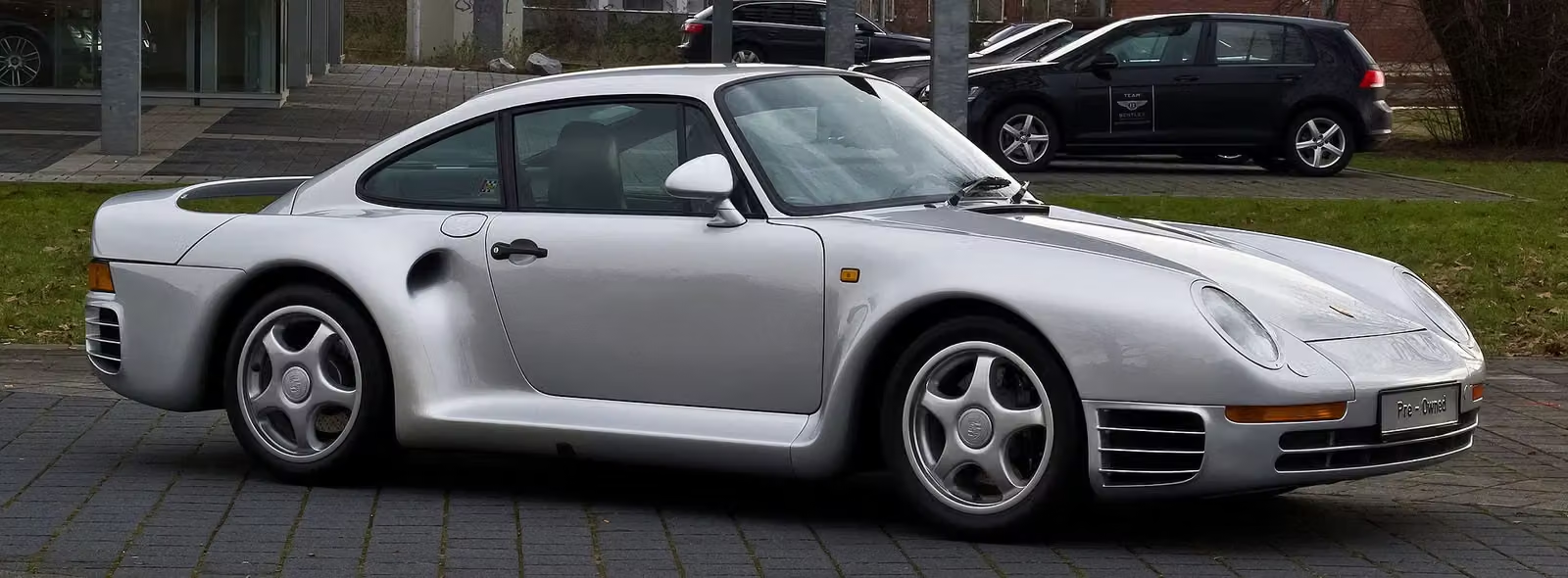
The 959 debuted in 1986 as a homologation special version, allowing the new, deeply redesigned car on the 911 platform to participate in Group B races.
Equipped with an advanced PSK all-wheel drive system and a horizontally opposed six-cylinder engine with twin turbocharging producing up to 508 horsepower (in the 959 S version), the Porsche 959 became the first full-fledged supercar with all-wheel drive.
Produced from 1986 to 1993, the 959 remains one of the most significant Porsche cars and one of the most legendary cars in the history of the global automotive industry.
The Legacy of All-Wheel Drive Pioneers
These five outstanding cars not only introduced all-wheel drive technology into passenger cars - they fundamentally changed the perception of what modern cars can and should be.
From the elite Jensen FF, available only to a select few, to the mass-produced Subaru Leone, which democratized the technology - each of these models made an invaluable contribution to automotive evolution.
Today, all-wheel drive is perceived as something self-evident. AWD and 4WD systems are offered in segments from compact crossovers to hypercars costing millions of dollars. But it all started with these five revolutionary models, which dared to challenge established ideas and proved that all-wheel drive is not just a utilitarian solution for off-road driving, but a technology that can make any car better, safer and more fun to drive.
Read more related articles:
- Legendary cars from movies: how much do they cost today
- Why Mercedes stubbornly sticks to its V12 engines
- Lamborghini Manifesto: concept for the 20th anniversary of Centro Stile
Комментарии