Volkswagen Phaeton can hardly be called a market hit - in 14 years of production, the brand's flagship underwent only one restyling and never became commercially successful. However, it cannot be called a failure. It was one of the most technologically advanced and engineered cars of its time, created not for sales, but for ambitions.
Project D1, later known as Phaeton, was born from the desire of Ferdinand Piëch - the grandson of Ferdinand Porsche himself - to prove that the "people's" brand is able to compete with Mercedes-Benz and BMW not only in mass production, but also in the level of technology.
How Piëch's ambitions gave rise to an automotive legend
Ferdinand Piëch began his career with his grandfather, but quickly left - too risky decisions in racing almost bankrupted Porsche. At Audi, he rose from engineer to head of the brand and gave the world such icons as the A4 and A8, laying the foundation for the brand's premium status.
In 1993, Ferdinand headed the entire Volkswagen Group and immediately set about pulling the brand out of the crisis, moving it up the market ladder. His strategy was mirrored: while Mercedes and BMW were going "to the people", Volkswagen had to go to the "elite". This is how the Touareg and Phaeton were born.
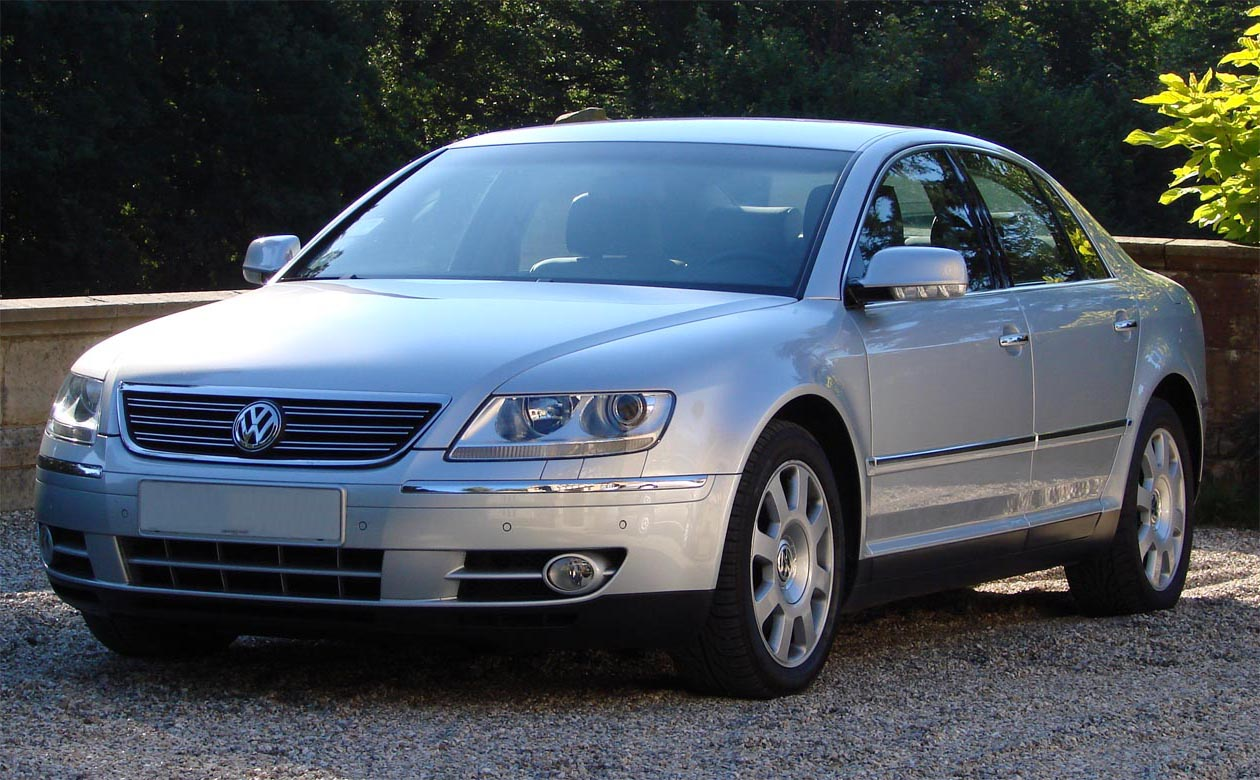
Phaeton became Piëch's personal project - almost an obsession. He wanted to build the most perfect car in its class and personally compiled a list of requirements for engineers.
What Piëch demanded: standards that shocked even VAG
Ferdinand knew no compromises. Here is just part of his "technical manifesto":
- maximum speed of 300 km/h at +50 °C;
- heat resistance even on the race track;
- no external antennas;
- body with a stiffness of at least 37,000 N·m/degree, higher than that of the S-Class and 7-Series of that time;
- climate control for four independent zones with soft air supply "Cadillac-style";
- 4Motion all-wheel drive - without compromise.
Piëch controlled the project personally. For him, the Phaeton was not just a car, but an engineering manifesto. At the same time, he wanted to show Audi that "internal competition" is the best incentive for development.
Own engines: from VR6 to monstrous W12
For the Phaeton, Piëch demanded the development of a unique line of engines - without borrowing from Audi. As a result, the car received VR6, V8, W12 and even a diesel V10 TDI.
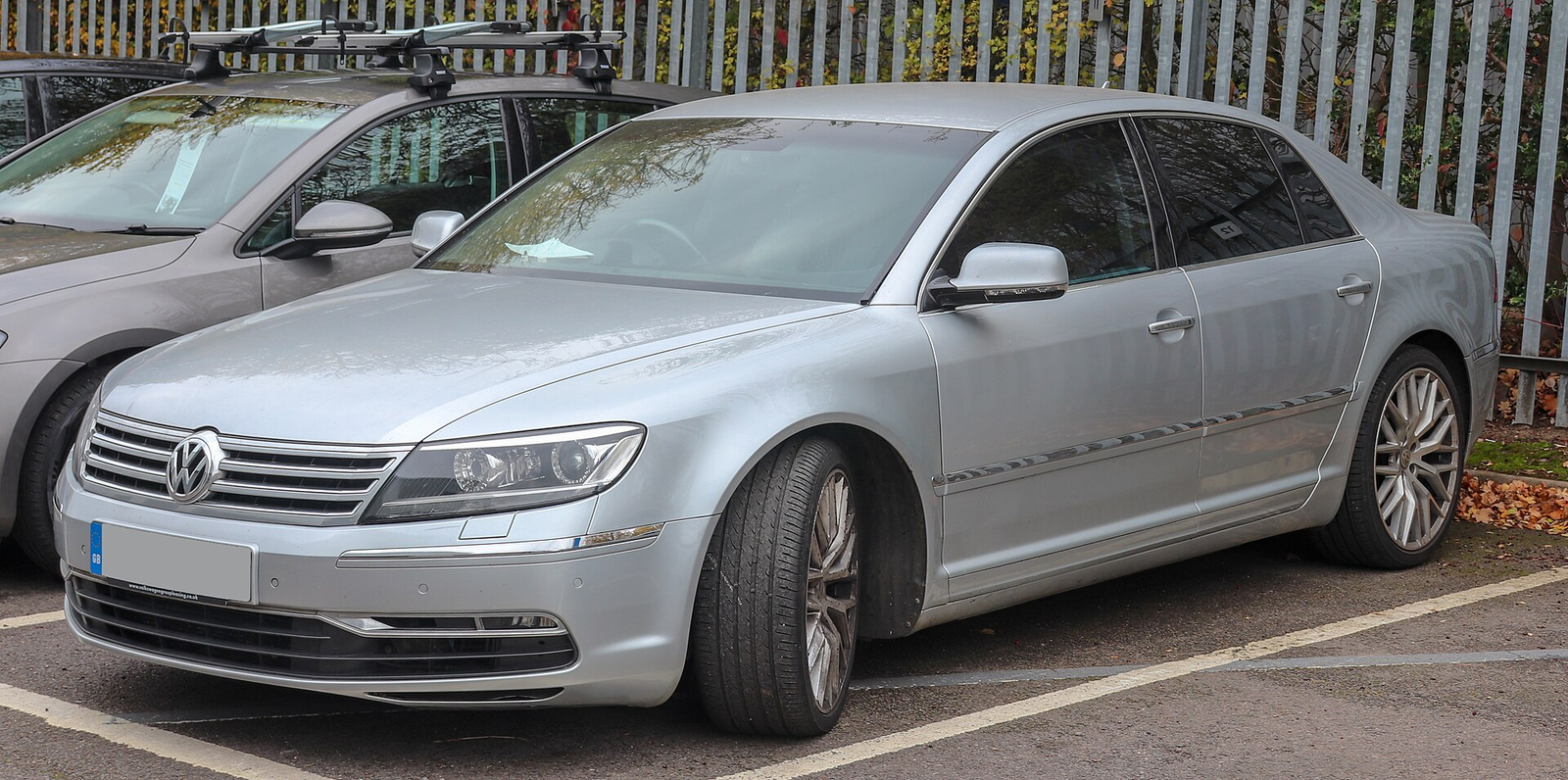
Although some of the units eventually came from Ingolstadt, the concept remained true to the spirit of the engineer: maximum power, minimum compromises. The W12 was especially impressive - at that time it was one of the most unusual engines on the market.
Debut: a large Passat that was underestimated
When the Phaeton finally came out in 2002, it looked exactly as expected - a strict sedan without ostentatious luxury, but with technologies at the level of Bentley. The press spoke of it with restraint, but respectfully: the car was striking in its quality, comfort and silence in the cabin.
However, the public remained indifferent. In the US, the project was curtailed after three years, and then the model survived thanks to the Chinese and Middle Eastern markets, where it was valued for its prestige and technical sophistication.
Five technologies that were ahead of their time
Despite weak sales, the Phaeton has earned a reputation as a technological masterpiece.
1. A line of unique engines. From VR6 to W12 - Volkswagen offered a set of engines that even competitors could not dream of. Special attention was drawn to the V10 TDI - one of the most powerful diesel engines of the early 2000s.
2. 4Motion all-wheel drive. The Phaeton became the only sedan in its class where all-wheel drive was standard for all versions.
3. NASA-level climate system. One evaporator, two heater radiators, many ventilation channels and a system for preventing window fogging. The air circulated gently and accurately - Ferdinand achieved his ideal.
4. Safe trunk. The innovative lock retracted inside the lid so that the owner would not accidentally hit his head. No one else had such attention to detail.
5. Engineering details that you can't see, but you feel. Two batteries with mutual support, an autonomous heater with a silent pump, swivel light, a mirror with memory, special license plate illumination - all for the sake of comfort and status.
Why Volkswagen created the Phaeton in the first place
On the surface, the Phaeton seems like a whim of an ambitious boss, but there were strategic goals behind this project. The car became a test bed for technologies for the Bentley Continental GT and Flying Spur, and later - even for the Bugatti Veyron.
The Phaeton did not make a profit, but gave the concern knowledge that made possible new generations of luxury VAG cars. It can be said that it is thanks to such experiments that Volkswagen remains one of the technological leaders of the global automotive industry today.
A car ahead of its time
Phaeton is not just a sedan. This is a monument to engineering ambitions and a reminder that sometimes a car can be created not for sales, but for ideas.
It did not become a hit, but went down in history as a project that proved that even a "people's" brand is capable of reaching the level of Bentley. And most importantly - as the swan song of Ferdinand Piëch, one of the most brilliant and stubborn people in the automotive industry.
Read more materials on the topic:
- What is the Audi E5 Sportback Quattro: the novelty was tested on the go
- Porsche 911 Turbo S 2026: a hybrid that has become almost GT3
- Subaru Ascent: a good SUV that lacks emotion