Despite the fact that automotive technology is becoming more complex every year, there are elements that remain unchanged for the vast majority of ordinary cars. We are used to the classic scheme: one injector per cylinder, one spark plug, one throttle. And when some element suddenly appears in double quantity, it is already a reason to be surprised. But in automotive history, there have been much crazier projects: cars in which engineers installed not two sets of spark plugs or injectors, but... two full-fledged internal combustion engines. And no, this is not about hybrids, where the internal combustion engine helps the electric motor - here both units were real engines with all the ensuing consequences.
Today we will talk about such unusual and extremely rare twin-engine cars.
Volkswagen Twin Golf (1985-1987)
In the early 80s, Volkswagen planned to build a car for one specific task - to win the legendary American Pikes Peak race, known as the "Race to the Clouds". The track is 12.4 km long with 156 turns, starting at an altitude of 2862 m and ending at 4300 m. At such altitudes, atmospheric engines lose power, and VW engineers took the most direct route: they simply took and installed a second engine.
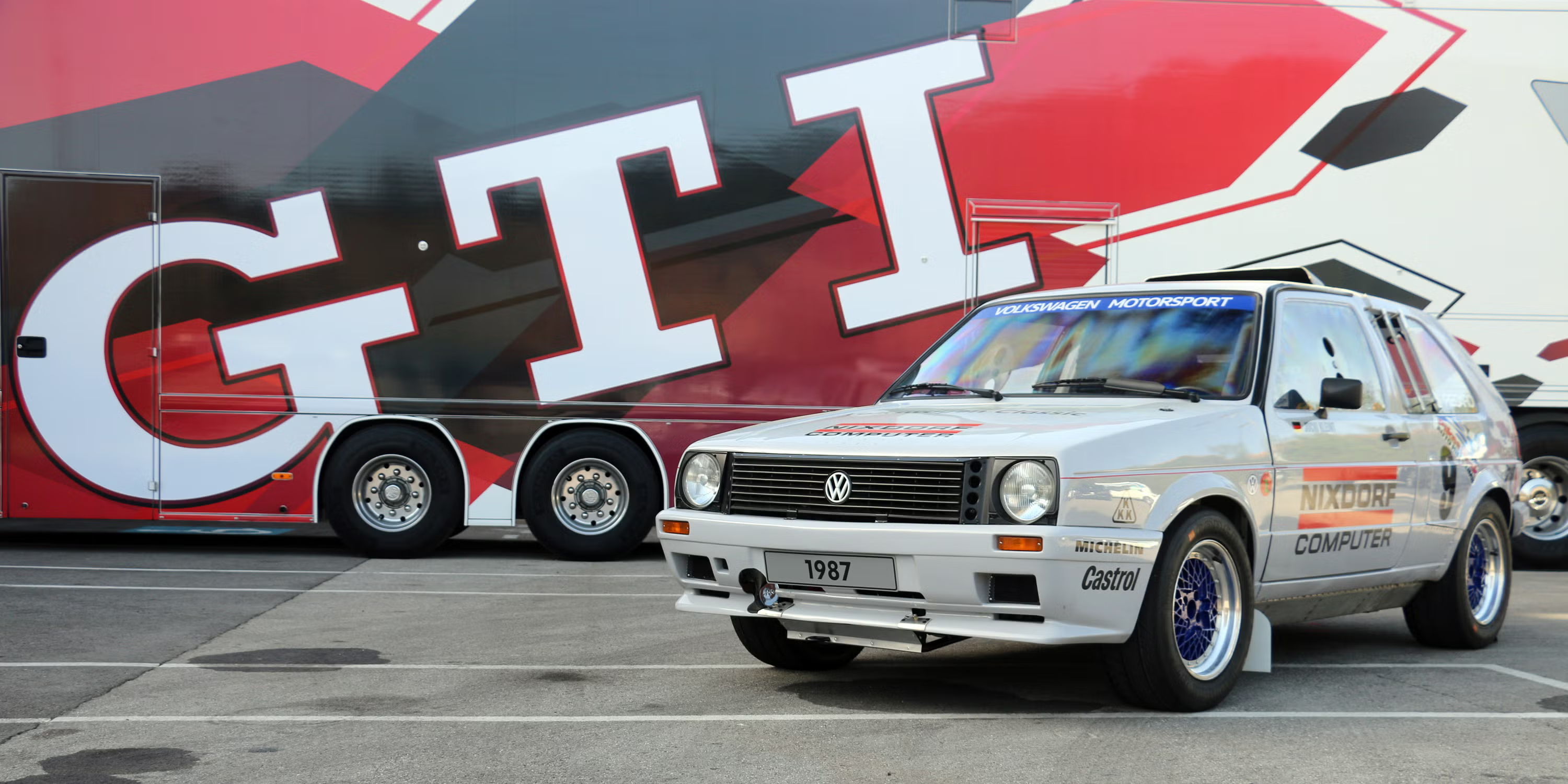
The first version of the Twin Golf received two naturally aspirated 1.8-liter four-cylinder internal combustion engines. Each rotated its own axis, and in total the car produced 390 hp. The debut was successful - the car came in third. But fighting the loss of power due to rarefied air was not easy. For 1986, VW prepared a new version - now with a pair of 1.3-liter turbo engines with a total power of 500 hp. However, electronics failed on the track - as a result, only 4th position.
But the Germans did not give up. In 1987, the third, most insane Twin Golf appeared - almost a pure racing chassis on a space frame, sheathed in fiberglass. Two turbocharged 1.8-liter engines already produced 652 hp, and acceleration to hundreds took a little more than three seconds - fantastic for the late 80s. The car had two gearboxes, but they were controlled by one lever. Alas, the race ended ahead of schedule: a suspension failure did not allow to storm the finish. A real "Das Auto", as they say.
But the Germans were not the first to come up with the idea of two engines. The French did it back in 1960, and on a car that would definitely not be approved in the USSR during the search for a prototype for the future "Zhiguli". Citroën 2CV - a symbol of simplicity and affordability - eventually received an amazing 2CV Sahara modification.
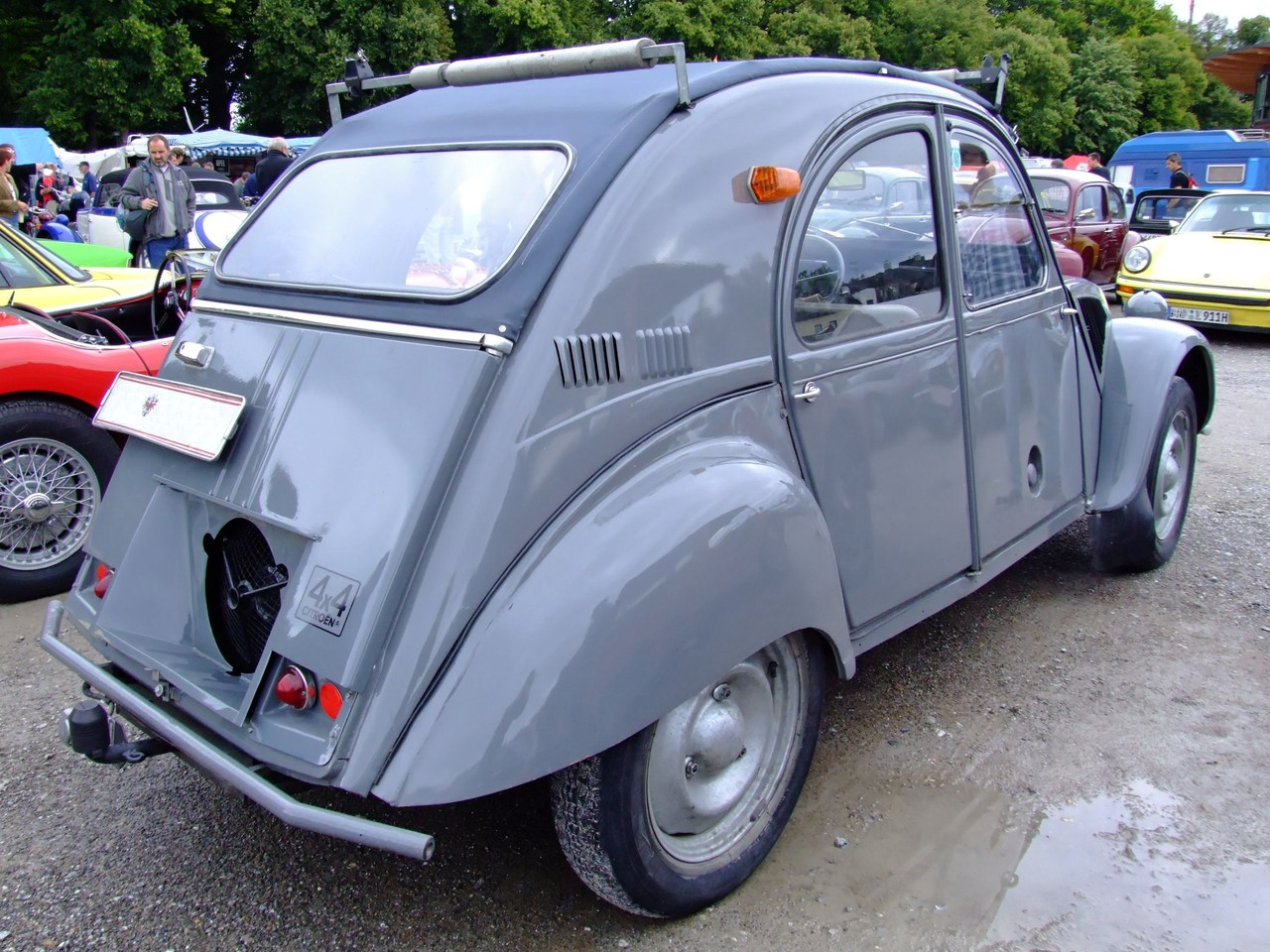
The goal was not speed, but to create the simplest all-wheel drive car for deserts and rural areas. The engineers went their own way: instead of a cardan shaft and a transfer case, they... put a second engine in the trunk. The tiny Citroen had two engines, two gearboxes, two tanks and two ignition locks. Want front-wheel drive - please. Rear? Easy. Full? Turn on both.
Externally, the Sahara was almost indistinguishable from the usual 2CV, except for the spare tire on the hood. The characteristics were very modest: both engines together produced only 24 hp. But due to the lightness of the car, it was enough for 100 km/h - someday, by the end of the day. In 7 years, only about 700 copies were built, and today surviving cars are rare and expensive collectible gems.
Honda CRX² (1984)
The next hero is the brainchild of the editors of Car and Driver magazine. In 1984, journalists took the Honda CRX - a compact lightweight coupe - and decided to "improve" it in the most radical way: to install a second engine, exactly the same as the main one.
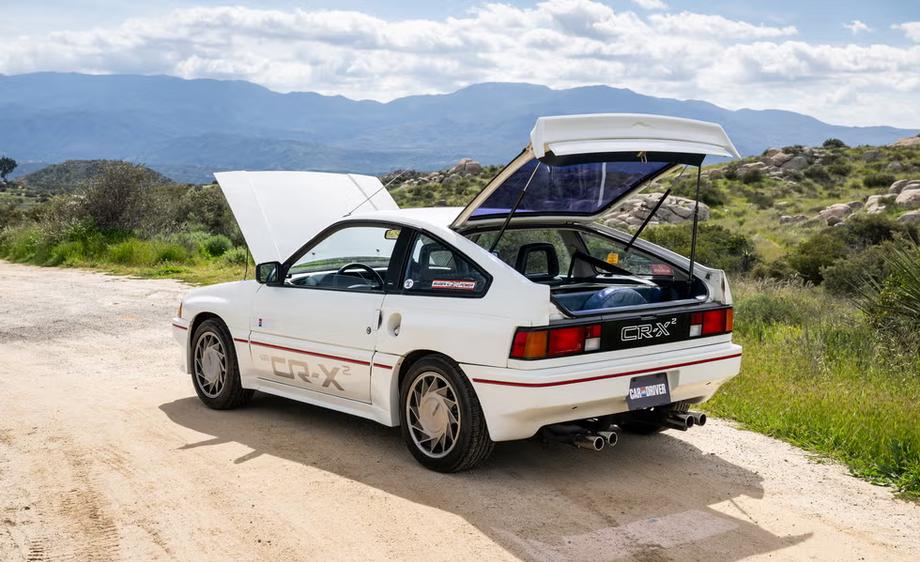
Another 1.5-liter engine with 76 hp and a three-speed "automatic" went to the trunk. But instead of the expected acceleration, the car became... slower. The weight increased, and acceleration to 100 km/h took about eight seconds. Then the enthusiasts threw out both one and a half liters and replaced them with 1.8-liter engines from the Accord. They installed new four-speed automatic transmissions, strengthened the cooling and suspension. Now the power reached 202 hp, and the car went much faster: 0-100 km/h in 6.2 seconds.
As with the 2CV Sahara, both engines could be started separately. The main one - with a key, the second - with a toggle switch. After long experiments, CRX² was sold to a private owner, and he wound more than 70 thousand km on it - surprisingly, but without serious problems.
Mini Cooper Twin Engine (Twini), 1963
Mini also had twin-engine experiments. Despite its tiny size, engineers somehow managed to squeeze two engines into the car. This is how the Mini Twini appeared - an all-wheel drive "dwarf" with two gearboxes and two drive axles.
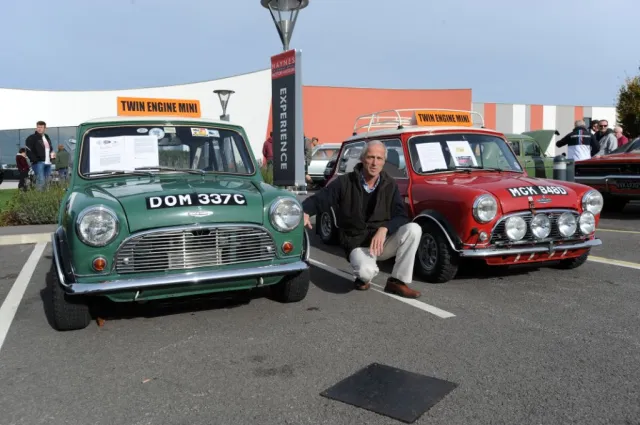
In total, two copies were built: one with a pair of conventional 997 cm³ engines, the second with sports 1.2-liter units with a total power of 178 hp. The car was created for the legendary Targa Florio race in the mountains of Sicily. Alas, the result was sad: the rear engine was constantly overheating, and it was impossible to complete the race at maximum pace. Both original Twinis were eventually destroyed, but today there are rare replicas for wealthy collectors.
Read more materials on the topic:
Now on home

Two cars of the same era, created for currency export, but with different philosophies

The crisis, compromises, and wrong decisions that buried a promising model


Resident of Sverdlovsk Region Recovers 192,000 Rubles and Receives Compensation

At the end of 2025, the crossover topped the sales ranking of new cars in the capital

The legendary racer moves around in a wheelchair and is under constant medical supervision

What malfunctions do owners of the Togliatti flagship most often encounter?

Slow shifting in the cold is not normal, but the first sign of transmission problems

The car features improved design and electronics

Now it's Rolls-Royce

Even with the recycling fee, the car will cost less than from official dealers

The model also received new trim levels