Winter is considered one of the toughest tests for a car, and the challenges are not limited to cold engine starts. When driving on a mixture of snow, water, and road chemicals, a slow but destructive process occurs continuously under the wheels.
Aggressive chemicals combined with sudden temperature changes—from red-hot brake discs to icy puddles—create ideal conditions for corrosion. In this environment, the brake caliper is often the most vulnerable element.
Many drivers operate under a simple logic: if the car brakes, then the system is working. In practice, this is a dangerous misconception. The peculiarity of the caliper is that it can work only partially: when braking, the pad presses against the disc, but after releasing the pedal, it does not always return to its original position.
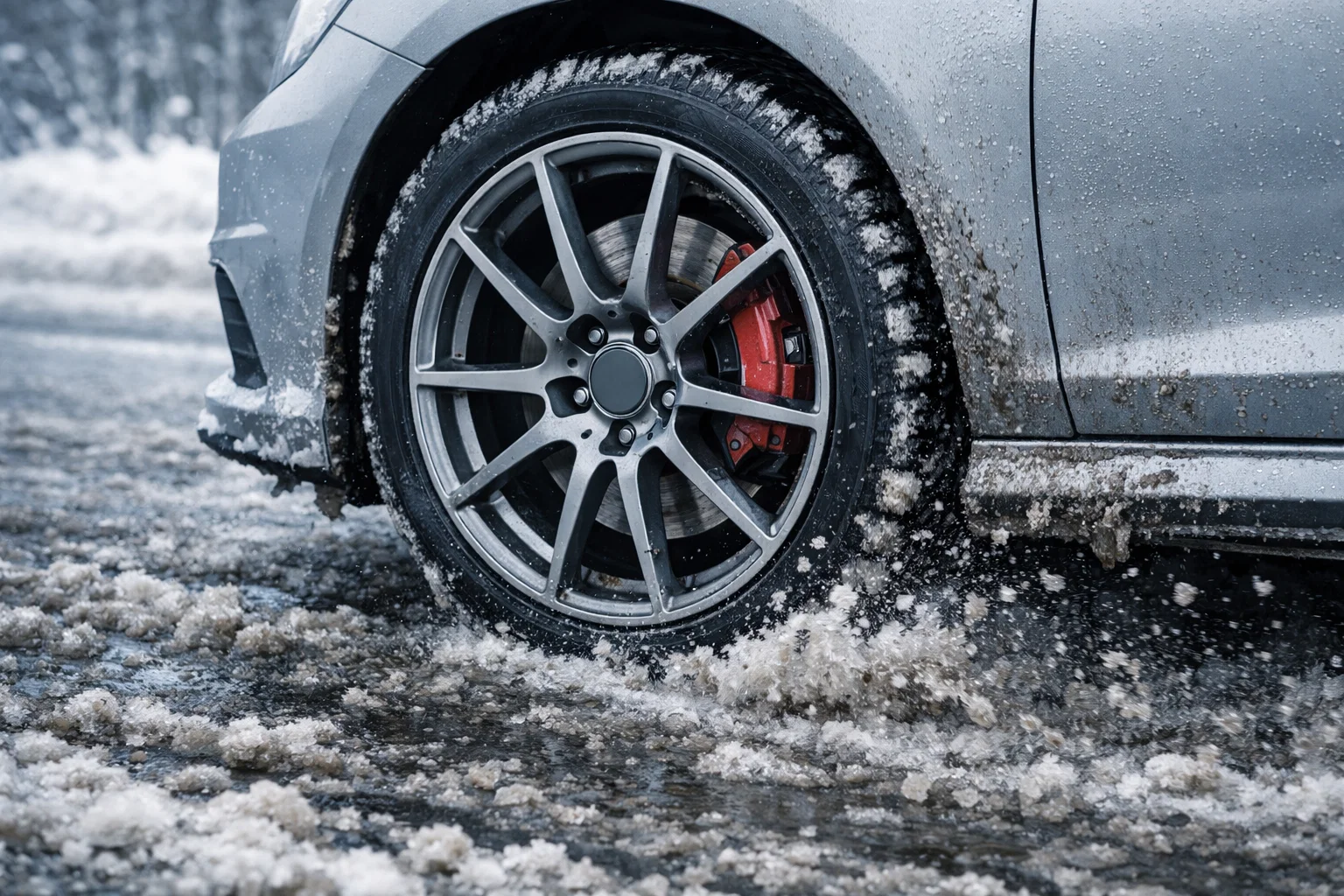
Often, cars are operated with sticking brakes throughout the winter. Drivers note an increase in fuel consumption or "heavy" acceleration, without associating these symptoms with the braking system. In spring, such cases often end with the need to replace brake discs on the entire car.
However, the problem can be identified without contacting a service center and without using complex equipment. There are simple ways to understand on the spot that the brakes need attention.
Test #1: Checking Free Roll
One of the most accessible methods of primary diagnostics, which gives a clear idea of the condition of the brakes.
It is necessary to find a flat section of road cleared of snow without a slope. The car accelerates to 40–50 km/h, after which the gas pedal is fully released.
On cars with a manual transmission, short-term engagement of neutral is allowed. On cars with an automatic transmission, it is enough to simply remove your foot from the gas.
A properly functioning car rolls freely, gradually and predictably reducing speed. If it feels like the car is being held back, deceleration occurs in jerks, or the car stops too abruptly, this is the first alarming signal.
The characteristic feeling that the car remains on the handbrake with the lever down usually indicates that the brake pads are not fully retracting.
Test #2: Temperature Check (Most Reliable)
This method is highly accurate and allows you to determine the specific problem wheel.
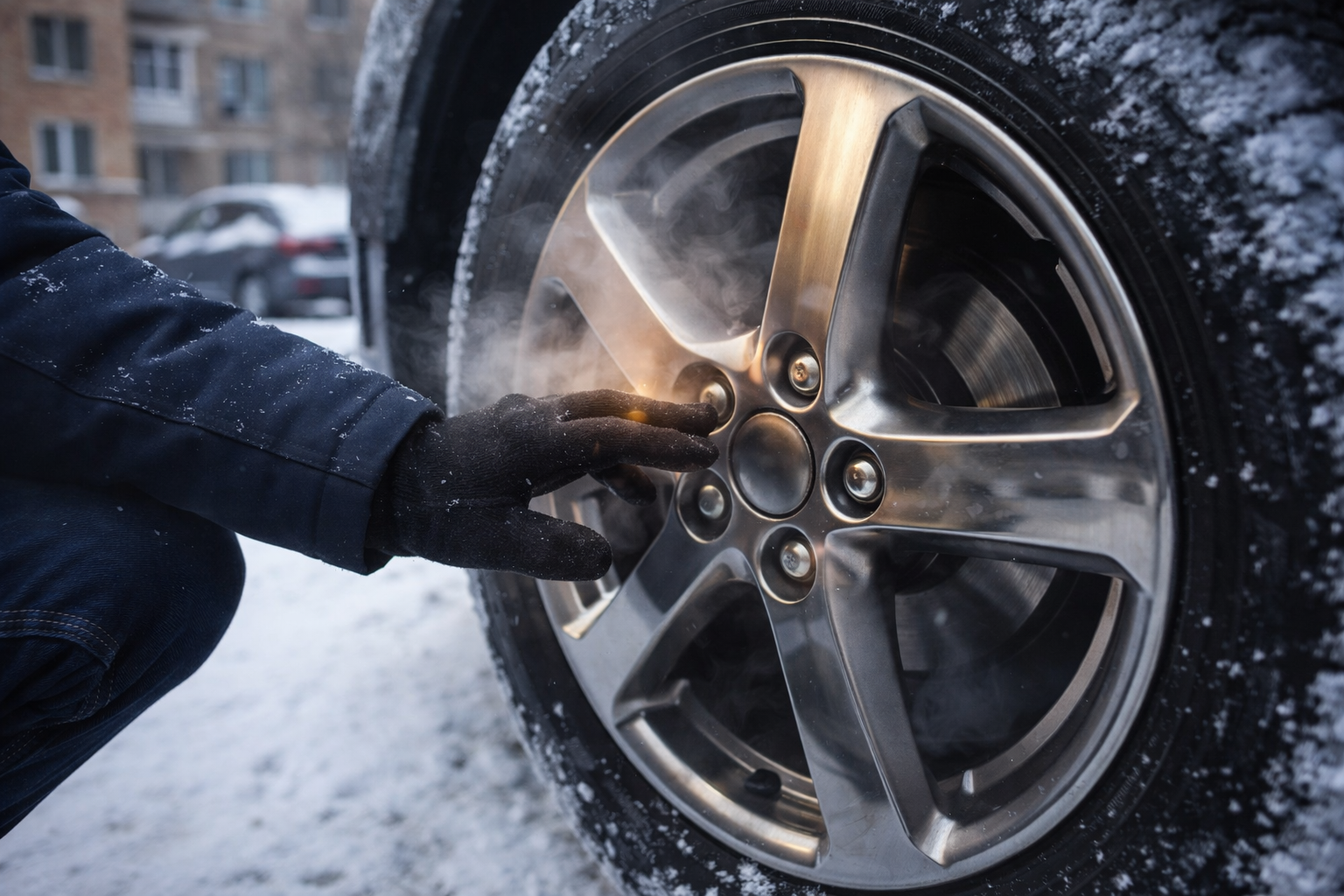
It is important to observe safety precautions: after a trip, you should not touch the brake disc with your fingers—the risk of immediate burns is extremely high.
The check is performed as follows. In normal city mode, the car travels 3–5 kilometers, while avoiding sharp braking before stopping. After stopping, you need to get out of the car and carefully touch the metal part of the wheel disc closer to the center with your hand.
In normal condition, all four wheels have approximately the same temperature: they are warm but not burning. It is permissible for the front wheels to be slightly hotter than the rear wheels, as the load on them is higher.
If three wheels remain simply warm, and the fourth is very hot, it is impossible to touch it, or there is a smell of burning from it, the source of the malfunction has been found.
In this wheel, the caliper is stuck. The piston or guides do not allow the pads to move away, and they continue to rub the disc while driving, heating the brake assembly to critical temperatures.
Why Caliper Seizure Occurs
This type of malfunction can occur even on a relatively new car. There are two main reasons, and both are quite common.
The first is a damaged dust boot. A small rubber part on the guide or piston can crack due to frost. Moisture with salt gets inside, and after a few weeks, the smooth surface of the metal is covered with corrosion, which causes the mechanism to lose mobility.
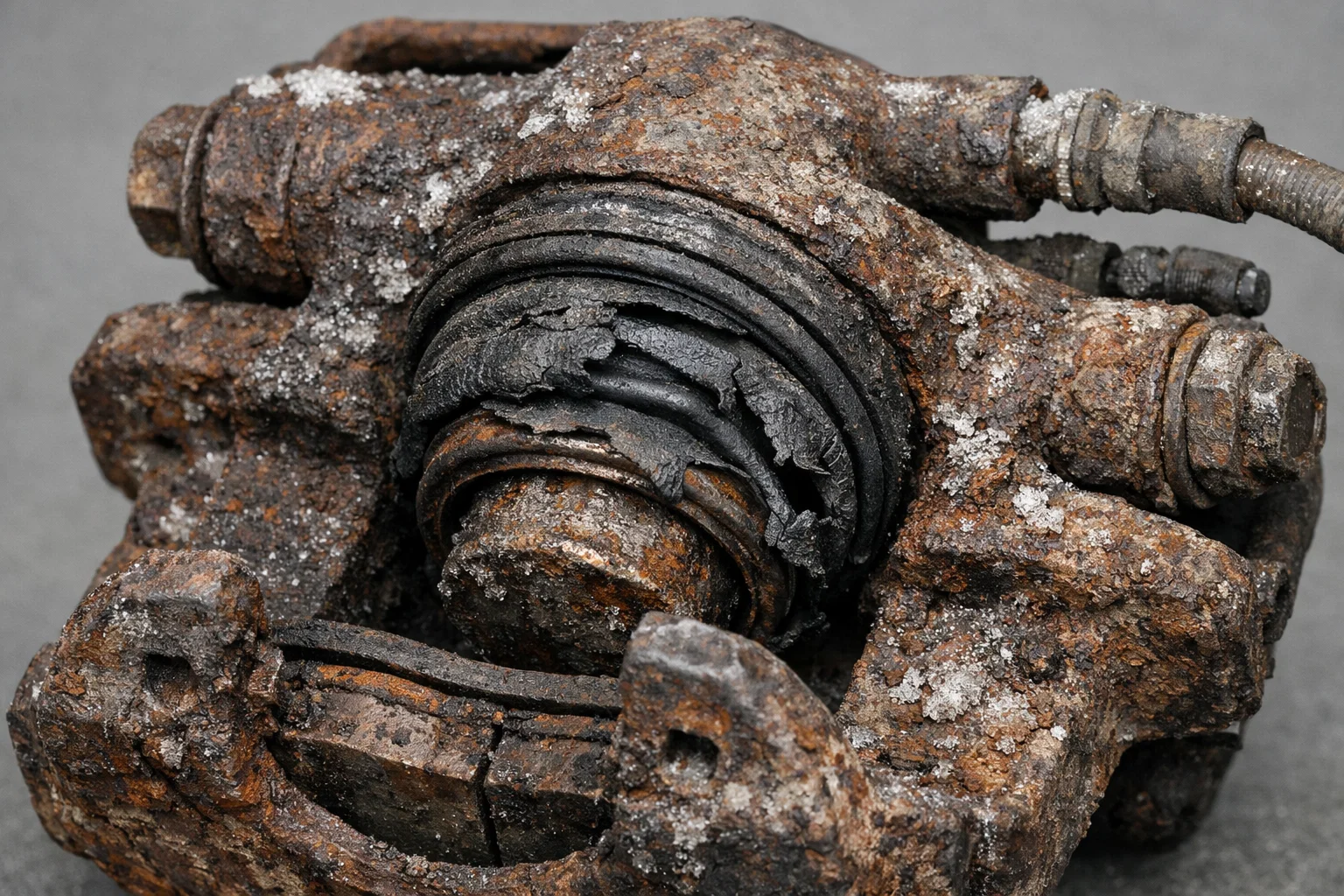
The second common reason is the use of unsuitable lubricant. Graphite grease, grease, or even copper paste are still often used.
It should be taken into account that petroleum-based lubricants destroy the rubber dust boots of the caliper. The rubber swells, the tightness is broken, and the lubricant itself dries out over time and turns into a solid mass. Only special synthetic compounds, usually on a polyalkylene glycol basis, are permissible for caliper guides. Universal and "garage" solutions do not work in this unit.
What are the Consequences of Ignoring the Problem
Operating a car with a constantly overheated wheel quickly leads to a chain of expenses.
First of all, the hub bearing suffers: the lubricant boils away due to overheating, after which a characteristic hum appears. Next, the brake disc fails. Red-hot metal deforms when it comes into contact with cold water, vibration occurs on the steering wheel, and the disc becomes unsuitable for further use. Fuel consumption increases additionally. The car constantly overcomes extra resistance, which causes fuel consumption to increase by 1–2 liters in winter for no objective reason.
The entire check takes no more than two minutes after returning home. It is enough to get out of the car, walk around it, and assess the temperature of the wheel discs. Uniform heating means normal brake operation. If one of the wheels is noticeably overheating, prevention is required immediately—before the need to replace the caliper entirely arises.
Read more on the topic:
- Why ABS brakes worse in winter than it seems
- Mechanics without clutch: Saab's strange experiment
- The dangerous belief in four-wheel drive
Комментарии