Formula 1 is not just a competition of racers, but also an intellectual battle of engineering minds, where advanced technologies are intertwined with daring concepts. For many decades, certain racing cars have become not just vehicles, but true icons that have forever transformed the idea of speed and the potential of racing technology. They didn't just win races - they made history in the greatest motorsport on the planet.
McLaren MP4/4 (1988) - Unsurpassed Domination
The most successful racing car in the annals of world championships. In the 1988 season, drivers Ayrton Senna and Alain Prost triumphed in 15 of the 16 Grand Prix stages, achieving a legendary "golden double" - Senna won the championship title in the individual standings, and the team won the Constructors' Cup.
The success of this model was ensured by an incredibly compact chassis with a 10% reduced drag coefficient and a compact but extremely powerful Honda V6 Turbo power unit. The team experimented with an active suspension system, while Honda engineers achieved phenomenal fuel efficiency, which was critical in the context of fuel tank volume restrictions.
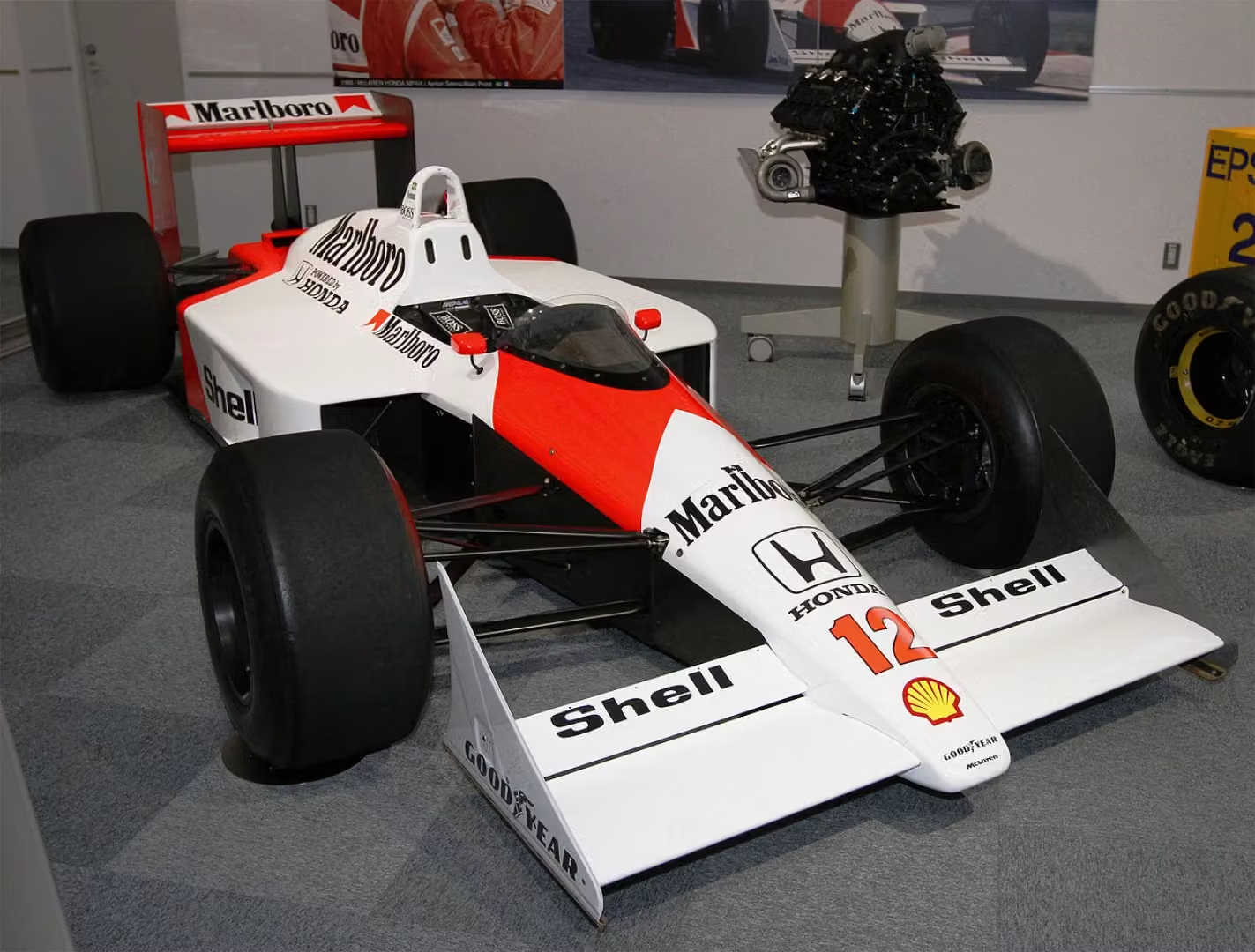
Despite the fact that the team did not have time to conduct full pre-season tests due to difficulties with the final fine-tuning of the design, Senna won the starting position from pole position in the first race of the season, and Prost won it. It was an unconditional triumph from the very start of the championship, demonstrating the technical superiority of the car.
MP4/4 became a symbol of an era when engineering excellence was combined with the genius of drivers. This car set a bar that many teams tried to reach over the following decades.
Lotus 78/79 (1977-1979) - The Birth of Downforce Effect
These racing cars have forever transformed the philosophy of aerodynamics in Formula 1. Lotus 79, an evolutionary development of the 78 model, helped Mario Andretti win the championship title in 1978, demonstrating a revolutionary approach to creating downforce.
Colin Chapman and his engineering team were the first to fully implement the concept of the "ground effect." The specific geometry of the bottom and innovative side "skirts" created a low-pressure zone under the car, literally gluing it to the asphalt and allowing it to overcome turns at unprecedented speeds. By 1979, a car without the use of the "ground effect" was considered hopelessly behind the times.

Initially, the revolutionary Lotus 78 model was capricious and unreliable. It took painstaking work by engineers and numerous modifications to transform it into the almost invincible Lotus 79, which became a nightmare for competitors.
This innovation caused a chain reaction in the world of Formula 1 - all teams rushed to copy and improve Chapman's concept, which ultimately led to radical changes in the regulations to limit excessive speeds in corners.
Lotus 25 (1962-1967) - Revolution in Safety
The first racing car in the history of Formula 1 with a monocoque-type load-bearing chassis, which replaced the outdated tubular space frames. In this innovative car, Jim Clark won seven victories in ten stages of the championship in 1963 and became the world champion.
The monocoque chassis, made of duralumin panels, was not only significantly lighter and stronger than the designs of its predecessors, but also much safer for the driver, providing better protection in accidents. It was a fundamental conceptual shift in the design of racing cars, which determined the development of the industry for many years to come.
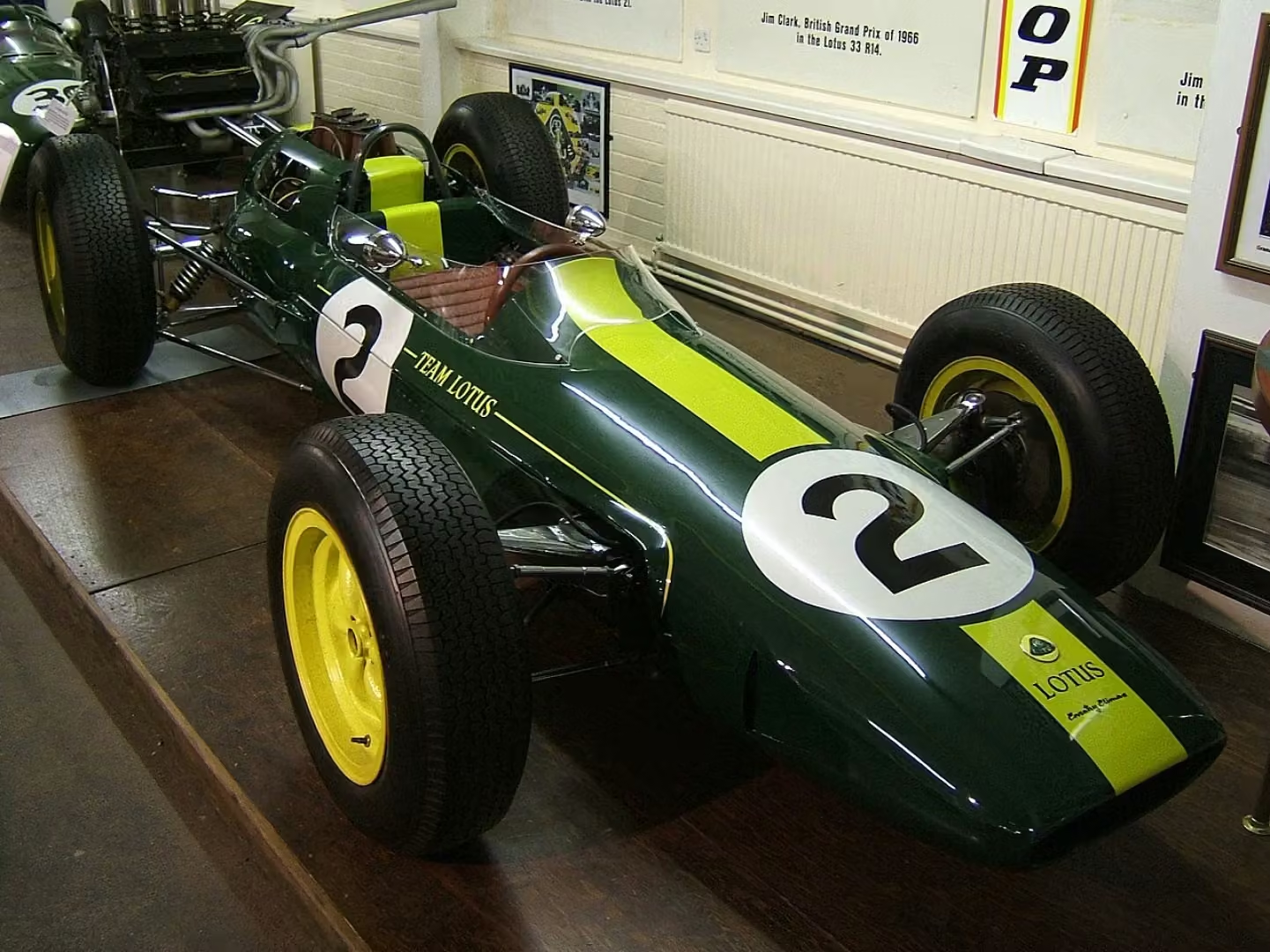
According to legend, the first sketch of the revolutionary chassis was sketched by Colin Chapman on an ordinary paper napkin during a lunch meeting with the team's chief designer Mike Costin, which emphasizes the spontaneity of brilliant engineering solutions.
Lotus 25 didn't just win races - it changed the very concept of safety in motorsport and laid the foundation for all modern cars, which use variations of the monocoque design to this day.
Ferrari 500 (1952-1957) - Unsurpassed Hegemony of the Reds
The dominance of this racing car remains the benchmark of excellence in the history of the world championship. In the 1952 and 1953 seasons, the Ferrari 500 won 14 victories in 15 stages of the world championship, demonstrating absolute technical superiority. Driver Alberto Ascari set an incredible record of 9 consecutive victories, which has not been broken to this day and is unlikely to be surpassed in the foreseeable future.
The genius of engineer Aurelio Lampredi lay in the perfect combination of design simplicity, unsurpassed reliability, and a powerful 2-liter four-cylinder engine. In an era when simply finishing a race was a challenge due to frequent technical failures, his car was a model of stability and predictability.
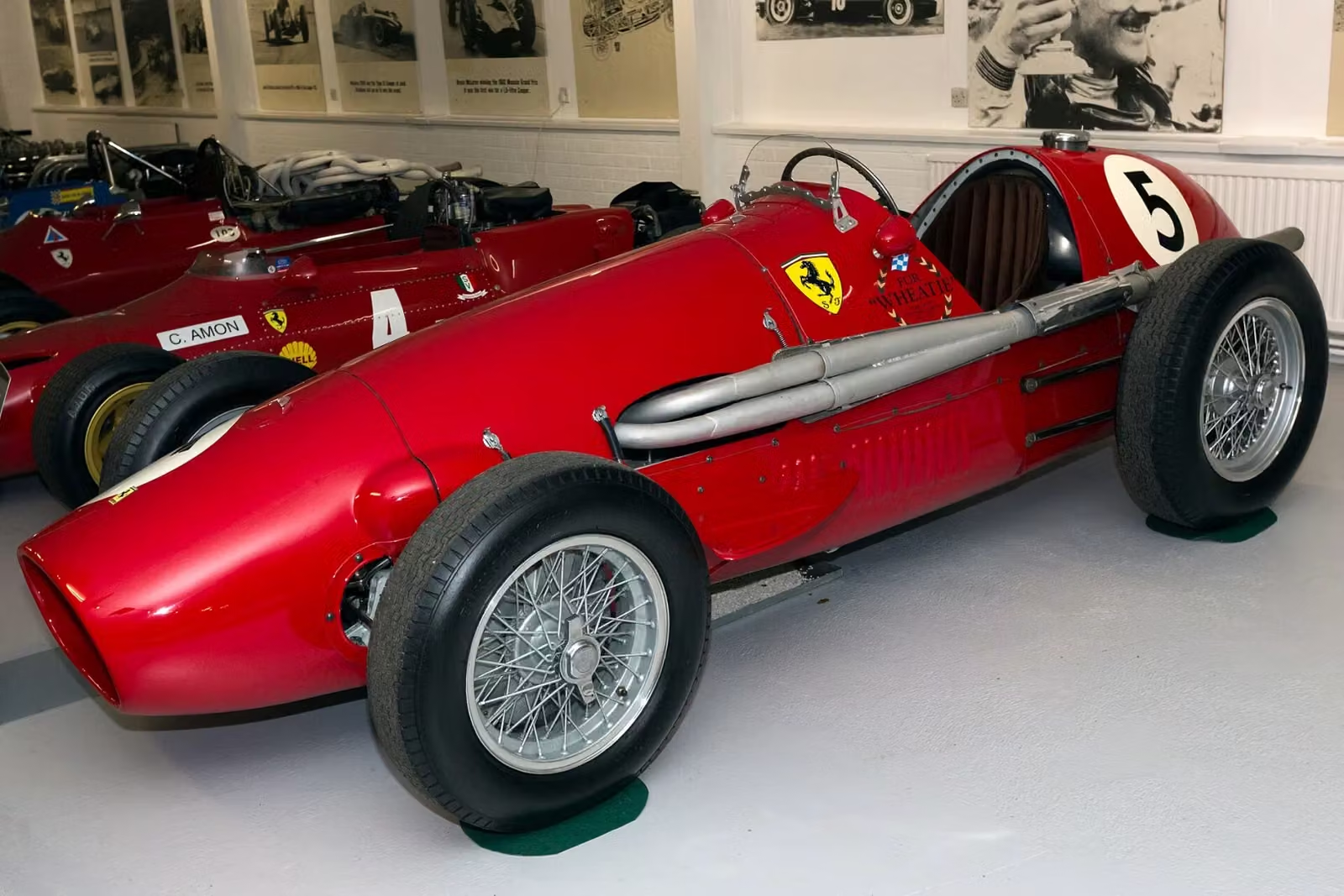
To imagine the scale of its technical superiority over competitors, it is enough to mention that in some stages of the championship, up to a third of the starting field (7-8 participants) consisted of private teams and privateer racers on the Ferrari 500 - a situation absolutely unthinkable in modern high-tech Formula 1, where each car is unique.
This period became the golden era of Ferrari and laid the foundation for the legend of the Italian team, which continues to dominate the minds of fans today.
McLaren MP4/2 (1984-1986) - Pioneer of Composite Materials
The car laid a solid foundation for the future triumphs of the McLaren team. This innovative car brought championship titles to Niki Lauda in 1984 and Alain Prost in 1985. It became the flagship of the era when turbocharged engines and composite materials from the aerospace industry came to Formula 1 en masse.
MP4/2 became the first racing car with a fully carbon fiber monocoque, borrowing advanced experience from the aviation and space industries. The combination of an incredibly light and exceptionally strong chassis with a powerful TAG-Porsche turbocharged engine made it the strongest car of its generation, setting new standards in racing.
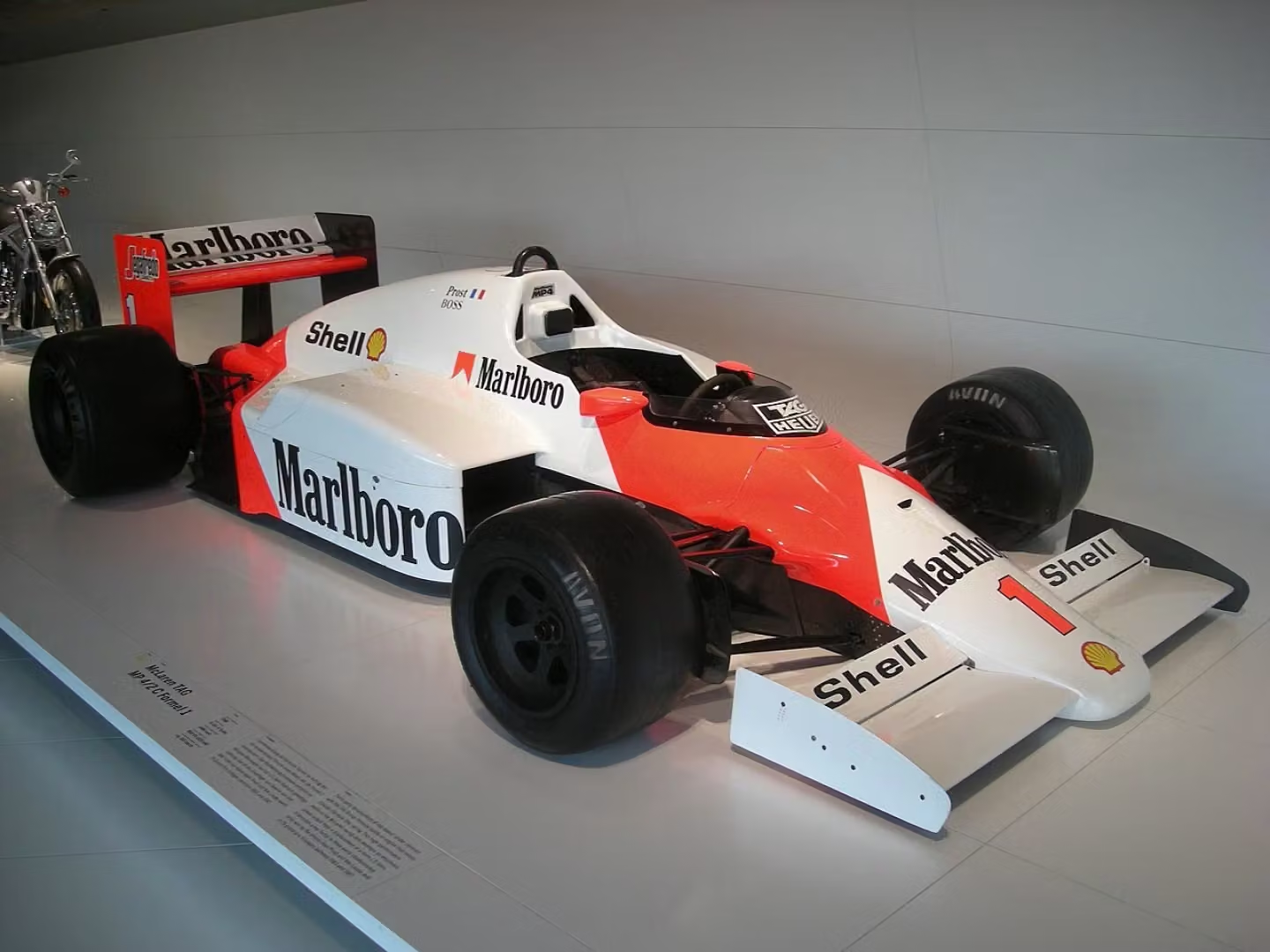
The use of carbon fiber opened a new era in the design of racing cars. The material provided not only a significant reduction in the weight of the structure, but also increased safety in accidents due to its ability to absorb impact energy.
The technologies and design solutions developed and improved on the MP4/2 were inherited and perfected in the legendary MP4/4, which clearly demonstrates how the innovations of one era become the foundation for the triumphs of the next.
Legacy of Legends
These five cars are more than just championship winners. Each of them became an important milestone in the history of motorsport, forcing rivals, engineers, and millions of fans around the world to take a fresh look at the limits of what is technically possible. They convincingly proved that in Formula 1, not only the one who drives the car faster and more accurately wins, but also the one who is able to think more boldly, take risks, and implement revolutionary technical solutions.
Modern Formula 1 cars are direct descendants of these pioneers of innovation. Every racing car today uses a monocoque (Lotus 25), composite materials (McLaren MP4/2), complex aerodynamics with airflow control (Lotus 78/79), and strives for the same reliability and efficiency that the Ferrari 500 demonstrated, while achieving the technical perfection of the McLaren MP4/4.
The history of these legendary cars reminds us that progress in motorsport never stops, and today's innovations will become the standard tomorrow, and the day after tomorrow - already history.
Read more related articles:
- Five legendary cars that made all-wheel drive mainstream
- Legendary cars from movies: how much do they cost today
- How Lamborghini built a military jeep with a V12 engine from Countach
Комментарии