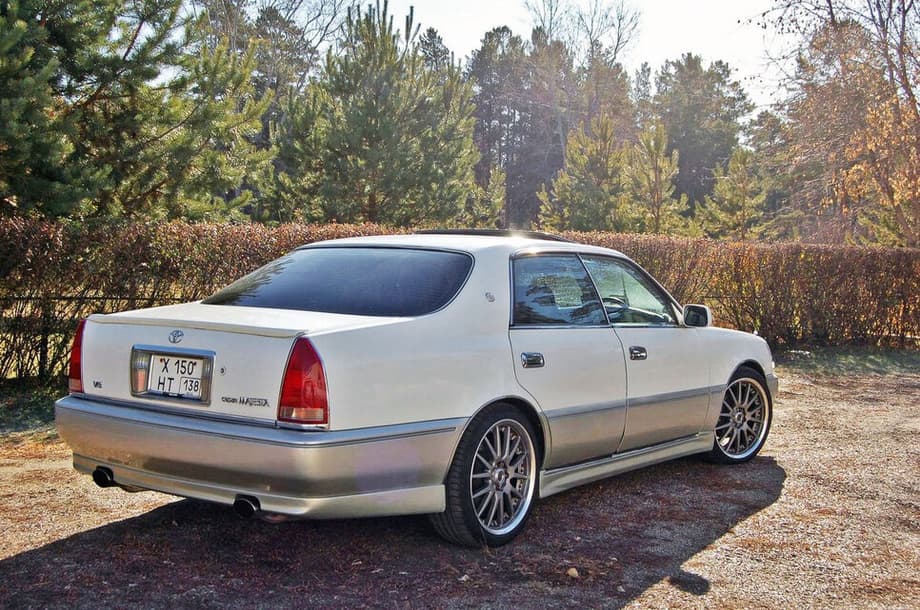
In the mid-90s, Japanese premium lived by special rules. While the economy cooled down after the wealthy 80s, Toyota was confident that the local buyer still wanted maximum comfort and was not going to give up the attributes of the executive class. It was in this niche in 1995 that the second generation of the Crown Majesta appeared - a model half a step below the Century, but with its own character and tasks.
Japanese brands were often criticized for their modest engine range. The Germans competed in V8s and V12s, while the Japanese were content with two or three engines. But this was determined by local taxes and customer requests. At the same time, in those years, the Japanese market was saturated with models that differed literally in shades of positioning. Toyota honed this approach by releasing three similar cars in a row: the Celsior in 1994, the Majesta in 1995, and the Aristo in 1997 - all on a common architecture, but with different roles.
The Celsior became the choice of those who did not quite reach the Century in rank. The Aristo was made a driver's sedan for those who wanted excitement. And the Crown Majesta was addressed to VIP clients, for whom the main value is the comfort of the second row. This triumvirate did not last long. The Aristo left in 2004, the Celsior in 2006, and the Majesta lived until 2018 (in China - until 2020), becoming the last representative of this era.
The first generation Majesta departed from the frame structure, while the regular Crown S140 still adhered to the traditional approach. The new platform was created jointly with the Aristo/Lexus GS, and their suspensions were virtually identical. For the second generation, Toyota engineers decided not to break anything: they retained the same architecture with forged levers at the front and rear. Except that the same Aristo was later given a radically new rear module in anticipation of competition with BMW and Mercedes.
The Majesta S150 was spared the traditional TEMS set with electronically controlled shock absorbers, but the air suspension was retained for the wealthy trim levels - along with ride height adjustment. All-wheel drive is also available: the i-Four system offered an interaxle differential with a basic weight distribution of 30:70 and automatic locking by a hydromechanical clutch. There was never a rear Torsen, but against the background of competitors, the presence of AWD was already considered an advantage.
In 1997, the restyling added a VSC stabilization system and a more modern five-speed A650E gearbox to the sedan, which worked with the V8. Before that, the Majesta only had a four-speed automatic, despite the fact that another Crown had already received a five-speed A350 based on the same line.
The engine range remained the same. The legendary inline "six" 2JZ-GE with 220 horsepower was considered the base. And the top was occupied by the V8 1UZ-FE with a volume of 4.0 liters: 265 hp before restyling and 280 after. Only the version with the "eight" could be all-wheel drive - and it was equipped as generously as possible.
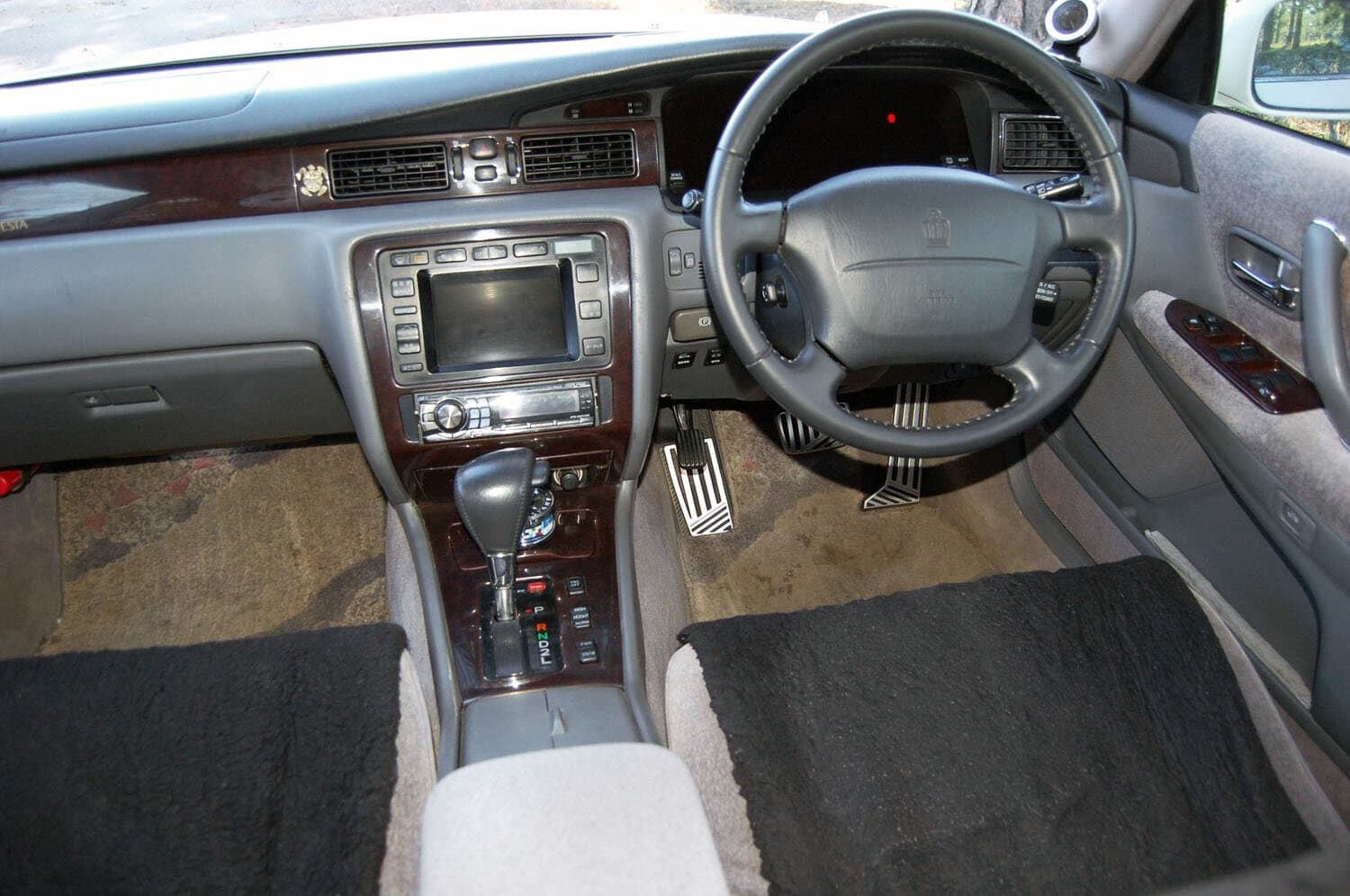
Inside, the Majesta tried to emphasize its status. Electric drives for the seats, steering wheel, halves of the rear sofa, projection display, rich audio system, ionizer, sunroof - all this was offered either as standard or in various F type and C type configurations. Rear passengers got a separate "climate" and audio system control panel, buttons for moving the front left seat, lighting and additional amenities focused on comfort.
Toyota considered the Electro Multivision complex to be a special pride. The touch panel showed navigation, TV, service data and climate settings. Many EMVs have not survived to this day due to burnout of displays and problems with cables. But on the specimen under consideration (in the photo), the system was restored, albeit without a navigation unit.
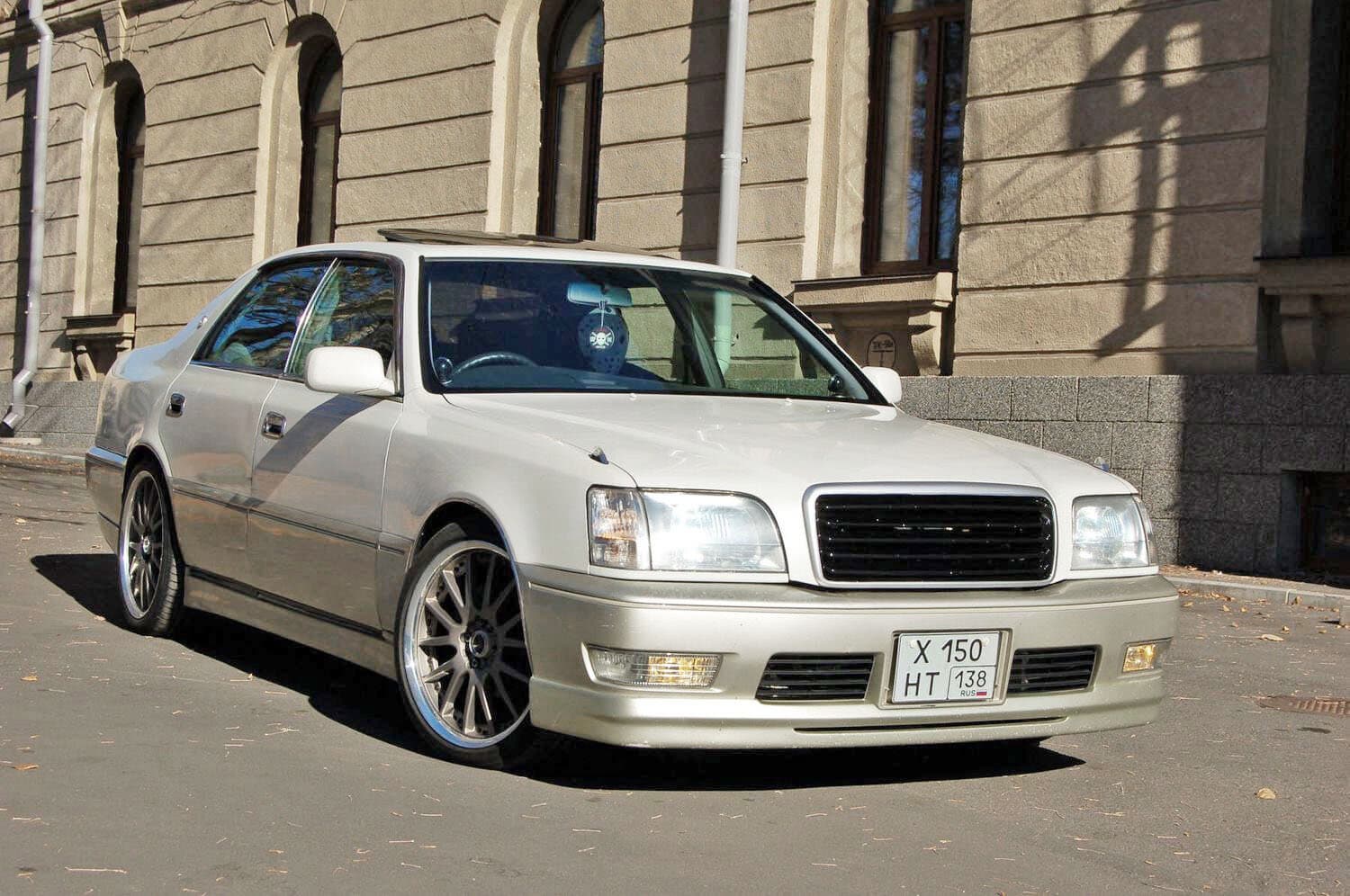
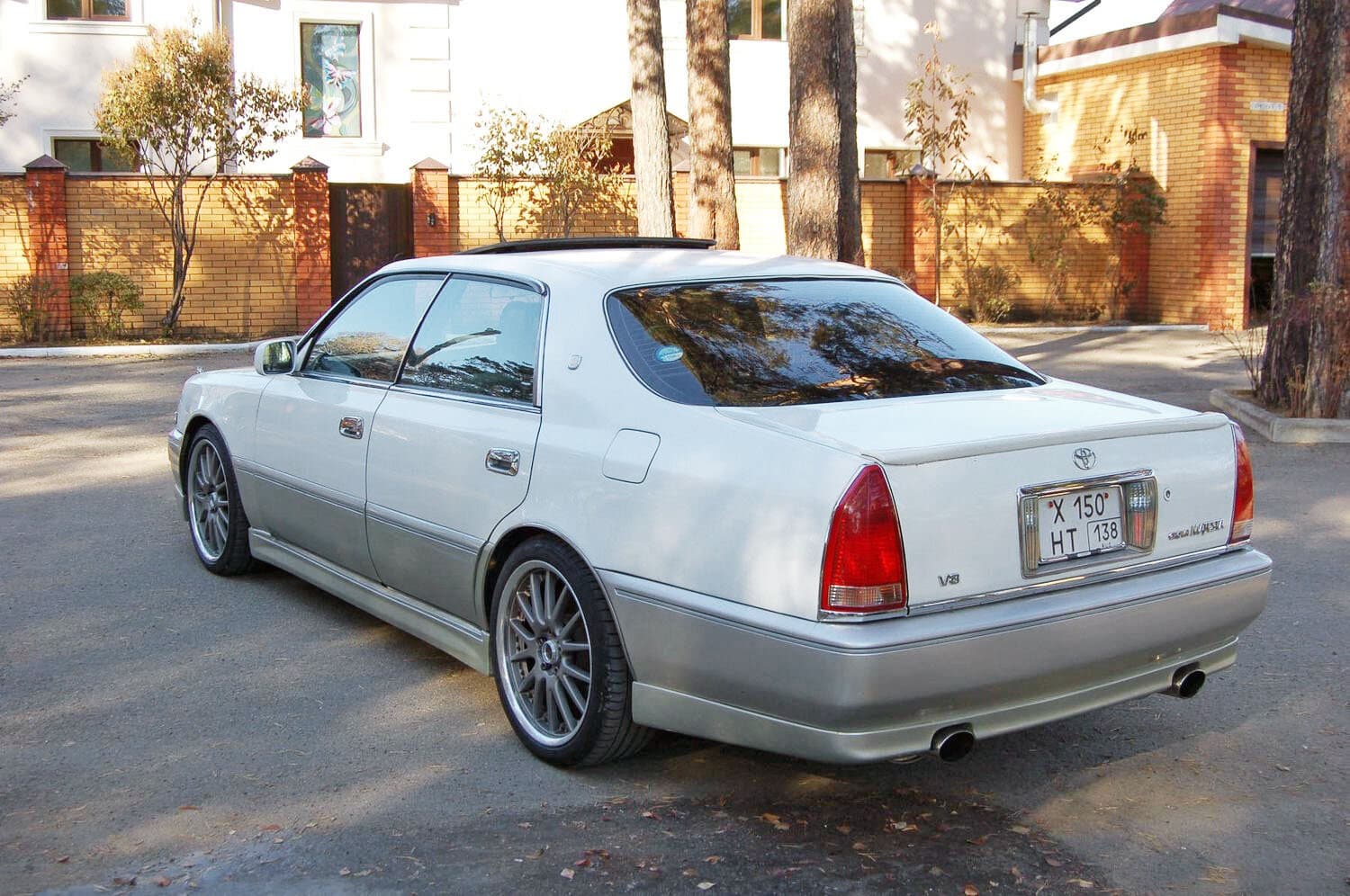
The interior design corresponded to the spirit of the Crown - strict, focused on the passenger in the back. But the owner of this particular car decided to move away from the classics: he replaced the grille with a K-break, installed an Evolution body kit, and borrowed the sills from the "one hundred and fiftieth" Crown. In the arsenal - a Cusco strut between the front struts, a freer exhaust and an advanced audio system.
The main thing, however, is the driving experience. The atmospheric V8 1UZ-FE remains a model of soft traction and recognizable velvety sound. The short-stroke design provides a quick exit to peak thrust, and the Majesta with the "eight" accelerates noticeably faster than with the base 2JZ-GE. The old four-speed automatic slowly drops gears, so it's more pleasant to accelerate at the moment - and here the 1UZ-FE reveals itself best.
The air suspension on this specimen has not been preserved: instead, struts from Aristo are installed. The wheels are 19-inch, with a low profile. Nevertheless, the smoothness of the ride remained proprietary: the Majesta confidently swallows patches and rails, does not irritate with shaking and retained its legendary soft swaying on smooth asphalt. On bad surfaces, low-profile tires, of course, suffer, but switching to the standard size completely solves the issue.
Handling is calm, without sporting ambitions. The steering wheel is long, rolls are noticeable, but the behavior is honest and predictable. The sedan remains exactly what it was intended to be: a quiet, soft and confident transport for a leisurely VIP.
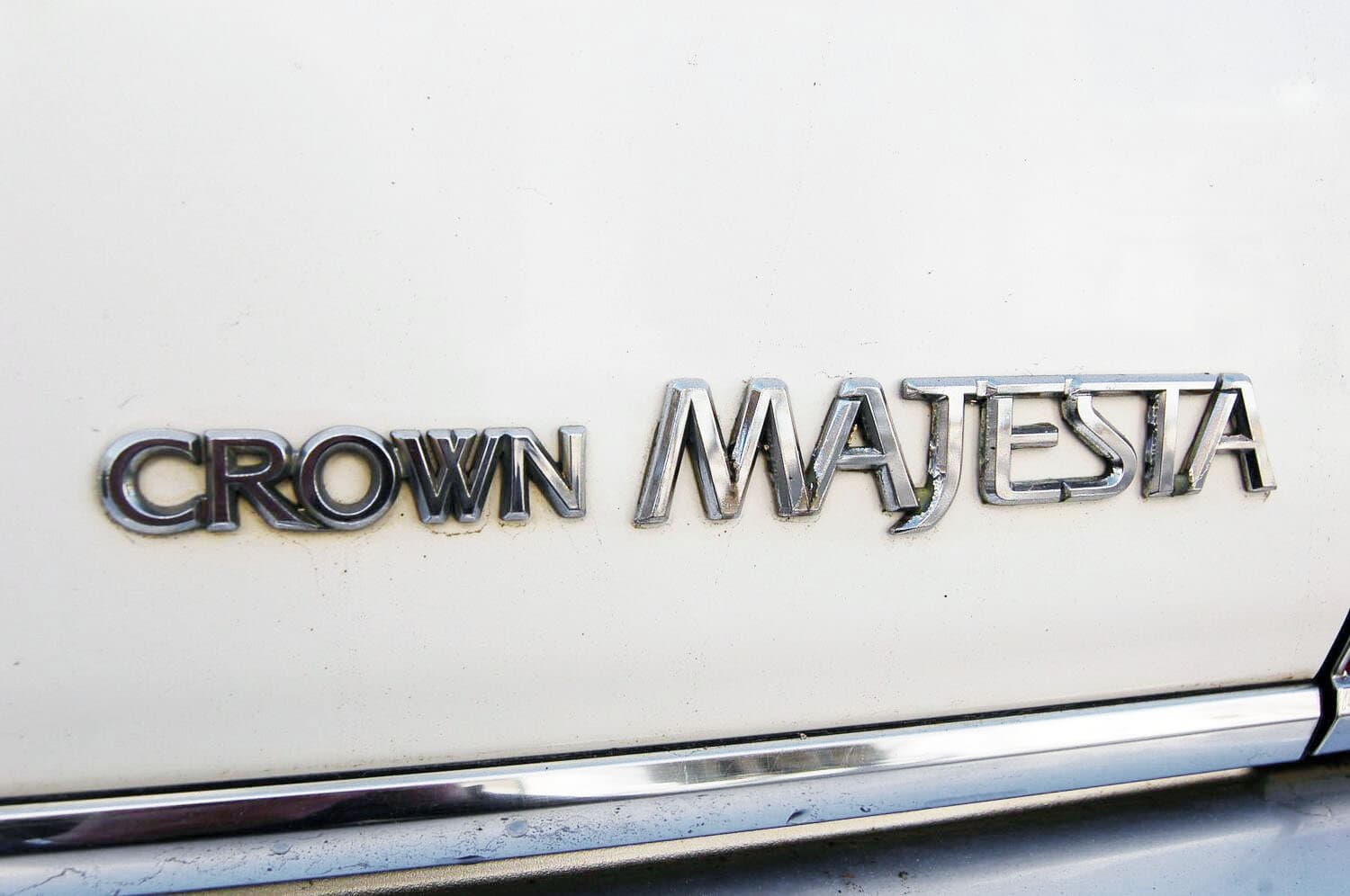
And this is the success of the Crown Majesta. Comfortable driving style, solid power reserve, proprietary Japanese reliability and emphasized status made the model almost an exemplary representative of the elite of the 90s. The following generations already lived in different conditions, when crossovers entered the market, and traditional sedans lost influence. But it was in these years that Toyota created its unique recipe for a real business class - and the Majesta became its vivid embodiment.
Read more materials:
Now on home

Two cars of the same era, created for currency export, but with different philosophies

The crisis, compromises, and wrong decisions that buried a promising model


Resident of Sverdlovsk Region Recovers 192,000 Rubles and Receives Compensation

At the end of 2025, the crossover topped the sales ranking of new cars in the capital

The legendary racer moves around in a wheelchair and is under constant medical supervision

What malfunctions do owners of the Togliatti flagship most often encounter?
Slow shifting in the cold is not normal, but the first sign of transmission problems

The car features improved design and electronics
Now it's Rolls-Royce
Even with the recycling fee, the car will cost less than from official dealers

The model also received new trim levels