A low-slung wedge-shaped silhouette, a sweeping glass line, and powerful rear arches - the Lamborghini Diablo became a symbol of the 90s. For schoolchildren of that time, it was a dream from Need For Speed, for adults - an unattainable embodiment of speed and power. The lifting doors inspired a whole generation of "garage masters" who installed "Lambo doors" even on VAZs.
The name Diablo translates as "devil," but it is not associated with mysticism, but with bullfighting. The car is named after the famous 19th-century bull, famous for his duel with the bullfighter El Chicorro. And, like that bull, the Lamborghini Diablo from day one aroused delight and awe. Its premiere in Monaco in 1991 was a real triumph of Italian design.
Italian Passion and Gandini's Genius
Diablo is the child of a truly Italian philosophy, where the artist's idea is superior to the rationality of engineers. The great Marcello Gandini created a design that people fell in love with at first sight. For the sake of these lines, engineers made compromises, adapting technical solutions to aesthetics.
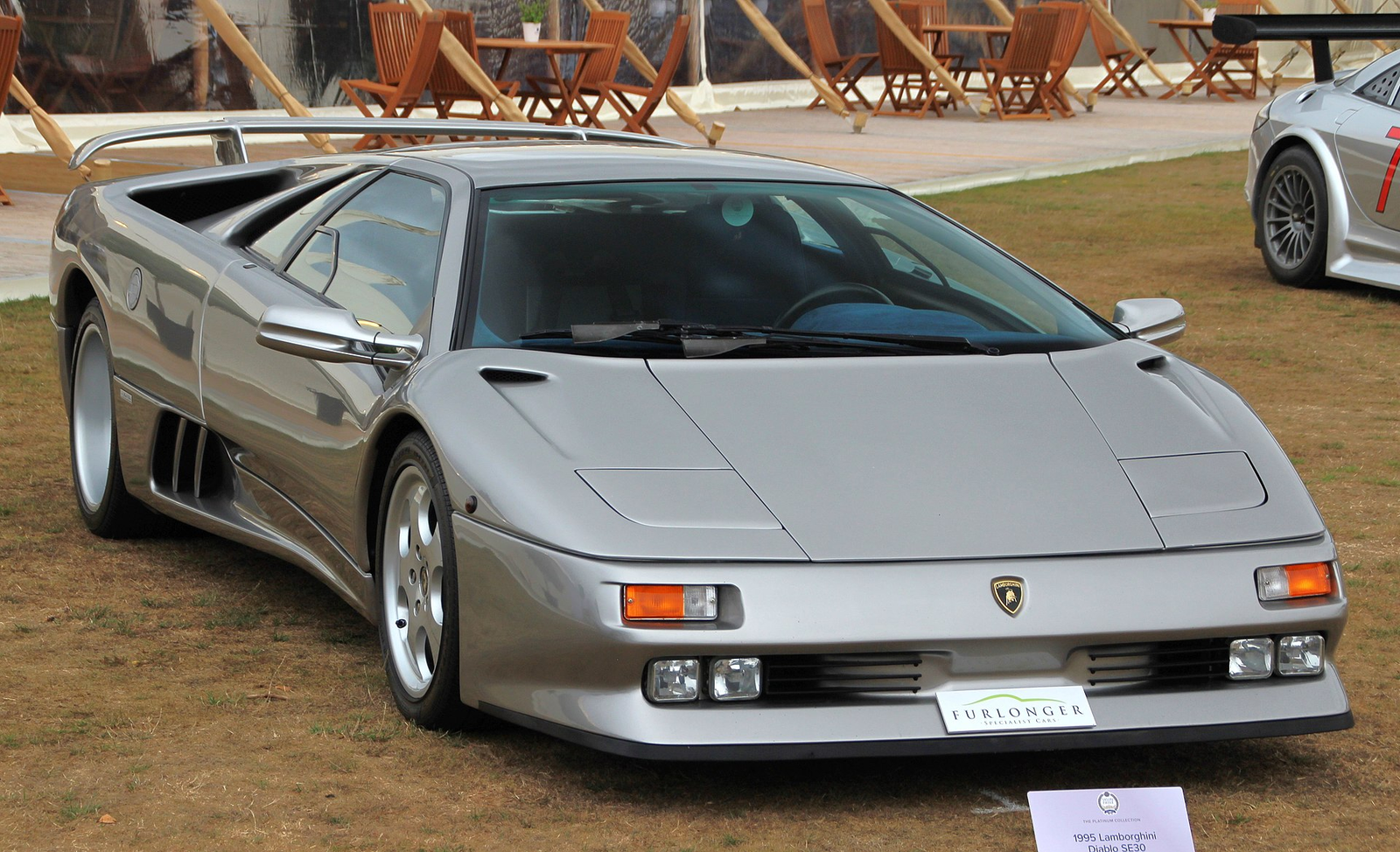
For example, to get to the battery, you need to remove the rear wheel - inconvenient, but beautiful! An approach in which beauty is more important than logic has become the hallmark of Diablo. Even today, its silhouette, with the straight "Gandini line" from the roof to the rear bumper, looks like a work of art.
A Little Italian Madness
The Lamborghini Diablo combined a masterpiece design and a share of the company's Italian chaos. Turn signals almost from a "kopeyka", taillights borrowed from a bus, instruments from a tractor, and later the pop-up headlights were replaced with Nissan ones. But it is the early versions with "blind" headlights and a high panel that are considered the most authentic. They embody the very spirit of Gandini, when the car was art, not a product.
Diablo from the Inside
Getting into the Diablo's cabin is a challenge. The fit is semi-reclining, the pedals are shifted, the instruments are blocked by the steering wheel, and the gear lever lives its own life. The clutch is as heavy as on a truck, and the gearshift pattern is reversed. All this requires skill and habit, but that's why Diablo is loved.
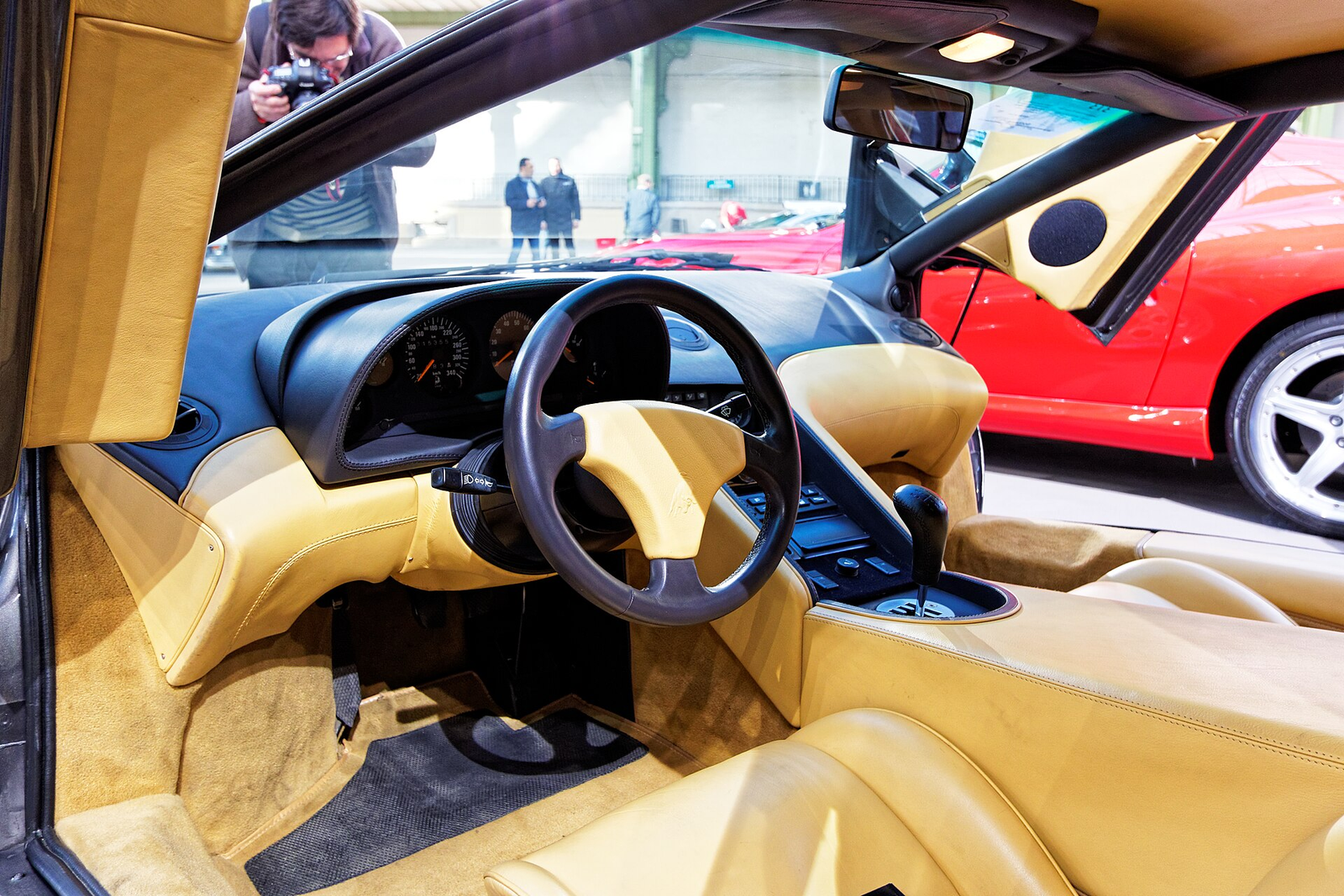
The gearbox is located literally between the seats - only a thin casing separates it. No cables, minimum sound insulation - only mechanics and pure drive. Each copy was assembled manually, and the quality could vary from car to car. Some growled, others howled like a Niva, but each felt the living soul of the master.
Mechanics of Passion
Under the body is a classic 90s layout: a space frame, double wishbones and fiberglass panels. The heart of the Diablo is a 5.7-liter V12 with 492 hp. This engine was assembled manually, detail by detail, with love and attention. No more than six cars were produced per week - not because of laziness, but because of thoroughness.
Each engine sounded like a musical instrument. The intake manifolds resembled orchestra pipes, and the plate with the order of the cylinders resembled a musical score. Up to 3000 rpm, the engine purred nobly, after that it turned into a roaring beast. Acceleration to hundreds took just over four seconds, and the maximum speed reached 325 km/h.
On the Roads and in Hearts
Despite the minimal ground clearance and sports suspension, the Diablo is able to drive on ordinary roads. Lamborghini has never had its own test site - testers tested the supercar on the streets around Sant'Agata. The handling was tuned by the legendary rally driver Sandro Munari, the 1977 WRC champion.
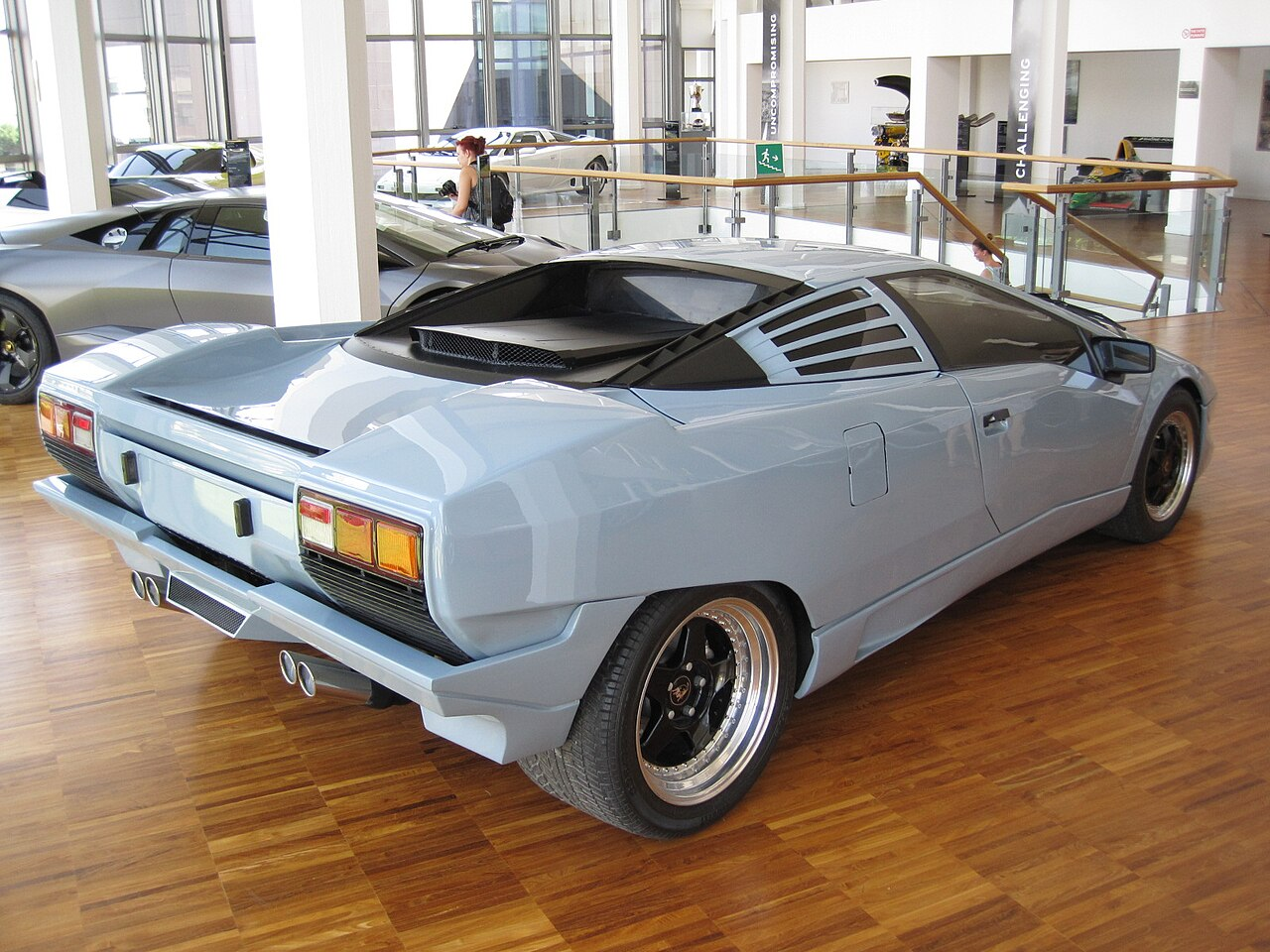
Diablo required courage: power steering appeared only in 1993, and ABS only in 1999. Driving this car is not entertainment, but art. There are no electronic assistants here that will save you from mistakes - only the hands, feet and heart of the driver.
End of an Era
The history of Diablo is the final chapter of the romantic era of Lamborghini. Since 1963, Ferruccio Lamborghini has created not just cars, but emotions on wheels. When the model was discontinued in 2001, the Diablo became the best-selling Lamborghini in history.
After him began the era of "efficient managers" of the VAG concern. Sales grew, technology stepped forward, but the soul, according to fans, remained in the past. Modern Aventador and Huracán impress with numbers, but only Diablo is recognized even by those who are far from motorsport.
Because this car is not just iron. This is a living legend, created with love, passion and a crazy belief in the idea. And although such cars are no longer made, the Lamborghini Diablo will forever remain a symbol of the era when a supercar was created by the heart, not by marketing.
Read more materials on the topic:
- Lada Iskra tested in action: how the Russian sedan withstood the test with competitors
- BMW Neue Klasse - a step into a new generation of electric vehicles
- Premium cars will replenish the budget by a record 5 billion rubles
Комментарии