Thirty years ago, in the era of the Porsche 911 series 993, Japanese engineers introduced a car that can still challenge modern sports cars today. The fourth-generation Toyota Supra (A80) became not just an icon of video games and cinema, but a true phenomenon of the automotive industry.
The Birth of a Legend
The history of the fourth Supra began in 1989, when a team of 42 engineers set out to create a dream car: a body, engine, and entire structure from scratch. The result was a rear-wheel-drive sports car with double-wishbone suspension and a sleek silhouette that instantly became a classic.
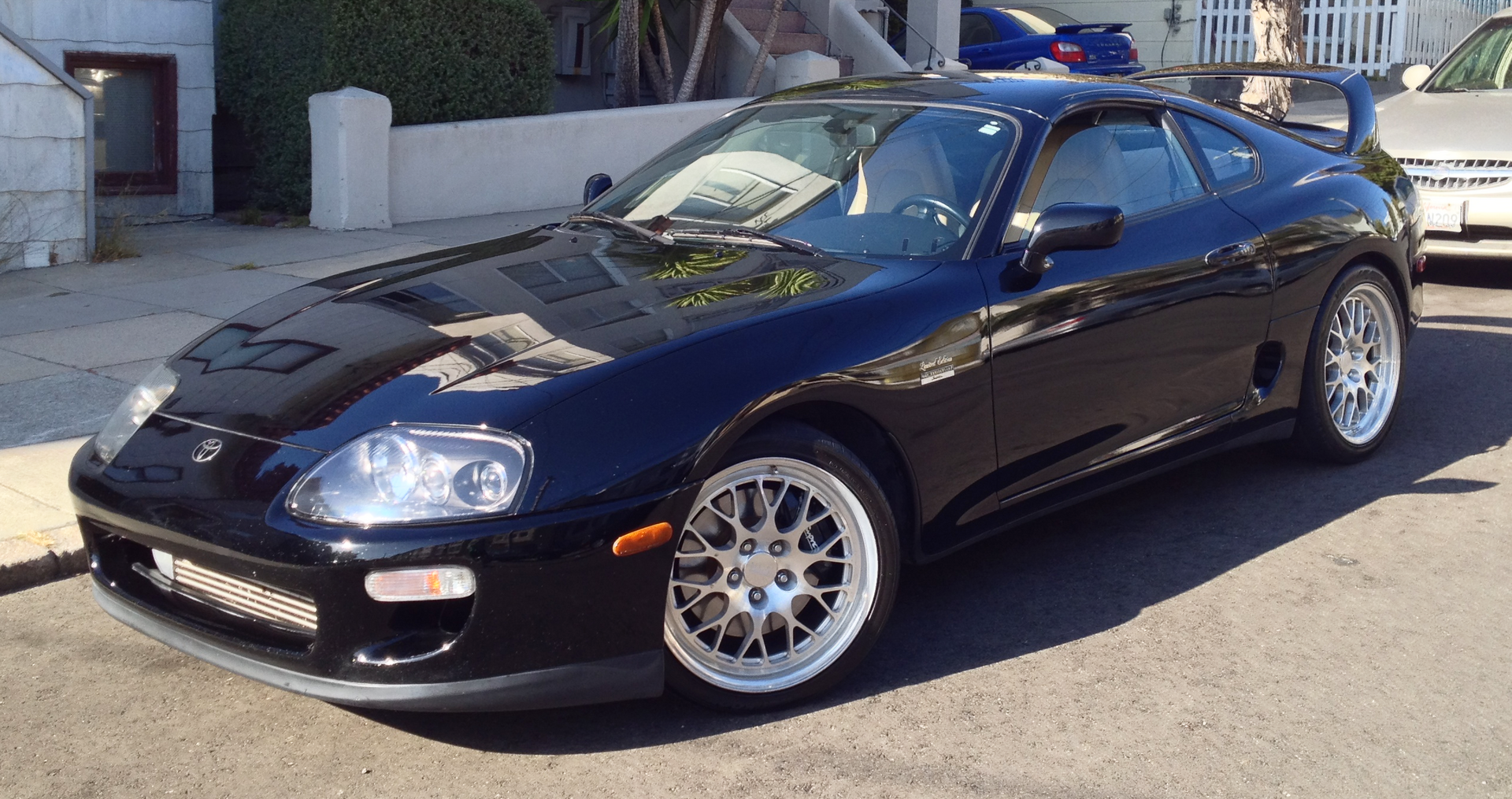
The aerodynamics were striking - a drag coefficient of just 0.31, which is an outstanding result even by today's standards. For comparison: some supercars of the XXI century cannot boast such "clean" flow.
The Heart of the Supra - the 2JZ-GTE Engine
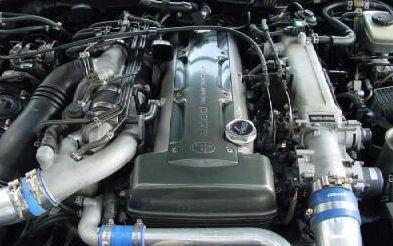
Under the hood was a 3-liter inline six-cylinder engine with two sequential turbines. Formally, its power was limited to 280 hp - such was the gentleman's agreement of Japanese brands. But the engineers initially built in huge potential: by raising the boost pressure to 1.2-1.3 bar, you can easily get almost 400 hp without interfering with the internals of the engine.
Brakes Worthy of Formula 1
The braking system is equally admirable. At the front - four-piston Sumitomo calipers, at the rear - two-piston. Their ABS used technology from Formula 1, with sensors constantly monitoring wheel rotation. The result - 43 meters from 100 km/h to zero. This record lasted a whole decade, until it was broken by the Porsche Carrera GT in 2003.
Triumphs on the Track
The Supra shone not only on the streets, but also on the race tracks. In the JGTC championship (now Super GT), Toyota won the title of Japanese champion five times. A lightweight 4-cylinder 3S-GTE engine was used for the racing version, but the chassis and aerodynamics remained unsurpassed.
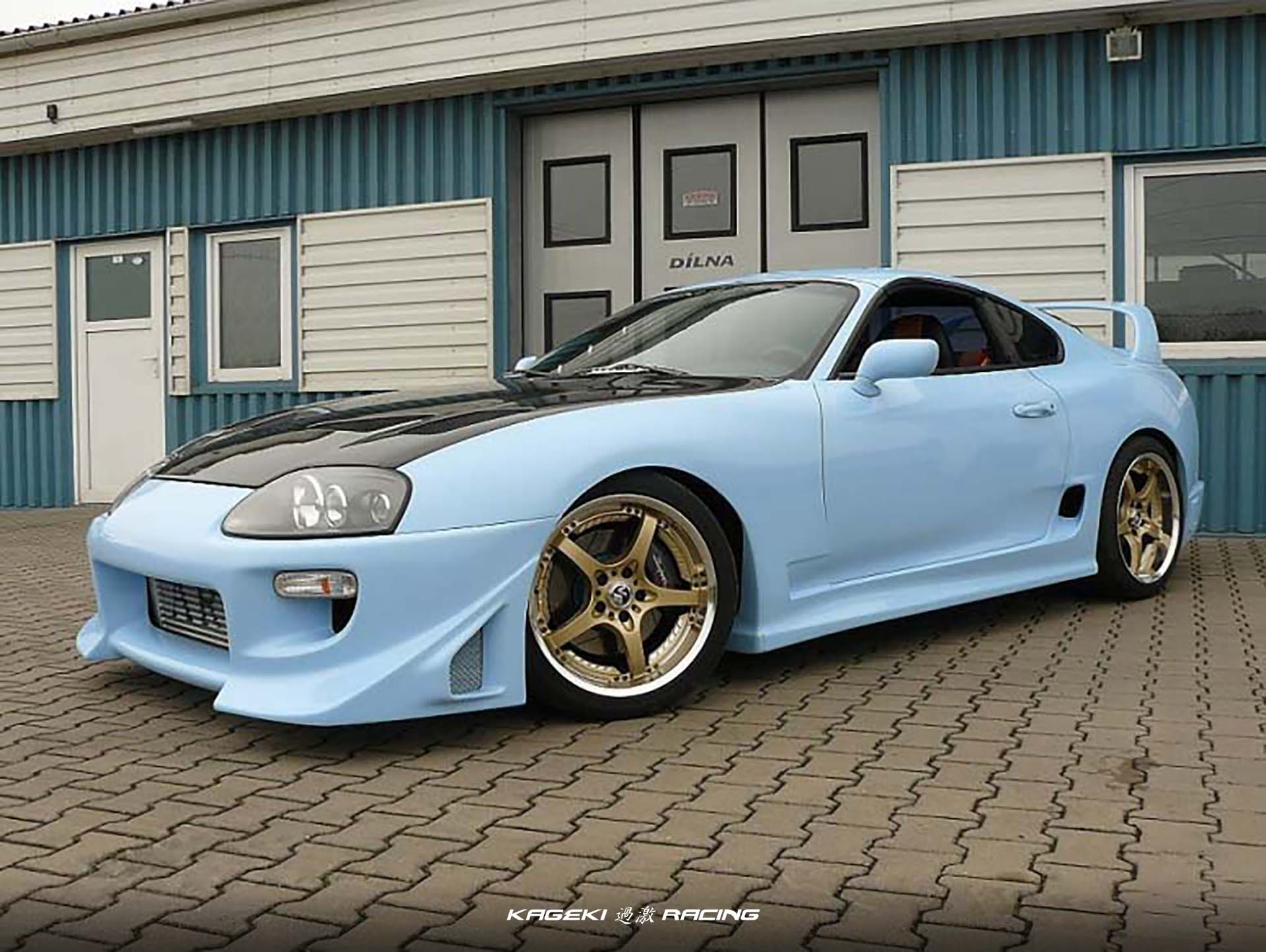
And in 1997, the Blitz tuning studio prepared a Supra that lapped the Nürburgring in 7 min. 48 sec. - and this was on road tires of that time! This result made it the fastest production car allowed on public roads.
Supra Today: Sport Beyond Time
Even decades later, the Supra does not lose its relevance. At Moscow Raceway, A80 owners consistently show laps around 2 min. 9 sec., competing with BMW M2, M4 and Mazda RX-7 FD. Minimal modifications are enough for this: BC Racing suspension, an enlarged intercooler and slightly raised boost pressure.
Toyota engineers provided a margin of safety in everything. Wide tires (265 mm), spacious arches for modern tires, and the legendary 6-speed Getrag manual transmission, capable of withstanding power far beyond the stock 280 hp.
Explosive Character and Honest Handling
Acceleration to 100 km/h - about 4.4 seconds. The turbo engine comes to life after 4000 rpm, and then the Supra literally "shoots" forward. Yes, turbo lag is present - long pipes to the intercooler do their job, but when the boost kicks in, emotions are guaranteed.
The behavior of the Supra is the quintessence of the Japanese engineering approach. Everything here is honest and simple: the steering wheel is not overloaded with feedback, but the reactions are lightning fast, the body is rigid, and the behavior at the limit is predictable and inspiring.
Interior and Driver Philosophy
The Supra's interior is in the spirit of functional minimalism. The dashboard is turned towards the driver, the tachometer is marked up to 10,000 rpm, and the speedometer is up to 320 km/h. The materials are simple, but everything is at hand and subordinated to the main goal - to drive the car, and not just sit in it.
From Undervalued to Cult
Like many Japanese legends of the 90s, the Supra has come a long way from a "drift beater" to a collector's item. Today, prices are striking: in Moscow - from 7 to 10 million rubles, in the regions - from 3.2 to 8.8 million rubles, depending on the condition.
You can buy a BMW M4 F82 for this money and tune it for the track, but the Supra is not about numbers. It's about spirit. About an era when a car was not a gadget, but an extension of the character of its owner.
Supra: Honest Power Without Filters
The Toyota Supra A80, like the Subaru WRX STI GC8, Nissan Skyline GT-R R32, Mitsubishi Lancer Evo and Mazda RX-7 FD, is a symbol of the time when Japanese engineers created not just fast cars, but living mechanisms filled with soul.
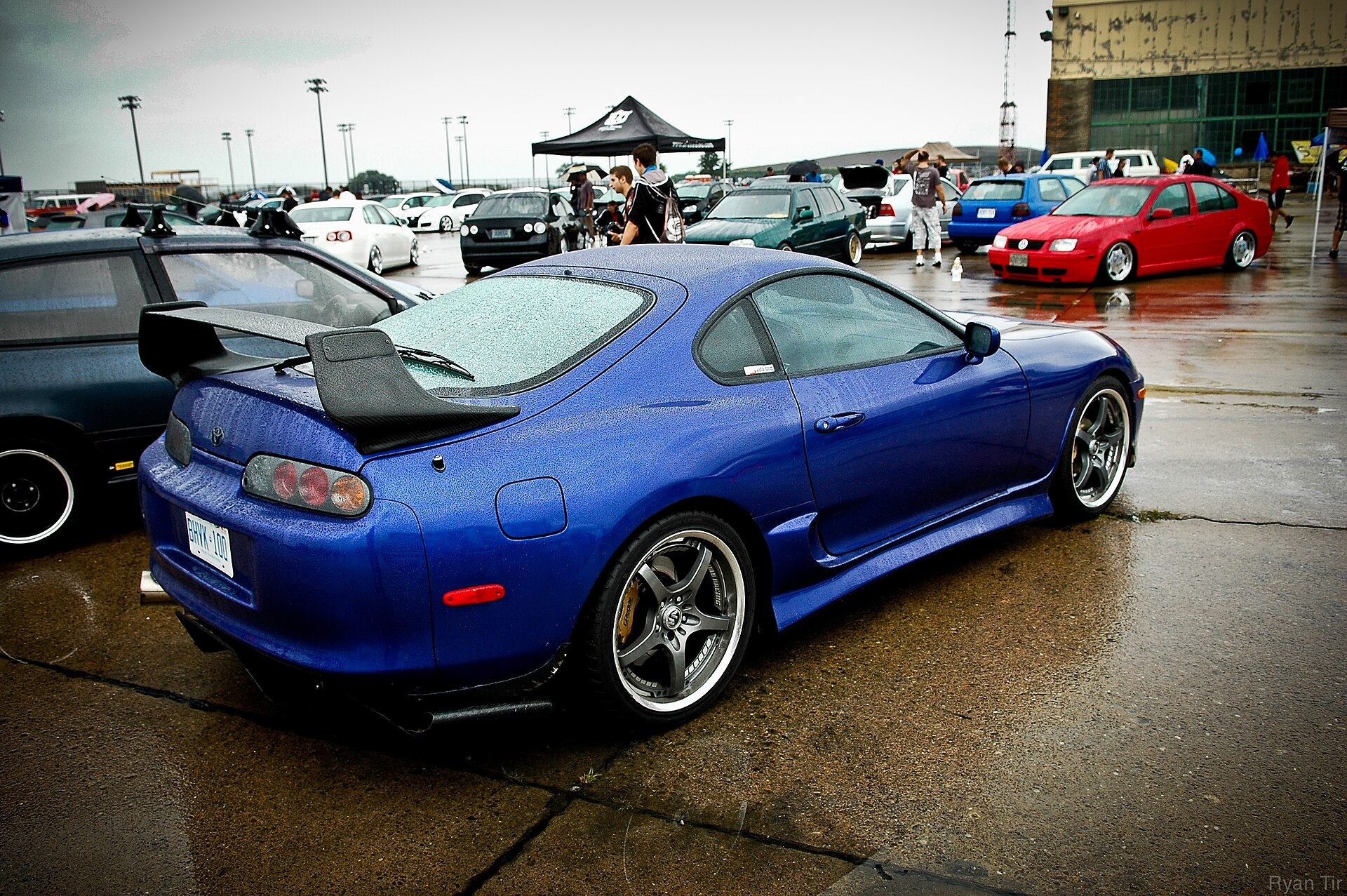
In 1995, 2005, 2015 and even in 2025, the Supra remains absolutely relevant. It does not need assistants, traction control and electronic crutches. This is a sports car that requires understanding, determination and respect.
The Supra does not strive to be polite - it is honest, brutal and real. 300+ horsepower, rear-wheel drive, a six-speed manual and zero compromises. In a world of digital filters, such directness evokes not just respect - it awakens real feelings.
Read more materials on the topic:
Now on home

Two cars of the same era, created for currency export, but with different philosophies

The crisis, compromises, and wrong decisions that buried a promising model


Resident of Sverdlovsk Region Recovers 192,000 Rubles and Receives Compensation

At the end of 2025, the crossover topped the sales ranking of new cars in the capital

The legendary racer moves around in a wheelchair and is under constant medical supervision

What malfunctions do owners of the Togliatti flagship most often encounter?

Slow shifting in the cold is not normal, but the first sign of transmission problems

The car features improved design and electronics

Now it's Rolls-Royce

Even with the recycling fee, the car will cost less than from official dealers

The model also received new trim levels