Starting an engine on a frosty morning is a challenge even for a new car. You turn the key or press the button, the heater quietly hums in the cabin, and a short but very harsh series of loads begins under the hood. At this moment, the engine experiences wear comparable to 100-200 km of mileage - and all this happens in a few seconds. Why does this happen and why is a cold start one of the most dangerous engine operating modes? Let's break it down.
What happens in the first seconds after starting
When a car sits for several hours in the cold, the engine oil thickens and flows into the oil pan. Only traces of lubricant remain on the parts, and even they work worse than usual: the oil does not form a complete film and is not retained in the gaps.
After turning the key, the starter begins to rotate the crankshaft, the pistons move through the cylinders, but the oil pump does not have time to pump oil through the system for the first 10-15 seconds. It is in this short window that the engine runs almost "dry": the surface of the cylinders, piston rings, and crankshaft bearings rub directly against each other.
This is not theory, but harsh reality: microparticles of metal are erased, gaps increase, and accelerated wear begins. Experts directly state: one start in winter is comparable to 100-300 km of normal mileage - this is how difficult this mode is.
Why a winter start is the most harmful
At -20 °C, any oil thickens many times more than at a positive temperature. Even high-quality 5W-40 synthetic oil becomes viscous like honey in the cold. The pump takes longer to push it through the channels - which means the engine runs longer under boundary friction conditions.

But oil is only part of the problem. Here's what else makes a winter start especially dangerous:
• Metal shrinks in the cold. Gaps between the piston and cylinder increase. The oil film cannot completely fill the space - gas breakthrough occurs, compression is lost, and parts receive shock loads.
• Fuel evaporates poorly. Gasoline or diesel mixes with air less efficiently in the cold. Some of the fuel settles on the cylinder walls, washing away the remaining oil and depriving the surface of minimal protection.
• The battery weakens. The battery loses up to 50% of its current in the cold. The starter rotates more slowly, the engine takes longer to "catch" the first spark - which means the operating time without normal lubrication increases.
All these processes are superimposed on each other. It's easier for the engine in the summer, but in the winter every cold start is a serious stress.
Three common misconceptions about winter starts
Myth #1. Warm-up is not needed - just get in and drive
The instructions for modern cars often say that you can start driving immediately. This is true, but only formally. Electronics do allow the engine to run cold, but it does not eliminate wear.
Until the oil warms up and reaches all the components, the timing chain, hydraulic compensators, and bearings experience increased loads. Therefore, you can drive after starting, but very carefully - without sudden accelerations, until the coolant temperature reaches at least 40-50 °C.
Myth #2. Good synthetic oil eliminates the problem
Oil with an index of 0W or 5W does tolerate frost better, but it is also not able to instantly fill the entire engine. Oil travels from the oil pan to the camshaft in 10-20 seconds - and during this time the engine is actually working on dry friction. Synthetic oil reduces risks, but does not negate physics.
Myth #3. Modern cylinder coatings are not afraid of cold weather
Nikasil, alusil, and other coatings reduce friction, but only in the presence of an oil film. If the oil does not have time to reach the walls, wear still occurs.
Moreover, the thin walls of modern engines are often more demanding on the correct temperature than old cast-iron blocks.
How to tell if your engine is suffering from cold starts
If the engine regularly experiences severe winter starts, the problem manifests itself quickly enough:
• Increased oil consumption. If you have to add more than 0.5 liters between changes, the cylinders and rings are probably already worn.
• Blue smoke on startup. The smoke becomes thicker in the first seconds after starting - a sign of oil entering the combustion chamber.
• Compression drop. Unevenness across cylinders or low readings usually indicate wear of the cylinder-piston group.
• Metallic ticking when cold. Hydraulic compensators or the timing chain may "knock" due to lack of oil.
• Uneven engine operation. If the engine misfires until it warms up, this may also indicate reduced compression.
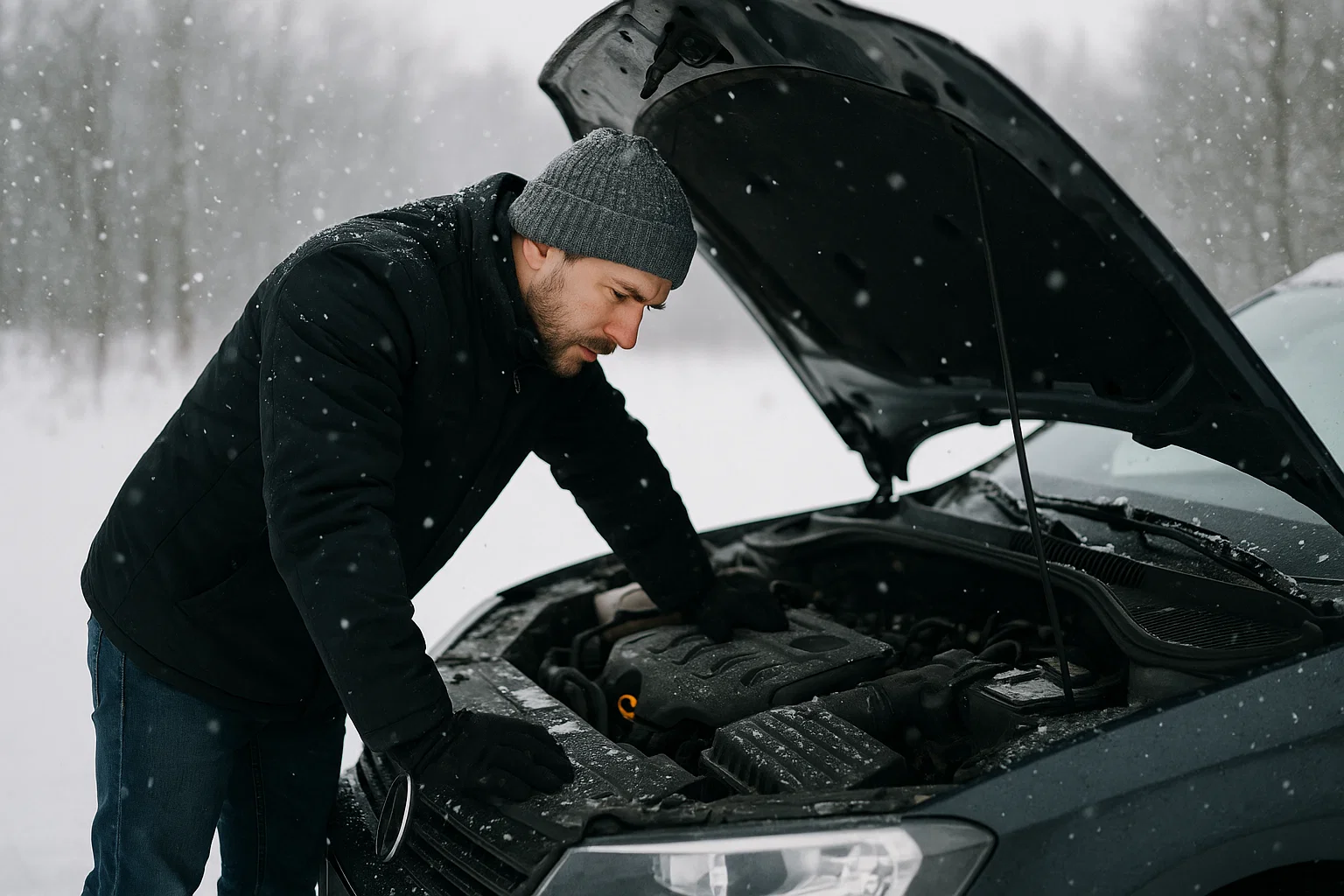
Two or more signs are a reason to take urgent action, otherwise repair will become inevitable and expensive.
A cold start is not a death sentence. There are ways to reduce wear: from simple correct warm-up techniques to modern technologies that create a protective film on parts even before the oil is fully warmed up.